Angora goat: mohair and keeping fiber goats
The Angora goat gives mohair, a long, shiny, smooth fiber that is shorn from the live animal. We explain where the breed comes from, how shearing works, what housing it needs and what to watch for in herd health.
verifiedFrom the team that has organised work on poultry farms for years.
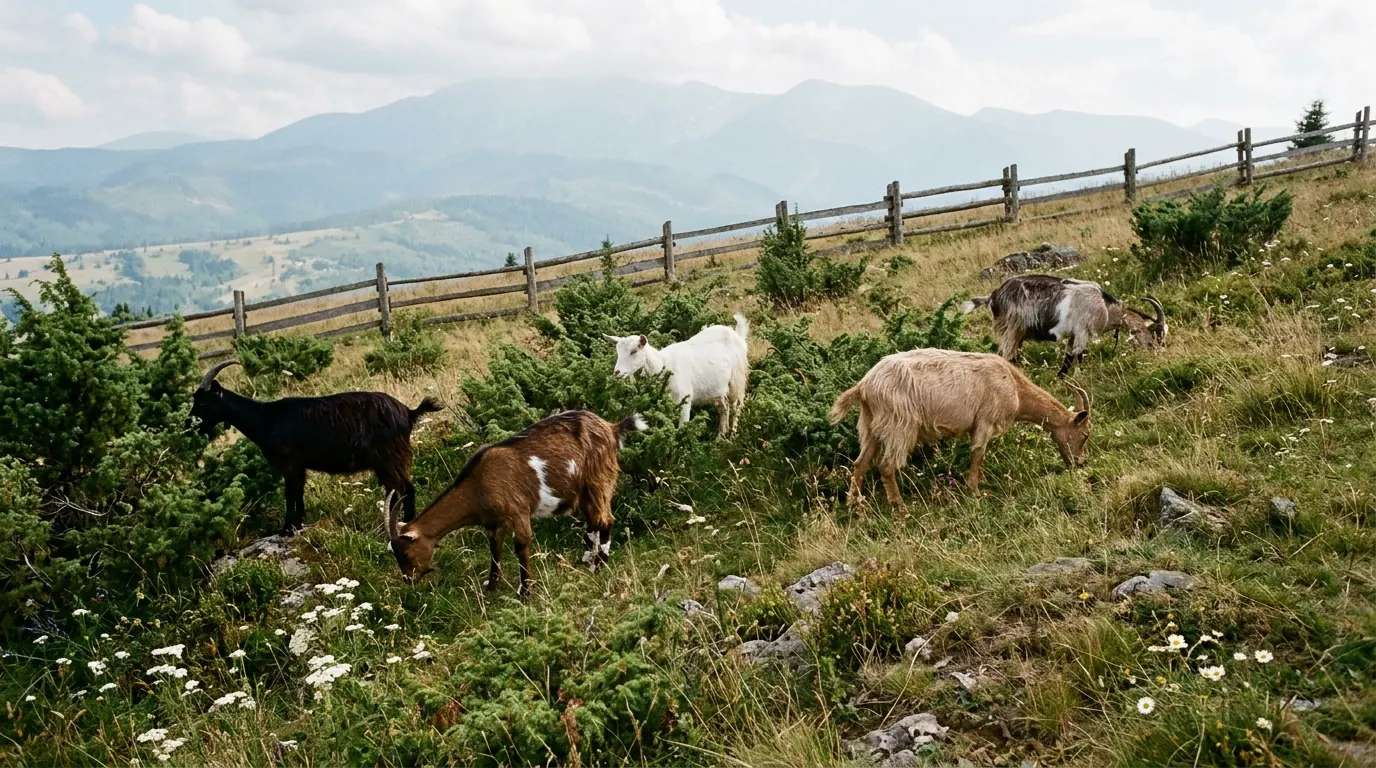
The Angora goat is a breed kept for a fiber called mohair. Mohair is a long, straight, shiny fiber that grows back after every shearing. The breed comes from Turkey, from the area around Ankara, which gave it its name. That sets the Angora apart from the dairy and meat breeds we cover in our overview of goat breeds: what counts is the quality and length of the fleece, not milk yield or weight gain.
Who this kind of keeping suits
Angoras need more attention than ordinary goats. You have to protect the fleece from dirt, rain and snagging on fences. If you are only planning a herd, start with the basics in our guide to keeping goats. Fiber goats also have the same registration duty as other goats in Poland. We describe the details in the article on goat registration with ARiMR (Poland's Agency for Restructuring and Modernisation of Agriculture).
What mohair is and where it comes from
Fiber traits
Mohair is the fiber from the fleece of the Angora goat. It is long, lustrous and straight, and it often hangs in locks or curls. It takes dye well and does not felt as easily as many sheep wools. Mohair is spun into yarn for sweaters, scarves, blankets and decorative fabrics. Fleece quality is judged by length, fiber thickness and shine. The finest fiber usually comes from the first shearing of young animals, and the fiber gets coarser with age.
Mohair vs. cashmere
Keepers often mix up mohair and cashmere. Mohair comes from the Angora goat and is a long, shiny outer fiber. Cashmere is the soft down from under the outer coat, and it comes from a different goat breed. We cover the two separately because they differ in how they are harvested and used. Cashmere down is described in the article on the cashmere goat. If you are weighing up fiber goats, compare both options before you buy animals.
Fleece prices
Mohair prices depend on quality, the batch, the season and demand from spinning mills, and on the Polish market they swing. So we give no amounts here. Before you invest, agree with a buyer or craftsperson what length and grade of fleece they will take, and in what form. Many keepers sell the fiber directly to hand spinners or as finished products.
Origin and appearance of the Angora goat
Origin
Angoras come from Asia Minor, where they have been kept for their fleece for centuries. Over time they reached other countries, where separate lines developed. In Poland it is a niche breed: goats here have long been described mainly as small ruminants on small farms. According to a monograph by IZ PIB (Poland's National Research Institute of Animal Production), goats were popular here thanks to early sexual maturity and modest feeding needs. These traits apply to Angoras too, although their fleece needs extra care.
How to recognize an Angora
The Angora goat has a fleece hanging in long, wavy or twisted locks that covers almost the whole body. It is usually white, though colored animals exist. It is smaller and finer-boned than the dairy breeds. The horns are moderate and the ears droop. If you buy breeding stock, check the fleece in several places on the body. It should be even, with no streaks of coarse hair. Look at the pedigree of the herd the goat comes from.
Shearing and handling the fleece
How often and when
Angora goats are usually shorn twice a year, in spring and autumn, so the fleece reaches a suitable length. Adjust the date to the weather and the condition of the animals. Do not shear weak or sick goats, or in severe cold. After shearing, goats lose their natural insulation and chill quickly, so for the first few days they need a dry place and shelter from wind and rain.
Preparing for shearing
The fleece should be dry and clean. Remove straw, hay and burrs from it beforehand. Set dirty parts aside, because they lower the quality of the whole batch. Shearing is done with special clippers, and experienced shearers work faster and with less risk of cuts. Treat any cuts right away, because shearing wounds get infected easily. Sort the fleece by length and grade at the shearing table.
Goat house, fencing and paddock
Shelter
Angoras cope badly with damp and cold rain, especially after shearing, so they need a dry, airy goat house without drafts. Keep the bedding clean, because soiled fleece loses value. We describe dimensions, ventilation and fittings in the article on the goat house. The paddock should have a shelter where the animals can get out of the rain. Avoid thorny bushes and weeds with clinging seeds, because they spoil the fleece.
Fencing
Goats jump and dig under fences, and Angora fleece snags easily on wire and mesh. Choose smooth fencing with no protruding wire ends. We cover fence types and heights in the article on fencing for goats. The fence should also protect the herd from dogs, which can kill several animals in a single night.
Feeding Angora goats
The base of the ration
The base of the ration is roughage: pasture, hay and other fibrous feeds. A goat's needs rise with production. According to INRA 2007, quoted by IZ PIB, a dry goat weighing 50 kg eats about 1.25 kg of dry matter a day, and a dairy goat giving 2 kg of milk a day eats about 1.90 kg. These figures are for dairy goats, and we give them as a point of comparison, not as a standard for Angoras.
Periods of higher demand
Angora goats need the most energy and protein in late pregnancy and in lactation, and also while the fleece is growing fast. Deficiencies show up as thinner, weaker fiber. We describe rations for each group in the article on what goats eat. Give constant access to clean water and a mineral lick, and discuss the ration with a feeding adviser.
Parasites, treatment and breeding
Parasites
A thick, long fleece makes it hard to judge an animal's condition, so feel the goat and check it regularly instead of just looking. Goats are prone to digestive parasites, especially on wet pastures. Agree the worming plan, timing and product with a vet. We describe the rules in the article on worming goats. The vet always chooses the medicine and dose, and after treatment you must keep the withdrawal period for milk and meat stated on the leaflet.
Breeding and kidding
Plan the mating dates so that kidding does not fall in the worst months. We cover heat, the breeding season and choosing a buck in the article on goat breeding, and the course of birth in the text on kidding. Angora goats need a dry, clean pen for kidding. Give kids colostrum in the first hours of life.
Frequently asked questions
What is an Angora goat?add
It is a goat breed kept for a fiber called mohair. It comes from Turkey, from the area around Ankara. Mohair is a long, lustrous, straight fiber that grows back after shearing.
How often do you shear Angora goats?add
Usually twice a year, in spring and autumn. The date depends on the weather and the length of the fleece. After shearing, goats need dry shelter and protection from cold.
What is the difference between mohair and cashmere?add
Mohair comes from the Angora goat and is a long, shiny outer fiber. Cashmere is the soft down of cashmere goats. The two differ in how they are harvested and used.
Do you have to register Angora goats?add
Yes, in Poland fiber goats are registered the same way as other goats. Check current requirements and deadlines with ARiMR and the county veterinary officer. We describe them in the article on goat registration.
How much does an Angora goat or mohair cost?add
Prices depend on pedigree, the animal's age, fleece quality and demand, and mohair prices change. So we give no amounts. Check current rates with breeders and fiber buyers.
Sources & resources
- linkIZ PIB — Livestock keeping and breeding over 70 years. Cattle Breeding Department, Sheep and Goat Breeding Department
- linkIZ PIB (Wiadomości Zootechniczne) — Basic issues in goat feeding
- linkPIW Pruszków (Veterinary Inspection, Inspekcja Weterynaryjna) — Sheep/goat registration book (template)
- linkARiMR — gov.pl/web/arimr
Prepared by: DlaFerm Team based on data from the sources listed · Publisher: INSTA-TECH sp. z o.o.
Keep treatment and withdrawal records in one place
The Treatment and Withdrawal module in DlaFerm.pl helps you log treatments and track withdrawal periods, even when you keep other species alongside your goats. Create a free farm account or get in touch.
Phone
+48 796 258 151