Cashmere goats: cashmere down and husbandry
A cashmere goat is not a separate breed with one standard. The name covers goats that grow a fine undercoat, called cashmere down, under a coarse outer hair. We explain how the down forms, how to harvest it and what these goats need on your farm.
verifiedFrom the team that has organised work on poultry farms for years.
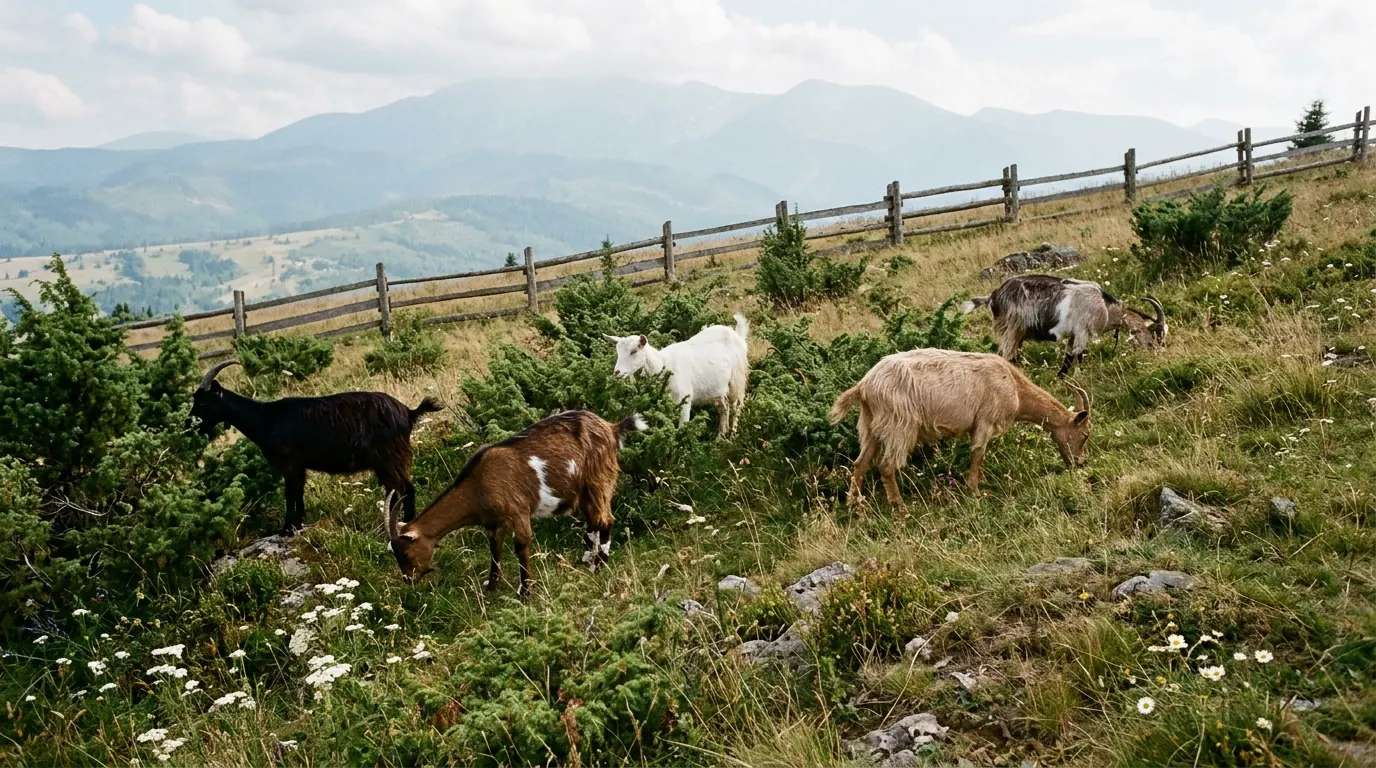
A cashmere goat is a goat that grows a dense, very fine undercoat in the cold season. That undercoat is cashmere down. The goat then carries two layers: long, stiff outer hair on top and soft down underneath. In trade, cashmere is down with a fiber diameter of up to about 19 µm, so quality depends on fineness, not just quantity. You harvest the down once a year, usually in spring, when the goat starts to molt. For general rules on starting a herd, see Goat farming: where to start, what it costs and whether it pays.
Cashmere, mohair and milk
Cashmere is easy to confuse with mohair. Mohair comes from the Angora goat: a long, shiny fiber shorn from the whole fleece. Cashmere is short, matte down from under the outer hair, and you have to separate it from the coarser hairs. Cashmere goats are not bred for milk, so do not expect the yields of dairy breeds. We cover goat milk in Goat milk. Such herds are rare in Poland, so before buying check the origin of the animals and their documents, and agree prices directly with the breeder.
How cashmere down forms
The undercoat grows with cold and light
Down grows in autumn and winter, when days are shorter and temperatures fall. In spring, as days lengthen, the goat starts to shed it. That moment sets your harvest date. A goat kept in a warm building all year grows less down, because her body gets no signal to prepare for winter. Give the animals access to a yard and a shelter even on cold days. Provide warmth only to those that really need it: goats before kidding and young kids.
What decides quality
Trade judges three traits: fiber diameter, length and color. The finer the fiber, the higher the value of the raw material. White down is prized because it is easier to dye. You send samples to a laboratory to measure diameter, and the processing plant will tell you which batches it accepts. Down prices change and depend on the world market, so we give no amounts. Ask the buyer for current rates before you plan the profitability of your herd.
Combing and shearing cashmere goats
When and how to collect the down
You collect down once a year, when molting starts. You can comb it out with a comb, or cut it close to the skin with scissors or clippers. Combing takes longer but gives cleaner raw material with fewer coarse hairs. After shearing, the mix of hair and down has to be separated mechanically at the plant. The animal stands calmly during the job if you have tamed it beforehand and you work on a dry day on a clean surface.
After the harvest
Put the down in clean, breathable bags and label each batch with the date and the goat's number. Moisture and dirt lower quality, so store the material in a dry room. After close shearing, goats lose their natural protection against cold. If cold or rain returns after the job, give them dry shelter without drafts. How much down you get per animal depends on the line, age and feeding. It is usually counted in hundreds of grams, so keep your own records every year.
What to feed cashmere goats
Feed requirements
According to INRA tables from 2007, cited in an IZ PIB (Poland's Institute of Animal Science) study on goat feeding, a dry goat weighing 50 kg eats about 1.25 kg of dry matter a day. A dairy goat giving 2 kg of milk needs about 1.90 kg. Outside the period of feeding kids, a cashmere goat comes close to the dry goat's figure, but she must also build down, which is made of protein. So in autumn and winter make sure the ration does not lack protein. You will find full-year rations in What goats eat: feeding goats all year.
Pasture changes
The same table shows how pasture value falls. Grass from 10 May had 0.97 UFL per kg of dry matter, and from 26 June only 0.70 UFL. Dry matter was 17% in May and 19% in June. In summer grass alone is not enough for kids and for goats after kidding, so supplement as your feeding adviser recommends. Also give constant access to clean water, plus salt and a mineral mix for goats.
Housing and welfare
Dry shelter, exercise outdoors
A cashmere goat tolerates cold better than damp. Dense down protects her from frost, but when soaked it felts and dries slowly. So provide a shelter or barn with dry bedding, good ventilation and no drafts. Goats also need exercise in a yard and the chance to climb. Agricultural advisory centers write about welfare requirements for sheep and goats, for example WODR Poznań in its Poradnik Gospodarski of May 2024.
Health and biosecurity
Down hides body condition, so every few weeks assess the goat by touch, not by eye alone. Check hooves, mouth and skin. Keep records of treatments and medicines, and with every treatment remember the withdrawal period: the vet chooses the drug and the dose, and you keep to the withdrawal period before the animal goes to slaughter. Log people who enter the premises, ideally in a QR entry and exit log. You can build your protection plan in the biosecurity plan generator.
Registration and documents
A goat keeper's duties
Legal state as of: 23.11.2026. Goats, like other farm animals, must be registered. You report the herd's location to the ARiMR (Agency for Restructuring and Modernisation of Agriculture) county office, and the Veterinary Inspection (Inspekcja Weterynaryjna) checks your record keeping. A template register for sheep and goats is available from the county veterinary inspectorate. Before you buy your first animals, ask ARiMR about the current rules on marking and reporting movements, because details may change.
Origin of the animals
When buying cashmere goats, ask for movement documents and a certificate of the herd's health status. To learn about purchase and keeping costs, read How much a dairy goat costs and what to look at when buying. The rules for judging an animal are similar, though the price of a cashmere goat depends on her down line. If you plan to breed them, read about goat pregnancy and preparing for kidding.
Frequently asked questions
What is a cashmere goat?add
It is a goat that grows a fine down, an undercoat, under its coarse outer hair. That down is called cashmere. It is not one breed with one standard, but a type of goat kept for down.
When is cashmere down harvested?add
Once a year, in spring, when the goat starts to molt. You can comb the down out or cut it close to the skin. Combing gives cleaner raw material but takes longer.
How do cashmere goats differ from Angora goats?add
Angora goats give mohair, a long, shiny fiber shorn from the whole fleece. Cashmere goats give short, soft down from under the outer hair. We describe Angoras in our article on the Angora goat.
How much does a cashmere goat cost?add
The price depends on line, age, down quality and origin documents. Agree the current amount directly with the breeder, because the market is small and prices vary.
Do cashmere goats have to be registered in Poland?add
Yes, like other goats kept on a farm. You report the herd's location to ARiMR and keep a registration book. Check the current marking rules at the ARiMR county office or with the county vet.
Is a cashmere goat good for milk?add
It is not bred for milk, so do not expect the yields of dairy breeds. If milk matters to you, choose a dairy breed, such as the Saanen.
Sources & resources
- linkIZ PIB — Livestock keeping and breeding over 70 years. Cattle Breeding Department, Sheep and Goat Breeding Department
- linkIZ PIB (Wiadomości Zootechniczne) — Basics of goat feeding
- linkWODR Poznań — Poradnik Gospodarski, May 2024 (Welfare issues in keeping sheep and goats)
- linkCounty Veterinary Inspectorate Pruszków (Veterinary Inspection) — Sheep/goat registration book (template)
- linkARiMR — gov.pl/web/arimr
Prepared by: DlaFerm Team based on data from the sources listed · Publisher: INSTA-TECH sp. z o.o.
Keep an entry and exit log on your farm
DlaFerm.pl has no separate goat module, but the QR entry and exit log and the biosecurity plan generator help you keep visits and safeguards in order, even in a small herd. Create a free farm account or get in touch.
Phone
+48 796 258 151