Boer goat: a meat breed from South Africa
The Boer goat is a purely meat breed that comes from South Africa. According to the Instytut Zootechniki PIB (National Research Institute of Animal Production), its population in Poland is small. We describe the breed's traits, feeding, housing and paperwork.
verifiedFrom the team that has organised work on poultry farms for years.
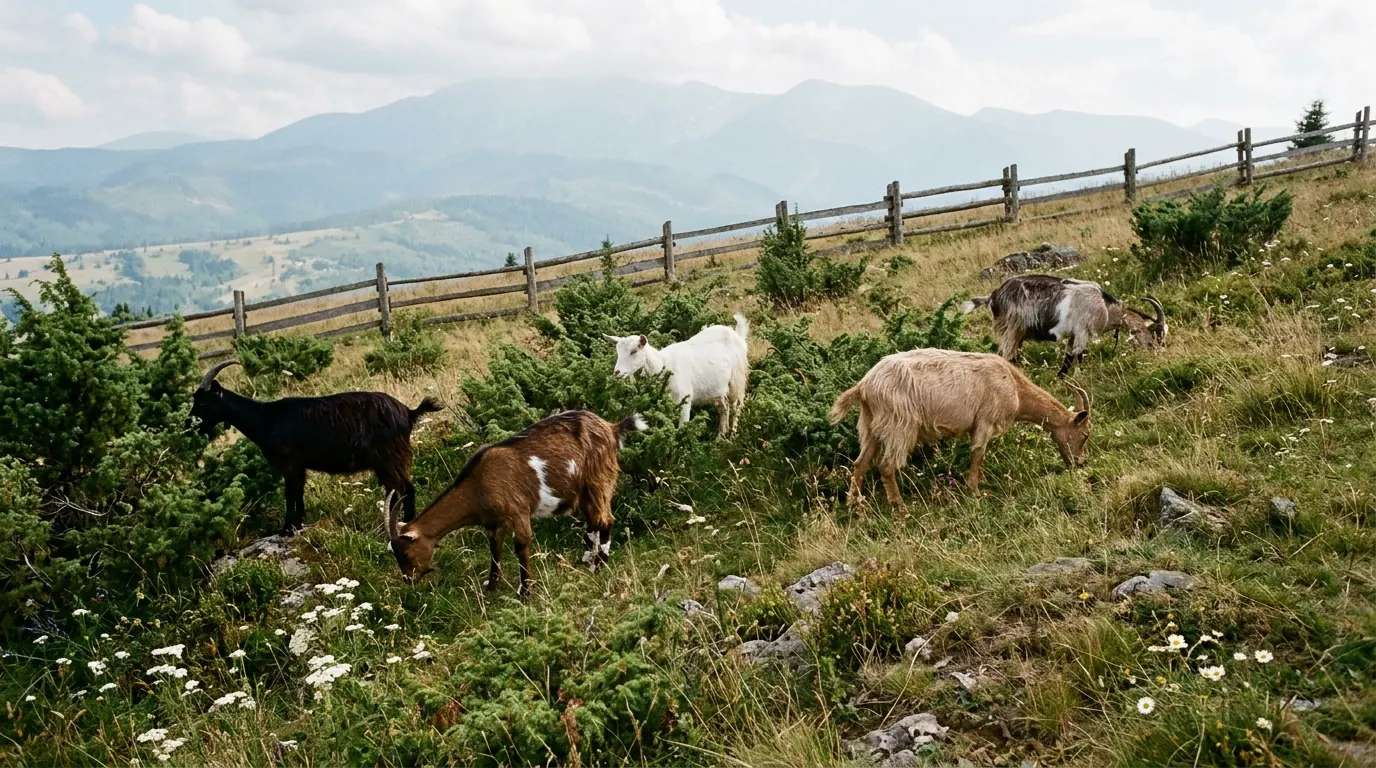
The Boer goat is a meat breed from the Republic of South Africa. You choose it when you want to sell kids or finishing animals, not milk. According to the Instytut Zootechniki PIB (Wiadomości Zootechniczne, 2017), Boer goats mature early, are highly prolific, are well muscled, and have high daily gains and a high dressing percentage.
Where Poland's Boer goats come from
The IZ PIB notes that most goats in Poland are dairy animals, and the population of meat goats (the Boer breed) is small. Polish Boer herds descend from animals imported from abroad. If you are only starting to think about goats, begin with the overview in Goat farming: where to start, what it costs and whether it pays. For an overview of production types, see Goat breeds: dairy, meat and fiber.
What sets the Boer goat apart
Meat production
The Boer breed is kept only for meat. The IZ PIB lists four traits of goats bred for this purpose: early maturity, high prolificacy, good muscling, and high daily gains together with a high dressing percentage. For you, that means a shorter time from birth to sale and more kids per doe than in dairy breeds, if the herd is well managed. Do not take exact figures for gains and dressing percentage from the literature. Work them out from your own weighings and settlements with your buyer.
Why meat goats do not give milk for sale
Meat breeds were selected for muscling and fertility, not milk yield. A Boer doe will feed her own kids, but she is not a breed for milking and selling milk. If you plan to produce milk, compare it with the breeds described in Saanen goat: one of the highest-yielding dairy breeds and Alpine goat: a dairy breed from the Alps. To see how much milk a dairy goat gives, read Goat milk: yield, composition and properties.
Single-purpose and multi-purpose breeds
Why multi-purpose breeds are losing ground
According to the IZ PIB, multi-purpose breeds (milk, meat, hides) are gradually losing importance. They are being replaced by breeds kept for a single purpose, either dairy or meat, or for two purposes, dairy and meat. Old local breeds adapt very well to local conditions, but they fall well short of specialized breeds in output. In Poland this was one of the reasons the Carpathian, Kazimierz (kazimierzowska) and Sandomierz goats died out.
The Carpathian goat as an example of a native breed
Scientists from the IZ PIB in Balice rebuilt the Carpathian goat. According to 2019 data, it is kept in 17 herds: 205 does and 26 bucks. The breed's average milk yield is 350 kg and the highest is 498 kg. That is a completely different direction from the meat-type Boer goat. It does show, though, that the choice of breed depends on your goal: the product you sell, the conditions on your farm and the protection of genetic resources. You can read about this native breed in Carpathian goat: a native Polish breed.
What to feed Boer goats
Pasture value changes through the season
Meat goats make use of pasture, but its nutritional value falls over the summer. INRA data from 2007, quoted by the IZ PIB, show this clearly. On 10 May the pasture had 17% dry matter and 0.97 JPM (feed unit for milk production) per kilogram of dry matter. On 26 June it had 19% dry matter but only 0.70 JPM. Protein fell noticeably over the same period. For this reason, do not leave pregnant does or does with kids on old pasture alone in summer.
Ration for the herd
Requirements depend on body weight, physiological state and age. The IZ PIB tables (INRA 2007) show that a dry doe weighing 50 kg needs less energy and protein than a lactating one. Needs rise with milk production, and a meat doe is, after all, feeding kids. Build the ration on an analysis of your own farm's feed and on advice from a nutrition adviser. We cover the basics of year-round feeding in What goats eat: feeding goats all year round.
Breeding, pregnancy and kidding
Prolificacy and kid care
High prolificacy means frequent twins and, with good feeding, triplets as well. A doe with several kids needs better feed than a dry doe, especially in the last weeks of pregnancy and at the start of lactation. For kidding, prepare a dry, clean pen with safe access to bedding and water. We describe the birth in Goat kidding: how birth goes and the kid's first hours, and the length and signs of pregnancy in Goat pregnancy: how long it lasts, signs and preparing for kidding.
Selection and buying animals
When buying Boer goats, look at muscling, body condition, hooves and pedigree. Ask the seller for the animals' documents and for data on the doe's earlier kiddings. We do not give prices, because they depend on the breeding line, age, sex and availability of animals in a given year. Agree them directly with the breeder. We describe general rules for assessing goats at purchase in What a dairy goat costs and what to look for when buying.
Registration, records and biosecurity
Herd registration
Keeping goats comes with registration and record-keeping duties. We checked the legal state on 23.11.2026. Confirm current requirements with your county office of ARiMR (Agency for Restructuring and Modernisation of Agriculture) and with the county veterinary officer (powiatowy lekarz weterynarii), because the rules change. Veterinary Inspection (Inspekcja Weterynaryjna) offices publish a template of the sheep and goat registration book, for example the PIW in Pruszków. In practice, inspectors expect you to keep records up to date, with dates of births, movements and disposal of animals.
Treatment and biosecurity
A vet chooses medicines and doses. You record what was given and when, and you keep to the withdrawal period before slaughter. This matters most for animals meant for meat, because a kid sold during the withdrawal period is not fit for consumption. Also limit visits from outsiders and record entries to the farm. A visitor log with a QR code helps with this, and you can prepare your protection plan in the biosecurity plan generator.
Frequently asked questions
What is a Boer goat used for?add
The Boer goat is a meat breed. According to the IZ PIB, it is marked by early maturity, high prolificacy, good muscling, high daily gains and a high dressing percentage.
Where does the Boer goat come from?add
The breed comes from the Republic of South Africa. The Polish population descends from animals imported from abroad and, according to the IZ PIB, is small.
Do Boer goats give milk?add
They give milk to feed their own kids, but they are not a dairy breed. If you want to sell milk, choose a dairy breed such as the Saanen or Alpine.
How much does a Boer goat cost?add
The price depends on the breeding line, age, sex and origin of the animal. Agree the amount directly with the breeder, ideally after seeing the animals and their documents.
Are Boer goats suitable for a small farm?add
Yes, if you have pasture, a dry pen and a buyer for kids or finishing animals. Before you buy, check the registration duties with ARiMR and the county veterinary officer.
How do you feed Boer goats?add
The base is good pasture or hay, plus supplementary feed in the last weeks of pregnancy and at the start of lactation. Build the ration on a feed analysis and on advice from a nutrition adviser, because pasture value drops over the summer.
Sources & resources
- linkIZ PIB (Wiadomości Zootechniczne) — Current problems in dairy goat breeding in Poland
- linkIZ PIB (Wiadomości Zootechniczne) — Basics of goat feeding
- linkIZ PIB (Wiadomości Zootechniczne) — Current state of breeding and the genetic resources conservation program for Carpathian goats
- linkPIW Pruszków (Veterinary Inspection) — Sheep/goat registration book (template)
- linkARiMR — gov.pl/web/arimr
Prepared by: DlaFerm Team based on data from the sources listed · Publisher: INSTA-TECH sp. z o.o.
Log farm visitors with a QR visitor log
DlaFerm.pl has no separate goat module, but the QR visitor log and the biosecurity plan generator help you keep control of people's movements and hygiene rules on any farm. Create a free farm account or get in touch.
Phone
+48 796 258 151