Sheep diseases: symptoms, prevention and vaccination
The most common sheep diseases are gut parasites, leg problems, pregnancy toxemia in ewes and infectious diseases such as bluetongue. We describe the signs you can see in the flock and the basic rules of prevention. Your vet decides on treatment and vaccination.
verifiedFrom the team that has organised work on poultry farms for years.
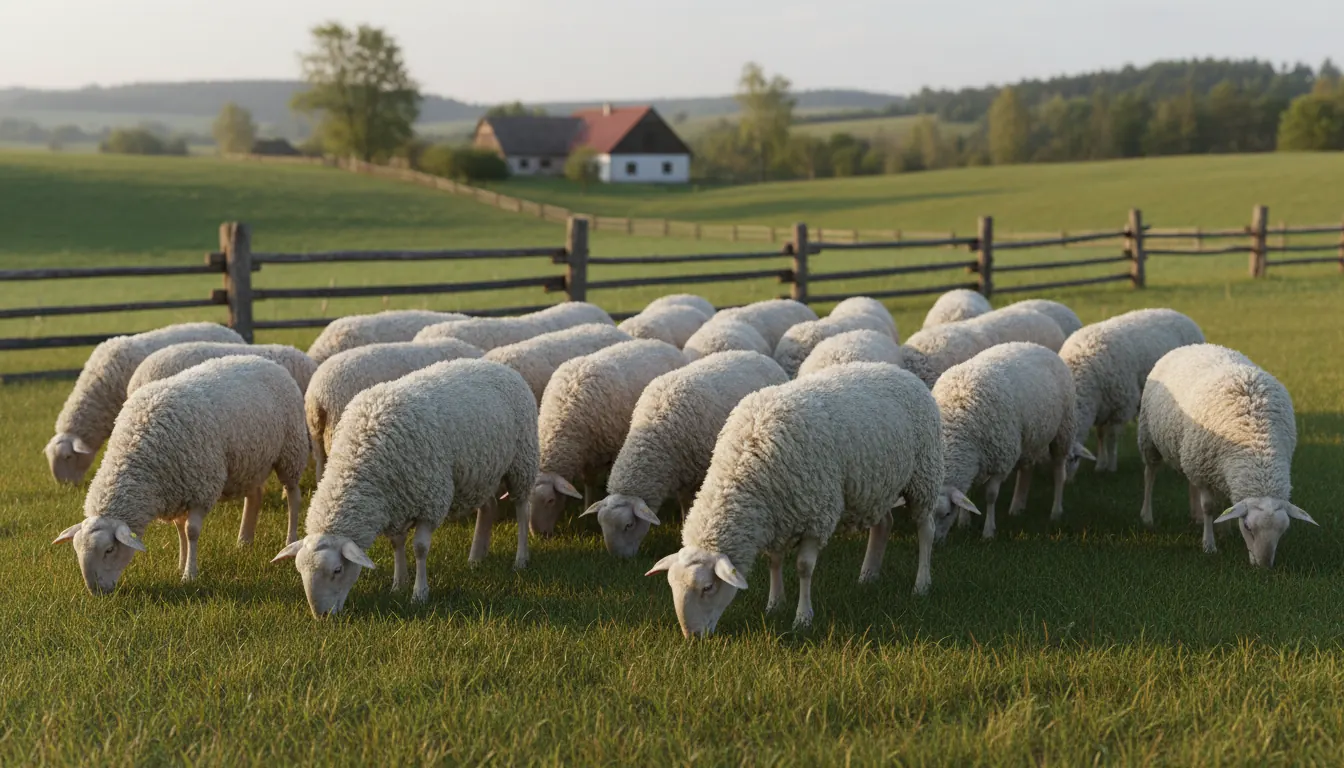
You usually spot a sick sheep by its behavior: it separates from the flock, stops eating, stands with its head down or limps. Sheep hide illness for a long time, so any change in behavior is a signal to look at the animal up close. The most common causes of losses are internal parasites, metabolic disorders in ewes before lambing and infectious diseases. For a full picture of running a flock, see our guide to sheep farming.
What to do first
Separate the sick animal from the flock, take its temperature and note the symptoms. Call your vet if the sheep is not eating, is lying down, or if more than one animal is sick. If you suspect a notifiable disease, report it to the county veterinary officer (powiatowy lekarz weterynarii). Current lists of diseases and requirements are on the website of Poland's Chief Veterinary Inspectorate (Główny Inspektorat Weterynarii).
Internal and external parasites
Gut worms
Parasitic gastroenteritis is one of the most common problems for sheep on pasture. Signs are weight loss, diarrhea, pale eye membranes and weaker lamb growth. British guidance from HCC, AHDB and QMS on worm control stresses that blanket treatment of the whole flock favors drug resistance in parasites. It is better to rely on body condition scoring and fecal egg counts. Your vet chooses the product, the dose and the withdrawal period.
How to limit infection
The rule is simple: the cleaner the pasture, the fewer larvae. Rotate paddocks, do not graze lambs on fields where a heavily wormy flock grazed before, and do not overstock. We explain how to divide pasture in our guide to grazing sheep. Quarantine new animals and worm them after talking to your vet, before they join the flock.
Liver fluke and skin parasites
Wet pastures carry the risk of liver fluke. AHDB notes that parasites, including worms and liver fluke, lower the condition of ewes, especially those carrying more than one lamb. The result is small lambs and weak colostrum. Scab mites and lice show up as sheep scratching and losing wool. Leave diagnosis and treatment to your vet.
Ewe diseases before and after lambing
Pregnancy toxemia
According to AHDB (Sheep Manual 14), pregnancy toxemia, also called twin lamb disease, occurs in the last four to six weeks of pregnancy. Ewes that are too thin, too fat or carrying more than one lamb are most at risk. The cause is a lack of energy in the feed and a drop in blood glucose. A sick ewe separates from the flock, is dull, stops eating, may seem blind and lies down. AHDB stresses that glucose treatment must start as soon as the ewe stops eating.
How to prevent it
Watch ewe condition from mating and through pregnancy, and raise the energy in the ration in the last weeks. Feed ewes with large litters separately from the rest so each gets her share. We cover winter rations in our guide to feeding sheep in winter, and the birth itself in the article on lambing.
Lamb losses
Lamb rearing rates differ between breeds. According to the Institute of Animal Science (IZ PIB), using data from 2008–2016, rearing in 2016 was 94.2% in the Wielkopolska breed and 77.4% in the Olkuska. The authors link such large gaps to, among other things, how well breeds suit local conditions and their hardiness. So compare your flock's results with your own breed, not with the average for all sheep.
Infectious diseases and vaccination
Bluetongue
Bluetongue (BTV) affects sheep and cattle, and insects spread the virus. The Veterinary Inspection (Inspekcja Weterynaryjna) publishes information leaflets for farmers. We describe symptoms, reporting and current rules in a separate article on bluetongue. If you suspect the disease, tell your vet, do not move animals and do not sell them until it is cleared up.
Vaccinating sheep
A vaccination program depends on region, breed, housing system and the situation in your area. Build the plan with a vet who knows the disease pressure locally. Record the date, product and batch number for each group. Vaccinating ewes before lambing passes immunity to lambs through colostrum, so time it against mating and lambing dates.
Reporting and rules
Lists of notifiable diseases and procedures are published by the Chief Veterinary Inspectorate, and you can find the legal acts in Poland's Internet System of Legal Acts. The legal state we describe is 23.11.2026. Before you do anything about a suspected infectious disease, contact the county veterinary officer. Also keep animal identification correct, as described in our guide to registering sheep with ARiMR (Poland's Agency for Restructuring and Modernisation of Agriculture).
Preventing disease in the flock
Sheep house and bedding
Dry bedding and working ventilation reduce the risk of respiratory and leg problems. Damp in the sheep house favors lameness and the growth of germs. We cover dimensions, bedding and airflow in our guide to the sheep house. Overcrowding raises stress and helps disease spread, so give every sheep space at the feeder and the water trough.
Quarantine and biosecurity
Keep new animals apart from the flock until you or your vet are sure they are healthy. Limit visitors and keep a record of who has been on the farm. The biosecurity plan generator helps you write down the rules for the whole farm. Fencing and pens limit contact with other people's animals, which we describe in the article on sheep pens and fencing.
Breed choice and body condition
Native breeds are often better suited to local conditions, but each has weak points. Before buying, compare lamb rearing rates and hardiness in breed descriptions, for example the Olkuska sheep or the Wrzosówka sheep. Score body condition regularly: before mating, in mid-pregnancy and after weaning.
Treatment and withdrawal periods
The withdrawal rule
After a drug is given, a withdrawal period applies: the time during which the animal's milk and meat cannot go to market. The length is on the product leaflet and on your vet's prescription. Record every treatment: date, ear tag number, drug name and the end date of the withdrawal. The treatment and withdrawal module makes this easier. Do not send an animal in withdrawal to slaughter and do not milk it for consumption.
When to call at once
Call your vet straight away if a sheep is down and will not get up, has a bloated belly, struggles to breathe or is very weak. A ewe in the last weeks of pregnancy that has stopped eating also needs urgent help. Before the visit, prepare the facts: how many animals are sick, since when, what they were fed and which drugs were given earlier.
Frequently asked questions
What are the most common sheep diseases?add
The most common are gut parasites, liver fluke, leg problems, scab and pregnancy toxemia in ewes. Bluetongue is one of the infectious diseases. Your vet always confirms the diagnosis.
What are the symptoms of a sick sheep?add
A sick sheep separates from the flock, stops eating, holds its head low, limps or has diarrhea. With worms you see weight loss and pale membranes. With pregnancy toxemia the ewe is dull, does not eat and lies down.
Do you need to vaccinate sheep?add
The range of vaccination depends on region, breed and the situation nearby. Build the program with a vet who knows the local risks. Record the date, product and group of animals.
How do you recognize twin lamb disease in sheep?add
According to AHDB it occurs in the last four to six weeks of pregnancy. The ewe isolates herself, is dull, stops eating, may seem blind and lies down. Glucose treatment must start as soon as possible, so call your vet at once.
How do you control worms in sheep?add
Rotate paddocks, do not overstock and do not graze lambs on heavily infected fields. Worm after a fecal egg count and a condition check, not blindly. Your vet picks the product and dose.
What should you do if you suspect bluetongue?add
Tell your vet and the county veterinary officer, and do not move animals. We describe the details in a separate article on the disease.
Sources & resources
- linkAHDB — Reducing lamb losses for Better Returns (Sheep Manual 14)
- linkHCC / AHDB / QMS — Worm control in sheep – for better returns
- linkIZ PIB (Wiadomości Zootechniczne) — Development of native sheep breeds in Poland, 2008–2016
- linkPIW Bartoszyce (Veterinary Inspection) — Bluetongue (BTV) leaflet
- linkChief Veterinary Inspectorate — gov.pl/web/wetgiw
Prepared by: DlaFerm Team based on data from the sources listed · Publisher: INSTA-TECH sp. z o.o.
Record sheep treatments and track withdrawal periods
The Treatment and withdrawal module in DlaFerm lets you log every treatment, drug and withdrawal end date, and the QR entry book keeps track of farm visits. Create a free farm account or get in touch with us.
Phone
+48 796 258 151