Lambing ewes: pregnancy, birth and when to help
An ewe is pregnant for about 150 days, roughly five months. We explain how to prepare your ewes and the shed, how to tell labor is close, when to help and when to call a vet.
verifiedFrom the team that has organised work on poultry farms for years.
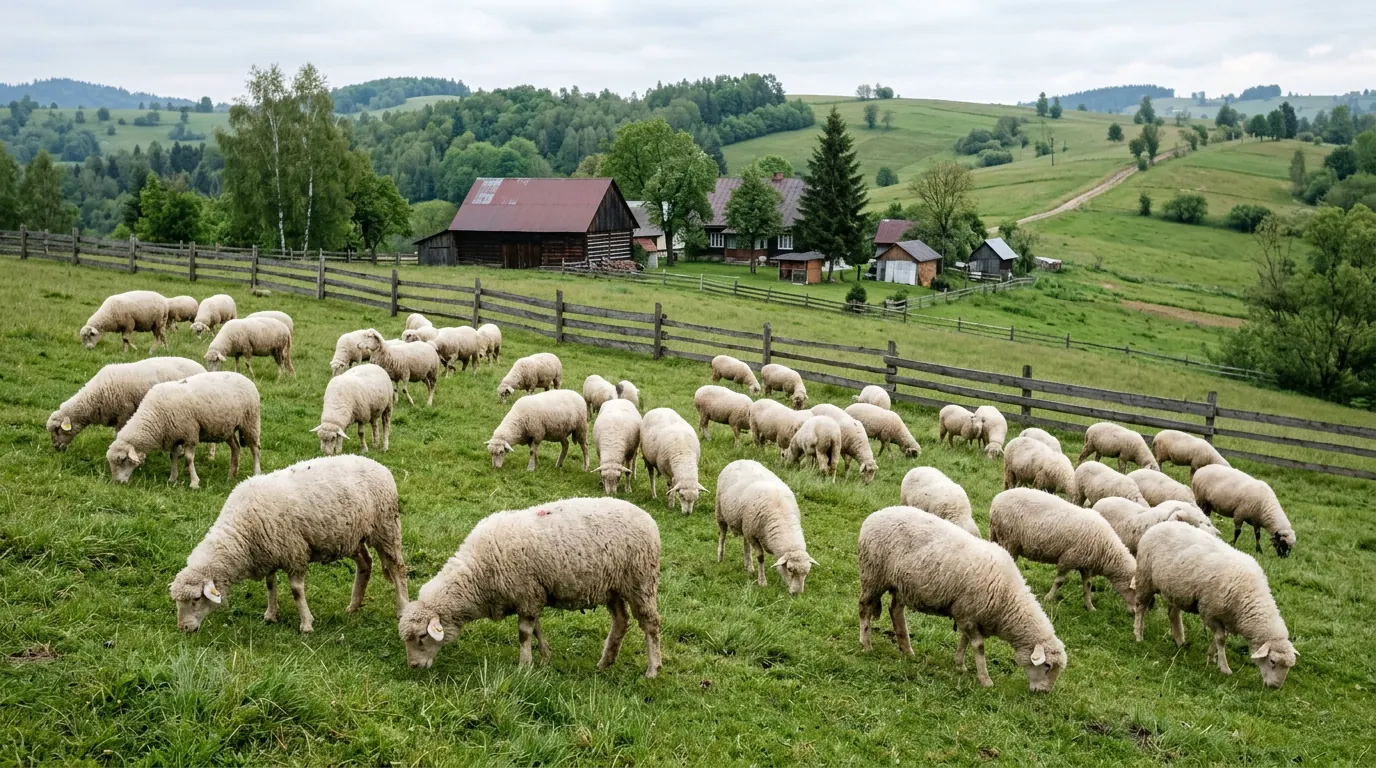
An ewe is pregnant for about 150 days on average. Individual ewes lamb a few days earlier or later, so count the due date from the day of mating and allow about a week either way. If you run a breeding season to the plan described in our article on sheep breeding, you can work out the start and end of lambing from the calendar on the day the ram goes in.
Lambing: what the terms mean
Lambing is the birth of lambs, and the lambing season is the whole period when lambs are born in the flock. On farms producing lambs for slaughter, lambing usually falls in winter and early spring. On the farm described in a monograph by IZ PIB (Poland's National Research Institute of Animal Production), ewes lambed mainly in February and March, and lambs stayed with their mothers until about 100 days of age. Pick the lambing date so that ewes have feed afterwards and lambs have a market.
What decides lambing results
The number of lambs you rear depends on the ewe's condition in the last weeks of pregnancy, calm and clean conditions at birth, and a quick response when labor stalls. According to Teagasc, every extra 5 kg of ewe weight at lambing raises lamb birth weight by 0.26 kg, which carries over into gains up to weaning. So lambing success is decided in the second half of pregnancy.
How long is an ewe pregnant and how to work out the lambing date
Gestation length and margin
Count on about 150 days from mating, roughly five months. In practice ewes lamb around that date, with a spread of a few days. Ewes carrying multiples often lamb a little earlier than those with a single lamb. Write the date next to each ewe on the day of mating and add a margin before you start watching. If the ram ran with the flock for longer, lambing will stretch over several weeks, and you must be ready for births the whole time.
Confirming pregnancy and expecting how many lambs
The most reliable way to confirm pregnancy is an ultrasound scan, done by a vet or a trained service provider. The scan also shows whether the ewe carries one lamb or twins. Use this to split the flock into groups and set feed rations. Ewes with multiples need more energy than those with a single lamb, and overfeeding single-bearing ewes raises the risk of hard births with large lambs.
Feeding and condition of ewes in late pregnancy
Ewe condition
Most fetal growth happens in the last weeks of pregnancy, so that is when a ewe feels feed shortages most. A ewe that is too thin gives birth to weak lambs and produces little colostrum. One that is too fat has a higher risk of a hard birth. Judge condition by hand, feeling the loin area, not by eye, because wool hides the real picture. For winter ration patterns, see our articles on winter feeding of sheep and on what sheep eat.
Concentrates and calcium
On the farm described by IZ PIB, the winter ration for ewes was based on maize silage, haylage and hay, with about 0.5 kg of barley grain per head per day. That is one farm's example, not a recommendation for every flock. Set the ration to the quality of your bulk feed and the number of lambs expected. According to AHDB (the UK's Agriculture and Horticulture Development Board), low blood calcium usually appears in the last four weeks of pregnancy, when the fetus needs more calcium than the feed supplies. If several ewes fall ill at once, check the ration.
Worming before lambing
Late in pregnancy ewe immunity drops, so the number of parasite eggs in the dung rises. According to HCC/AHDB, healthy adult sheep in good condition cope well with parasites, and unnecessary treatment speeds up drug resistance. The guidelines advise treating ewes as close to lambing as possible and leaving at least 10% of each grazing group untreated, preferably those in good condition. A vet chooses the drug, dose and withdrawal period. We cover the details in our article on worming sheep.
Preparing the shed and pens for lambing
Lambing pens and bedding
Prepare a dry, clean place sheltered from drafts. Build small pens where a ewe stays alone with her lambs for the first days. A pen lets her recognize her own lambs and protects them from being trampled by the flock. Change the bedding often, because damp encourages navel infections and scours. We describe space and ventilation requirements in our article on the sheep shed.
Lambing outdoors
When ewes lamb outdoors, AHDB advises keeping condition at 3 on the BCS (body condition score) scale and matching lambing date to spring grass growth. Grass should be about 6 cm tall when lambing starts. Do not feed concentrates in troughs, because it disturbs grazing and birthing behavior. Supplements in buckets or as licks can improve colostrum quality and lamb survival. Paddock planning is covered in our article on grazing sheep.
Lambing kit
Keep at hand: disposable long gloves, lubricant, clean towels, navel disinfectant, a bottle with a teat and frozen spare colostrum, a heat lamp and your vet's phone number. Clean and disinfect pens between births. Write down in a notebook the date, number and sex of lambs and notes on how the birth went, because this data helps when you assess your ewes.
Lambing: signs, stages and when to help
Signs that birth is near
A few hours before birth the ewe leaves the flock, paws at the bedding, gets up and lies down often, and her udder is tight. The vulva swells and mucus runs from the vagina. Give her peace and watch from a distance, because stress can delay birth. Most ewes lamb without help, and stepping in too early brings dirt into the vagina and irritates it for no reason.
A normal lambing
In the normal position the lamb comes out front feet first with its nose resting on them. During contractions the ewe lies or stands and pushes. When you see the water bag, birth is nearing its end. After a lamb is born the ewe usually licks it clean herself. With twins the second lamb follows after a short pause. After birth the womb expels the afterbirth, and you remove it from the pen so it does not stay in the bedding.
When to help and when to call a vet
Help when pushing goes on for long with no visible progress, when you see only one foot or just the head, or when the ewe is exhausted. Wash your hands and arms, put on gloves, use lubricant and gently correct the lamb's position. Pull only with a contraction and downward, toward the ewe's hocks. If you cannot feel the position, the lamb is too big and birth is not progressing, call a vet. Damage from pulling too hard can be permanent.
Colostrum, lamb care and birth problems
A lamb's first hours
Make sure the lamb breathes, clear mucus from its mouth and nose, and disinfect the navel. The lamb should stand and suckle colostrum in the first hours of life, because colostrum gives it immunity and energy. If the ewe has no milk or rejects the lamb, bottle-feed colostrum, preferably from another ewe or from frozen stock. Check that lambs are fed: full lambs lie quietly, hungry ones cry and wander.
Prolapse and low blood calcium
AHDB describes vaginal prolapse as one of the main causes of ewe death at lambing. It occurs in late pregnancy, more often with multiples, and overfeeding raises the risk. The ewe needs quick help and often treatment from a vet. The advice is to mark and cull ewes that have had it. Low blood calcium shows as a wobbly gait, lying down and growing dullness. It needs treatment at once, and the vet sets the drug and dose.
Registration and records
Record the ear tag numbers of the mothers and the birth date for each lamb, because this makes flock selection and later reporting easier. For lamb tagging rules and reporting deadlines, see our article on registering sheep with ARiMR (Poland's Agency for Restructuring and Modernisation of Agriculture). For a general introduction to running a flock, read our guide to sheep farming.
Frequently asked questions
How long is a sheep pregnant?add
An ewe is pregnant for about 150 days on average, roughly five months. Individual ewes lamb a few days before or after that date, and ewes with multiples often a little earlier.
How can you tell a ewe is about to lamb?add
The ewe leaves the flock, is restless, paws at the bedding and often lies down and gets up. Her udder is full and the vulva is swollen with mucus running from it. When you see the water bag, labor is under way.
When should you help a ewe give birth?add
Help when pushing goes on for long with no progress, when you see only one foot or just the head, or when the ewe is exhausted. Work in clean gloves with lubricant. In difficult cases call a vet.
What should you do with a lamb right after birth?add
Clear its nose and mouth, disinfect the navel and make sure the lamb suckles colostrum in the first hours of life. If the ewe has no milk or rejects the lamb, bottle-feed colostrum, preferably from another ewe or from frozen stock.
Should you worm ewes before lambing?add
According to HCC/AHDB guidelines, ewes are treated as close to lambing as possible, and at least 10% of each group in good condition is left untreated to slow parasite resistance. A vet chooses the drug, dose and withdrawal period.
When is the best time to plan lambing?add
It depends on your feed base and market. On the farm described by IZ PIB, lambing was mainly in February and March. For lambing outdoors, match the date to spring grass growth, and for lambing indoors, to pen capacity.
Sources & resources
- linkAHDB — Reducing lamb losses for Better Returns (Sheep Manual 14)
- linkTeagasc — Teagasc Sheep Open Day 2022
- linkIZ PIB (monograph) — Potential of native sheep breeds in natural food production: tradition, regionality, quality
- linkHCC / AHDB / QMS — Worm control in sheep – for better returns
Prepared by: DlaFerm Team based on data from the sources listed · Publisher: INSTA-TECH sp. z o.o.
Record treatments and withdrawal periods during lambing too
The Treatment and withdrawal module in DlaFerm.pl lets you keep a log of treatments and track withdrawal periods on your farm. Create a free farm account or get in touch, and we will show you how it works in practice.
Phone
+48 796 258 151