Worming sheep: parasites, timing and withdrawal periods
Worm sheep when the flock needs it, not on a fixed calendar. A fecal egg count, the condition of the animals and the state of the pasture tell you when. Your vet chooses the drug and the dose, and you keep track of the withdrawal period.
verifiedFrom the team that has organised work on poultry farms for years.
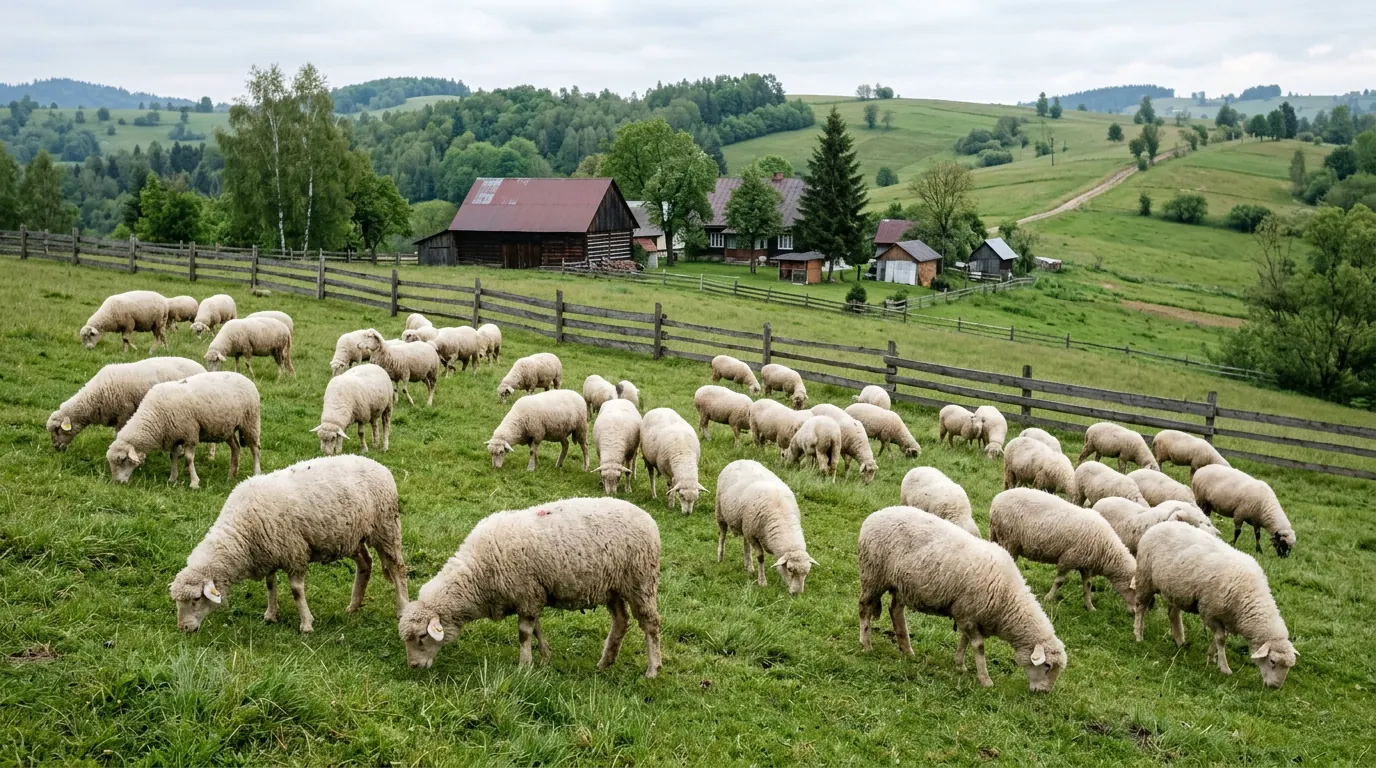
Worming pays off when it is targeted. Dosing the whole flock "just in case" selects for the parasites that tolerate the drug best, and over time the drug stops working. The British HCC, AHDB and QMS programs say it plainly: frequent and wrong use of cheap products led to resistance. So you start with a fecal egg count and only then reach for a drug.
What to worm sheep with
We do not name products or doses, because choosing them is the job of your vet. The vet matches the active substance to the parasite species, the age and weight of the animals, and what works in your flock. The rule is simple: the right product, at the right time, for the right animal, at the right dose. Before dosing, check the leaflet for the withdrawal period for milk and meat and write it in your treatment records. Parasites are only one group of health problems; we cover the rest in our guide to sheep diseases.
Sheep parasites: how to spot a problem
Signs in the flock
Sheep with a heavy parasite load lose weight despite good feed, have dull wool and scour. Pale membranes of the eye and gums point to anemia. Penn State Extension describes similar signs in goats: weight loss, rough coat, diarrhea and anemia. You will see them first in lambs and in ewes after lambing, because these groups have weaker immunity. Do not treat signs alone as a diagnosis, since other diseases look similar, including nutritional deficiencies. Check that the ration is right; our guide on what sheep eat can help.
Fecal egg count instead of guesswork
You send a fresh pooled fecal sample from several animals to a laboratory. According to Teagasc, a result of 600 eggs per gram or more may indicate that treatment is needed. The test lets you treat only when necessary and keep some drug-susceptible parasites on the pasture. Ask your vet how to collect and label the sample, and how often to repeat it during the season.
When to worm sheep
Timing depends on the flock, not the date
We cannot give you a fixed day of the year, because it depends on the pasture, the weather, the age of the animals and the egg count result. You set the right moment with your vet, based on samples taken during the grazing season. Watch the most exposed groups: lambs after weaning and ewes around lambing, which we cover in our guide to lambing. Record treatments in the farmer's deadline calendar along with other flock work.
Quarantine for new animals
The British worm control manual advises against bringing drug-resistant parasites onto your farm. So you keep every purchased animal apart before it joins the flock. Your vet will decide how to worm it and when to check that the treatment worked. Release treated animals onto pasture only after you have worked out how to limit the spread of resistant parasites. Write down the arrival date, ear tag number and treatment date. We explain registration rules in our guide to registering sheep with ARiMR (Poland's Agency for Restructuring and Modernisation of Agriculture).
Resistance and checking the drug
Does the drug work in your flock
Teagasc recommends checking a product's effectiveness with a fecal egg count after treatment. You take a pooled sample 2 weeks after drugs marked white or clear, and just 1 week after products marked yellow. If the sample still contains parasite eggs, the drug is not fully working and you need to change your approach. Irish advisers stress that the best product is the one that works on your farm. Ask your vet how to run the check.
How to slow resistance
The HCC, AHDB and QMS advice comes down to a few rules: treat only the animals that need it, give a dose matched to body weight, and use pasture management that reduces your reliance on drugs. Do not treat the whole flock without testing. According to the authors of the British manual, newer drug groups may keep working for many years if you use them carefully, for example in quarantine and once a season. Agree the season's plan with your vet.
Pasture as a worming tool
Fewer parasites through grazing
Parasites spread through grass where infected animals grazed earlier. By rotating paddocks you cut the number of larvae sheep eat with the grass. It also helps to keep susceptible lambs apart from older, stronger sheep, on the cleanest paddocks. We describe how to organize grazing in our guide to grazing sheep. Plan your pens and fencing with the help of our article on sheep pens and fencing.
The sheep house in winter
In the building, dry bedding, the right stocking density and ventilation matter, because damp encourages disease. We cover winter feeding in feeding sheep in winter. Housing conditions are described in our article on the sheep house. Animals in good condition cope better with a parasite load.
Withdrawal period after worming
The withdrawal rule
The withdrawal period is the time after the last dose when meat or milk from the animal must not go to human consumption. The product leaflet or your vet gives its length, and it differs between drugs and between milk and meat. Watch it especially closely for dairy sheep whose milk goes into cheese, described in our guide to sheep milk. Before you sell animals for slaughter, check that the full withdrawal period has passed since treatment. Record the treatment date, product name and ear tag numbers straight away.
Frequently asked questions
How often should you worm sheep?add
There is no single schedule for every flock. How often depends on the fecal egg count result, the age of the animals and pasture conditions. Agree the season's plan with your vet.
What do you worm sheep with?add
Your vet chooses the product and the dose. The vet considers the parasite species, the weight of the animals and how well drugs work in your flock. Choosing the dose yourself encourages resistance.
How do you tell if sheep have worms?add
Watch for weight loss, scouring, dull wool and pale membranes. A fecal egg count at a laboratory gives certainty. According to Teagasc, a result of 600 eggs per gram or more may indicate that treatment is needed.
Can you worm pregnant sheep?add
It depends on the product, because not every one is approved for pregnant or lactating sheep. The leaflet has the information, and your vet makes the decision.
What is a withdrawal period after worming?add
It is the time after the last dose when milk and meat must not go to human consumption. You find its length in the product leaflet, or your vet sets it. Note the treatment date in your records.
Why quarantine new sheep?add
A new animal can bring in drug-resistant parasites. Quarantine and worming under your vet's supervision keep them out of your flock.
Sources & resources
- linkHCC / AHDB / QMS — Worm control in sheep – for better returns
- linkTeagasc — Teagasc Sheep Open Day 2022
- linkPenn State Extension — Agricultural Alternatives: Dairy Goat Production
- linkGłówny Inspektorat Weterynarii (Chief Veterinary Inspectorate) — gov.pl/web/wetgiw
Prepared by: DlaFerm Team based on data from the sources listed · Publisher: INSTA-TECH sp. z o.o.
Record treatments and track withdrawal periods
The "Treatment and withdrawal" module in DlaFerm.pl helps you keep records of the drugs you give and track withdrawal dates. See <a href="/ewidencja-leczenia-i-karencja-lekow">how treatment records work</a> and create a free farm account, or get in touch with us.
Phone
+48 796 258 151