Sheep Milk: Milking, Cheese and Oscypek
Sheep milk is high in dry matter, so cheesemakers value it. We cover what research shows about sheep cheese composition, the EU requirement for oscypek and what decides whether milking sheep pays.
verifiedFrom the team that has organised work on poultry farms for years.
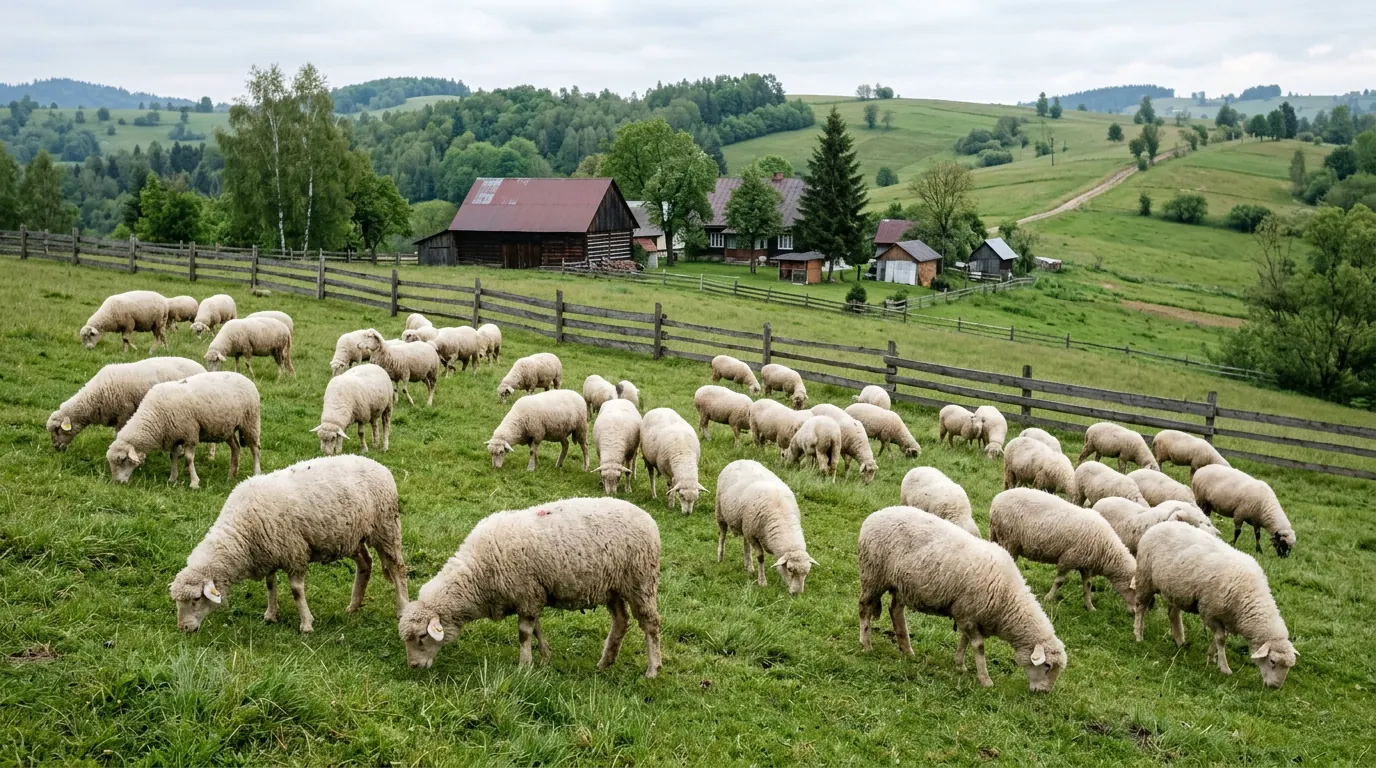
Sheep milk is mainly a raw material for cheese. People rarely drink it, and sales rest on cheesemaking. Research by IZ PIB (Poland's National Research Institute of Animal Production) compared three traditional cheeses (sheep, cow and goat). The sheep cheese had the most dry matter, fat, crude ash and calcium. For small farms, dairy sheep and sheep cheese can bring more income than selling lamb alone. Before you buy a milking machine, check the breed, the pens and the market.
Why interest in sheep cheese is growing
According to IZ PIB, consumers show growing interest in traditional and regional food, because they link it with home recipes and health. The same monograph lists sheep, goat and mixed cheeses, including traditionally smoked ones, among true delicacies. For a farmer, that means a customer who looks for a product from a specific breed and region and will pay more than for a mass-market product.
What we know about sheep cheese composition
Dry matter, fat and protein
The study looked at three rennet cheeses from Poland's list of traditional products: oscypek (sheep), gołka (cow) and ser podkarpacki (goat). The authors report that the sheep cheese had the most dry matter, fat, crude ash and calcium. Cheeses from the milk of mountain breeds had 59.29–60.46% dry matter, 21.32–27.06% fat and 25.47–31.85% protein, and crude ash in the sheep cheeses was 5.8%. Results depend on breed, feeding and recipe, so your own numbers may differ.
Sheep milk and goat milk
Dairy goats have a longer tradition of organized milk collection in Poland. IZ PIB describes small dairies making fresh curd cheese, rennet, brined and ripened cheeses, whey cheeses, yogurts and butter, and many products reached Poland's National List of Traditional Products. The same processing routes are open to sheep milk. Collection terms for sheep milk are set locally, so when you plan sales, ask local dairies and cheesemakers about their terms.
Oscypek: what the EU rule says
Minimum dry matter
According to IZ PIB, citing a 2006 EU Council regulation, the dry matter content of oscypek must not be below 56%. In the study, oscypek made from Polish Mountain Sheep (polska owca górska) milk had 65.75% dry matter. So with a good recipe the rule is met with room to spare. If you want to sell a product under the name oscypek, ask Poland's agriculture ministry and the Veterinary Inspection (Inspekcja Weterynaryjna) what extra requirements apply to producers before you start.
Mountain breeds and regional identity
In the cited studies, oscypek was made from the milk of the Polish Mountain Sheep, its colored variety and the Podhale Zackel (cakiel podhalański). You can read about breeds in our article on sheep breeds. The IZ PIB monograph notes that consumers look for Podhale and Beskid lamb, so a native breed and a region also work as a brand.
Milking sheep: where to start
Choosing a breed
Milk yield depends first of all on breed. We describe one dairy breed in our article on the East Friesian sheep. Yield in liters depends on breed, line and feeding, so check the data with the breed association or IZ PIB. Plan milking after weaning the lambs, or in a combined system, following the breed breeder's advice.
Lambing and breeding
Lactation starts after birth, so the milking date follows the lambing date. We explain the basics in our articles on lambing and sheep breeding. When you plan the mating season, work out when you want milk to process and when you will have time for grazing and milking.
Feeding dairy sheep
Ewes in lactation need more feed than dry ewes, and a shortfall quickly shows in milk quantity and composition. We cover feeding in our articles on winter feeding of sheep and grazing sheep. Work out rations with a nutrition adviser, because they depend on breed, yield and forage quality.
Selling sheep milk and cheese
What sets the milk price
We give no amounts, because they change from month to month. Using goat milk as an example, IZ PIB describes a dairy that collected milk from farms 2–3 times a week and paid 15–30% less than dairies where the farmer delivered the milk. A payment system was also introduced that takes into account protein and fat content, bacteria count and delivery volume, with a bonus for hygienic quality. You can expect similar rules for sheep milk, but agree the contract with the specific buyer.
Your own cheese and regional products
Selling your own cheese usually gives a higher margin than selling milk alone, but it takes work, equipment and compliance with veterinary rules. Check the requirements for a processing plant and direct sales with your county veterinary officer and the Chief Veterinary Inspectorate. Before you invest, work out costs and income using our article on sheep farming profitability.
Health, registration and housing
Health of milking sheep
Disease cuts yield and spoils milk quality. You will find an overview of diseases and vaccination in our article on sheep diseases, and parasite control in the article on worming sheep. A vet always chooses the medicine and dose. Observe the withdrawal period: milk from a treated ewe is not fit to drink or process for the time stated on the medicine leaflet.
Registration and conditions
Sheep must be tagged and reported as the rules require. We describe this in our article on registering sheep with ARiMR (Poland's Agency for Restructuring and Modernisation of Agriculture). For milking, prepare a clean, dry spot and good ventilation in the sheep house. Clean milking and cooling the milk right after milking decide the bacteria count.
Frequently asked questions
Does sheep cheese have more fat than other cheeses?add
In the IZ PIB study of traditional cheeses, the sheep cheese (oscypek) had the most dry matter, fat, crude ash and calcium compared with the cow and goat cheeses. The results apply to the specific cheeses in the study.
How much dry matter must oscypek have?add
According to IZ PIB, citing a 2006 EU Council regulation, no less than 56%. In the study, oscypek made from Polish Mountain Sheep milk had 65.75% dry matter.
What milk is oscypek made from?add
In IZ PIB studies, oscypek was made from the milk of mountain breeds: the Polish Mountain Sheep, its colored variety and the Podhale Zackel.
How much does sheep milk cost?add
The price changes and depends on the buyer, milk quality and delivery method. Using goat milk as an example, collection from the farm meant a 15–30% lower price for the farmer than delivering the milk yourself. Agree the current rate with a dairy or cheesemaker.
Can you sell milk after a ewe has been treated?add
Only after the withdrawal period on the medicine leaflet has passed. A vet chooses the medicine and dose, and you should record the withdrawal period in your treatment log.
Which breed should I choose for milk?add
Start with dairy breeds such as the East Friesian, or with mountain breeds if you plan regional cheeses. Take yield data from the breed association.
Sources & resources
- linkIZ PIB — Cattle and livestock breeding over 70 years. Cattle Breeding Department, Sheep and Goat Breeding Department
- linkIZ PIB (monograph) — The potential of native sheep breeds in natural food production: tradition, regionality, quality
- linkIZ PIB (Wiadomości Zootechniczne) — Current problems in dairy goat breeding in Poland
- linkChief Veterinary Inspectorate — gov.pl/web/wetgiw
Prepared by: DlaFerm Team based on data from the sources listed · Publisher: INSTA-TECH sp. z o.o.
Track withdrawal periods after treating milking sheep
The <a href="/ewidencja-leczenia-i-karencja-lekow">Treatment and withdrawal</a> module in DlaFerm lets you record treatments and withdrawal dates, so milk from a treated ewe does not go on sale too early. Create a free farm account or get in touch.
Phone
+48 796 258 151