Is sheep farming profitable? Costs, income and budget
Selling live lambs alone rarely covers the bills. In a calculation by the National Research Institute of Animal Production (IZ PIB), direct costs per ewe exceeded the value of the live animals sold by more than PLN 300. We explain what goes into the sum and what improves the result.
verifiedFrom the team that has organised work on poultry farms for years.
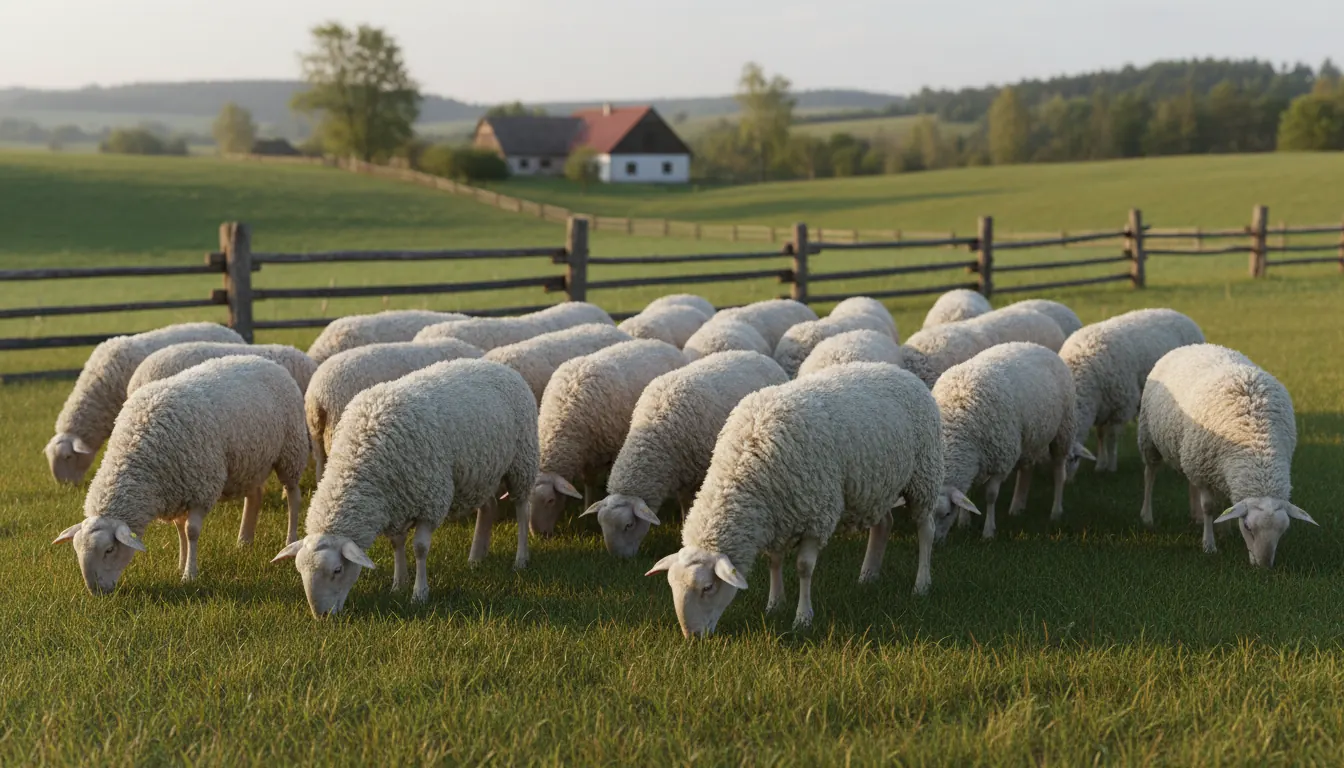
Is sheep farming profitable? It depends on what feed and labor cost you, and on whether you have income besides selling live lambs, mainly area-based subsidies. In the IZ PIB calculation for a farm with 10 ha of grassland, direct costs per ewe were between PLN 540.30 and PLN 546.53. The value of live animals per ewe in the flock was between PLN 224.32 and PLN 226.50. Live sales alone therefore ran at a loss.
Where these numbers come from
The data come from the study "Economics of sheep farming in Poland at the beginning of the 21st century" (Wiadomości Zootechniczne, 2011). The amounts are years old and would be different today, because prices of feed, live animals and labor have changed. The formula stays the same: direct costs minus the value of production, then subsidies. We built this article on that formula. We give no current prices, because they change every week.
Who sheep suit
Sheep work best where you have meadows and pasture that are not worth mowing or using in another way. The authors of the IZ PIB study on improving profitability write that using natural meadows and pasture lowers production costs. For a general overview, see our article on sheep farming.
What makes up the costs of keeping sheep
Feed is the biggest item
In the IZ PIB calculation, feed was the largest part of direct costs. At a stocking rate of 1.0 LU/ha (67 breeding ewes, 13 replacement ewes, 2 rams and 74 lambs on 10 ha), feed cost PLN 24,133.38 and total direct costs were PLN 36,200.07. The dry matter feed requirement from 1 ha was 6895 kg. The more feed you get from your own meadows and pasture, the less you buy. In winter you add hay, silage and concentrate feed. We cover the sums in our guide to feeding sheep in winter.
Cost of one ewe
A practical measure is the cost per breeding ewe. In the IZ PIB table, at three stocking rates, it was PLN 543.20 (0.33 LU/ha), PLN 540.30 (1.0 LU/ha) and PLN 546.53 (1.5 LU/ha). The differences are small. So raising the stocking rate does not by itself improve the result per animal: the number of animals goes up, but so does the feed. For your own budget, enter your own items in the table: feed, bedding, vet, ear tags, shearing and electricity.
Costs that are easy to forget
Besides feed, fencing, a shelter, drinkers and equipment all count. Electric fencing, netting and a sheepfold are an up-front outlay that you pay off over the years. We describe the rules in our article on sheep pens and fencing. Add shearing, because with many breeds the cost of shearing can be higher than the value of the wool sold. Also put your own labor in the budget, even though nobody sends you an invoice for it.
How much you earn from sheep, and from where
Live animals, meat and wool
Income per ewe comes mainly from selling lambs. In the IZ PIB calculation, the value of live animals per ewe in the flock was between PLN 224.32 and PLN 226.50. The price of a lamb depends on weight, breed, time of sale and whether you sell to a buyer, for slaughter or directly to a customer. You can check current prices with buyers and at agricultural advisory centers. We give no specific amounts, because they change from week to week.
The result without subsidies
According to the same table, the loss per ewe was between PLN 314.52 and PLN 320.03. With 67 breeding ewes and a loss of PLN 314.52 per head, that is a shortfall of about PLN 21 thousand a year. A result like this means that farming based only on selling live animals will not keep a farm going. The authors of the calculation noted, however, that the profitability of sheep farms varied widely and depended on use of subsidy instruments.
Subsidies as part of the balance
The IZ PIB study lists instruments of the EU Common Agricultural Policy, such as the single area payment and the ONW payment (support for areas with natural constraints). For many sheep farms it is subsidies, not lamb sales, that close the budget. Check current rates and conditions with ARiMR (Poland's Agency for Restructuring and Modernisation of Agriculture), because they change from year to year. Your animals must be properly tagged and reported. We explain the rules in our article on registering sheep with ARiMR.
Breed decides how many lambs you get
Breeding indicators of Polish breeds
The Institute of Animal Production (IZ PIB) compared the breeding performance of native sheep breeds in 2008–2016. In 2016 the indicator was 147.1% for the Olkuska sheep, 118.5% for the colored variety of the Polish Mountain sheep, 117.3% for the Podhale Zackel (cakiel podhalański) and 111.1% for the Wrzosówka. The Świniarka had 98.5% and the Uhrusk 96.6%. The gap is wide. The more lambs per ewe, the lower the cost per lamb, because you divide the cost of keeping the mother across more animals.
How to choose a breed for your conditions
High fertility is not enough. The breed must suit your feed, your land and your buyers. Dairy, meat and wool breeds have different needs and different sources of income. You will find the most popular ones in our overview of sheep breeds, and we show a dairy breed using the East Friesian sheep as an example. Breeding, heat and choice of ram affect the number of lambs, so also read about sheep reproduction.
How to improve the profitability of your flock
Cheaper feed from pasture
The simplest way to lower costs is to get more feed from your own land. IZ PIB points out that natural meadows and pasture lower production costs and improve the quality of sheep products. Well-run grazing with paddocks lengthens the period without bought feed. We describe the rules in our article on grazing sheep. The budget shows that raising the stocking rate without your own feed does not improve the result per ewe.
Meat sales and export
The authors of the study "Improving the profitability of sheep production in Poland" see a chance in widening exports, not only of live animals but also of sheep meat. They also write that lamb and mutton have high flavor value and that their fat contains omega-3 and omega-6 acids. They propose simplifying sheep registration, easing rules on trade in slaughter materials and allowing the sale of meat from on-farm slaughter. These are the authors' proposals, not rules in force.
Fewer lamb losses
Every lamb that dies is the cost of keeping its mother with no income. So give attention to births and the first days of life: a clean place, colostrum, watching the ewes. We cover this in our guide to lambing. When you treat animals, remember that the vet chooses the medicine and dose, and you keep to the withdrawal period before sending animals to slaughter.
How much does a sheep cost
What the price depends on
The price of a sheep depends on breed, age, sex and origin. A ewe with breeding records costs something different from a lamb from the market or an animal for slaughter. A breeding ram with good breeding value costs more than an ordinary one. We give no specific amounts, because they change from season to season. Ask several breeders, check adverts and contact the breed associations.
How to work out the cost of buying a flock
On top of the price of the animals, add transport, ear tags, tests, fencing and feed for the first months, before you sell your first lambs. Start with a small number of animals and work out your own cost per ewe after the first year. Only with that number decide whether to enlarge the flock. You can do simple sums in our calculators for farmers.
Frequently asked questions
Is sheep farming profitable?add
Selling live animals alone usually does not cover costs. In the IZ PIB calculation, the direct cost per ewe (about PLN 540) was higher than the value of live animals (about PLN 225). The result improves with your own feed from pasture, area payments and a breed with high fertility.
How much does it cost to keep one sheep for a year?add
In the IZ PIB calculation, direct costs per breeding ewe were between PLN 540.30 and PLN 546.53, depending on stocking rate. The data come from the early 21st century, so today the amounts would be higher. Work out your own costs for feed, vet and bedding.
How much does a sheep cost?add
The price depends on breed, age, sex and origin. A breeding ewe, a lamb and an animal for slaughter have different prices. You can check current amounts with breeders, in adverts and with the breed associations.
How many sheep can you keep on 10 ha?add
In the IZ PIB calculation, at a stocking rate of 1.0 LU/ha, 10 ha carried 67 breeding ewes, 13 replacement ewes, 2 rams and 74 lambs. At 0.33 LU/ha it was 22 ewes, and at 1.5 LU/ha it was 100. The real number depends on the yield of your meadows.
Are subsidies enough to make sheep farming pay?add
On many farms, subsidies such as the single area payment and the ONW payment decide whether the result is positive. Check current rates and conditions with ARiMR. Remember to tag and report your animals properly.
Which sheep breed is the most profitable?add
There is no single answer, because the breed must suit your feed and your buyers. In IZ PIB data for 2016, the Olkuska sheep had the highest breeding performance indicator (147.1%). Compare breeds by fertility, production type and your own conditions.
Sources & resources
- linkIZ PIB (Wiadomości Zootechniczne) — Economics of sheep farming in Poland at the beginning of the 21st century
- linkIZ PIB (Wiadomości Zootechniczne) — Improving the profitability of sheep production in Poland
- linkIZ PIB (Wiadomości Zootechniczne) — Development of native sheep breeds in Poland in 2008–2016
- linkARiMR — gov.pl/web/arimr
Prepared by: DlaFerm Team based on data from the sources listed · Publisher: INSTA-TECH sp. z o.o.
Keep treatment and withdrawal records in one place
The DlaFerm "Treatment and withdrawal" module helps you keep track of withdrawal periods before selling animals and keep records of treatments. Create a free farm account or get in touch with us.
Phone
+48 796 258 151