Cameroon sheep: care, meat and housing needs
The Cameroon sheep is a small hair sheep. It grows short hair instead of wool, so it is never shorn. People keep it mainly for meat and on small farms. We cover what the barn, the pasture and the paperwork require.
verifiedFrom the team that has organised work on poultry farms for years.
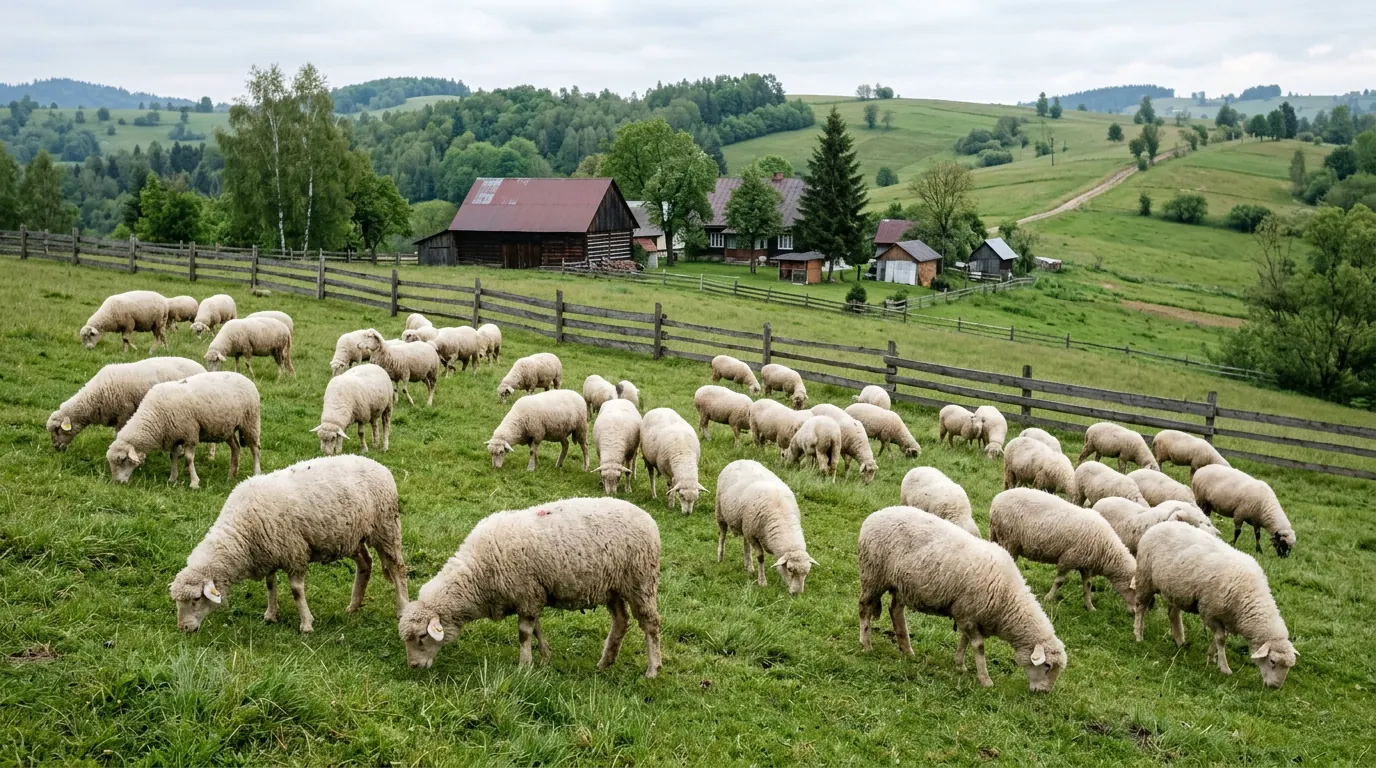
The Cameroon sheep is a breed of West African origin, kept in Europe as a hair sheep. It has a short, close coat instead of a fleece, so you have no shearing and no trouble selling wool. For a keeper with a few hectares of grass it is a low-labor breed, but the market is limited: you sell the meat yourself, and breeding stock is found among private breeders.
Is it a meat breed?
Yes, but with a modest carcass weight. The Cameroon sheep is small and light, so it does not compete with true meat breeds such as the Texel, which are built for muscle. Its advantage is low-input keeping: the hair coat replaces shearing, and the animal copes well with grazing. For the general rules of starting a flock, see our guide to sheep farming.
What it looks like and how it differs from other sheep
Hair instead of wool
The main trait is the lack of a fleece. The Cameroon sheep has a short, smooth coat, and keepers describe a longer, denser undercoat in winter. That means no shearing, no shearing fees and no pile of unsold wool, which has had a low value in Poland for years. The breed does have a practical downside: it tolerates cold, wet and windy spots worse than woolly breeds, so the barn must be dry and sheltered from drafts.
A breed outside the national breeding program
The breed list in the monograph by IZ PIB (the National Research Institute of Animal Production), which covers Poland's national breeding program, does not include the Cameroon sheep, either among sire breeds (Suffolk, Blackheaded, Texel, Charollais) or among dam breeds (Merino, the Polish Mountain Sheep and others). So you will not find national selection indexes or official performance results. The quality of an animal depends on the breeder's judgment, the pedigree and the health of the flock you buy from.
Cameroon sheep for meat
What to expect from the carcass
The Cameroon sheep gives a small carcass, and lambs are usually sold whole or as half carcasses to private customers. Keepers describe the meat as mild, but taste depends on slaughter age and pasture, so do not treat that as a guarantee. Before you buy a flock, work out how many lambs you can realistically sell in a season and to whom. With a small carcass, the cost of the trip to the abattoir per animal is higher than with heavy breeds.
Slaughter and sale
Meat for sale must come from animals slaughtered in an approved plant or sold through the forms of direct sale the rules allow. The county veterinarian (powiatowy lekarz weterynarii) sets the rules for your farm, so ask before you announce any sales. You can also check the rules on the website of the Chief Veterinary Inspectorate (Główny Inspektorat Weterynarii). If an animal is treated, a withdrawal period applies: your vet names the drug and its withdrawal period, and the lamb must not be slaughtered before it ends.
Meat and animal prices
We give no amounts, because lamb and meat prices change with the season, and for rare breeds they depend on the deal with the customer. The biggest factors are age and weight at slaughter, distance to the buyer, the form of sale (live animal, carcass, portions) and the holiday season. Check current rates with local breeders, agricultural advisory centers and classified ads.
Requirements: barn, run and floor space
How much barn space
WODR Poznań (the Greater Poland Agricultural Advisory Centre) describes the requirements of the "Animal Welfare" eco-scheme in Poland's CAP Strategic Plan for 2023–2027 and gives minimum floor space for sheep. For a ewe over 12 months old with a lamb, the standard is at least 2.5 m² plus 0.7 m² for each further suckling lamb. With raised welfare, the requirement is at least 3 m² and 0.84 m² for each further lamb. For females aged 6–12 months it is 1.5 m² under the standard and 1.8 m² under the eco-scheme. The breed is small, but the norms apply to the species, so do not scale them down.
Grazing and run
The eco-scheme for sheep requires grazing or access to a run for at least 120 days in the growing season, and living space at least 20% larger. Check payment conditions and the status as of 23.11.2026 with ARiMR (Poland's Agency for Restructuring and Modernisation of Agriculture), because program rules are sometimes changed. Cameroon sheep cope well with heat, but they need shade and a dry place in the rain. The fence must be tight: a small animal slips through gaps more easily and falls prey to a dog or fox more easily.
Bedding and dryness
Without a thick fleece, damp is a bigger problem for this sheep than frost. Keep the bedding dry and topped up regularly, avoid drafts at animal height, and ventilate well above the flock. A separate pen or corner for lambing and the first days afterward makes it easier to look after the lamb.
Feed, parasites and prevention
What to feed
The base is pasture or meadow plus good-quality hay. We cover rations, the transition period and supplementary feeding in our guide to what sheep eat. Small breeds are easy to overfeed, so judge body condition instead of simply adding feed. A nursing ewe needs more energy than a dry one, and constant access to water in a drinker is a must all year.
Parasites and disease
Gut parasites are the biggest constant threat to sheep on pasture. British materials, including the HCC/AHDB/QMS guide to worm control in sheep, recommend planning grazing and using fecal egg counts instead of worming "by the calendar". Your vet chooses the drug, the dose and the timing, and you should keep treatment and withdrawal records up to date. The Veterinary Inspection (Inspekcja Weterynaryjna) has published a leaflet for keepers on bluetongue (BTV), among other sources; your vet decides on vaccination.
Biosecurity for a small flock
A small flock is not safer: new animals, equipment and visitors bring disease in. Keep newly bought sheep apart for the period your vet recommends before you join them to the flock. Clean footwear and tools after visits from outsiders. The biosecurity plan generator helps with this, and the QR entry log records who comes onto the farm.
Breeding and rearing lambs
Prolificacy and rearing
Keepers describe Cameroon sheep as fertile, but prolificacy depends on the line and the way they are kept, so ask the breeder for the results of the specific flock. For comparison, in a trial at Athenry Teagasc assumed 1.5 lambs reared per ewe for sheep of medium prolificacy and 1.8 for high. According to IZ PIB, lamb rearing in 2016 was, for example, 94.2% in the Wielkopolska breed and 77.4% in the Olkuska, even though the Olkuska is Poland's most prolific breed. The lesson: lambs born does not equal lambs sold.
How to cut losses
Lamb losses most often come from chilling, hunger and poor care in the first days. Provide a warm, dry lambing spot, make sure the lamb drinks colostrum, and watch the ewes during lambing. Britain's AHDB devotes a whole manual to this, "Reducing lamb losses". Record mating, lambing and rearing dates, because without them you cannot tell which ewes are worth keeping.
Flock registration and documents
What to sort out before buying
Farm animals, including sheep, must be registered and identified in the national system run by ARiMR. Check the details for your flock, the deadlines and the transport documents at your county ARiMR office and with the county veterinarian. We give no act numbers, because there are no separate rules for Cameroon sheep. The rules for sheep as a species apply.
Does it pay?
The profitability of sheep keeping in Poland is analyzed by IZ PIB and CDR Brwinów (the Agricultural Advisory Center in Brwinów), among others, and their conclusions are cautious: the result depends on feed costs, labor, sales income and subsidies. With a small-carcass breed, profitability is sensitive to the cost per lamb sold. Before you buy a flock, add up the cost of fencing, the barn, testing and transport to the abattoir, then compare it with other breeds, for example the Polish Mountain Sheep.
Frequently asked questions
Do Cameroon sheep need shearing?add
No. They have short hair instead of wool, so they need no shearing. In winter they may grow a denser undercoat, but it needs no treatment.
What are Cameroon sheep kept for?add
Mainly for meat and on small farms where low labor matters. Some keepers also keep them as companion animals or to keep grass down.
What does Cameroon sheep meat taste like?add
Keepers describe it as mild, but taste depends on slaughter age, feeding and pasture. The carcass is small, so lambs are usually sold whole or as half carcasses.
How much barn space does a sheep need?add
WODR Poznań gives at least 2.5 m² for a ewe over 12 months old with a lamb, plus 0.7 m² for each further suckling lamb. The "Animal Welfare" eco-scheme requires at least 3 m² and 0.84 m². Confirm program rules with ARiMR.
Do Cameroon sheep handle winter well?add
They cope worse than woolly breeds, especially when it is wet and windy. Give them a dry place sheltered from drafts, thick bedding and constant access to water.
Who treats sheep and how long is the withdrawal period?add
Your vet names the drug, the dose and the length of the withdrawal period. The animal must not be slaughtered before the period ends, and it pays to keep treatment records up to date.
Sources & resources
- linkIZ PIB — Livestock keeping and breeding over 70 years. Cattle Breeding Department, Sheep and Goat Breeding Department
- linkWODR Poznań — Farm Guide, May 2024 (Welfare issues in keeping sheep and goats)
- linkIZ PIB (Wiadomości Zootechniczne) — Development of native sheep breed farming in Poland, 2008–2016
- linkTeagasc — Teagasc Sheep Open Day 2022
- linkHCC / AHDB / QMS — Worm control in sheep – for better returns
Prepared by: DlaFerm Team based on data from the sources listed · Publisher: INSTA-TECH sp. z o.o.
Keep treatment and withdrawal records in one place
The "Treatment and withdrawal" module in DlaFerm lets you log treatments and track withdrawal dates, which helps when you sell meat from a small flock. Create a free farm account or get in touch.
Phone
+48 796 258 151