Czarnogłówka sheep: a meat breed from Poland
The czarnogłówka (blackhead) is a meat sheep. In Poland's breeding program, the Institute of Animal Science (IZ PIB) lists it as a sire breed: you use its rams on ewes of maternal breeds. We explain what it is used for, what IZ PIB data says and what to check before you buy.
verifiedFrom the team that has organised work on poultry farms for years.
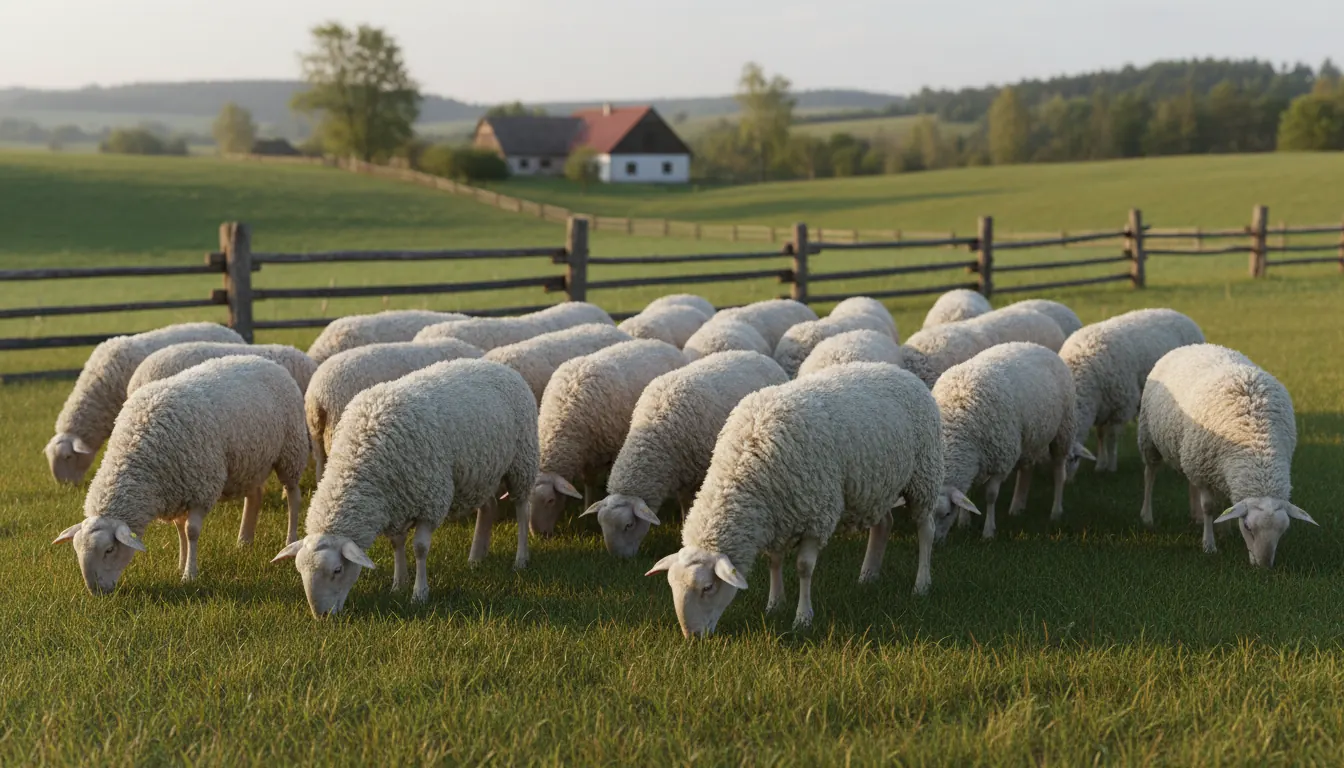
The czarnogłówka is a meat breed that Poland uses mainly on the sire side. According to IZ PIB (Instytut Zootechniki PIB, Poland's National Research Institute of Animal Production), sheep breeds in the national breeding program fall into sire breeds and maternal breeds, and prolific sheep count as maternal. The czarnogłówka sits in the sire group with Ile de France, Suffolk and Berrichonne, and with other meat breeds such as Texel and Charolaise. So you buy a czarnogłówka ram to improve the meatiness of lambs out of ewes of another breed, not to run a flock of this breed alone.
Where the name comes from
The name describes the look: sheep of this breed have a dark head. You can check this description and the breed's place in the breeding program in IZ PIB documents and with the breeders' association. We give no figures for body weight or daily gain, because they depend on the line and on husbandry. You will get hard data on the flock you buy a ram from in its performance recording results and breeding papers. For a wider overview of breeds, see Sheep breeds: meat, wool, dairy and native Polish breeds.
Czarnogłówka as a sire breed
What a sire breed means
In its monograph on sheep breeding, IZ PIB explains that breeding value is estimated with selection indexes. The INDIZ-P program serves sire flocks and INDIZ-M serves maternal flocks. The result shows how far an animal departs from the national average of the year before the evaluation. For you, this means a ram is judged by its index, not only by eye. Before you buy, ask for the evaluation results and compare them with other rams of the same breed.
What to cross it with
The institute lists as maternal breeds, among others, the Merino, the Wielkopolska sheep, Coopworth (korideil), the Pomeranian sheep, the Kamieniecka and the Polish Mountain Sheep. Prolific sheep such as the Romanov, Finnsheep and Friesian also count as maternal. That is the pool of ewes with which a ram of a meat sire breed produces commercial lambs. Ewes of light native breeds, such as the Wrzosówka or the Świniarka, are smaller. Matching ram size to ewe size affects how easily lambs are born, so discuss it with an adviser from an agricultural advisory center or with your vet.
Lamb meat quality
What the IZ PIB research shows
In a monograph on the potential of native breeds for natural food production, IZ PIB compared the meat composition of lamb carcasses from different breeds. The carcasses came from the slaughterhouse at the Pawłowice Experimental Station. Two feeding systems were tested: a standard one following the IZ PIB scheme in Kołuda Wielka, and the feeding used on the farms of origin. For the czarnogłówka, dry matter was 24.69% under standard feeding and 23.89% on the farms. For the other breeds tested it was usually in the range of about 32% to 43%.
How to read this in practice
This is a result from trial lambs, not a guarantee for every flock. The difference between the two feeding systems shows that how you feed changes meat composition within the same breed. So do not judge the czarnogłówka by one number. Compare lambs from your own flock, fed the same way, and look at slaughterhouse results: carcass weight, grading and the buyer's comments. Get lamb prices from buyers, because they change from week to week.
A czarnogłówka ram in a commercial flock
Buying a ram
A ram gives half the genes of the whole lamb crop, so it is the single most important purchase in the flock. Buy from a breeder who runs performance recording and can show the selection index. Check legs, bite, testicles and general condition, and agree tests and quarantine with your vet. Keep the new animal apart for as long as the vet advises before it joins the flock. To start, read Sheep farming: where to start, what it costs and whether it pays.
Ewes per ram and condition
We give no fixed number of ewes per ram, because it depends on the ram's age, the breeding season and conditions. Before mating the ram should be in good condition, and the ewes even and in proper condition. Record mating and lambing dates, so you can work out how many lambs each ewe rears. Teagasc gives about 1.3 lambs weaned per ewe joined for Irish lowland farms and notes that this result has barely changed in 30–40 years.
Flock health and duties
Treatment and withdrawal periods
A vet always chooses the medicine and the dose. You keep to the withdrawal period: you may not sell lamb meat or ewe milk before the withdrawal period in the product documentation ends. Keep a record of what was given, to whom and when. For intestinal parasites, AHDB's guide "Worm control in sheep" recommends a program matched to the flock, not dosing by the calendar.
Registration and veterinary supervision
Sheep must be registered with Poland's ARiMR (Agency for Restructuring and Modernisation of Agriculture) and are under the supervision of the Veterinary Inspection (Inspekcja Weterynaryjna). We checked the legal position as of 23.11.2026, but rules change, so before you buy a ram or move animals, check the ARiMR and Chief Veterinary Inspectorate websites or ask your county vet. When you buy an animal, check the ear tags and movement documents.
Does the czarnogłówka pay
What the result depends on
IZ PIB publications describe the profitability of sheep farming, among them "Ekonomia chowu owiec w Polsce na początku XXI wieku" (the economics of sheep farming in Poland at the start of the 21st century) and "Poprawa opłacalności produkcji owczarskiej w Polsce" (improving the profitability of sheep production in Poland). The key factors are the cost of keeping a ewe, the number of lambs reared and the sale price. Teagasc points out that production costs are carried mainly by the ewe, not the lambs. More lambs reared per ewe lowers the cost of each lamb. A ram of a meat sire breed improves meatiness and sales, but it cannot replace good fertility in the ewes.
Compare with other sire breeds
Teagasc reports that in Ireland 73% of lowland ewes came from one of three main sire breeds: Suffolk, Texel and Charollais. For a Polish farmer this suggests that choosing a ram means choosing among a few proven breeds. Compare the czarnogłówka with the Suffolk and Texel on ram availability, prices in your area and what your lamb buyer wants. Buyers often prefer a particular carcass type.
Frequently asked questions
What is the czarnogłówka sheep used for?add
It is a meat breed. IZ PIB lists it among the sire breeds in Poland's national breeding program. Its rams are used on ewes of maternal breeds to get meaty lambs.
Is the czarnogłówka suitable as a ewe breed?add
In its breeding program IZ PIB classes it as a sire breed, not a maternal one. For a maternal flock, pick the maternal or prolific breeds the institute lists, for example the Merino, the Wielkopolska sheep or the Romanov.
How do you judge the quality of a czarnogłówka ram?add
Ask the breeder for performance recording results and the selection index. Look at the animal: legs, bite, testicles, condition. Agree tests and quarantine with your vet.
How much does a czarnogłówka ram cost?add
The price depends on pedigree, selection index, age and whether the ram has breeding papers. Ask several breeders directly and compare offers, because prices change over time.
Where can I find reliable data on the breed?add
Start with publications from IZ PIB (the Institute of Animal Science in Kraków) and ask the sheep breeders' association about breed details. For rules and registration, contact ARiMR and your county vet.
Sources & resources
- linkIZ PIB — Livestock farming and breeding over 70 years. Cattle Breeding Department, Sheep and Goat Breeding Department
- linkIZ PIB (monograph) — Potential of native sheep breeds in natural food production: tradition, regionality, quality
- linkTeagasc — Teagasc Sheep Open Day 2022
- linkHCC / AHDB / QMS — Worm control in sheep – for better returns
- linkARiMR — gov.pl/web/arimr
Prepared by: DlaFerm Team based on data from the sources listed · Publisher: INSTA-TECH sp. z o.o.
Protect your sheep flock with biosecurity
Bringing in a new ram or letting visitors onto the farm? The biosecurity plan generator in DlaFerm helps you write down entry and quarantine rules, and the QR entry log records who was on the farm. Create a free farm account or get in touch.
Phone
+48 796 258 151