Raising lambs: colostrum, bottle feeding and weaning
A lamb's survival is decided in the first hours: colostrum, and certainty that it has suckled. We describe how to feed lambs on the ewe and from the bottle, how to trace the causes of losses and when to wean.
verifiedFrom the team that has organised work on poultry farms for years.
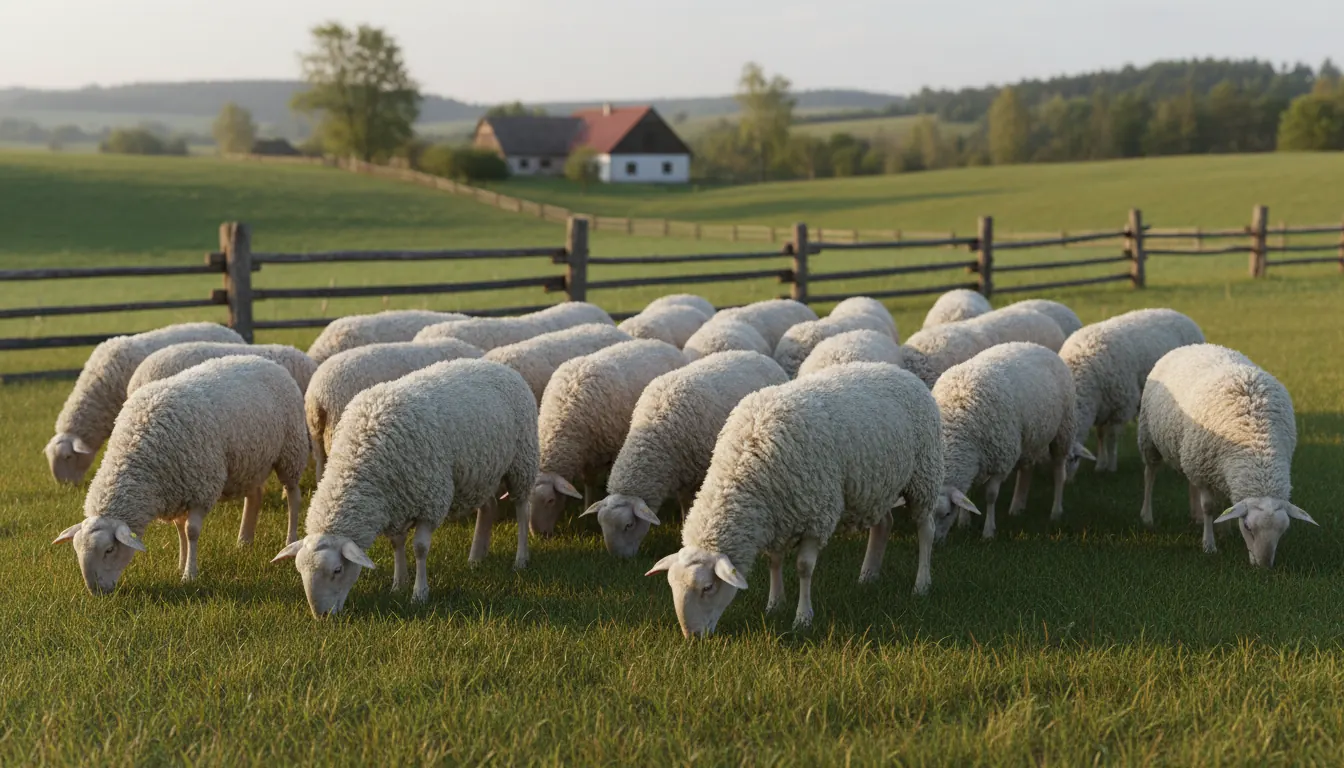
Raising lambs starts in the lambing pen, not at weaning. A lamb must get colostrum as soon as possible after birth, and you must be sure it has suckled. According to AHDB guidance (Sheep Manual 14), for every lamb that dies you should check whether it suckled within six hours. A lamb that does not suck needs feeding right away, not at the next round.
Milk for lambs: where it comes from
There are three sources of milk: the mother, another ewe acting as a foster mother, or milk replacer. With twins and triplets the ewe's milk often falls short, so lambs from triplets most often need extra feeding. AHDB lists being born a triplet among the risk factors for death from starvation. We cover milking and sheep milk in a separate guide to sheep milk, and the wider picture of the flock on the page about sheep farming.
Colostrum: the base of good rearing
Why colostrum decides survival
A lamb is born without immunity and gets it from its mother's colostrum. The later it has its first meal, the worse it absorbs antibodies. So during lambing season check the ewes often, including at night. At every birth, check that the lamb stood up, found the udder and suckled. A lamb that is weak, chilled or lying still needs warming and colostrum before it will suck on its own.
How to tell whether a lamb has suckled
The belly of a lamb that has suckled is full and tight, and its tail wags while it sucks. A hungry lamb looks hollow, bleats and follows the ewe around with no result. Check the ewe's udder too: both teats should be open and give milk. When analyzing losses, AHDB recommends asking the same questions: do the teats work, was colostrum available, and is the ewe rejecting the lamb. Write down the result of each round so you know which lambs need another check.
Colostrum from another ewe
If the mother has no colostrum, you can use colostrum from another ewe that has just lambed and has plenty. Milk it out with clean hands into a clean container. Agree the amount and temperature with your vet or an ODR adviser (Poland's agricultural advisory center), because they depend on the lamb's weight. Keep bottles and teats clean, because dirty equipment is a route for diarrhea infections.
Feeding lambs with milk replacer
When to move to bottle feeding
Lambs that go onto artificial feeding are those from triplets, orphans, lambs rejected by the mother and those whose ewe has too little milk. Always give colostrum first, and only then switch to milk replacer. Experience with calves (KPODR Minikowo, Poland's regional agricultural advisory center, with authors from SGGW, the Warsaw University of Life Sciences) shows that a calf given colostrum equal to 8.5% of its birth weight within two hours grew like calves given a longer period of transition milk. That is cattle data and we do not carry it over directly to sheep, but it shows how important it is to give colostrum quickly.
Replacer, temperature and hygiene
Use a replacer made for lambs and mix it exactly as the manufacturer's label says. Do not give cow's milk as a permanent diet without advice from a nutritionist. Wash the feeder or bottle after every feed. Fixed times and a constant milk temperature reduce diarrhea. Lambs drink readily from a feeder with teats, which makes the work easier with larger numbers. Agree the starting feeding plan with an adviser or vet, because it depends on breed and the lamb's weight.
Solid feed and water
From the first days, put fresh hay and clean water in the pen, and after a few days a small amount of concentrate. For calves, the KPODR schedule starts with a handful of concentrate, then gives it freely. This shows that rumen development depends on feed given early. The principle is the same for lambs, and you should choose the actual mix with a nutrition adviser.
Why lambs die and how to prevent it
AHDB checklist
For every death from starvation, AHDB advises checking: are both of the ewe's teats open and giving milk, was there enough colostrum, are ewes mixing up their lambs, was the stocking rate too high so ewes lost their lambs, did the lamb suckle within six hours, was it a triplet, was the lambing site exposed, and what was the weather. Print this list and write down the answers for each loss. After the season you will see the causes that repeat.
Lambing site
Dry pens, no drafts and enough space reduce losses. Stocking that is too dense makes ewes lose their lambs, and an exposed pasture in bad weather chills the young. We describe building requirements in the guide to the sheep house, and dividing land and fencing in the text on sheep pens and fencing.
Disease and treatment
Diarrhea, lameness and navel infections need an examination by a vet. Do not give antibiotics or parasite treatments on your own. The vet chooses the medicine and dose, and you must respect the withdrawal period before slaughter. Record every treatment in the treatment and withdrawal records. The biosecurity plan generator helps you organize hygiene rules and protect the flock from disease coming in.
Growth rate and data from practice
Teagasc data on prolificacy and weaning weight
According to Teagasc (Sheep Open Day 2022), ewes lambing for the first time at 2 years old had a litter size of 1.77 lambs and reared 1.41 lambs per ewe put to the ram. Weaning weight in this group was 30.4 kg. Ewes aged 3 years and older gave 1.98 lambs per litter, reared 1.60, and weaning weight reached 34.0 kg. The gap between lambs born and lambs reared is exactly the losses described above.
What this means for your flock
The Irish figures are a reference point, not a standard for a Polish farm. Breed, pasture and weather change results. The IZ PIB monograph on native breeds (IZ PIB is Poland's National Research Institute of Animal Production) says that the lamb rearing rate changes from year to year and depends on weather and pasture quality. Work out your own rate: how many lambs you reared per ewe put to the ram, and compare it across seasons. When planning sales, see the guide to lambs for slaughter.
Weaning lambs from their mothers
When to wean
The timing depends on breed, production type and the weight of the young. The IZ PIB monograph describes a farm where ram lambs destined for slaughter are weaned at about 4 months. In other systems the timing can be earlier, so decide by lamb weight and pasture condition, not by the calendar alone. The lamb should already eat solid feed well and drink water. In the first days after separation, watch appetite and health.
How to wean gently
Separate lambs and ewes so they cannot hear each other, and leave the young in a familiar place with access to good feed. Cut the ewes' feed for a few days to help the udder dry off. Check the udders for mastitis. Separate the sexes if you keep ewe lambs as replacements. If several people work for you, everyone should know the schedule, and the staff app helps with that.
Frequently asked questions
When should a lamb get colostrum?add
As soon as possible after birth, in the first hours of life. AHDB recommends checking whether the lamb has suckled within six hours. If not, give the mother's colostrum or colostrum from another ewe, or supplement as your vet advises.
What milk should I give lambs if the mother has no milk?add
Preferably a milk replacer made for lambs, mixed as the manufacturer's label says. Colostrum must be given first. Agree amounts and frequency for your breed with your vet or an ODR adviser.
Which lambs most often need bottle feeding?add
Most often lambs from triplets, orphans, lambs rejected by the mother and those whose mother has little milk. AHDB lists being born a triplet among the risk factors for death from starvation.
When should I wean lambs from their mothers?add
There is no single date. The IZ PIB monograph describes a system where ram lambs for slaughter are weaned at about 4 months. Decide by lamb weight, whether they eat solid feed and the condition of the pasture.
How many lambs should a ewe rear?add
According to Teagasc (2022), ewes aged 3 years and older reared 1.60 lambs per ewe put to the ram, and 2-year-olds 1.41. That is Irish data. Work out your own result after the season and compare it year to year.
Can I treat lamb diarrhea myself?add
Do not choose medicines and doses yourself. Call a vet, who will find the cause and set the treatment. Respect the withdrawal period and record treatments in your records.
Sources & resources
- linkAHDB — Reducing lamb losses for Better Returns (Sheep Manual 14)
- linkTeagasc — Teagasc Sheep Open Day 2022
- linkKPODR Minikowo — Rearing beef calves (guide, authors from SGGW)
- linkIZ PIB (monograph) — The potential of native sheep breeds in natural food production: tradition, regionality, quality
Prepared by: DlaFerm Team based on data from the sources listed · Publisher: INSTA-TECH sp. z o.o.
Record treatments and rounds in one place
The Treatment and withdrawal module in DlaFerm lets you record treatments and keep track of withdrawal periods. DlaFerm has no separate module for sheep, so we describe the general modules. Create a free farm account or get in touch.
Phone
+48 796 258 151