Salmonella in ducks: silent carriage, biosecurity and food safety
Ducks are very often asymptomatic carriers of Salmonella — they rarely fall ill themselves, yet they can spread the bacteria and pose a food-safety risk. Learn where the infection comes from, how to limit it with biosecurity, and how to keep proper records.
verifiedFrom the team that has organised work on poultry farms for years.
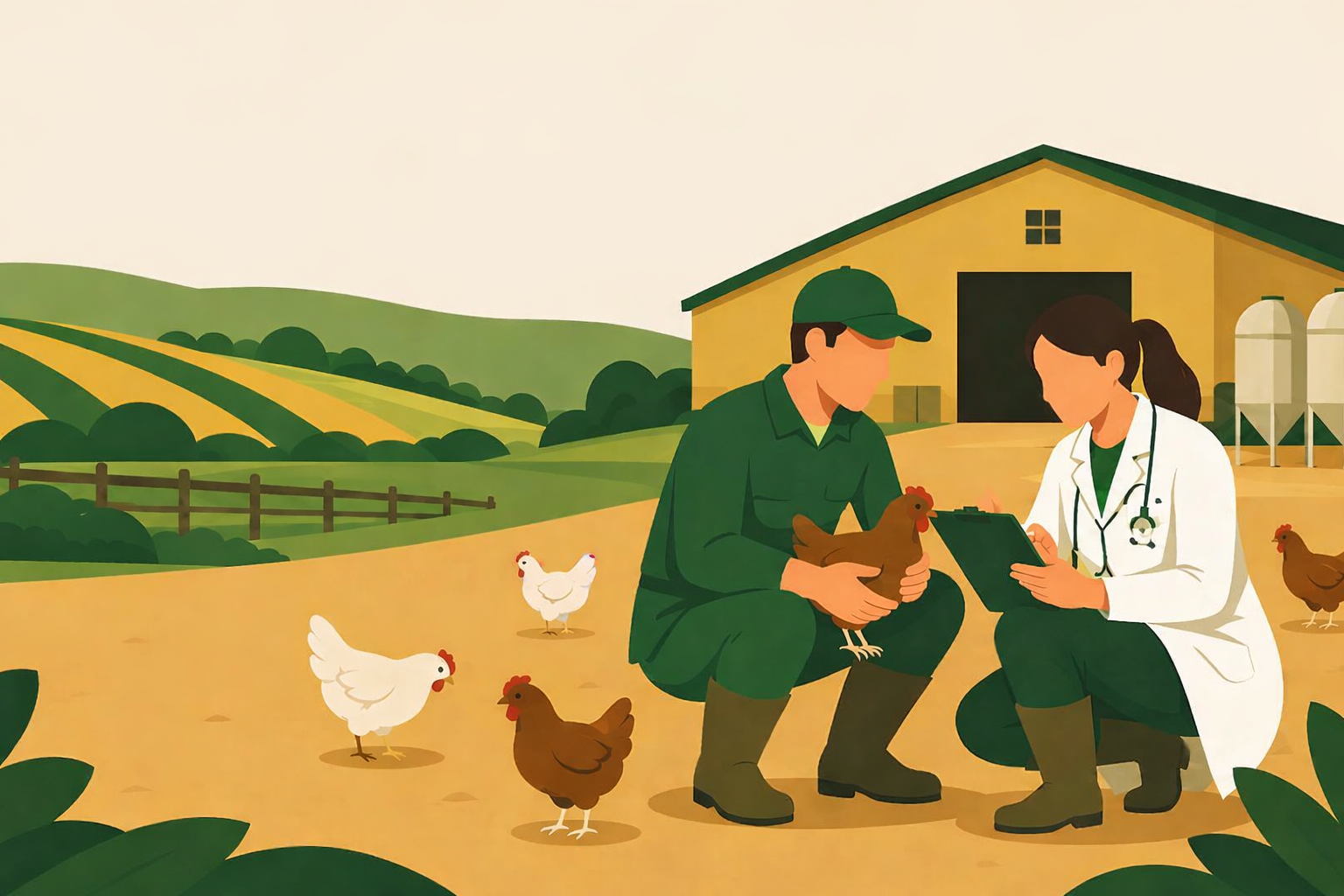
What is salmonella in ducks?
Salmonellosis is an infectious disease caused by bacteria of the genus Salmonella. With ducks, one key feature matters most: waterfowl are very often asymptomatic carriers of these bacteria. This means a duck can shed Salmonella in its droppings while showing no signs of illness at all. From the farmer’s point of view this is exactly what makes ducks an important link in the food-safety chain — even a healthy-looking flock can be a source of human infection through eggs or meat. An overview of other diseases of this species is in the Duck diseases section.
Why do ducks rarely fall ill yet remain dangerous?
In adult ducks salmonellosis is usually asymptomatic — the bacteria live in the gut without causing visible changes. That is why waiting for symptoms is risky: since carriage is often invisible, an absence of sick birds does not mean the flock is free of Salmonella. The animals most likely to fall ill are ducklings in their first weeks of life, in which diarrhoea, weakness and deaths may occur. In adult birds, then, what counts is not treatment so much as consistent biosecurity and hygiene that limit the introduction and spread of the bacteria. This is a shift in mindset: we protect not the individual duck but the whole flock and food safety.
Where do ducks pick up Salmonella?
Ducks have access to water and often come into contact with wild waterfowl, which markedly increases the risk of introducing the bacteria onto the farm. Open reservoirs, puddles and drinkers contaminated with droppings from wild birds are typical sources of infection. Add to this rodents (mice and rats spreading Salmonella in their droppings), contaminated feed, dirty litter, and equipment or footwear carrying the bacteria between sites. The more of these routes stay open, the greater the chance the bacteria reach the flock. That is why limiting ducks’ contact with wild birds and open water is one of the pillars of prevention.
Why is salmonella in ducks a food-safety issue?
Salmonella is one of the most common causes of food poisoning in people in the European Union, and poultry and eggs are a typical source of infection. Because ducks may be silent carriers, the bacteria can reach food products via eggshells soiled with droppings or via meat contaminated during slaughter. For this reason Salmonella surveillance in poultry flocks is covered by national control programmes in the EU, and the farmer is responsible for the hygiene of egg and raw-material collection. Read more about the bacterium and the control programmes on the Salmonella on a poultry farm page.
What can the farmer do about it?
Since carriage is often invisible, the key is not reacting to symptoms but daily prevention: tight biosecurity, limiting contact with wild birds, rodent control, clean feed and water, and hygiene of egg collection and slaughter. Equally important is documentation — of inspections, tests, disinfection and any corrective actions. If Salmonella is suspected, consult a veterinarian and report the matter to the Veterinary Inspection, because salmonellosis is under official supervision. We describe entry and delivery rules in the guide Vehicle entry and deliveries — biosecurity.
How Salmonella reaches a duck flock and what can be observed
Remember: the absence of signs in adult ducks does not rule out carriage — that is why prevention matters, not waiting for disease.
Asymptomatic carriage in adults
Adult ducks usually do not fall ill but shed Salmonella in their droppings. This silent carriage is not obvious at first glance, and that is precisely why it is the biggest risk to food safety.
Wild waterfowl
Contact with wild ducks, geese and other water birds is a typical route of introduction. Wild birds contaminate open water, runs and feed with their droppings.
Access to open water
Ponds, puddles and open reservoirs can be contaminated with Salmonella. Water accessible to wild birds and rodents may be a source of infection for the whole flock.
Rodents and feed
Mice and rats spread Salmonella in their droppings around stores and houses, while contaminated or poorly stored feed carries the bacteria straight to the birds’ beaks.
Diarrhoea and deaths in ducklings
The youngest birds are the most vulnerable. In ducklings salmonellosis may show as diarrhoea, weakness, ruffled feathers and increased mortality in the first weeks of life.
Dirty litter and equipment
Wet, contaminated litter and uncleaned equipment, footwear and vehicles carry the bacteria between sites and successive batches of birds.
How to limit Salmonella in ducks and how to act on suspicion
Effective protection means biosecurity and hygiene carried out every day — without waiting for symptoms — backed by reliable records.
Tight farm biosecurity
The basis is controlling who and what enters the farm: disinfection mats, work clothing and footwear, hygiene barriers and rules for vehicle entry. Details are in the guide Poultry farm biosecurity.
Limiting contact with wild birds
Protect runs and drinkers from access by wild waterfowl, limit access to open water and cover reservoirs. With ducks specifically, this is one of the most important steps.
Rodent control and clean feed
Run a continuous rodent-control programme and protect feed stores from mice and rats. Feed and water must come from reliable sources and be stored clean.
Egg-collection and slaughter hygiene
Clean nests, regular collection and proper egg storage limit shell contamination with droppings. Slaughter hygiene prevents meat contamination — which translates directly into food safety.
Testing and veterinary consultation
Salmonella is detected by laboratory tests, not by symptoms. Regular flock testing and cooperation with a veterinarian make it possible to detect carriage before it reaches the food chain. Book a visit via the Veterinarian section.
Reporting and record-keeping
Report any suspicion of Salmonella to the Veterinary Inspection — salmonellosis is under official supervision. Keep records of tests, disinfection, rodent control and treatment; with DlaFerm.pl you do this digitally within the Flock Card and treatment records.
Frequently asked questions about salmonella in ducks
Do ducks fall ill with salmonellosis?add
Adult ducks usually show no signs — they are asymptomatic carriers of Salmonella. It is mainly ducklings that fall ill, with diarrhoea, weakness and deaths. The absence of sick birds does not, however, mean the flock is free of the bacteria.
Why are ducks important for food safety?add
Because they are often silent carriers, ducks can spread Salmonella through eggs and meat even when they look healthy. Salmonella is one of the most common causes of food poisoning in people, which is why its surveillance in poultry flocks is mandatory in the EU.
Where do ducks pick up Salmonella?add
Most often from wild waterfowl, open water and puddles, from rodents, and through contaminated feed, dirty litter and equipment. Access to water and contact with wild birds mean that, with ducks specifically, the risk of introducing the bacteria is elevated.
How can the risk of Salmonella in ducks be reduced?add
Focus on biosecurity and hygiene carried out daily: limit contact with wild birds and open water, run rodent control, keep feed and water clean, and maintain egg-collection and slaughter hygiene. Since carriage is often invisible, prevention matters more than reacting to symptoms.
What should I do if I suspect Salmonella in my flock?add
Contact a veterinarian and report the matter to the Veterinary Inspection — salmonellosis is under official supervision. The vet will order laboratory tests and determine further action, including any corrective measures and disinfection.
How does DlaFerm.pl help with Salmonella surveillance?add
DlaFerm.pl lets you keep the Flock Card and records of tests, disinfection, rodent control and treatment digitally. As a result, the documentation required by veterinary supervision is organised and available during a check or inspection.
Keep biosecurity records with DlaFerm.pl
Want to see how the Flock Card and the testing and treatment records work? Write to us or create an account.
Phone
+48 796 258 151