Salmonella in turkeys: control programme, symptoms and biosecurity
Meat and breeding turkeys are covered by the national salmonella control programme. It is a zoonosis and a matter of meat safety. Learn how to limit the risk of infection, how to run flock testing and how to document farm actions.
verifiedFrom the team that has organised work on poultry farms for years.
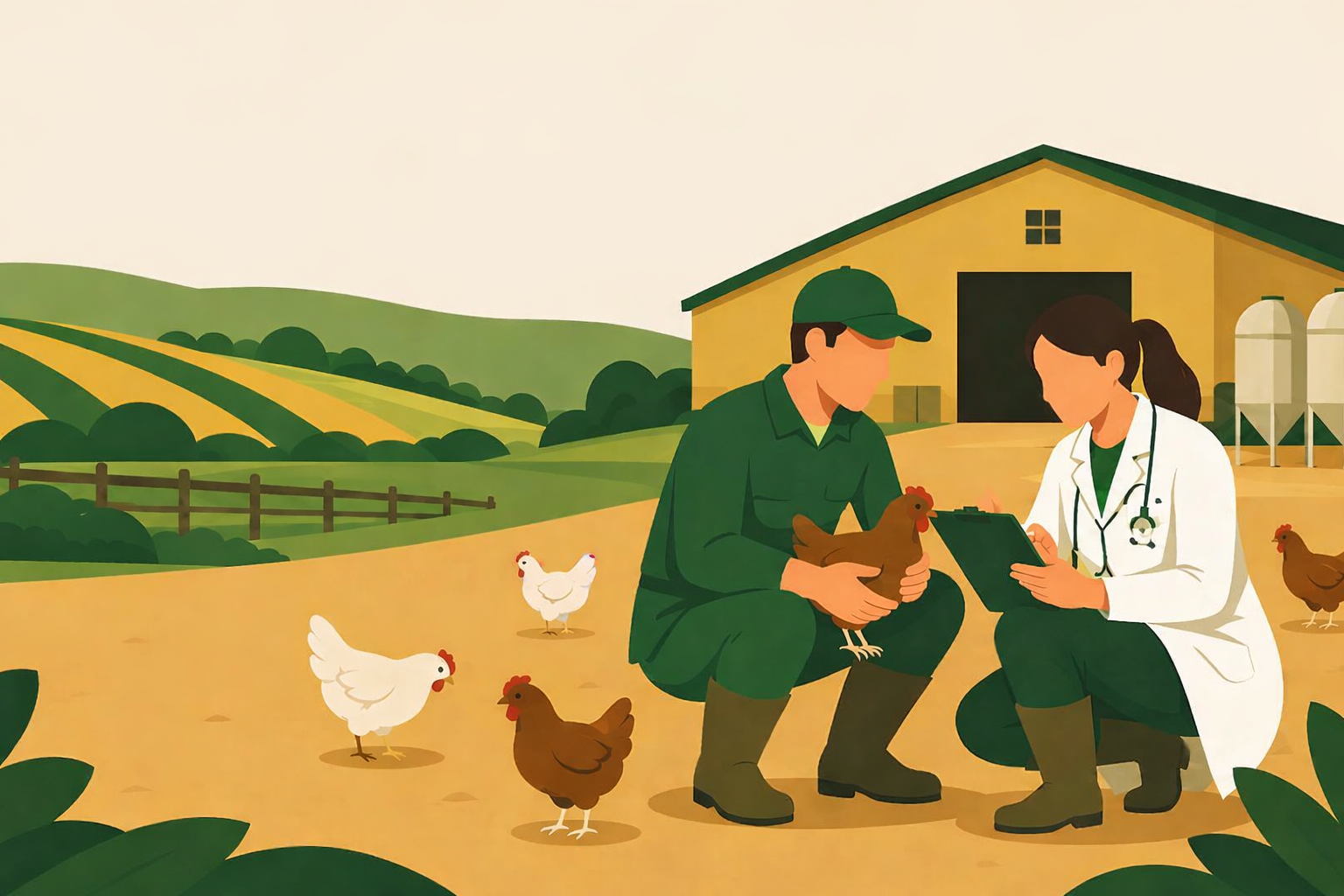
What is salmonellosis in turkeys?
Salmonellosis is an infectious disease caused by bacteria of the genus Salmonella. In turkeys, the so-called zoonotic serotypes matter most — chiefly Salmonella Enteritidis and Salmonella Typhimurium — which can be transmitted to humans and cause food poisoning. That is why salmonella is not only a flock-health issue but, above all, a matter of meat safety and public health. The bacterium lives in the birds’ intestines, is shed in faeces and contaminates litter, feed, water and equipment. More about the disease on a poultry farm: Salmonella on a poultry farm.
Why are turkeys covered by the control programme?
In Poland and across the European Union, meat and breeding turkeys are covered by the national salmonella control programme. Its aim is to reduce the number of flocks infected with zoonotic serotypes, mainly S. Enteritidis and S. Typhimurium. Under the programme, flocks undergo regular testing, and detection of a covered serotype triggers official procedures. It is a system supervised by the Veterinary Inspection, based on EU and national law. Details of the legal requirements for turkeys: Legal standards for turkey farming.
How does salmonella present in turkeys?
In adult turkeys the infection is usually asymptomatic — the bird is a carrier and sheds the bacterium without visible signs of disease. This carrier state is the most dangerous, because the infection circulates in the flock unnoticed. In poults, whose immunity is still developing, signs may appear: diarrhoea, dullness, loss of appetite, huddling near the heat source and increased mortality in the first days of life. Because the signs are non-specific, a reliable diagnosis comes only from laboratory testing, not from flock observation alone.
Why does the long turkey fattening period raise the risk?
Turkeys grow much longer than chicken broilers — fattening lasts many weeks, and for breeding flocks even months. The longer the birds stay in the building, the longer infection pressure from the environment acts on them: rodents, wild birds, insects, contaminated feed and water. This pressure accumulates throughout the rearing period, so even a single biosecurity lapse can, over time, introduce salmonella into the flock. That is why consistent protection of the building across the whole cycle — not only at placement — is especially important in turkeys.
What are the consequences of detecting salmonella?
Detection of a serotype covered by the programme (S. Enteritidis or S. Typhimurium) carries legal and market consequences. The Veterinary Inspection imposes specific procedures, which may include trade restrictions, additional testing and corrective actions on the farm. For the farmer this means real losses and the need to demonstrate that proper biosecurity and documentation were maintained. You will find an overview of other poultry-disease signs in our table: Poultry diseases — symptom table.
How salmonella affects a turkey flock
Most infections are asymptomatic — so the presence of salmonella is decided by testing, not by observing the birds alone.
Asymptomatic carriers
Adult turkeys usually show no signs but shed the bacterium in faeces. The infection circulates in the flock unnoticed until laboratory testing detects it.
Diarrhoea and dullness in poults
Young birds with immature immunity may show diarrhoea, loss of appetite, dullness and huddling near heaters. This is a signal for an urgent veterinary consultation.
Raised mortality in the first days
Infected poults may die in the first week of life. A rise in mortality right after placement always calls for diagnostics, including for salmonella.
Rodents and wild birds
Mice, rats and wild birds are the main carriers that bring salmonella into the building. The longer the turkey fattening period, the longer this pressure acts.
Contaminated feed and water
Salmonella can reach the flock via feed or water contaminated during transport, storage or by rodent droppings in the feed room and silo.
Equipment, footwear and hands
The bacterium travels on boots, tools, vehicles and hands. A lack of hygiene at entry and during handling is a common, invisible route of infection.
How to limit salmonella risk and act in line with the programme
Effective protection combines biosecurity, rodent control, clean feed and water, plus flock testing and sound documentation.
Farm biosecurity
A hygiene barrier at entry, a change of footwear and clothing, washing and disinfection of equipment and the all-in/all-out rule limit the introduction of the bacterium. We cover the basics here: Poultry farm biosecurity.
Rodent and insect control
A standing programme to control rodents and insects is key during the long turkey fattening period. Bait stations, sealing buildings and tidiness around the site cut off the main source of salmonella.
Clean feed and water
Feed from a trusted source, sealed silos and a clean drinking system limit contamination risk. Regular cleaning of the drinking line and water-quality checks are part of prevention.
Hygiene at placement and handling
Thorough washing and disinfection of the building before placement and hygiene at every entry break the chain of infection. Delivery and vehicle control: Vehicle entry and deliveries.
Flock testing under the programme
Turkey flocks are tested for salmonella in line with the national control programme. Samples are taken at set times and results are supervised by the Veterinary Inspection. The testing plan is agreed with a veterinarian.
Reporting and documentation
Detection of a serotype covered by the programme is reported to the Veterinary Inspection. It is worth recording all tests, treatments and procedures digitally — in DlaFerm.pl you keep treatment and withdrawal records and the Flock Card.
Frequently asked questions about salmonella in turkeys
Is salmonella in turkeys dangerous for humans?add
Yes. The zoonotic serotypes, mainly S. Enteritidis and S. Typhimurium, can be transmitted to humans and cause food poisoning. That is why salmonella is above all a matter of meat safety and public health, not only flock health.
How do I recognise salmonella in a turkey flock?add
In adult birds the infection is usually asymptomatic, while poults may show diarrhoea, dullness and raised mortality. The signs are non-specific, so a reliable diagnosis comes only from laboratory testing of collected samples, not from observation alone.
Why are turkeys covered by the salmonella control programme?add
Meat and breeding turkeys are covered by the national salmonella control programme because they are an important link in the meat-production chain. The programme, supervised by the Veterinary Inspection, aims to reduce the number of flocks infected with zoonotic serotypes.
What happens after a covered salmonella is detected?add
Detection of S. Enteritidis or S. Typhimurium carries legal and market consequences. The Veterinary Inspection imposes procedures that may include trade restrictions and corrective actions. The official veterinarian decides on the further course of action.
How can I limit salmonella risk during the long turkey fattening period?add
The most important things are consistent biosecurity across the whole cycle, standing rodent and insect control, clean feed and water and hygiene at placement and handling. Because turkey fattening is long, infection pressure accumulates and the rules must be maintained throughout the rearing period.
How does DlaFerm.pl help with the salmonella control programme?add
DlaFerm.pl lets you keep the Flock Card and digital records of treatment and drug withdrawal. As a result, tests, procedures and biosecurity actions are documented and available during a Veterinary Inspection visit. This makes it easier to show that the farm operates in line with the programme requirements.
Document testing and biosecurity with DlaFerm.pl
Want to see how the Flock Card and treatment records work with the salmonella control programme? Write to us or create an account.
Phone
+48 796 258 151