Ross Ranger — a slow-growth broiler for free-range farming
Ross Ranger is a slow/medium-growth broiler from Aviagen — the same company behind the fast-growing Ross 308. The Ranger is designed differently: it grows more slowly, is active and hardy, does well on range and fits premium and organic production. We show what sets it apart, its public weight, FCR and slaughter-age norms, and who it is a good choice for.
verifiedFrom the team that has organised work on poultry farms for years.
What Ross Ranger is
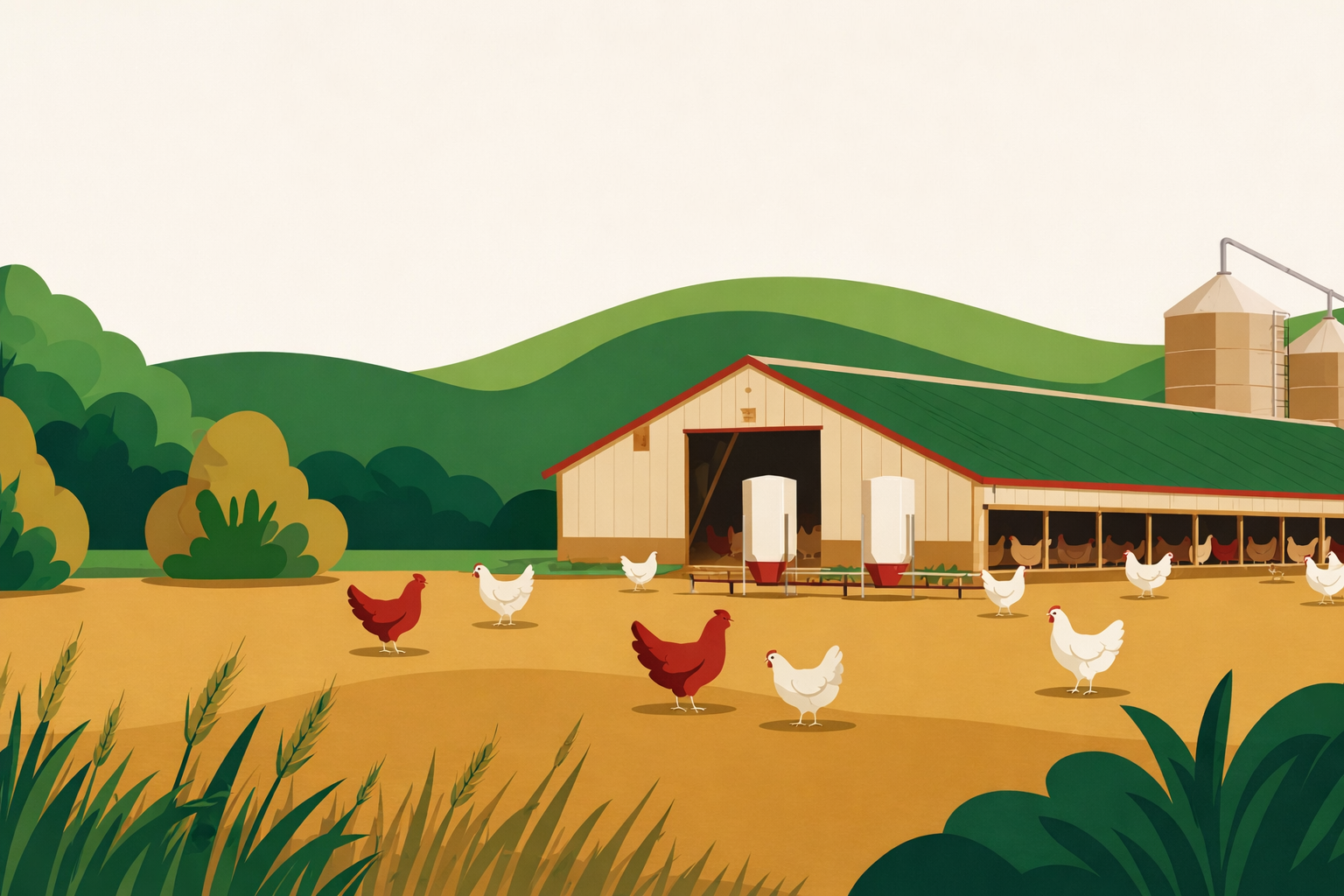
Ross Ranger is a slow/medium-growth broiler (one that grows more slowly than a classic meat chicken) from Aviagen. Unlike typical fast-growing broilers, which reach slaughter weight in about 5–6 weeks, the Ranger grows more slowly and is intended for a longer, calmer cycle with access to range. It is a meat-type bird, but geared towards quality, welfare and premium production rather than maximum growth speed. If you are just comparing genetics, start with the overview of Ross and Cobb broiler breeds.
Where it comes from and who is behind it
Ross Ranger comes from Aviagen — one of the world’s largest suppliers of meat-poultry genetics and the company behind the Ross brand. Aviagen runs its own breeding programmes and publishes management guides with growth, feed and welfare norms. The Ranger is their answer to the growing demand for a slow-growth chicken for range systems and certified premium programmes. The easiest way to understand how this line fits against the classics is the comparison Ross 308 vs Cobb 500.
Slower growth is a different farming model
A slow-growth broiler is not a “worse" bird, just a different production model. A longer cycle means more days on the farm, more feed eaten per bird and usually a higher unit cost — but in return you get meat with a different character, better welfare and access to premium and organic markets. It is closer to tradition than to industrial fattening, though still run professionally. The basics of the rearing itself are in the broiler farming guide.
Who Ross Ranger is for
The Ranger works where quality and the product’s story matter, not just the lowest cost: in free-range farming, on organic holdings, and in local and premium sales. It is a good choice for a farmer who has access to land, accepts a longer cycle and wants to stand out on the market. If you are weighing alternatives in the same bracket, see also Hubbard JA / Redbro and other Aviagen genetics such as Arbor Acres.
Run your Ranger flock properly with DlaFerm.pl
A longer cycle and a demanding premium market mean one thing: the records must be in order. DlaFerm.pl lets you keep a digital broiler Flock Card — placements, mortality, weight, feed and results — and flock records in IRZplus in one place. The IRZplus portal can be unintuitive, so you can have DlaFerm.pl file the flock-change reports for you — automatically, if you want; or you can report them yourself. So you stay in control of the cycle and are ready for an inspection and for a conversation with a premium buyer. You can create a farm account for free.
Ross Ranger — what to know
Six features that best describe this broiler: where it comes from, how it is used, how it grows, its temperament, and what market and chick availability you can count on.
Origin and breeding company
Ross Ranger comes from Aviagen — a world leader in meat-poultry genetics and the creator of the Ross brand. It is a line from a professional breeding programme, backed by management guides. The full brand context is in the overview of Ross and Cobb broiler breeds.
Use type: slow-growth, for range
It is a slow/medium-growth meat-type broiler, built for farming with access to range (free-range) and for premium and organic systems. The cycle is longer than in fast lines, and the bird is meant to use the outdoors and natural behaviour. The basics of rearing are described in broiler farming.
Weight and growth rate
Slow-growth broilers grow noticeably more slowly than fast lines: they typically reach slaughter weight at around 56 days or more, while a classic broiler does so in 5–6 weeks. The exact target weights and growth curves are given in the public Aviagen guide for the line — always check the manufacturer’s current document for your market.
Temperament, activity and hardiness
The Ranger is an active, mobile bird that makes good use of range. Slower growth supports leg health and overall hardiness, which translates into welfare over a longer cycle. This trait is wanted where birds are meant to genuinely use outdoor access, not just stand in the building.
Purpose and market
Ross Ranger targets the premium market: free-range farming, organic production, certified welfare programmes and local sales, where meat quality and the product’s story matter. It is not a bird for the cheapest mass fattening — its edge is added value, not price. Alternatives in this bracket include Hubbard Redbro.
Day-old chick availability
Chicks of Aviagen slow-growth lines are available through hatcheries and distributors that work with the producer. The availability of a specific line depends on the market and season, so it is worth arranging the chick source in advance. Always buy day-olds from a trusted, registered hatchery with a known health status.
Norms, environment and recommendation
Six areas that decide success with the Ranger: public production norms, range requirements, feeding, health, welfare and who this line really suits.
Norms: FCR and slaughter age (public)
Slow-growth broilers have a higher feed conversion ratio (FCR — feed per kilogram of gain) and a higher slaughter age than fast lines: slaughter typically happens around day 56 or later, not at 35–42 days. The exact FCR values and target weights are in the public Aviagen guide for the line — the only reliable source of norms for your planning.
Environmental and range requirements
The point of the Ranger is access to range, so you need land around the building, pop-holes and paddock management (rotation, shade, predator protection). Inside, the standard needs apply: ventilation, brooding heat, dry litter, access to water and feed. A lower stocking density than in intensive fattening is a typical condition of premium and organic programmes.
Feeding
A longer cycle means more feeding phases and more feed eaten per bird. The feeding programme is matched to the slower growth curve, often with feeds that meet a given certificate (e.g. non-GMO or organic). Stick to the Aviagen guide and your feed supplier’s recommendations, as they decide the real FCR and carcass quality.
Health and risks
Access to range means more contact with the outdoor environment and wild birds, so biosecurity demands grow along with the risk of parasites and coccidiosis. A considered preventive programme and contact with a vet are essential. Record every treatment and drug withdrawal period — it is a duty and the basis for safe sales.
Welfare and management
The Ranger’s strength is welfare: activity, leg health and natural behaviour on range. To make the most of it, manage the flock calmly — appropriate stocking, clean litter, outdoor access and mortality monitoring. Keep results in a digital Flock Card and the mandatory records in IRZplus.
Who it is for (recommendation)
Ross Ranger is a choice for a farmer who has land for range, accepts a longer cycle and a higher unit cost in return for quality, welfare and access to premium and organic markets. If you only care about the cheapest, fastest fattening, a fast-growth line from the Ross 308 vs Cobb 500 comparison will suit you better. For a wider look at poultry, see also ornamental breeds.
Frequently asked questions about Ross Ranger
How does Ross Ranger differ from Ross 308?add
Both lines come from Aviagen but are designed differently. Ross 308 is a classic fast-growing broiler that reaches slaughter weight in about 5–6 weeks and is geared towards maximum growth speed and low cost. Ross Ranger is a slow-growth broiler for free-range farming and premium production — it grows more slowly, is active and hardy, and slaughter comes much later. It is a different production model, not a better or worse version of the same thing.
At what age is Ross Ranger slaughtered?add
Slow-growth broilers are slaughtered much later than fast lines — typically around day 56 or more, while a classic broiler goes to slaughter at 35–42 days. The exact age depends on the target weight and the requirements of a specific premium or organic programme. Always check the current target weights and growth curve in the public Aviagen guide for the line.
Is Ross Ranger suitable for organic and free-range farming?add
Yes, that is exactly what it was created for. Its slower growth, activity and hardiness suit systems with access to range (free-range) and certified organic and premium production. It is a line for a farmer who has land around the building and wants the birds to genuinely use the outdoors, not just stand in the house.
What FCR and profitability does a slow-growth broiler have?add
Slow-growth broilers have a higher feed conversion ratio (FCR) and a longer cycle, so the unit cost is higher than for fast lines. In return you get access to premium and organic markets, where the price per kilogram can be markedly higher. Profitability therefore depends not on FCR alone but on whether you have a buyer ready to pay for quality. The exact FCR values are given in the Aviagen guide.
Where can I buy Ross Ranger chicks?add
Chicks of Aviagen slow-growth lines are available through hatcheries and distributors that work with the producer. The availability of a specific line depends on the market and season, so it is worth arranging the source in advance. Buy only from a trusted, registered hatchery with a known health status, and record placements in the flock register right away.
Is Ross Ranger harder to farm than an ordinary broiler?add
Not so much harder as different. A longer cycle and access to range mean higher demands on biosecurity, paddock management and parasite prevention. On the other hand, slower growth supports leg health and overall fitness, so with calm management the birds are hardy. The key is good documentation of the cycle and sticking to the Aviagen guide and veterinary advice.
Run your Ross Ranger flock under control with DlaFerm.pl
Want the longer slow-growth cycle, the results and the flock documentation under control — and to be ready for the premium market and for an inspection? We will show you how DlaFerm.pl keeps a digital Flock Card and records in IRZplus. Create a free farm account.
Phone
+48 796 258 151