Hubbard Redbro — a coloured broiler for free-range farming
Hubbard Redbro is a coloured, slow-growing meat chicken from Hubbard genetics. Red-brown plumage, sturdier legs and a calm temperament make it well suited to the range and to extensive farming. It is a choice for farmers aiming at higher-quality meat — organic, free-range or Label-type certified production. We explain where it comes from, how it grows and who it suits.
verifiedFrom the team that has organised work on poultry farms for years.
What Hubbard Redbro is
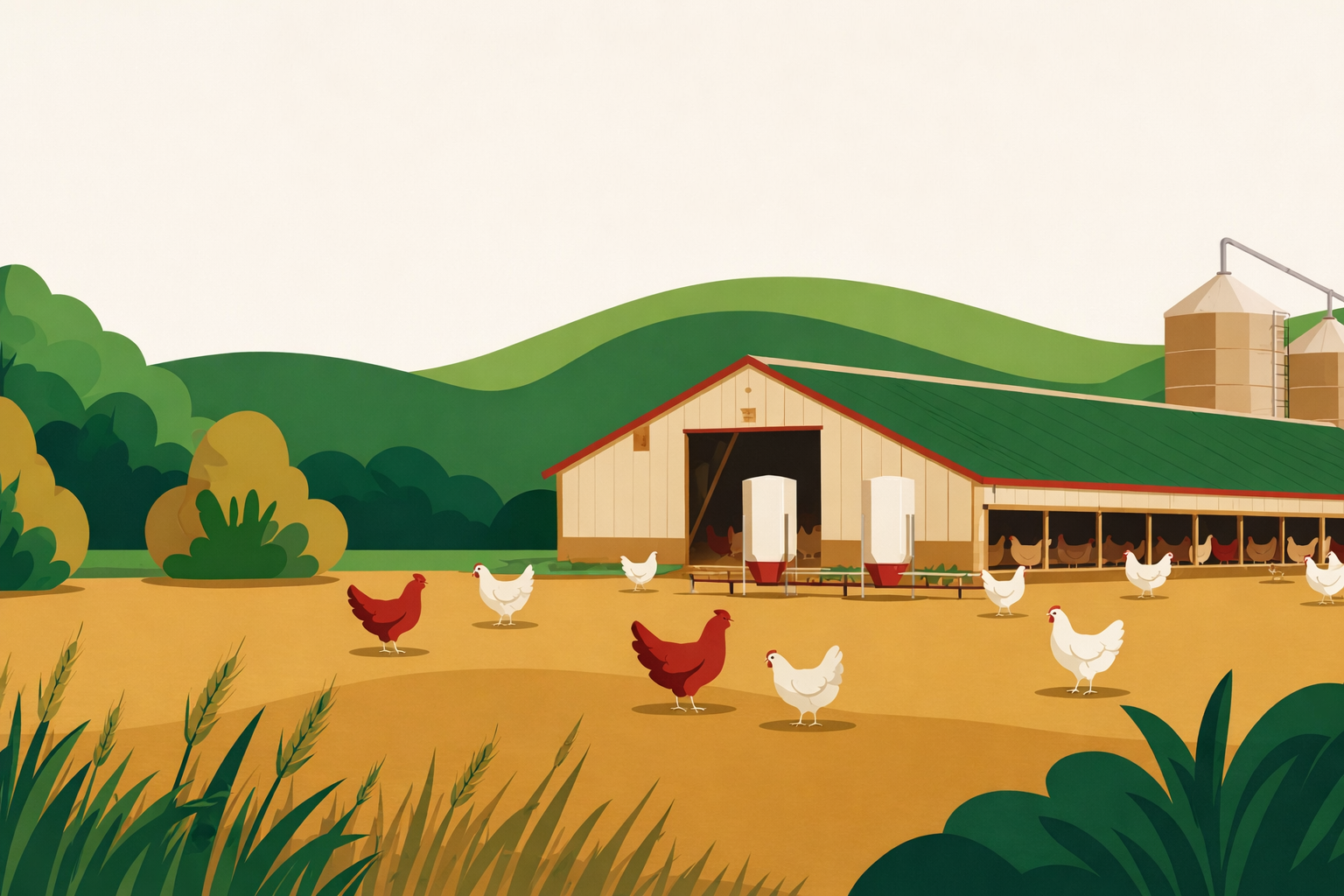
Hubbard Redbro is a coloured, slow-growing broiler — a meat chicken that grows more slowly than the classic fast-growing hybrids. It has red-brown (rusty) plumage, a robust build and is adapted to movement on the range. Genetically it comes from the Hubbard portfolio, one of the world’s leading suppliers of meat-poultry breeding stock. This is a breed designed for extensive farming and higher-quality meat rather than the fastest possible fattening. To compare approaches, see the guide to Ross and Cobb broiler breeds.
Hubbard genetics and the slow-growing type
Hubbard has long specialised in the slow-growing and coloured chicken segment alongside its classic fast-growing lines. Redbro belongs to the family of coloured birds intended for extensive, free-range and organic production. Slower growth means a longer rearing cycle and a higher unit cost, but in return you get meat with a different texture and flavour, valued on premium markets. It is a different model from the industrial broiler farming focused on maximum gains.
Coloured plumage and fit for the range
The red-brown feathers are not only about looks — coloured plumage is often required in systems with range access, because the birds blend in better against predators and are less visible from the air. Redbro has a calm temperament, forages well on green range and copes well with extensive conditions. That makes it a fit for farms wanting to combine meat production with open outdoor access, much like other traditional ornamental and heritage poultry breeds.
Who this breed is for
Hubbard Redbro is a choice for farmers who prioritise quality over the lowest cost per kilo. It fits organic, free-range, Label-type systems and direct sales, where the customer pays more for free-range meat. If you are comparing slow-growing lines from different suppliers, look also at the profiles of Arbor Acres and the slow-growing Ross Ranger to match the genetics to your market and housing system.
Hubbard Redbro under control with DlaFerm.pl
A longer cycle and a range system mean more events to record: placements, weighings, deaths, treatments and withdrawal periods. DlaFerm.pl brings this together in one place — you keep a digital broiler Flock Card, have treatment and drug withdrawal records at hand and flock records in IRZplus. The IRZplus portal can be unintuitive, so you can have DlaFerm.pl file the flock-change reports for you — automatically, if you want; or you can report them yourself. So from day one you stay on top of flock results and are ready for an inspection. You can create a farm account for free.
Hubbard Redbro — six traits you should know
Before you place your first flock, it pays to know where Redbro comes from, how it grows and what it expects. Here are six traits that describe this breed.
Origin and company (Hubbard)
Redbro is a line from the Hubbard portfolio — one of the world’s main suppliers of meat-poultry genetics. Hubbard develops a separate segment of coloured and slow-growing birds, to which Redbro belongs. Breeding stock is distributed by specialised hatcheries, and full technical data is published by the supplier itself. It is a different shelf from the classic fast-growing Ross and Cobb breeds.
Use type: slow-growing coloured
It is a slow-growing meat chicken with red-brown plumage. It grows more slowly and for longer than industrial lines, which translates into firmer meat and a more pronounced flavour. Coloured feathers are the standard in range-access farming. Redbro is designed for extensive production, not for the fastest fattening as in classic broiler farming.
Weight and growth rate
In slow-growing systems Redbro usually reaches slaughter weight only after many weeks of rearing — far longer than a fast-growing broiler. The exact growth, daily-weight and target final-weight curves depend on the line and housing system, so stick to the current tables published by Hubbard for the specific product. Slower gain is a deliberate trade of speed for quality.
Temperament and robustness
Redbro has a calm character, is active and forages well on the range. Sturdier legs and better condition mean it tolerates movement and extensive conditions better than delicate fast-growing lines. Calm, robust birds are easier to manage in a range system, much like traditional poultry breeds kept outdoors.
Purpose and market
Redbro targets the premium market: organic, free-range and Label-type certified systems plus direct sales. The customer of such meat pays more for the free-range origin and the higher carcass quality. This is a completely different sales model from mass meat-chicken production focused on a low cost per kilo.
Availability of day-old chicks
Redbro chicks are sourced from hatcheries cooperating with the Hubbard genetics supplier. Availability and placement dates depend on the region, so plan your order in advance and confirm the line parameters with the seller. If you are comparing slow-growing alternatives, check also Ross Ranger and Arbor Acres to match the supplier to your market.
Standards, conditions and risks of Redbro farming
A slow-growing chicken has different norms and different requirements than an industrial broiler. Here are six areas to think through before placement.
Standards: FCR and slaughter age
Slow-growing chickens naturally have a higher feed conversion ratio (FCR — kg of feed per 1 kg of gain) and a much longer cycle than fast-growing lines, because longer rearing means more feed eaten. The exact FCR, age and slaughter-weight ranges are published by Hubbard for a given product — stick to those tables. These figures translate directly into unit cost and profitability.
Environmental and range requirements
Redbro is designed for systems with range access, so it needs green ground, shade and protection from predators. Organic and free-range production carries requirements on range area per bird and lower indoor stocking density. Plan the range and biosecurity together, because open outdoor access increases contact with wild birds and disease risk.
Feeding matched to slow growth
A slow-growing chicken needs feed matched to a longer cycle — often less energy-dense than for fast broilers, with foraging on the range. Feed still remains the largest running cost, and a longer rearing means you eat more of it per bird. Use a feeding programme in line with the supplier’s recommendations for the given line and rearing stage.
Health and risks
Slower growth usually means fewer metabolic and leg problems than in very fast lines, but range access increases the risk of infection from wild birds, including avian influenza. From day one biosecurity applies: entry control, clean and dirty zones, limiting contact with wildlife. A good preventive programme means lower losses over a longer cycle.
Welfare and flock management
A longer cycle and a range system mean more events to record: weighings, deaths, treatments, drug withdrawal periods. Keep a digital Flock Card and flock records in IRZplus from day one to stay on top of results and be ready for an inspection. Calm, high-welfare birds give better carcass quality and fewer losses.
Who it is not for and who it is
Redbro is not for the farmer fighting for the lowest cost per kilo — there the fast-growing Ross and Cobb lines win. Redbro is chosen by those who have a market for premium meat: organic, free-range, Label-certified or from direct sales. First check that you have a buyer ready to pay more, and only then place a slow-growing flock.
Frequently asked questions about Hubbard Redbro
What is Hubbard Redbro?add
Hubbard Redbro is a coloured, slow-growing broiler — a meat chicken from Hubbard genetics with red-brown plumage. It grows more slowly than the classic fast-growing hybrids and is adapted to farming with range access. It is a breed designed for extensive production and higher-quality meat — organic, free-range or Label-type certified.
How does Redbro differ from Ross and Cobb?add
Ross and Cobb are classic, fast-growing broilers focused on maximum gains and a low cost per kilo, usually with white plumage. Redbro grows much more slowly, has coloured feathers and is designed for range farming and premium meat. These are two different production models — mass versus quality — with different FCR, age and slaughter-weight norms.
How long does Hubbard Redbro grow until slaughter?add
As a slow-growing chicken, Redbro reaches slaughter weight only after many weeks of rearing — far longer than a fast-growing broiler. The exact age, weight and growth curves depend on the line and housing system, so you must stick to the current technical tables published by Hubbard for the specific product. The longer cycle is a deliberate trade of speed for quality.
Is Redbro suitable for organic and free-range farming?add
Yes — it is one of the main purposes of this breed. Coloured plumage, a calm temperament and a sturdier build mean Redbro copes well on the range and in extensive farming. Organic and free-range production, however, carries extra requirements on range area, stocking density and feed that must be met to use the certificate.
Is Redbro farming profitable?add
Redbro has a higher FCR and a longer cycle than fast broilers, so the unit cost is higher. Profitability depends on whether you have a premium-meat market ready to pay more for free-range origin. Without such a buyer, a slow-growing chicken loses on cost to the Ross and Cobb lines. First check your outlet, then calculate the cycle soberly.
Where do I get Redbro chicks?add
Day-old Redbro chicks are sourced from hatcheries cooperating with the Hubbard genetics supplier. Availability and placement dates depend on the region, so it is worth planning the order in advance and confirming the line parameters with the seller. Current technical data and feeding recommendations for a given product are published by Hubbard itself.
Run your Redbro flock calmly with DlaFerm.pl
A slow-growing chicken on the range means a longer cycle and more events to record. We will show you how DlaFerm.pl keeps the broiler Flock Card, treatment and withdrawal records and IRZplus records in one place. Create a free farm account.
Phone
+48 796 258 151