Novogen Brown — a brown-egg layer from Novogen genetics
Novogen Brown is a brown-egg layer hybrid created by the French company Novogen, part of Groupe Grimaud. It is a hen bred for a long, even lay, good feed efficiency and a calm temperament. In this guide we gather the public figures from Novogen’s management material: origin, production type, lay rate and egg weight, body weight and feed intake, and who this layer suits.
verifiedFrom the team that has organised work on poultry farms for years.
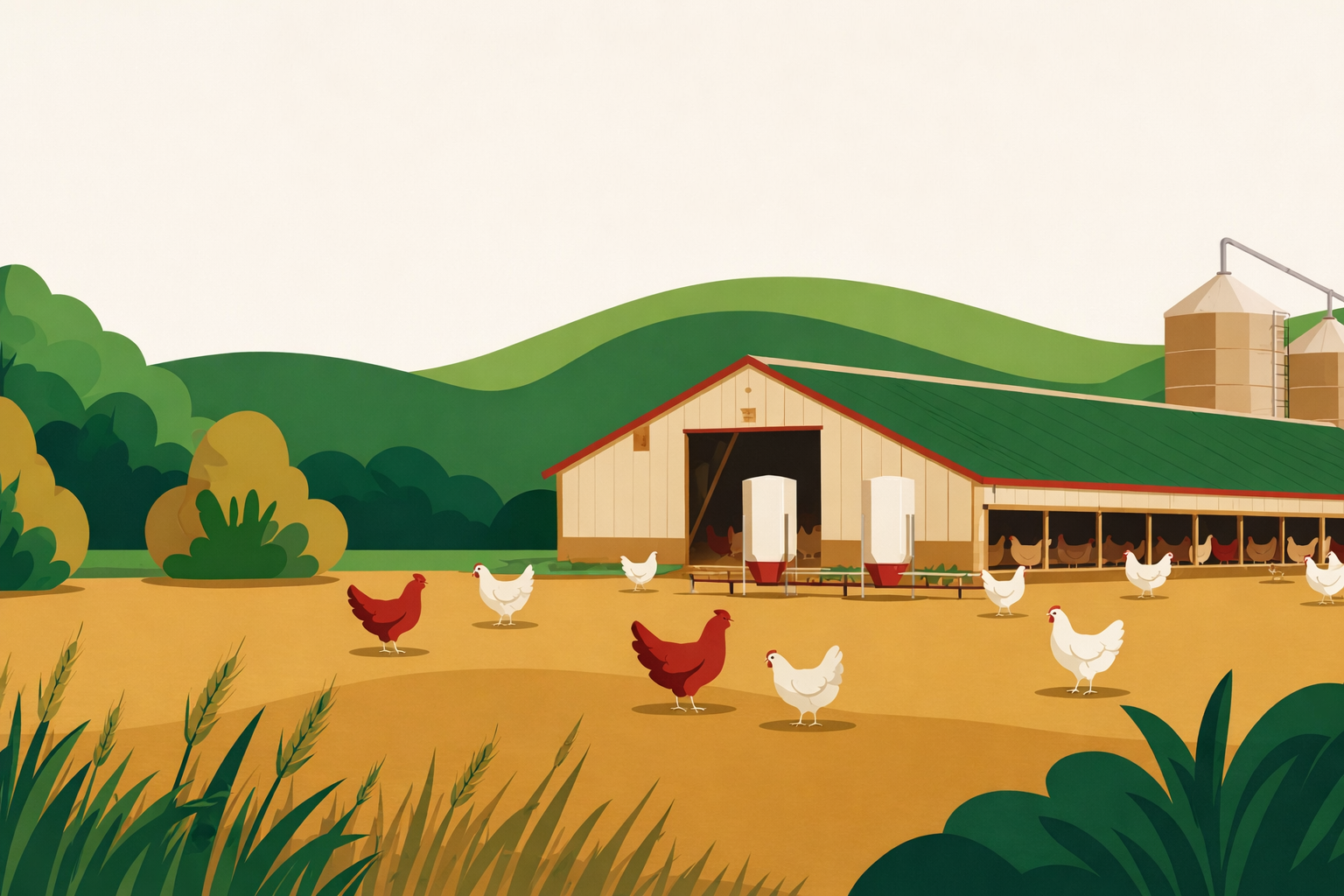
What Novogen Brown is
Novogen Brown is a hybrid (commercial cross) of a laying hen that produces brown eggs. It is not an old backyard breed but a modern breeding line created for table-egg production. In practice you buy day-old chicks or reared pullets which, once mature, lay many even, brown eggs. It is one of the popular choices among layer breeds alongside lines such as ISA Brown, Lohmann and Hy-Line.
Where it comes from — Novogen and Groupe Grimaud
The Novogen brand is developed by a French genetics company belonging to Groupe Grimaud — one of the largest breeding groups in the poultry and animal sector worldwide. As a layer-genetics supplier Novogen entered the market relatively recently compared with industry veterans, but quickly built a portfolio of brown and white lines. Novogen Brown is their brown-egg layer, designed for modern housing systems.
Why choose a brown egg
Many consumers associate a “good farm egg” with a brown shell, which is why brown layers dominate both commercial and backyard flocks. Shell colour does not affect nutritional value — it is purely a genetic trait — but it decides what the buyer picks off the shelf. Novogen Brown fits that demand: it lays brown-shelled eggs of good, firm quality. You will find more on running such a flock in the guide on layer-hen farming.
Efficiency — feed turned into eggs
Modern hybrid layers, Novogen Brown included, are selected for feed efficiency (FCR — how much feed is needed per unit of egg output). The lower the feed use per egg, the cheaper the production, because feed is usually the largest running cost on a layer farm. So when choosing a breed you look not only at the lay rate but at the balance: how much feed the hen eats and how many eggs that yields. We give these ranges below from Novogen’s management guide.
Who it is for and managing it with DlaFerm.pl
Novogen Brown works both on a commercial farm and in a larger backyard flock where stable, long lay matters. Whatever the scale, the flock has to be recorded and its health watched. DlaFerm.pl brings this together in one place: you keep a digital Flock Card, flock records in IRZplus and treatment and drug withdrawal records. The IRZplus portal can be unintuitive, so you can have DlaFerm.pl file the flock-change reports for you — automatically, if you want; or you can report them yourself. You can create a farm account for free.
Novogen Brown — six features to know
Before you place a flock it is worth knowing the layer’s profile: where it comes from, what it is bred for and what results to expect. Here are six basic features of Novogen Brown from public management material.
Origin and company
Novogen Brown is a layer hybrid developed by the French company Novogen, part of Groupe Grimaud — one of the world’s leading poultry genetics groups. It is a modern commercial line, not a traditional breed. Among layer breeds Novogen sits alongside ISA, Lohmann and Hy-Line.
Production type — a brown layer
This is a typically laying (light) hen, aimed at producing brown-shelled table eggs rather than meat. It lays brown eggs and is designed for a long, even lay. How to run such a flock — from rearing to peak — is covered in the guide on layer-hen farming.
Lay rate and egg weight
According to Novogen’s management guide, brown lines reach a high lay of around 400–420 eggs over an extended production cycle (up to about 90–100 weeks of age). Egg weight in production usually falls in the range of about 62–65 g. These levels are comparable to top brown layers — compare them with Hisex Brown.
Body weight and feed intake
An adult Novogen Brown hen usually weighs about 1.9–2.1 kg at peak lay. Daily feed intake is roughly about 110–120 g per bird, depending on phase, temperature and feeding programme. These figures are key to calculating the cost per egg — feed is the largest cost on a layer farm.
Temperament and robustness
Novogen Brown lines are selected for a calm temperament and good liveability, which makes handling easier and limits pecking or cannibalism in the flock. A calmer hen means less stress and a more even lay. To compare the character and results of different lines, see the Lohmann vs ISA Brown comparison.
Availability of day-olds
Novogen Brown chicks and reared pullets are available through hatcheries and distributors working with Novogen. When buying, confirm the origin, health status and vaccination programme of the parent flock. A good source of day-olds is the basis of a successful rearing — whether you go for Novogen, Hy-Line W-36 or another line.
Norms, environment, health and flock choice
Genetics alone is not everything — you will only reach Novogen Brown’s results with a good environment, feeding and prevention. Here are six areas to watch, plus a hint on who this layer is for.
Production norms (public ranges)
Novogen’s management guide gives, for brown lines, a lay of around 400–420 eggs over an extended cycle, a peak lay above 95% reached around 25–30 weeks of age, and feed efficiency (FCR) of about 2.0–2.2 kg of feed per kg of eggs. These are reference ranges from the producer’s material — your real results depend on conditions on your farm.
Housing environment
For the hen to lay what the genetics allow, it needs a stable microclimate: the right temperature (thermal comfort around 18–24°C), good ventilation, a light programme and appropriate stocking. Temperature swings and draughts lower the lay rate and shell quality. The environment matters as much as the line choice — it often decides the gap between the norm and the real result.
Feeding by production phase
A layer needs feed matched to the phase: a different mix in rearing, another before peak and another in late lay (more calcium for a firm shell, among others). Constant access to clean water and limestone grit is a must. Poor feeding shows quickly in a drop in lay and worse shell — even in a genetically excellent hen.
Health and risks
The biggest risks are infectious diseases (including avian influenza, which means culling the flock), parasites and lay drops under stress. A vaccination programme in line with recommendations and firm biosecurity are essential. Record every drug administration together with its withdrawal period — most conveniently digitally, keeping a digital Flock Card and treatment records in one place.
Welfare and flock management
Novogen Brown’s calm temperament helps, but welfare has to be provided: the right stocking, access to nests, perches and litter, and limited stress. An even flock in good condition means a longer, more stable lay. Record the flock and its events in IRZplus flock records — it is a duty and the basis for inspection readiness.
Who Novogen Brown is for
It is a good choice for commercial farms and larger backyard flocks aimed at brown eggs and a long, even production cycle. If you care about maximum feed efficiency and a layer that is calm to handle, Novogen Brown fits those expectations. Before deciding, compare it with other brown lines, e.g. Hisex Brown, and check the availability of day-olds in your region.
Frequently asked questions about the Novogen Brown layer
What is Novogen Brown?add
It is a hybrid (commercial cross) of a laying hen that produces brown eggs, developed by the French company Novogen, part of Groupe Grimaud. It is not a traditional breed but a modern commercial line created for table-egg production. It is selected for a long, even lay, good feed efficiency and a calm temperament.
How many eggs does Novogen Brown lay?add
According to Novogen’s public management guide, brown lines reach a lay of around 400–420 eggs over an extended production cycle (up to about 90–100 weeks of age), with a peak lay above 95%. These are the producer’s reference ranges — the real result on your farm depends on the environment, feeding and flock health.
What egg weight does Novogen Brown have?add
Egg weight in production usually falls in the range of about 62–65 g, on a par with top brown layers. Weight rises with flock age, so eggs are smaller at the start of lay and larger later on. Specific values are best confirmed in the current Novogen production sheet.
How much feed does Novogen Brown eat and what is its FCR?add
Daily feed intake is roughly about 110–120 g per bird, depending on phase, temperature and feeding programme. The feed efficiency (FCR) the producer gives for brown lines is about 2.0–2.2 kg of feed per kg of eggs produced. Feed is the largest running cost, so these figures are key when calculating profitability.
How does Novogen Brown differ from ISA Brown or Lohmann Brown?add
All are modern brown-egg layers with similar, very high lay-rate and feed-efficiency figures, differing in genetics supplier and profile details (temperament, egg weight, lay kinetics). The choice often comes down to the availability of day-olds and service in the region. You can compare line profiles in the Lohmann vs ISA Brown comparison.
Is Novogen Brown suitable for backyard keeping?add
Yes, it works in a larger backyard flock because it combines a high lay with a fairly calm temperament. You do, however, have to provide the conditions it is selected for: a stable microclimate, good feed matched to the phase and prevention. Without that, even a genetically excellent hen will not show its potential.
Run a Novogen Brown flock under control with DlaFerm.pl
Want the lay, health and documentation of your layer flock under control from day one? We will show you how DlaFerm.pl keeps the Flock Card and IRZplus records. Create a free farm account.
Phone
+48 796 258 151