Lohmann Brown vs ISA Brown — which brown-egg layer to choose
Lohmann Brown and ISA Brown are the two most popular brown-egg layers in the world — both lay over 320 eggs a year and both suit a commercial farm and a smaller flock alike. The differences are subtle, but across hundreds of hens they can tip the scales. We compare them criterion by criterion: lay, egg weight, feed use, temperament, persistency and availability in Poland — using only public breed-guide figures.
verifiedFrom the team that has organised work on poultry farms for years.
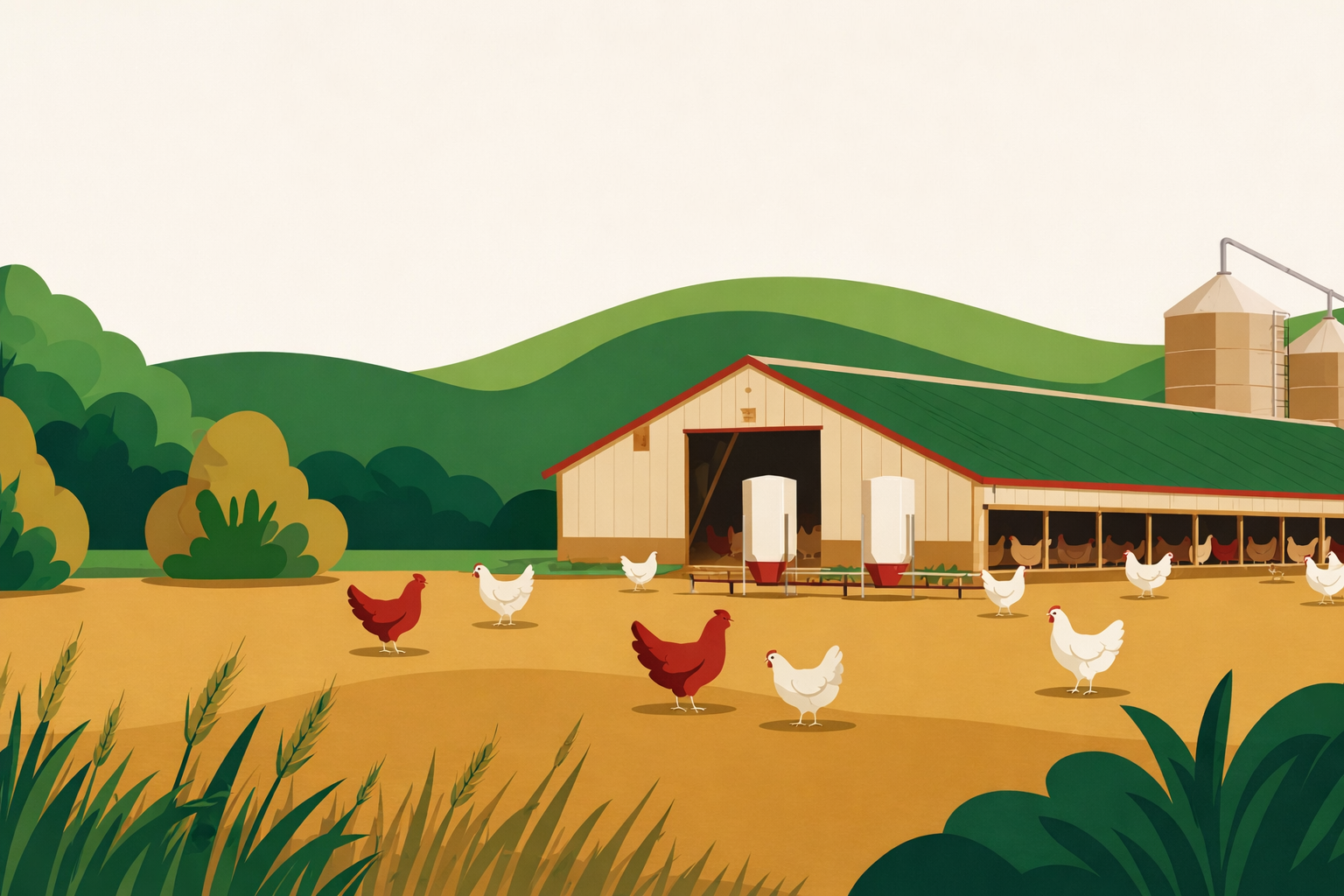
Two leading brown-egg layers
Lohmann Brown (a line of the German firm Lohmann Breeders) and ISA Brown (a line of the French Hendrix Genetics group, ISA brand) are two hybrids that together dominate the world brown-egg market. Both grew from the same idea: a hen that lays plenty of eggs with a strong, brown shell, eats little feed and is calm to handle. If you are still choosing a direction, start with an overview of laying-hen breeds and lines, then come back here for the specific comparison.
Why this choice matters
On a small flock a few eggs a year mean nothing. But on a commercial flock every extra egg per hen and every gram of saved feed multiplies across hundreds of birds and a whole year of use. So it pays to look not at one number but at the whole set: lay, egg weight, feed use, length of use and temperament. How to run such a flock day to day is covered in the guide on laying-hen farming.
Lay and persistency, not just the peak
Both lines reach a high lay peak (over 90 percent) around weeks 26–30 of life. But the result of the whole cycle is decided by persistency — how long the hen holds high lay after the peak. A producer who looks only at the peak may be disappointed by the drop in the second half. So in the comparison below we treat persistency as a separate, important criterion, not an add-on to annual lay.
Availability and housing system also count
The best line on paper is useless if you cannot buy chicks from your supplier. In Poland both lines are available, but in different regions one is easier to get than the other. The system in which you keep the hens also matters — comparing the cage, litter and aviary systems helps match the line to your conditions, because both are versatile but differ in small preferences.
Everything under control with DlaFerm.pl
Whichever line you choose, the flock result depends on whether you are in control of the data: lay, mortality, feed use and treatment. DlaFerm.pl brings this together in one place — you keep a digital Flock Card, and the tedious flock records in IRZplus you can leave to us: we’ll file the flock-change reports to IRZplus for you automatically, if you want, or report them yourself, whichever you prefer. After the first cycle you have hard numbers to compare with the breed-guide norm. You can create a farm account for free.
Lohmann Brown vs ISA Brown — criterion by criterion
Six criteria that really differentiate the two layers. Figures come from the public management guides of Lohmann Breeders and ISA/Hendrix Genetics — treat them as a target under good management, not a guarantee.
Annual lay and age at peak
Both lines are world-class. Lohmann Brown, per its guide, reaches about 320–340 eggs to week 72 and a lay peak above 92 percent around weeks 26–28. ISA Brown declares a similar ceiling — about 320–345 eggs to weeks 72–80, with a peak above 93 percent. The difference is small and under good management both can exceed 330 eggs. How to run such a flock is described in laying-hen farming.
Egg weight and quality (shell)
Egg weight rises with hen age in both lines. Lohmann Brown gives an egg averaging about 62–64 g over the cycle, with a strong, brown shell and good durability. ISA Brown sits similarly — average egg weight about 62–63 g and an equally prized, uniform brown shell. Both lines are known for good shell quality into the late weeks, which means fewer breakages and losses in trade.
Feed use and egg FCR
Here what counts is how much feed goes into producing an egg. Lohmann Brown, per its guide, eats about 105–115 g of feed a day and reaches a feed conversion ratio (FCR) of around 2.0–2.2 kg of feed per kg of egg. ISA Brown reports very similar values — about 105–118 g a day and an FCR of around 2.0–2.2. Both are exceptionally economical; still, a few grams a day across a large flock is worth calculating.
Body weight and temperament
Lohmann Brown is a hen of about 1.9–2.2 kg body weight at production age, regarded as calm and easy to handle. ISA Brown is of similar size — about 1.9–2.1 kg — and is also famous for a gentle, balanced character that tolerates human contact well. Both lines suit beginners, because they rarely panic and adapt well to different housing systems.
Lay persistency and length of use
Persistency — holding high lay after the peak — is a strength of both modern lines. The Lohmann and ISA guides show a cycle run even to weeks 80–90 with lay still at a good level if health and nutrition are under control. This lets you extend the use and spread the rearing cost over more eggs. The actual result depends on management more than on the line itself.
Day-old chick availability in Poland
In Poland both lines are available through hatcheries and distributors, but supply can be regional and seasonal. Lohmann Brown is very widespread in Central Europe, while ISA Brown has a strong position in western markets and is present here too. Before choosing a line, confirm the date and quantity of chicks with your supplier — this is a common reason plans change. Either way you register the flock in IRZplus records.
Lohmann Brown or ISA Brown — how to decide
The differences between the lines are small enough that the choice is more often decided by the system, the market and the supplier than by genetics alone. Here are six things worth thinking through before ordering chicks.
Match the line to the housing system
Both lines are versatile and do well in cages, on litter and in an aviary system, but the calm temperament of both means they also work on free range. If you are unsure about the system, compare the cage, litter and aviary systems — that is a bigger decision than choosing between Lohmann and ISA, because the system affects welfare, cost and egg price more strongly.
Look at the egg market, not just egg count
If you sell litter or free-range eggs at a higher price, a few eggs of difference a year matter less than shell quality and low breakage. Both lines give a prized, uniform brown egg. Choose the one you can get more steadily from your supplier and that better fits your buyer’s expectations — that is often more important than a small lay advantage.
Your conditions and management weigh most
Guide figures assume good nutrition, a stable microclimate and a healthy flock. Under weaker management both lines will fall below the norm — and by more than the difference between them. Before you compare genetics down to a single egg, make sure you have the basics under control: feed, water, light, ventilation and prevention. We cover all of it in laying-hen farming.
Check real availability with the supplier
The best line on paper means nothing if you cannot buy chicks at the time you need. Ask the hatchery about the availability of both lines, minimum quantities and pickup dates before you commit to one choice. Sometimes it is wiser to take the line your supplier has steadily and in good condition than to wait months for the one "two eggs better".
Common mistakes when comparing
The first mistake is looking only at the lay peak, not the whole cycle and persistency. The second is comparing figures from different conditions — guide norms are not the same as a result on poor feed. The third is ignoring egg weight, which rises with age and affects the trade class. Compare like with like: the same age, system and feeding level for both lines.
The bottom-line recommendation
For most Polish farms the difference between Lohmann Brown and ISA Brown is small enough that supplier availability, the housing system and the sales market decide, not genetics alone. Choose the line you can get steadily and in good condition, stick with it for a few cycles and compare your own results with the guide norm. If you are also considering white eggs, look at the light layer Hy-Line W-36.
Frequently asked questions about choosing between Lohmann Brown and ISA Brown
Which layer lays more eggs — Lohmann Brown or ISA Brown?add
Both are world-class and, per the breed guides, give about 320–345 eggs over the cycle to weeks 72–80, with a lay peak above 92–93 percent. The difference is small enough that in practice it is decided by management, nutrition and flock health, not the line itself. Under good conditions both can exceed 330 eggs per hen.
How does a Lohmann Brown egg differ from an ISA Brown egg?add
Both hybrids give a prized, uniform brown egg with a strong shell, averaging about 62–64 g over the cycle and rising with hen age. The shell in both lines holds good quality into the late weeks, which means fewer breakages. The differences are cosmetic and in commercial practice rarely matter to a table-egg buyer.
Which layer eats less feed?add
Both are very economical. Per the guides they eat about 105–118 g of feed a day and reach a feed conversion ratio (FCR) of around 2.0–2.2 kg of feed per kg of egg. The values are almost identical, so the real feed cost is decided more by mix quality, microclimate and flock health than by the choice between these two lines.
Which line is calmer and easier for a beginner?add
Both lines are famous for a gentle, balanced temperament and suit beginner farmers well. The hens rarely panic, tolerate human contact and adapt to different housing systems. Body weight at production age is about 1.9–2.2 kg in both cases, so in that respect too they are very similar.
Is Lohmann Brown or ISA Brown easier to buy in Poland?add
Both lines are available in Poland through hatcheries and distributors, but supply can be regional and seasonal. Lohmann Brown is very widespread in Central Europe, while ISA Brown has a strong position and is present here too. Before choosing, confirm the date, quantity and condition of the chicks with your supplier — this is a common reason a farmer’s plans change.
How long can these layers be kept?add
The Lohmann and ISA guides show a cycle run even to weeks 80–90 with good lay persistency if health and nutrition are under control. Extending the use lets you spread the rearing cost over more eggs. The real moment to replace the flock, however, depends on the drop in lay, shell quality and profitability in your conditions, so it pays to track your own data.
See which layer really earns in your conditions
The choice between Lohmann Brown and ISA Brown is best settled on your own data. DlaFerm.pl lets you keep a digital Flock Card and records in IRZplus, so after the first cycle you compare lay, feed and mortality with the guide norm. Create a free farm account.
Phone
+48 796 258 151