Pressure washers for poultry houses — clean surfaces before disinfection
Disinfection only works on a clean surface — which is why pressure washing is the first and most important stage of preparing the house between flocks. We explain the types of washers (cold- and hot-water, with foam dosing), how they work, which parameters matter and how to wash step by step, so that foam, pressure and detergent remove dirt, fat and biofilm before the disinfectant goes on.
verifiedFrom the team that has organised work on poultry farms for years.
What a pressure washer is and why a farm needs one
A pressure washer is a device that delivers water (sometimes hot) with detergent under high pressure, lifting dirt, droppings, litter residue, fat and biofilm off surfaces. In a poultry house it is used to wash floors, walls, drinking and feeding lines and all the equipment during the break between flocks. It is the basic tool of the washing stage in the cleaning and disinfection (C&D) cycle, without which later disinfection is barely effective.
Where and when you wash — the technological break
Pressure washing is done during the technological break, that is while the house is empty — after the flock is removed and the litter cleared out, and before new birds are placed. This is the moment to clean every surface where dirt and microbes could settle. Once the building is washed and dry, it is time for disinfection — whether with a sprayed product, a disinfection fogger or an ozone generator.
Why washing is the condition for effective disinfection
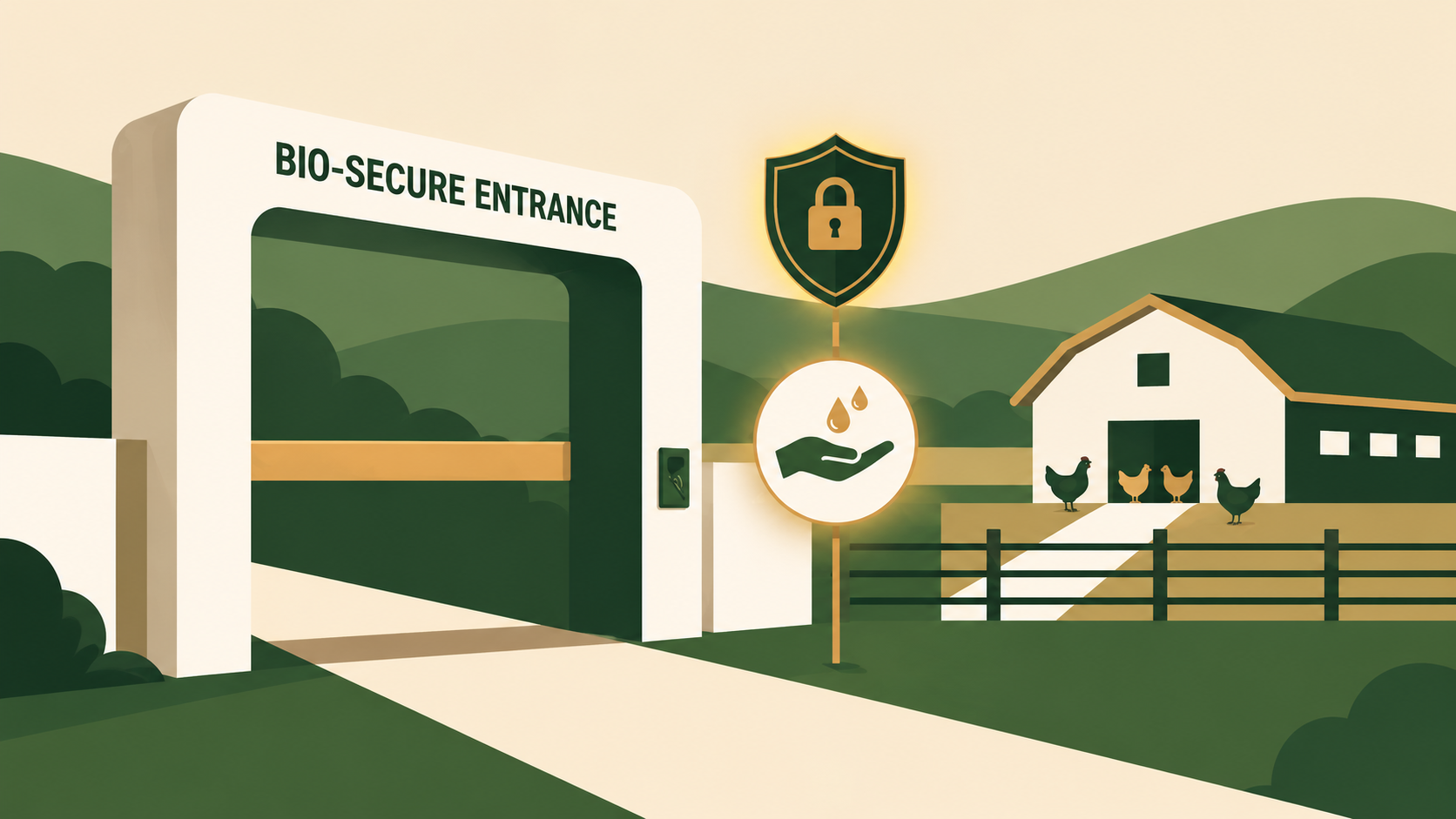
A disinfectant works where it contacts the surface. If an organic layer is left — droppings, fat, biofilm — microbes hide under it and the active substance is used up on the dirt instead of the pathogens. So the rule is simple: washing first, disinfection second. A well-washed house is the foundation of poultry farm biosecurity and lower risk of carrying disease over to the next flock.
A washer is part of a larger hygiene plan
Pressure washing does not work in a vacuum — it is one link in the chain of a clean start. First you remove droppings and residue (for example clearing manure from the manure belts), then wash surfaces and equipment, and finally disinfect and dry. A well-planned downtime sequence shortens the idle period and gives certainty that the new flock enters a truly clean building.
Plan and records under control with DlaFerm.pl
The cleaning and disinfection cycle is a repeatable procedure worth recording and confirming for every batch. In DlaFerm.pl you keep a digital Flock Card, and DlaFerm.pl can file your flock records in IRZplus for you — automatically, if you want. Placement dates, technological breaks and house preparation are all in one place — ready for an inspection. You can create a farm account for free.
Pressure washers for poultry houses — how they work and how to wash
From the type of device, through the parameters, to the washing technique in the C&D cycle. Here are six things worth understanding before you wash a house before disinfection.
Types of washers — cold, hot and foam
The simplest are cold-water washers — cheap and enough for routine washing. Hot-water washers heat the water (usually to 60–80°C), which dissolves fat and biofilm far better. Models with foam dosing apply detergent as foam, which clings to vertical surfaces longer and gives the dirt time to soften.
How it works — pressure, detergent and foam
Washing rests on three elements: water pressure (mechanically tears off dirt), detergent (chemically dissolves fat and organic matter) and contact time (foam that does not run off at once). Good washing is not the pressure jet alone — it is a combination of soaking, the chemistry working and rinsing.
Key parameters — pressure, flow, heating
The most important figures are working pressure (bar) — usually 100–200 bar in houses, to remove dirt effectively without damaging surfaces; flow (litres per minute, l/min) — which sets the pace over a large area; and water heating if you want to dissolve fat. Add a tank or a dosing system for detergent and foam.
Where and when — the cleaning and disinfection (C&D) cycle
Pressure washing is the C&D stage carried out in an empty house during the technological break. The order is fixed: dry cleaning (removing manure and litter) → pressure washing → disinfection → drying. Only then is the new flock placed. Washing is the second step, but without it the next two lose their point.
Technique — soaking, foam, rinsing
First soak the surfaces with water to soften dried-on dirt. Then apply detergent foam from bottom to top and leave it for several to a dozen minutes (do not let it dry). Finally rinse under pressure from top to bottom until the water runs clean. Wash systematically, section by section — ceiling, walls, equipment, floor — so you do not soil what is already clean.
Integration with the biosecurity plan
Pressure washing is the foundation of poultry farm biosecurity: only a clean, dry surface lets disinfection work. Once washed and dry, the disinfectant goes on — by spray, a fogger or an ozone generator. A clean start means lower risk of losses and better results for the next batch.
Sizing, costs and safe operation of a washer
You size a washer to the building and how often you wash, and you use it sensibly — water and electricity in one place call for care. Here are six things worth watching.
Sizing to the building
For a small house a mobile cold-water washer of moderate flow is enough. The larger the area, the more flow (l/min) and working comfort matter — big farms often choose hot-water washers or fixed installations with longer hoses. A washer that is too weak means hours of idle time; one too powerful in a small house is a needless cost.
Costs — purchase and running
The cost is not only the price of the device but also the use of water, energy (especially with heating) and detergents. A hot-water washer costs more, but shortens washing time and chemical use thanks to warm water. Calculate the cost per washing cycle, not just the purchase price — with many batches a year it adds up fast.
Service, storage and water
A washer is a pump and seals that like regular service: cleaning the filter, checking nozzles, changing the pump oil. After work drain the water and store the device protected from frost — frozen water bursts the pump. Hard water leaves scale, so consider a filter or descaling in line with the manufacturer’s manual.
Safety — water, electricity and aerosol
Pressure washing combines water and electricity, so use sockets with a residual-current device and sound cables. A pressurised jet can injure — never point it at people. Washing creates a water-dust aerosol with organic matter, so use a mask, goggles and protective clothing, and ventilate the building well during work.
A common mistake — disinfecting without washing
The most dangerous shortcut is applying disinfectant to an unwashed surface. A layer of droppings and fat absorbs the active substance, so the pathogens beneath survive and the farmer has a false sense of safety. The rule is one: there is no effective disinfection without prior washing. This step cannot be skipped or rushed at the cost of cleanliness.
When it pays off
An own washer pays off where washing repeats regularly — with several broiler batches a year, idle time and washing quality have a real effect on results. At a small, occasional scale you may consider renting or a service. The more cycles and the bigger the building, the faster an efficient hot-water washer pays for itself.
Frequently asked questions about pressure washers for poultry houses
Why wash a poultry house before disinfection?add
Because a disinfectant only works on a clean surface. A layer of droppings, fat and biofilm absorbs the active substance and shields microbes, so disinfecting a dirty house is barely effective. Pressure washing lifts the organic matter, so the next stage — by spray, fogger or ozone — actually reaches the surface and the pathogens.
What pressure and flow for a poultry house washer?add
In houses a working pressure of around 100–200 bar is most common — enough to remove dirt effectively while staying safe for surfaces and equipment. Flow (litres per minute) is sized to the building: the larger the area, the more a higher flow shortens washing. The specific values depend on the model and the device manufacturer.
Cold-water or hot-water washer?add
A cold-water one is cheaper and enough for routine washing of smaller buildings. A hot-water one heats the water, which dissolves fat and biofilm far better, shortens the work and cuts detergent use. With regular washing and a larger scale a hot-water washer usually pays off despite the higher price, because it gives a better effect in less time.
Why foam dosing in a washer?add
Detergent foam clings to vertical surfaces longer — walls, equipment, drinking lines — and gives time to chemically soften the dirt before you rinse it off under pressure. This raises washing effectiveness and limits the brute jet force needed to remove deposits. The foam is applied from bottom to top and not allowed to dry.
How to wash a house safely with a pressure washer?add
Use sockets with a residual-current device and sound cables, because you combine water with electricity. Never point the jet at people — under pressure it can injure. Washing creates an aerosol with organic matter, so use a mask, goggles and protective clothing and ventilate the building well. After work drain the water and protect the pump from frost.
How to plan washing during the technological break?add
The order is fixed: dry cleaning (removing manure and litter), pressure washing, disinfection and drying — only then placing the new flock. Wash systematically, section by section, from top to bottom. In DlaFerm.pl you record placement and break dates with the digital Flock Card, so the C&D cycle is documented and ready for an inspection.
Keep the cleaning and disinfection cycle under control with DlaFerm.pl
Want your placement dates, technological breaks and house preparation recorded in one place? We will show you how DlaFerm.pl keeps a digital Flock Card and records in IRZplus. Create a free farm account.
Phone
+48 796 258 151