Cannibalism and feather pecking in guinea fowl: causes and prevention
Guinea fowl are naturally easily startled, nervous and highly sensitive to stress and noise. This makes them especially prone to feather pecking and pecking, which under crowding and bright light can quickly turn into cannibalism. Learn where it comes from and how to prevent it.
verifiedFrom the team that has organised work on poultry farms for years.
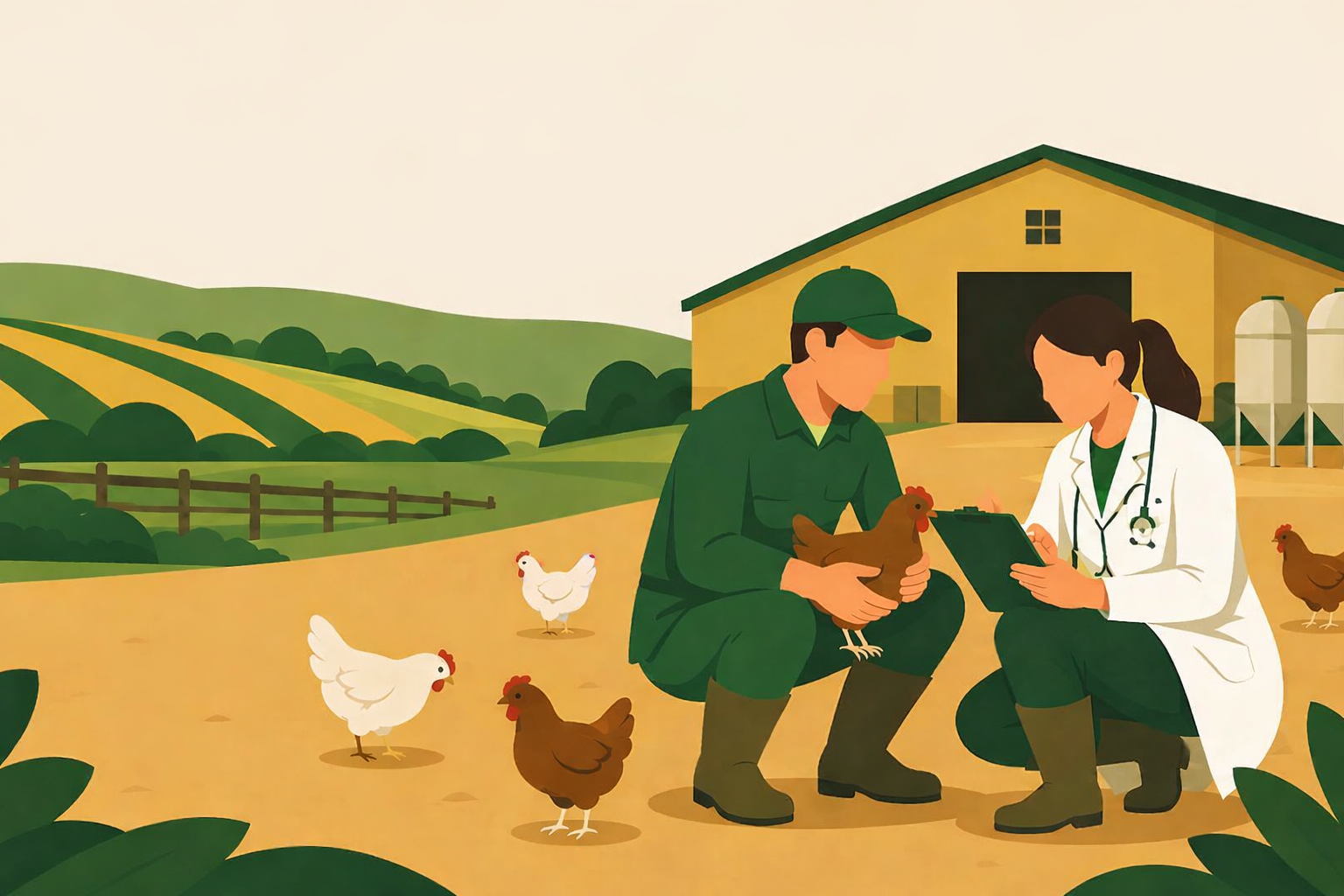
What are cannibalism and feather pecking in guinea fowl?
Cannibalism is birds pecking and wounding one another, and feather pecking is pulling out and eating the feathers of other birds in the flock. This is not an infectious disease but a behavioural disorder caused by stress and poor housing conditions. It matters especially in guinea fowl, because by nature they are very easily startled, alert and nervous — they panic and peck one another more readily than chickens. Feather pecking comes first, and once blood appears on the skin the pecking escalates sharply and can lead to serious wounds and even death of the affected birds.
Why are guinea fowl especially at risk?
Guinea fowl are birds with a strong flocking instinct and high sensitivity to stimuli. They react with loud calls and panic to sudden noise, movement or a stranger, and when confined — where they cannot flee — they release that anxiety on one another. In a stressed, crowded flock pecking spreads quickly, because guinea fowl copy their neighbours’ behaviour. The sight of blood acts as a trigger and excites them even more. That is why calm, predictability and space matter more for guinea fowl than for most other poultry. More on the nature of these birds: guinea fowl keeping.
How to spot the problem in the flock?
The first sign is thinned, broken or completely plucked feathers — most often on the back, rump and around the tail. More loose feathers appear on the floor, some birds have bald patches, and in more severe cases you can see scratches, abrasions and small wounds on the exposed skin. Birds that have become targets often hide in corners and are restless or apathetic. The earlier you notice these signs, the easier it is to stop the problem before it spreads through the whole flock. We cover daily bird observation in our guinea fowl welfare guide.
Why does it matter to the farmer?
Feather pecking and cannibalism are not only a welfare problem but a real loss. Wounded birds grow more slowly, are more prone to wound infections, and in extreme cases die. Damaged plumage also impairs heat retention, so birds get cold and eat more without benefit. Importantly, cannibalism rarely has a single cause — it is usually the sum of several small mistakes in housing. That is why effective control means improving the whole environment rather than a single measure.
Cannibalism and other health problems
Feather pecking is sometimes confused with other causes of feather loss — moulting, external parasites (such as lice) or feed deficiencies. Open wounds on the skin can in turn become a gateway for bacterial infection. If the problem grows despite better conditions, or wounds and deaths appear, consult a veterinarian to rule out disease causes. You will find an overview of typical poultry signs in the poultry diseases — symptom table.
What triggers pecking and feather pecking in guinea fowl
Cannibalism is usually the sum of several factors at once — each is worth checking and reducing.
Stress and noise
Guinea fowl are exceptionally easily startled and alert. Sudden noise, abrupt movements, strangers or predators trigger panic, which confined birds release by pecking one another. Calm in the house is fundamental.
Excessive stocking density
Crowded birds cannot avoid contact or flee an aggressor. In a tight flock tension and rivalry grow, and pecking spreads quickly as birds copy their neighbours.
Too bright or intense light
Sharp, bright light excites guinea fowl and highlights any wound or darker feather, drawing pecking to it. An overly long light day further unsettles them and fuels aggression.
Feed deficiencies
A shortage of protein, certain amino acids (such as methionine), salt or fibre makes birds seek them out by eating feathers and pecking others. An unbalanced diet is a common cause of feather pecking.
Boredom and lack of activity
In a bare, empty room guinea fowl have nothing on which to focus their natural urge to peck and scratch. They then turn it on the feathers and skin of their flock mates — out of boredom the problem grows fast.
Sight of blood and the avalanche effect
Once the first wound appears, the sight of it acts as a strong trigger for guinea fowl. Pecking focuses on the injured bird, others join in by imitation, and in a short time the problem engulfs the whole flock.
How to prevent cannibalism and how to react when it appears
Effective prevention means removing stress factors and improving the whole environment, not a single procedure.
Calm, predictable handling
Enter the house calmly, at set times, avoiding abrupt movements, shouting and sudden noise. Limit access by strangers and animals. The less stress, the lower the risk of panic and pecking. More on daily handling: guinea fowl welfare.
Sensible stocking density
Give birds enough space to spread out and avoid conflicts. Do not overfill the house and make sure all birds can freely reach feeders and drinkers. Stocking guidance: guinea fowl stocking density.
Dimming and light control
Use soft, dimmed light instead of sharp and bright. Limit the length of the light day to the recommendations for the given group of birds. Dimming visibly calms guinea fowl and reduces the tendency to peck.
A balanced diet
Feed a ration matched to the age and purpose of rearing, with the right amount of protein, amino acids, mineral salts and fibre. Well-balanced nutrition removes one of the most common causes of feather pecking. Also provide constant access to fresh water.
Enrichment and access to a run
Give birds something to focus on: straw bales, perches, a dust-bathing spot, vegetables to peck. Access to an outdoor run lets them release energy and reduces boredom. Occupied guinea fowl peck one another less often.
Promptly separating injured birds
Immediately separate a bird with a wound or signs of blood from the flock so it does not trigger an avalanche of pecking, and let the wound heal. Note recurring problems in the Flock Card, and with wounds or deaths consult a veterinarian.
Frequently asked questions about cannibalism and feather pecking in guinea fowl
Why do guinea fowl pluck each other’s feathers?add
Most often because of stress, noise, crowding, too bright light, feed deficiencies or boredom. Guinea fowl are very easily startled and sensitive, so they release tension by pecking and pulling out the feathers of other birds. It is a behavioural disorder, not an infectious disease.
Is it a disease that can be treated with drugs?add
No, cannibalism and feather pecking are a behavioural and welfare disorder, not an infection — there is no "cure" for it. The solution is to improve conditions: calm, lower stocking density, dimmed light, better feed and enrichment. Drugs are only needed when wounds become infected.
How fast should I react when I notice plucked feathers?add
Right away. Check stocking density, light, noise and feed, and separate injured birds so the sight of blood does not fuel pecking. The sooner you react, the lower the risk that the problem spreads through the whole flock.
Does dimming the house really help?add
Yes. Soft, dimmed light visibly calms guinea fowl and makes wounds and darker feathers less eye-catching. Sharp, bright light and an overly long light day do the opposite — they excite the birds and intensify pecking.
Is beak trimming a good solution?add
It raises serious welfare concerns and is restricted by regulations — it should not replace improving housing conditions. Removing the causes works better and lasts longer: stress, crowding, bright light and feeding mistakes. If in doubt, consult a veterinarian.
How does DlaFerm.pl help reduce this problem?add
In the Flock Card you record observations from the house — when pecking appeared, under what conditions and what changes you made. This makes it easier to link the severity of the problem with stocking density, light or feed and react before losses grow. The records are also available during a veterinary inspection.
Sources & resources
- linkMSD Veterinary Manual — Cannibalism and feather pecking in poultry
- linkEFSA — scientific opinions on poultry welfare
- linkChief Veterinary Inspectorate Poland — information for poultry farmers
- linkKRD-IG — Polish Poultry Council Industry Chamber
- linkWOAH — World Organisation for Animal Health (animal welfare)
Track your flock observations with DlaFerm.pl
Want to see how the Flock Card helps you track welfare and react to problems in the house? Write to us or create an account.
Phone
+48 796 258 151