Cannibalism and feather pecking in broilers: causes, prevention and response
Cannibalism and feather pecking (feather plucking) are behavioural disorders, not infectious diseases. In broilers they are rarer than in laying hens, but they appear with overcrowding, too bright light, heat and feed deficiencies. Learn how to recognise the first signals, how to prevent the problem and how to respond quickly.
verifiedFrom the team that has organised work on poultry farms for years.
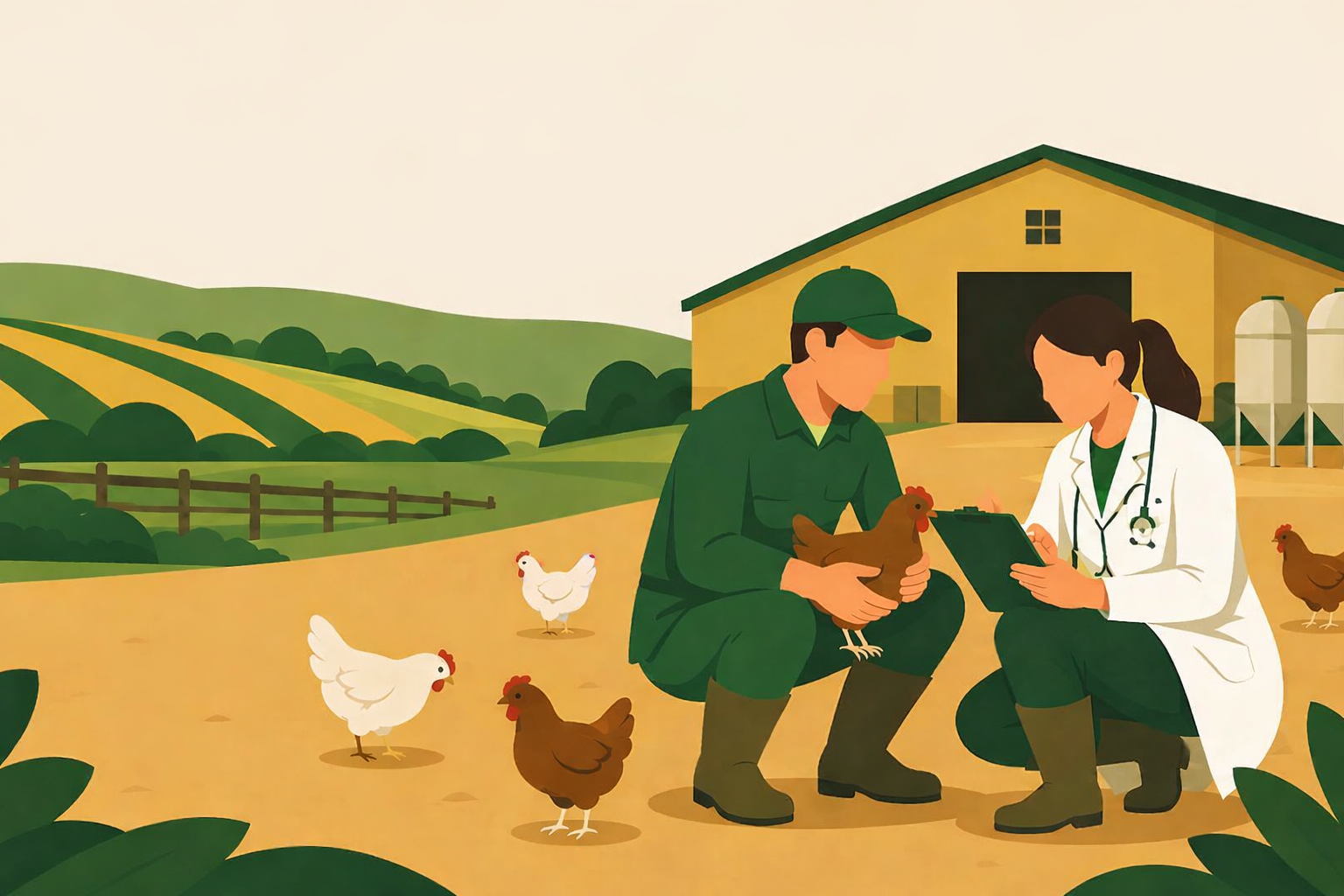
What are cannibalism and feather pecking in poultry?
Cannibalism is pecking and wounding other birds in the flock — the skin, wounds, toes and sometimes the vent. Feather pecking (from Greek “ptero” — feather and “phagia” — eating) is the plucking and eating of other birds’ feathers. These are not infectious diseases caused by a virus or bacterium, but behavioural disorders with welfare and environmental roots. In broilers the problem is rarer than in laying hens, because the cycle is short and birds are usually kept under dimmed light. Even so, under poor conditions it can appear in a broiler flock too and escalate quickly.
Why do broilers start pecking and plucking feathers?
Pecking is a natural chicken behaviour — in the wild birds scratch and peck in search of food. When they cannot meet this need and stressors act on them at the same time, pecking is redirected onto other birds. The main triggers are overcrowding, light that is too bright or too intense, heat and poor ventilation, as well as feed deficiencies (protein, amino acids, salt, minerals). The “sight of blood” mechanism is key: once a bird is wounded and blood appears, the others peck that spot ever harder, so the problem cascades across the whole flock.
What forms does cannibalism take in broilers?
The problem has several forms that often occur together. Feather pecking is the plucking of feathers — gentle at first, then increasingly aggressive, leading to bare patches of skin. Skin and wound pecking appears where feathers are missing or where a wound has already formed. Toe pecking occurs mainly in young chicks that mistake toes for food. Each of these forms begins with individual birds, but with the sight of blood and environmental stress it can spread to a large part of the flock.
What are the consequences for the flock and results?
The consequences are both health-related and economic. Wounds become a gateway for secondary bacterial infections, which worsens bird health and may require veterinary treatment. Wounded and stressed birds grow more slowly, which lowers daily gain and worsens production results. In severe cases there are deaths and the need to cull birds. Above all, flock welfare suffers — and welfare is now a legal requirement and an element assessed during inspections. More on welfare: Broiler welfare.
Cannibalism and other problems in the house
Cannibalism rarely appears in isolation from other problems. It is usually a signal that something is wrong with the microclimate, stocking density or feeding. It is also sometimes confused with disease symptoms — wounds and feather loss may come from pecking, but also from other causes, so it is worth consulting a veterinarian. You must respond to the first signs, not after the fact, once the problem has already engulfed the whole flock. Overview of other disease symptoms: Poultry diseases — symptom table.
What triggers cannibalism and feather pecking in broilers
Each of these factors should prompt the farmer to check house conditions and respond early.
Overcrowding (excessive stocking)
Too high a stocking density increases competition for feed, water and space. Birds get in each other’s way more often, tension rises and so does the risk of pecking. More: Broiler stocking density.
Light too bright or too intense
Light that is too strong stimulates birds and intensifies pecking. Dimming the house is one of the most effective ways to calm the flock. Bright spots (e.g. incoming daylight) can trigger the problem.
Heat and poor ventilation
High temperature and stuffy, humid air stress birds and worsen their condition. Heat stress fosters restlessness in the flock and increases the tendency to peck.
Feed deficiencies
An imbalance of protein and amino acids, or a lack of salt or minerals, makes birds seek the “missing” components by pecking the feathers and skin of others. A balanced diet limits this behaviour.
Sight of blood (cascade effect)
A single wound and the sight of blood act on other birds like a magnet — they peck that spot ever harder. So from one wounded bird the problem spreads across the whole flock in a short time.
Boredom and no chance to scratch
Birds have an innate need to scratch and peck. When they cannot satisfy it, they redirect pecking onto other birds. Environmental enrichment (e.g. scratching material) meets this need.
How to prevent cannibalism and how to respond to the first signs
Effective prevention combines sensible stocking, control of light and microclimate, a balanced diet and a fast response to individual wounds.
Sensible stocking density
Keeping density within broiler standards limits competition and tension in the flock. This is the basic and cheapest way to prevent pecking. Rules: Broiler stocking density.
Control of light intensity and colour
Dimming the house and even lighting without glaring spots calms birds. Eliminate uncontrolled incoming daylight. The lighting programme should be matched to bird age and recommendations.
Good ventilation and temperature
Efficient ventilation and the right temperature limit heat stress and maintain a good microclimate, which reduces flock restlessness. Technical requirements: Broiler house requirements.
Balanced feed
Feed that covers the requirement for protein, amino acids, salt and minerals limits the search for “missing” components through pecking. It is worth discussing the ration with a nutrition adviser or veterinarian.
Quick removal of wounded birds
A wounded bird, once spotted, should be separated from the flock as soon as possible — this removes the sight of blood and breaks the cascade. This is the most important immediate action at the first signs.
Environmental enrichment and observation
Scratching and pecking material satisfies the birds’ natural needs and draws attention away from other individuals. Daily observation of the flock lets you catch the first signals before the problem spreads. More: Broiler welfare.
Frequently asked questions about cannibalism and feather pecking in broilers
How does cannibalism differ from feather pecking?add
Feather pecking is the plucking and eating of other birds’ feathers. Cannibalism is pecking and wounding the skin, wounds, toes or vent. The two behaviours often occur together and share similar causes — overcrowding, poor microclimate and feed deficiencies.
Is cannibalism in broilers an infectious disease?add
No. It is a behavioural disorder with welfare and environmental roots, not an infection caused by a virus or bacterium. That is why it is not treated with anti-infective drugs, but by improving conditions: stocking density, light, microclimate and feeding.
Why is pecking rarer in broilers than in laying hens?add
Broilers have a short rearing cycle and are usually kept under dimmed light, which calms the birds. Laying hens live longer and are more often in brighter conditions. Even so, with overcrowding, heat or deficiencies the problem can appear in broilers too.
How does light affect cannibalism?add
Light that is too bright and intense stimulates birds and intensifies pecking. Dimming the house and even lighting without glaring spots is one of the most effective ways to calm the flock. Uncontrolled incoming daylight can trigger the problem.
What should I do when I notice a wounded bird?add
Separate the wounded bird from the flock as soon as possible — this removes the sight of blood that intensifies pecking in others. Then check house conditions: stocking density, light intensity, temperature and feed. For wounds and secondary infections, consult a veterinarian.
How does DlaFerm.pl help with welfare problems?add
DlaFerm.pl lets you keep a Flock Card — a running record of observations, deaths and rearing parameters. This makes it easier to catch the moment when the number of wounded birds starts rising and to respond faster. The data are available during veterinary or welfare inspections.
Sources & resources
- linkMSD Veterinary Manual — Cannibalism and feather pecking in poultry
- linkEFSA — scientific opinions on broiler welfare
- linkChief Veterinary Inspectorate Poland — information for poultry farmers
- linkKRD-IG — Polish Poultry Council Industry Chamber
- linkDirective 2007/43/EC on the protection of chickens kept for meat production
Keep a Flock Card with DlaFerm.pl
Want to see how the Flock Card helps track observations and bird welfare? Write to us or create an account.
Phone
+48 796 258 151