Poultry farm biosecurity plan — a ready checklist
A biosecurity plan is a written set of rules that protect your flock from a disease being brought in — above all avian influenza. Every poultry farm must have one, and the veterinary inspection checks it. Below you will find a ready checklist: every part of the plan and how to implement it, point by point. Write it down, adapt it to your facility and apply it from day one.
verifiedFrom the team that has organised work on poultry farms for years.
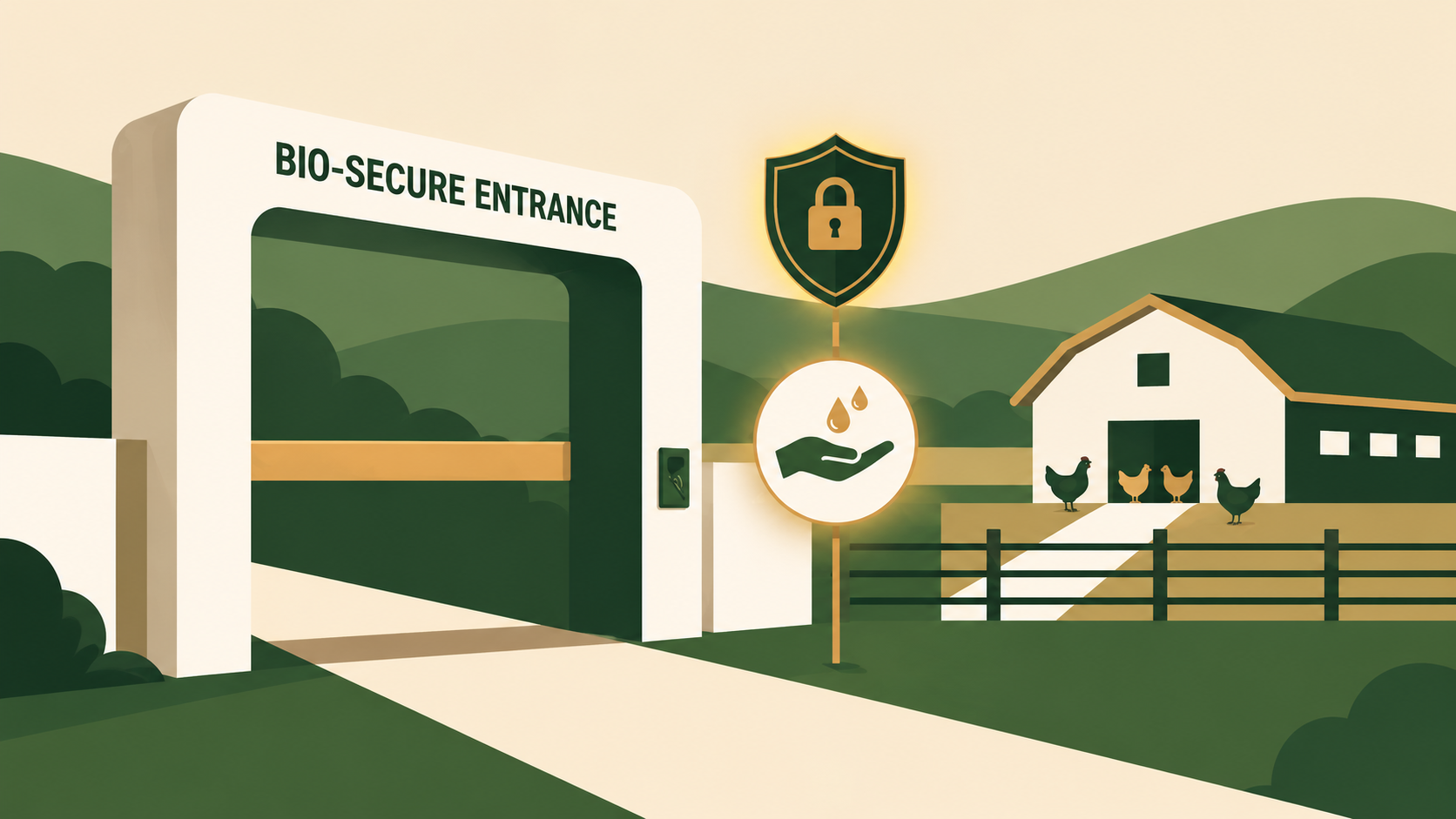
What a biosecurity plan is
A biosecurity plan is a written document describing how, on your farm, you prevent infectious bird diseases from being brought in and spread. It is not an ornament for a binder — it is a concrete set of rules: who enters the house and how, how equipment is cleaned and disinfected, how you protect feed, water and litter. The basics are gathered in our guide on poultry farm biosecurity, and below we break the plan itself into a ready checklist to write down.
Why the plan is required
Biosecurity on a poultry farm is mandatory — it follows from veterinary regulations and orders issued by the General Veterinary Inspectorate (GIW), especially in the higher-risk season. The district veterinary officer checks whether the farm has a plan and whether it follows it. No plan, or failing to follow it, is a risk of penalties and, in case of an outbreak, of losing compensation. The most serious threat is avian influenza (HPAI), which means culling the whole flock.
The deadliest enemy: avian influenza
Highly pathogenic avian influenza spreads mainly through wild waterfowl, and reaches a farm on boots, wheels, equipment, feed or litter. That is why the heart of every plan is cutting the flock off from the outside world. How the season unfolds and the scale of the threat is shown in our avian influenza season summary. The higher the risk in your region, the stricter the entry and disinfection rules are worth applying.
Below is a ready checklist
You do not have to write the plan from scratch. In the two sections below you will find a complete list: first six elements the plan must contain, then six rules on how to implement and maintain it day to day. Go through the checklist point by point, write down a version for your farm and post it at the entrance. You can test your team’s knowledge with our biosecurity knowledge quiz.
Run the plan and records in the app
The plan is one thing, the daily records another. An inspection checks not only the document but also the proof that the rules work: entry, cleaning and disinfection, and pest-control logs. The easiest way is to do it digitally, without paper chaos. In DlaFerm.pl you keep a digital Flock Card and treatment and drug withdrawal records — all in one place and ready for inspection. You can create a farm account for free.
Elements of a biosecurity plan — six pillars
A good plan rests on six areas. Write each of them down in a version for your farm: what exactly you do, who is responsible and how you record it. This is the core of the document the inspection checks.
Clean and dirty zone and a hygiene lock
Divide the farm into a dirty (outer) zone and a clean (by the birds) zone, with a hygiene lock between them. In the lock you change footwear and clothing, wash your hands and cross a clear dividing line. This is the first and most important element of the plan — without physically separating the zones the rest of the rules will not work. Describe in the plan where the border runs and what happens in the lock.
Control of people and vehicle entries
Write down who enters the farm and on what terms: an entry log, a ban on people in contact with other poultry, a quarantine after returning from risk areas. Vehicles enter only after wheel disinfection, and outside equipment only after washing. A disinfection mat at every entrance and gate is an absolute basic. Every entry into the biosecurity zone must be deliberate and recorded.
Cleaning and disinfection (C&D) and the technological break
Describe the cleaning and disinfection (C&D) cycle: removing litter and droppings, dry and wet washing, then the disinfectant and drying. After each batch a technological break applies — an empty, clean house before a new placement. Effectiveness is also raised by space disinfection, e.g. with ozone generators. Record the agents, doses and times in the plan.
Control of rodents and wild birds
Rodents and wild birds carry diseases — the plan must describe pest control (placement and inspection of bait stations) and protection against wild birds entering: nets in windows and inlets, sealed feed stores, no spilled grain around the facility. Also remove scrub and standing water that attract wild birds. This is direct protection against avian influenza.
Safety of water, feed and litter
Drinking water must be clean and tested regularly, and drinker lines washed and disinfected between batches. Feed and litter come from a reliable source and are stored closed, out of reach of rodents and wild birds. Record in the plan where you source them and how you secure them. This is a common, underrated route for a pathogen to enter the farm.
Documentation and staff training
A plan is worth as much as its records. Keep logs: of entries, cleaning and disinfection, pest control, water tests, and treatment and drug withdrawal. Every worker must know the rules — train them and note the training. The most convenient way is digital: a digital Flock Card and treatment and withdrawal records in one place, ready for inspection.
From a document to daily practice
A plan on the shelf does not protect the flock. These six rules show how to turn the checklist into a daily routine, keep it up and be ready if something goes wrong.
A task schedule — assign deadlines
Turn each element of the plan into a concrete task with a deadline and a responsible person: a daily mat check, a weekly review of bait stations, cleaning and disinfection after a batch, periodic water testing. Without a schedule the rules “dissolve” in the daily rush. It is best to run the task plan digitally, with reminders, so nothing slips.
The all-in, all-out rule
Apply all-in, all-out (you fill and empty a whole house in one batch). One age of birds in one facility and a full technological break with cleaning and disinfection between batches break the chain of infections. Mixing ages and continuously adding birds is a straight path to diseases persisting on the farm. Write this rule into the plan and stick to it.
Self-checks and audit — check yourself
Every so often go through your checklist like an inspector: are the mats moist, does the lock work, are the logs filled in, are the nets intact. Such a self-check catches gaps before a disease or an inspector does. You can test your team’s knowledge with our biosecurity knowledge quiz — a quick way to see what needs refreshing.
The most common gaps — where a plan leaks
Most infections come in through small lapses: a dry disinfection mat, a “quick” entry without changing boots, an open feed store, a hole in a net, spilled grain attracting wild birds. The plan must name these weak points plainly so the team remembers them. The scale of risk grows in season — shown by the avian influenza season summary.
Response to a suspected disease
The plan must describe what you do at the first signs: a sudden rise in mortality, a drop in feed and water intake, apathy, respiratory or nervous symptoms. Step one is an immediate call to the district veterinary officer and stopping movement on the farm. It is worth posting the early signs of avian influenza at the entrance so everyone recognises them and knows whom to notify.
Keeping records up to date
Fill in records right after the action, not “before an inspection”. Entries, cleaning and disinfection, pest control, water tests, treatment and withdrawal — this is the proof that the plan is alive. A paper binder is easy to lose or backfill; digital records in the Flock Card and treatment records are always at hand and ready to show.
Frequently asked questions about the biosecurity plan
What is a biosecurity plan and do I have to have one?add
A biosecurity plan is a written set of rules protecting the flock from an infectious disease being brought in and spread. Every poultry farm must have and follow one — it is an obligation under veterinary regulations. The district veterinary officer checks both the document itself and whether the rules are followed day to day.
What exactly must a biosecurity plan contain?add
Six pillars: a division into a clean and dirty zone with a hygiene lock, control of people and vehicle entries, cleaning and disinfection (C&D) with a technological break, control of rodents and wild birds, safety of water, feed and litter, and documentation and training. A ready checklist of all elements is in the sections above — just write a version for your farm.
How does a clean zone differ from a dirty one?add
The dirty zone is the outer area — the road, parking, deliveries. The clean zone is the space by the birds, where pathogens should not reach. Between them a hygiene lock is set up, where you change footwear and clothing, wash your hands and cross a clear dividing line. Without physically separating the zones the other rules lose their meaning.
How often should the house be cleaned and disinfected?add
Full cleaning and disinfection (C&D) is carried out after each batch, during the technological break, when the house is empty. The cycle is removing litter and droppings, dry and wet washing, then the disinfectant and drying. Day to day there are daily tasks: checking and refreshing disinfection mats and keeping the hygiene lock clean.
How do I effectively protect the farm from rodents and wild birds?add
Run continuous pest control: place and regularly inspect bait stations, especially near feed stores. You cut off wild birds with nets in windows and inlets, sealed feed storage and clearing spilled grain. Remove scrub and standing water around the facility, because they attract wild birds — the main carrier of avian influenza.
What is the technological break for?add
A technological break is the time when the house stands empty and cleaned between one batch and the next. Together with the all-in, all-out rule it breaks the chain of infections: new chicks go into a washed and disinfected facility, not into the environment left by the previous flock. It is one of the simplest and most effective elements of the plan.
What should I do if I suspect avian influenza?add
At a sudden rise in mortality, a drop in feed and water intake, apathy or respiratory symptoms, immediately contact the district veterinary officer and stop movement on the farm. Do not move birds or equipment. Early recognition and a quick report limit the scale of the problem — that is why it is worth posting the symptoms at the house entrance.
Can I run the plan and records digitally?add
Yes, and it is the most convenient solution. Digitally you keep the task schedule, logs of entries, cleaning and disinfection, pest control, and records of treatment and drug withdrawal — all in one place and ready to show during an inspection. In DlaFerm.pl you do this through the digital Flock Card and treatment records, without paper chaos or the risk of something missing.
Run your biosecurity plan without paper chaos
Want your plan, task schedule and records in one place, ready for inspection? We will show you how DlaFerm.pl runs biosecurity through the digital Flock Card and treatment records. Create a free farm account.
Phone
+48 796 258 151