Feed enzymes — phytase, xylanase and more digestible feed
Birds digest some feed components poorly, and a few even block phosphorus absorption. Feed enzymes help change that: phytase releases phosphorus from phytates, while xylanase and beta-glucanase break apart difficult fibres. The effect is twofold — less nitrogen and phosphorus in the environment, and cheaper, better-used feed. We explain how it works and what each enzyme does.
verifiedFrom the team that has organised work on poultry farms for years.
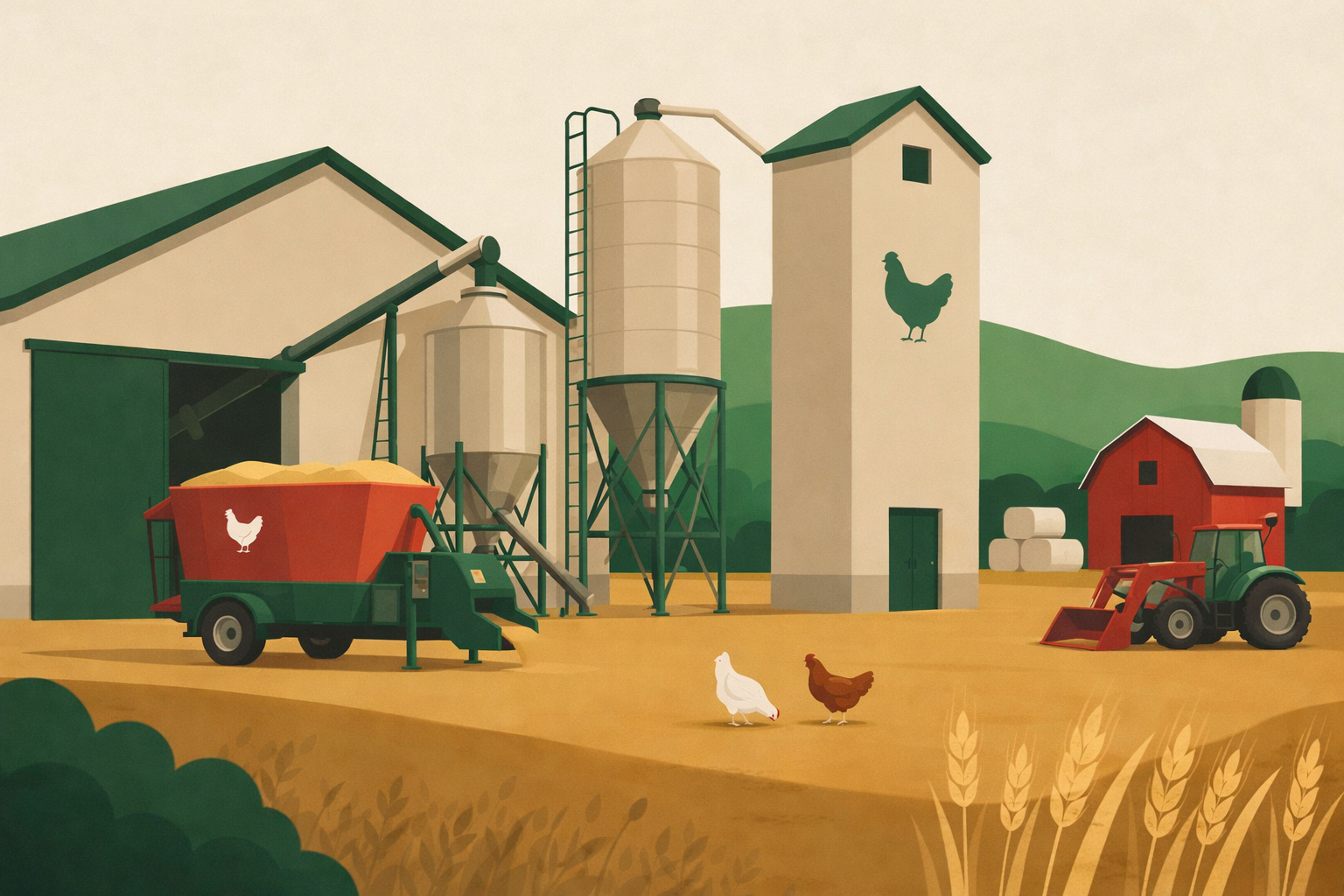
Poultry feed is mostly grains and plant meals, and these hide components the bird cannot digest well. Phosphorus is often “locked” in phytates, and sticky fibres (so-called NSP) hinder the absorption of other nutrients and loosen the droppings. Feed enzymes are proteins that break down these difficult compounds, so the bird gets more out of the feed and fewer unused components end up in the environment.
Why add enzymes to feed?
The reason is twofold: environmental and economic. Phytase releases phosphorus from phytates, so you can add less expensive inorganic phosphorus and less of it ends up in the slurry. Xylanase and beta-glucanase break down sticky non-starch polysaccharides (NSP), improving digestibility and drying the litter, which favours foot condition. Protease aids protein digestion, cutting nitrogen excretion. Together this translates into better feed use, lower costs and less pressure on the environment — as reviews of research on feed enzymes confirm.
What each enzyme does
Different enzymes tackle different feed components — they are often combined in one product so as to cover phosphorus, fibres and protein all at once.
Phytase — releases phosphorus from phytates
Most phosphorus in plants is bound as phytates, which the bird digests poorly. Phytase breaks this compound apart and releases the phosphorus, making it available to the bird. The effect: you can add less expensive inorganic phosphorus to the feed, and less phosphorus ends up in the environment with the droppings.
Xylanase — breaks down arabinoxylans
Wheat, rye and triticale contain sticky fibres (arabinoxylans) that thicken the gut contents and hinder absorption. Xylanase cuts them up, lowering viscosity and improving digestibility. A common side effect is drier litter, because the droppings are less loose — and dry litter means better foot condition.
Beta-glucanase — handles barley and oats
Beta-glucans, in turn, are sticky fibres typical of barley and oats. Beta-glucanase breaks them down, reducing the viscosity of the gut contents and improving the use of these grains. This lets you reach more widely for cheaper raw materials without losing digestibility or litter quality.
Protease — supports protein digestion
Protease helps break the feed protein into absorbable fragments, including some proteins that hinder digestion. Better protein use means less nitrogen excreted into the environment and savings on expensive protein raw materials. It is often combined with other enzymes in one product.
Environmental effect — less nitrogen and phosphorus
The more nutrients the bird actually uses, the fewer end up in the slurry and the environment. Phytase cuts phosphorus excretion, and better protein digestibility cuts nitrogen excretion. That is a real easing of pressure on the environment, which is sometimes also a requirement when managing manure and limiting phosphorus run-off into water.
Economic effect — a cheaper recipe
Enzymes let you “recover” components you would otherwise have to pay for: less inorganic phosphorus added, better use of grains and protein. A well-chosen enzyme often pays off through a lower feed cost per kilogram of gain. The key is matching the enzyme to the recipe composition and keeping to the dose.
Feed enzymes step by step
- 1
Start from the feed composition
Choosing an enzyme starts from what is in the feed. A lot of wheat and rye is an argument for xylanase, barley and oats for beta-glucanase, and a high share of plant raw materials always speaks for phytase. Look at the recipe first, then choose the enzyme, not the other way round.
- 2
Pick an enzyme or a combined product
You can reach for a single enzyme or a ready multi-component product covering phosphorus, fibres and protein. Choose products with clearly stated activity and — as feed additives — authorised in the EU. Remember that enzymes are feed additives subject to EU law, so use only permitted products.
- 3
Set the dose and account for it in the recipe
Stick to the activity and dose given by the manufacturer. With phytase a so-called “matrix” is often used — meaning you deliberately lower the phosphorus addition and some components, because the enzyme will release them. That is where the saving comes from, but it requires a deliberate recalculation of the recipe, ideally with a nutritionist.
- 4
Mind the quality during feed production
Enzymes are proteins sensitive to high temperature, so the way the feed is produced and stored matters. Check whether the product withstands pelleting if the feed is pelleted, or choose a form added after heat treatment. A mistreated enzyme simply will not work.
- 5
Watch the litter, droppings and results
After introducing an enzyme, look at what is visible: litter dryness, droppings consistency, flock uniformity and feed use. Drier litter and firmer droppings are a common, clearly visible effect of NSP enzymes. Record the changes so you can compare flocks and judge whether the enzyme pays off.
- 6
Count the environmental effect and the cost
Finally, sum up the benefits: how much less phosphorus and nitrogen end up in the environment and how much cheaper the recipe turned out. These are two sides of the same decision — an enzyme makes sense when it improves the result and eases the environment. Note these figures to plan future recipes deliberately.
Frequently asked questions about feed enzymes
What does phytase actually do?add
Phytase releases phosphorus bound in plants as phytates, which the bird digests poorly. This makes the phosphorus available to the bird, lets you add less expensive inorganic phosphorus to the feed, and means less phosphorus ends up with the droppings in the environment. It is one of the most widely used feed enzymes precisely because of its environmental and economic effect.
What is NSP and why does it get in the way?add
NSP are non-starch polysaccharides — sticky fibres present in wheat, rye, barley and oats, among others. They thicken the gut contents and hinder nutrient absorption, and the droppings become looser, which softens the litter. Xylanase and beta-glucanase break them down, improving digestibility and often drying the litter.
Do enzymes lower the feed cost?add
They can, because they let you make better use of what is already in the feed. Phytase cuts the need to add expensive phosphorus, and NSP enzymes improve grain and protein digestibility. With phytase the phosphorus addition and some components are often deliberately lowered (the so-called matrix), which is exactly where the saving comes from — but it requires recalculating the recipe.
Are enzymes permitted and safe?add
Feed enzymes are feed additives subject to EU law — permitted products are listed in the EU feed additives register, with a defined use and dosage. By using an authorised product according to the manufacturer’s instructions, you act within the rules. It is worth keeping to the dose, as it decides effectiveness and safety.
Record the recipe and additives in DlaFerm.pl
In DlaFerm.pl, next to the flock card, you note which enzymes and feed additives you use, and the feed calculators help plan the recipe and doses. Create a free account or write to us.
Phone
+48 796 258 151