Welfare during poultry catching and loading
The last hours before slaughter weigh most on bird welfare and on meat quality. How the crew catches and loads the flock decides bruising, fractures and heat stress. We show how to catch correctly, how to prepare the house for pickup and what Regulation (EC) 1099/2009 requires.
verifiedFrom the team that has organised work on poultry farms for years.
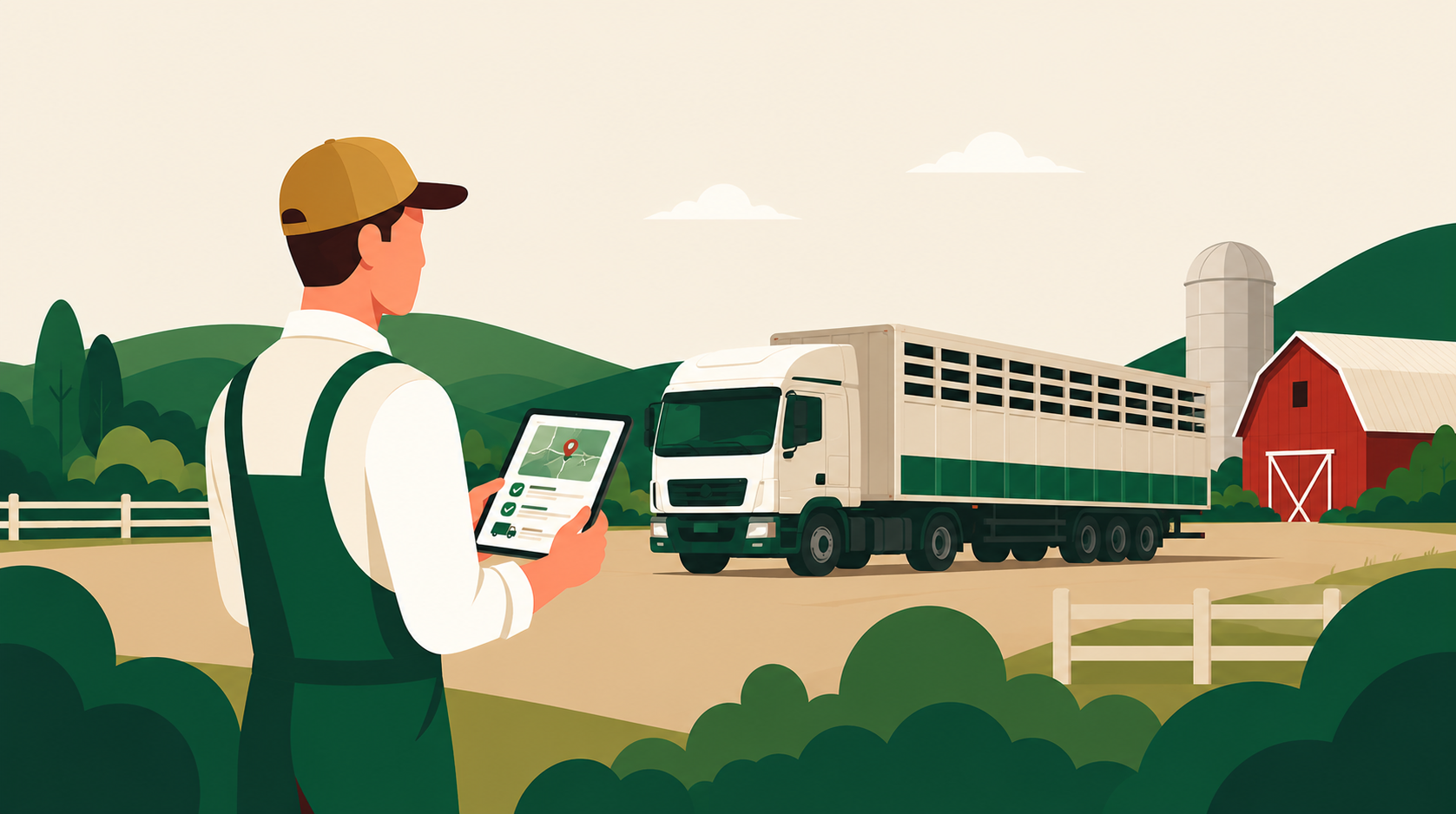
Catching and loading is a short moment, but the strain on the birds is the highest in the whole cycle. A spooked flock crowds into corners, birds collide with each other and with equipment, and a rushing crew turns that into bruises and fractures. These injuries show up later on the slaughter line as a lower carcass grade, and some birds suffer needlessly. That is why the way the crew catches and the pace of work are not a detail, but one of the most important parts of welfare.
Why do the last hours weigh so much?
A bird caught the wrong way suffers and loses value. Catching by a single leg head-down, too many birds per hand, or throwing birds into crates are the most common causes of fractures, dislocations, haematomas and breast scratches. On top of that comes heat stress, when birds wait crowded in modules with no air movement. A well-run pickup — a calm pace, the correct grip, sensible density and ventilation — cuts these losses and is directly required by the rules on protecting animals at the time of killing.
What makes a good pickup
Welfare in catching depends on the grip technique, house preparation, crate density and transport conditions — each of these can be set up properly.
The correct grip — two-handed, not one leg
A bird is lifted calmly, cupping the body with both hands or holding both legs with the body supported. Catching by a single leg head-down is the most common cause of fractures and dislocations and should be avoided. The number of birds per hand is kept low so each is held securely, not squeezed in a bunch.
Dimmed, blue light
Birds in low light are calmer and spook less. Before the crew enters, the light is dimmed, and many farms use blue light, which settles the flock and makes catching easier. Calm birds crowd less, so the risk of suffocation in corners and of mutual injuries falls.
Fasting before pickup by the rules
Feed, and sometimes water, is withdrawn for a set time before slaughter to limit contamination of carcasses with gut content. Fasting must be handled sensibly — too short misses the point, too long worsens welfare and dehydration. The time is matched to the transport schedule and the arrangements with the slaughterhouse.
A calm pace and the house climate
Haste is the main enemy of welfare at pickup. The crew works at a steady, calm rhythm, and ventilation and temperature in the house are kept up until catching ends. Birds waiting to be loaded must not overheat or suffocate in a crowd — which is why the climate is not switched off too early.
Density in crates and modules
The number of birds in a crate or module depends on their weight and the temperature — in the heat it must be lower. Overloaded crates mean crushing, suffocation and heat stress; too loose ones let birds move and injure themselves. Stocking is set so a bird can stand in a natural posture, without climbing on others.
Ventilation and heat stress in transport
After loading the birds still generate heat, and in a stationary vehicle the air quickly turns hot and humid. Modules are arranged so air can flow, and waiting and travel time is limited, especially in the heat. Controlling transport conditions is part of welfare; it does not end at the house door.
Catching and loading step by step
- 1
Prepare the house and the light
Before the crew enters, clear the aisles, prepare the crates or modules and dim the light — ideally to blue. Keep ventilation and temperature going. A calm, dimly lit flock spooks less, so catching is safer for the birds and quicker for the crew.
- 2
Manage fasting to plan
Withdraw feed for the agreed time before pickup, matched to the transport schedule and the slaughterhouse. Make sure the fast is neither too short nor too long. Water is withdrawn later and for a shorter time, so the birds are not dehydrated at the moment of catching.
- 3
Catch with the correct grip
Lift birds with both hands around the body, or by both legs with the body supported, never by a single leg head-down. Keep the number of birds per hand low so each is held securely. Work calmly and without jerking — jerking is what causes fractures, dislocations and haematomas.
- 4
Place into crates gently
Birds are set into crates calmly, not thrown. Match the stocking to weight and temperature — lower in the heat. Check that no bird is caught by the lid or stuck by the head or a wing. An overloaded crate means suffocation and heat stress.
- 5
Load with airflow in mind
Arrange the modules on the vehicle so air can flow between them and the birds inside do not overheat. Limit the time a loaded flock stands with no air movement. In the heat, shorten the wait and plan travel for cooler hours.
- 6
Train and supervise the crew
Everyone catching should know the correct grip and the limit of birds per hand, and the crew’s work must be supervised. Regulation (EC) 1099/2009 requires people at pickup to act without causing avoidable pain and stress to the animals. A short briefing before each pickup holds the standard and reduces injuries.
Frequently asked questions about poultry catching and loading
Is it allowed to catch birds by a single leg?add
Catching by a single leg head-down is the most common cause of fractures and dislocations and should be avoided. The correct grip is cupping the body with both hands, or holding both legs with the body supported. The number of birds per hand is kept low so each is held securely, not squeezed in a bunch. This is a basic element of welfare at pickup.
Why dimmed and blue light during catching?add
Birds in low light are calmer and spook less, so they crowd into corners less. Dimming the light, and often a blue colour, settles the flock and makes the crew’s work easier. Calm birds suffocate and injure each other less, and loading goes more smoothly. It is a simple measure with a large effect on welfare.
How many birds should go into a crate?add
Stocking depends on the birds’ weight and the temperature — the warmer it is, the fewer birds per crate. An overloaded crate risks crushing, suffocation and heat stress, while too loose a one lets birds move and injure themselves. It is set so a bird can stand in a natural posture. Exact figures follow from the flock weight, the weather and the arrangements with the slaughterhouse.
What does Regulation (EC) 1099/2009 require?add
These are the rules on protecting animals at the time of killing and related operations, including catching and loading. They require birds to be spared avoidable pain, distress and stress, and people at pickup to act competently and under supervision. In practice this means the correct grip, sensible density, control of heat conditions and a trained crew.
Plan the pickup in DlaFerm.pl
In DlaFerm.pl you keep a digital flock card and an entry/exit log, and for working with the catching crew there is a separate programme. All in one place. Create a free account or write to us.
Phone
+48 796 258 151