Mechanical poultry catching — machine versus by hand
Catching is one of the hardest moments in the cycle — its quality decides bird welfare and end-of-flock losses. Alongside classic hand catching, machine harvesting is appearing more often: a harvester with soft fingers sweeps birds onto a conveyor and feeds them into modules. We explain how it works, how it differs from hand catching and when it pays off.
verifiedFrom the team that has organised work on poultry farms for years.
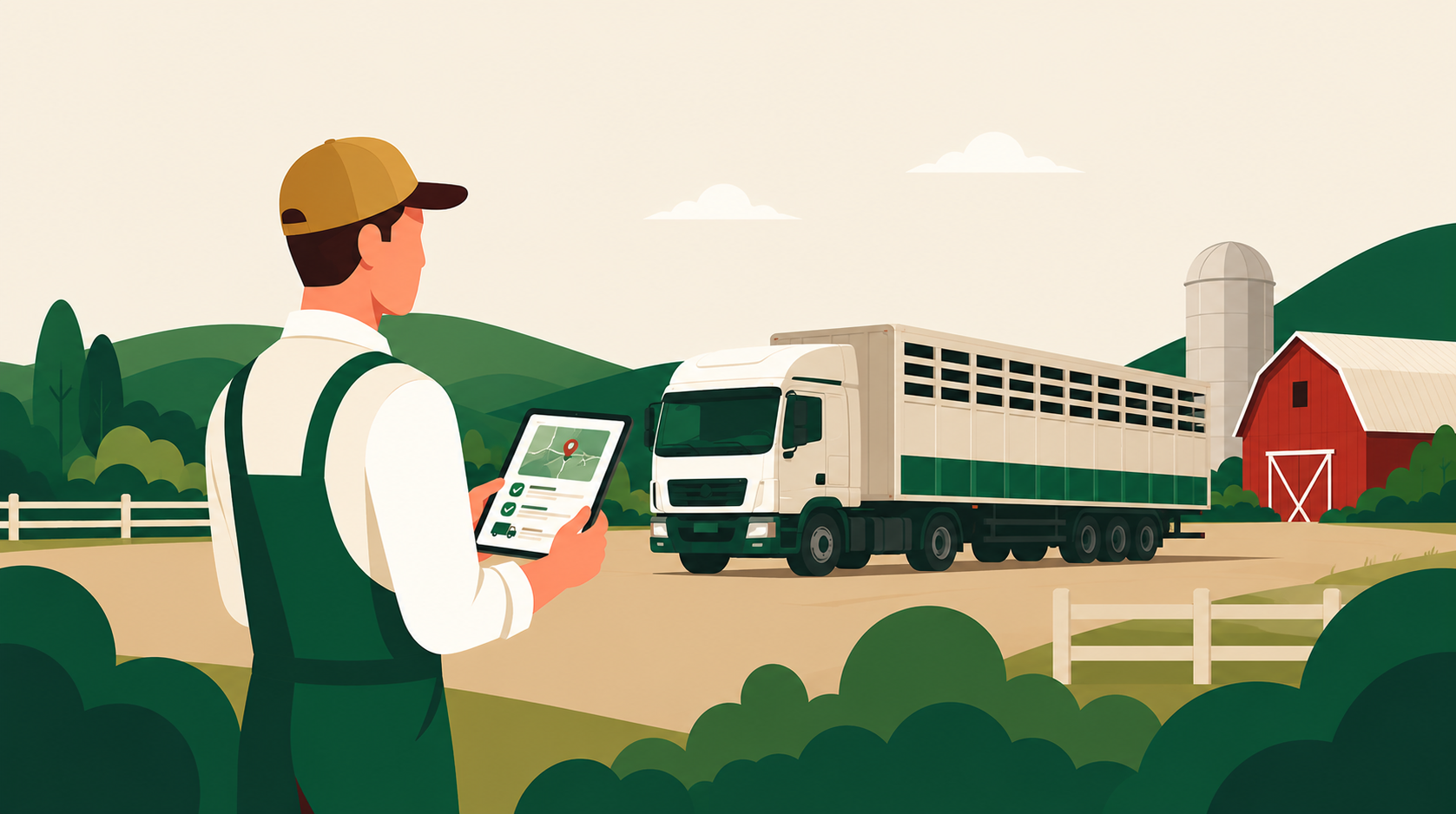
End-of-cycle broiler catching can be done in two ways. The classic one is hand catching — a crew enters the house and picks up the birds, usually by the legs, then loads them into crates or modules. The other is mechanical catching: a machine (a harvester) moves through the house and, with rotating soft fingers or belts, gently sweeps the birds onto a low conveyor, which carries them on into transport modules. In both cases the goal is the same — to prepare the flock for transport efficiently and safely, limiting stress and injury.
Why turn to a machine at all?
Hand catching is flexible and cheap on equipment, but demanding — for the birds and for the people. Under haste, crew fatigue or careless gripping, losses rise: broken wings and legs, bruising, dislocations, and in the heat there is heat stress on top. Machine catching is meant to limit those risks with a repeatable, calm pace and gentle sweeping instead of grabbing limbs. It is not a perfect answer for every building — it has its costs and limits — but on many farms it genuinely improves welfare and brings order to the work.
What the difference comes down to
A point-by-point comparison of mechanical and hand catching on what weighs most on welfare, results and how the work is organised.
How a catching harvester works
The machine drives deep into the house and moves along the birds. Rotating soft fingers or belts gently guide the birds onto a low conveyor, which lifts them and feeds them into modules set behind the machine or on a trailer. The bird is not grabbed by the legs or wings — it travels on the conveyor, which is meant to limit injury.
Welfare: fewer injuries and bruises
Handled correctly, machine catching usually gives fewer broken wings and legs, fewer bruises and dislocations than rushed hand catching. The decisive factors are gentle sweeping instead of grabbing limbs and an even pace. That “handled correctly” is key — a poorly set or too-fast machine can do harm as well.
Less heat stress
The machine’s even, calm pace limits panic and birds piling up in the corners of the house, which in hand catching can be a source of smothering and overheating. A calmer run means less heat stress, especially on warm days and at high stocking density.
Throughput and repeatability
The machine works at an even rhythm across the whole house and does not tire like people at the end of the night. That gives a predictable, repeatable number of birds per hour and less quality spread between the start and the end of catching. It is also easier to plan a time window for pickup.
Fewer people and better biosecurity
Machine catching is run by a smaller crew than classic hand catching. Fewer people entering the house means a lower risk of bringing in pathogens and simpler biosecurity, as well as less dependence on the availability of hands at the peak of the season.
Costs and limits of the machine
A harvester is a major outlay and running cost, plus demands on the building: a suitable floor width and evenness, access to the house, room to manoeuvre at the entrances and columns. Not every house — especially an older one or with an unusual layout — is fit for machine work, and there hand catching still remains the answer.
Catching step by step
- 1
Assess whether the building suits a machine
Check the width and evenness of the floor, the height and layout of the house, the width of the entrances and obstacles inside (columns, drinking and feeding lines). A harvester needs room to manoeuvre and even ground. If the building doesn’t provide that, well-organised hand catching remains the real choice.
- 2
Prepare the house before catching
Raise the drinking and feeding lines, remove or secure obstacles, and clear a path for the machine or a passage for the crew. Preparing the house in advance shortens the catching itself and limits the risk of injury — whether you catch by machine or by hand.
- 3
Plan the light, pace and crew
Dimmed, even light calms the birds and makes the work easier. Set the pace so the birds don’t pile up in the corners and don’t overheat. Size the crew to the method: machine catching is run by fewer people, hand catching by more, but both need a calm, trained crew.
- 4
Mind welfare during handling
In hand catching, pick birds up carefully, avoid carrying them by a single leg and don’t overfill the crates. In machine catching, watch the finger setting and the speed so the birds enter the conveyor smoothly. In both cases, react at once when injuries or panic start to rise.
- 5
Line catching up with pickup and transport
Match the catching pace to module supply and the arrival of transport, so the birds don’t wait too long in the crates. A smooth handover from the house to transport shortens the time between catching and travel and limits extra stress before the slaughterhouse.
- 6
Record the run and the results
After catching, note the method, the time, the crew and any remarks — for example the level of injuries or problems with machine access. With later flocks such a record lets you compare methods, refine house preparation and decide deliberately when to use a machine and when to catch by hand.
Frequently asked questions about mechanical poultry catching
Is machine catching better for the birds than by hand?add
Handled correctly, usually yes — gentle sweeping onto a conveyor instead of grabbing the legs, and an even, calm pace, limit broken wings, bruising and heat stress. The key, though, is “handled correctly”: a poorly set, too-fast machine or an unprepared house can do as much harm as rushed hand catching. The machine on its own won’t replace a calm, trained crew.
When a machine, and when better by hand?add
A machine works well in houses with an even, wide floor, good access and a typical layout, especially at high stocking density and with repeated catches. Hand catching stays sensible in older, tight or unusually laid-out buildings where a harvester has no room to manoeuvre, and where buying and running a machine doesn’t pay. Often the specific building decides, not the method itself.
How many people are needed for machine catching?add
Fewer than for classic hand catching — the machine takes over the heaviest part of the work, while the crew mainly operates it, supplies modules and watches welfare. Fewer people in the house also means simpler biosecurity and less dependence on the availability of hands at the peak of the season. The exact crew is sized to the machine and the house.
How do I prepare the house for machine catching?add
Raise the drinking and feeding lines, remove or secure obstacles and give the machine room to enter and manoeuvre. Check the floor width and evenness, the entrances and the column layout in advance. Set dimmed, even light and a calm pace. Good house preparation shortens catching and limits injuries — whatever method you choose.
Plan catching in DlaFerm.pl
In DlaFerm.pl you keep a digital flock card and organise the work of poultry-catching crews in one place — from house preparation to pickup. Create a free account or write to us.
Phone
+48 796 258 151