Turkey welfare — what really matters on the farm
Turkey welfare is not a slogan but a handful of things you can measure and improve: healthy legs, clean footpads, a calm flock with no feather pecking, the right stocking density, night-time rest and clean air. We explain in plain language what to watch and which rules apply to the meat turkey (under Directive 98/58/EC and the Council of Europe recommendations for turkeys).
verifiedFrom the team that has organised work on poultry farms for years.
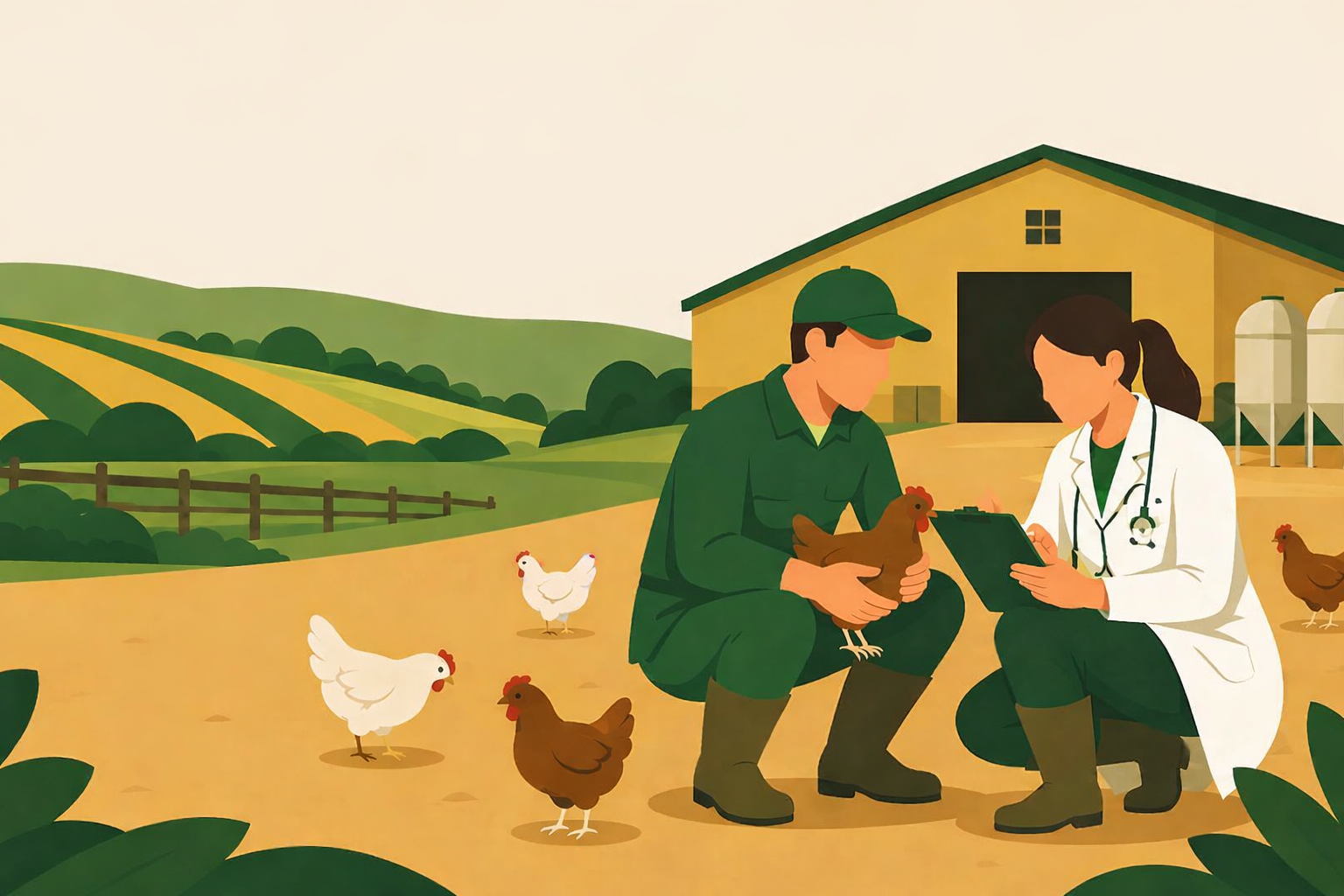
Turkey welfare is simply the conditions in which a bird can live, eat, drink, move and rest normally, without pain or excessive stress. It is the classic “five freedoms” translated into the turkey house: freedom from hunger and thirst, from discomfort (dry litter, good temperature, clean air), from pain and disease, from fear, and freedom to behave normally. In the turkey — a heavy, alert bird — welfare shows up most in the legs, the footpads and the calmness of the flock. The whole production cycle is covered in the guide on turkey farming, and the first weeks of life in the guide on turkey rearing.
Where do turkey welfare rules and indicators come from?
Turkeys have no dedicated EU directive of their own, unlike the meat chicken. The general Council Directive 98/58/EC on the protection of farm animals applies, implemented in Poland by the relevant ministerial regulation. Species-specific guidance is set out by the Council of Europe in its recommendation on turkeys, with EFSA opinions and poultry bodies providing the scientific backdrop. The legal requirements for the species are covered in the guide on legal rules for turkey farming, and general indicators for all poultry in the guide on poultry welfare indicators.
Why does the heavy turkey have its own challenges?
An adult tom reaches an enormous weight — over 20 kg. Such a load strains the legs, so in turkeys welfare shows up most in mobility and limb condition: leg deformities, gait problems and tibial dyschondroplasia (TD, a disorder of cartilage ossification). On top of that comes an alert temperament — turkeys stress easily and, under harsh light or boredom, start pecking their own feathers, which can turn into cannibalism. So in the turkey, several things matter in parallel: healthy legs, dry litter, the right density, a calm lighting programme and clean air.
How to manage turkey welfare in practice
- 1
Start with litter and footpads
Dry, friable litter is the foundation of turkey leg health. Wet or capped litter damages the skin on the footpads (footpad dermatitis), and in a heavy turkey such lesions heal slowly and hurt. Check the litter by hand every day: it should be loose, not sticking into clumps, and react to wet patches under drinker lines and air inlets. The mechanism is the same as in the broiler — covered in the guides on litter management in the house and footpad dermatitis — footpad quality.
- 2
Watch the legs and gait
A heavy turkey is prone to leg deformities and ossification disorders (tibial dyschondroplasia, TD). Watch how the flock walks regularly: a healthy turkey moves willingly and evenly, while a bird reluctant to stand or sitting on its hocks is a warning sign. A simple gait score on a sample of birds helps. The causes and prevention of deformities are covered in the guide on leg deformities in turkeys (TD), and the scoring method itself in the guide on gait score — assessing gait.
- 3
Keep the density and provide night-time rest
Overstocking means more manure on the same floor area, faster wet litter, more stress and a higher risk of feather pecking. Turkeys are stocked far more loosely per square metre than broilers, and the target density is counted in kg of bird weight per m², separately for toms and hens. The flock also needs a night break with darkness, to rest and to limit active pecking. Density conversions are in the guide on turkey stocking density, and light schedules in the guide on lighting programme for turkeys.
- 4
Prevent feather pecking and cannibalism
Feather pecking and cannibalism are a serious welfare problem in turkeys, because they spread quickly. They usually start with harsh light, boredom, too high a density, dietary deficiencies or poor air quality. Prevent rather than react: a calm, dimmed lighting programme, pecking enrichment (e.g. straw bales, chains, material to peck at), the right density and a balanced feed. The sooner the flock settles, the fewer losses. A calm lighting programme is covered in the guide on lighting programme for turkeys.
- 5
Look after air quality and ventilation
Turkeys are sensitive to ammonia and dust — high ammonia irritates the eyes and airways, encourages disease and worsens the litter under their feet. Good ventilation removes moisture and ammonia, keeps litter dry and temperature stable, which feeds straight into healthy legs and footpads. React when the house “bites” your eyes or the litter turns damp despite correct drinking. The climate and air requirements for the species are covered in the guide on turkey house requirements.
Measurable turkey welfare indicators and what to watch
Four groups of indicators used to describe meat-turkey welfare. Values are indicative* — they depend on the programme, the buyer and national rules; turkeys have no single species directive.
Legs and gait
In a heavy turkey this is indicator number one. Leg deformities, ossification disorders (tibial dyschondroplasia, TD) and mobility all count. In practice gait is scored on a sample of birds (gait score): the goal is as many turkeys as possible moving freely and as few as possible with a clear problem walking. A worsening gait flags litter, density or feeding. More in leg deformities in turkeys (TD).
Footpads (footpad dermatitis / FPD)
Lesions and discolouration on the underside of the feet come from contact with wet litter. They are scored on a footpad (FPD) scale from healthy skin to a deep lesion, usually on a sample of birds or after slaughter. A low average score shows the litter was dry and the density right; a high one is the first proof that leg welfare slipped. The mechanism is shared with the broiler: footpad dermatitis — footpad quality.
Plumage and flock behaviour
Plumage condition and flock calmness are a sensitive welfare indicator in turkeys. Pulled or damaged feathers, wounds on the back and tail, and a nervous, “quarrelsome” flock are signs of feather pecking and cannibalism. The response to a human presence matters too — a very flighty flock is often frightened and stressed. The goal is smooth, clean plumage and birds that respond calmly to handling, with no pecking outbreaks.
Environment: stocking, light, air
On-bird indicators go hand in hand with the environment. Stocking: counted in kg of weight per m², far looser than the broiler, separately for toms and hens. Light: a programme with a night break (darkness) for rest, without a harsh intensity that provokes pecking. Air: low ammonia, dry litter and a stable temperature. Plus enrichment (straw bales, chains, pecking material) that keeps the birds busy and limits stress.
Mistakes that lower turkey welfare
A few errors come up repeatedly — worth knowing before they show in the legs, the footpads and the calmness of the flock.
Light too harsh and no night break
Strong, around-the-clock light “for growth” provokes feather pecking and cannibalism and robs the flock of rest. Turkeys need a calm, dimmed programme with night-time darkness. When pecking starts in the house, one of the first moves is to dim and calm the light. Schedules are covered in the guide on lighting programme for turkeys.
Ignoring wet litter
Wet litter is a direct route to footpad dermatitis and sore legs in the turkey, and in a heavy bird the lesions heal slowly. Moisture usually returns through leaking drinkers, weak ventilation or overstocking. The longer you delay, the worse the footpads and gait. Litter management is covered in the guide on litter management in the house.
Overstocking and a bare house
Too many birds per square metre and a house with no enrichment mean less movement, more stress, faster wet litter and a higher risk of feather pecking. A turkey needs space and something to occupy it. Plan the right density and enrichment from the start of the cycle — conversions are in the guide on turkey stocking density.
Ignoring ammonia and air quality
High ammonia irritates turkeys’ eyes and airways, encourages disease and keeps the litter damp under their feet. It is easy to miss, because the nose quickly gets used to the smell. React to stinging eyes and damp litter by improving ventilation. The climate requirements for the species are covered in the guide on turkey house requirements.
Frequently asked questions about turkey welfare
Is there a separate welfare directive for turkeys?add
There is no dedicated EU directive for turkeys, unlike the meat chicken (broiler). The general Council Directive 98/58/EC on the protection of farm animals applies, implemented in Poland by the relevant ministerial regulation. Species-specific guidance is set out by the Council of Europe in its recommendation on turkeys, with EFSA opinions as the scientific backdrop. The legal requirements are covered in the guide on legal rules for turkey farming.
What matters most for turkey welfare?add
The legs, the footpads and the calmness of the flock. A heavy turkey is prone to leg deformities and ossification disorders (dyschondroplasia, TD), and wet litter quickly damages the footpads. The second thing is feather pecking and cannibalism, driven by stress, harsh light, boredom and too high a density. On top of that comes air quality — low ammonia and dry litter. These areas decide welfare the most.
Where does feather pecking in turkeys come from and how do you prevent it?add
Feather pecking and cannibalism usually start with harsh light, boredom, too high a density, dietary deficiencies or poor air quality. You prevent rather than react after the fact: a calm, dimmed lighting programme with a night break, pecking enrichment (straw bales, chains, material to peck at), the right density and a balanced feed. The sooner the flock settles, the fewer losses.
Why are the legs such an important indicator in turkeys?add
Because the turkey is very heavy — a tom reaches over 20 kg, and such a load strains the legs and encourages deformities and cartilage ossification disorders (tibial dyschondroplasia, TD). Gait is scored on a sample of birds (gait score): the goal is as many turkeys as possible moving freely. A worsening gait flags litter, density or feeding. More in the guide on leg deformities in turkeys.
What stocking density and lighting programme support turkey welfare?add
Turkey stocking is counted in kg of bird weight per m² and is far looser than for broilers, separately for toms and hens — too dense means more stress, faster wet litter and a higher risk of feather pecking. The lighting programme should be calm and not too harsh, with a night break (darkness) for rest. Conversion details are in the guide on turkey stocking density, and light schedules in the guide on the lighting programme for turkeys.
Is turkey welfare covered by subsidies?add
Yes, in Poland there are welfare payments that also cover turkeys — for raised housing standards, including looser stocking and additional care requirements. The conditions and rates change between application years, so always check the current guidance. The money side — how welfare payments work — is covered in a separate guide on poultry welfare subsidies.
Sources & resources
- linkCouncil Directive 98/58/EC concerning the protection of animals kept for farming purposes (eur-lex.europa.eu)
- linkCouncil of Europe — recommendation concerning turkeys (Meleagris gallopavo) under the Convention for the Protection of Animals kept for Farming Purposes (coe.int)
- linkEFSA — scientific opinion on turkey welfare and animal welfare topic (efsa.europa.eu)
- linkNational Research Institute of Animal Production (IZ-PIB) — poultry welfare and housing guidance (izoo.krakow.pl)
Keep welfare records in DlaFerm.pl
Want a digital flock record, a mortality log and turkey welfare observations in one place — ready for inspection and subsidies? Create a free farm account or write to us.
Phone
+48 796 258 151