Is chicken raised on hormones? In short: no
It is one of the most stubborn food myths. The answer is simple and clear: chicken is not raised on hormones, because hormones in poultry production have been banned in the European Union for decades. Broilers grow fast for a completely different reason — decades of breeding, good feed and good conditions. We explain why the myth is so alive and what really drives the bird’s growth.
verifiedFrom the team that has organised work on poultry farms for years.
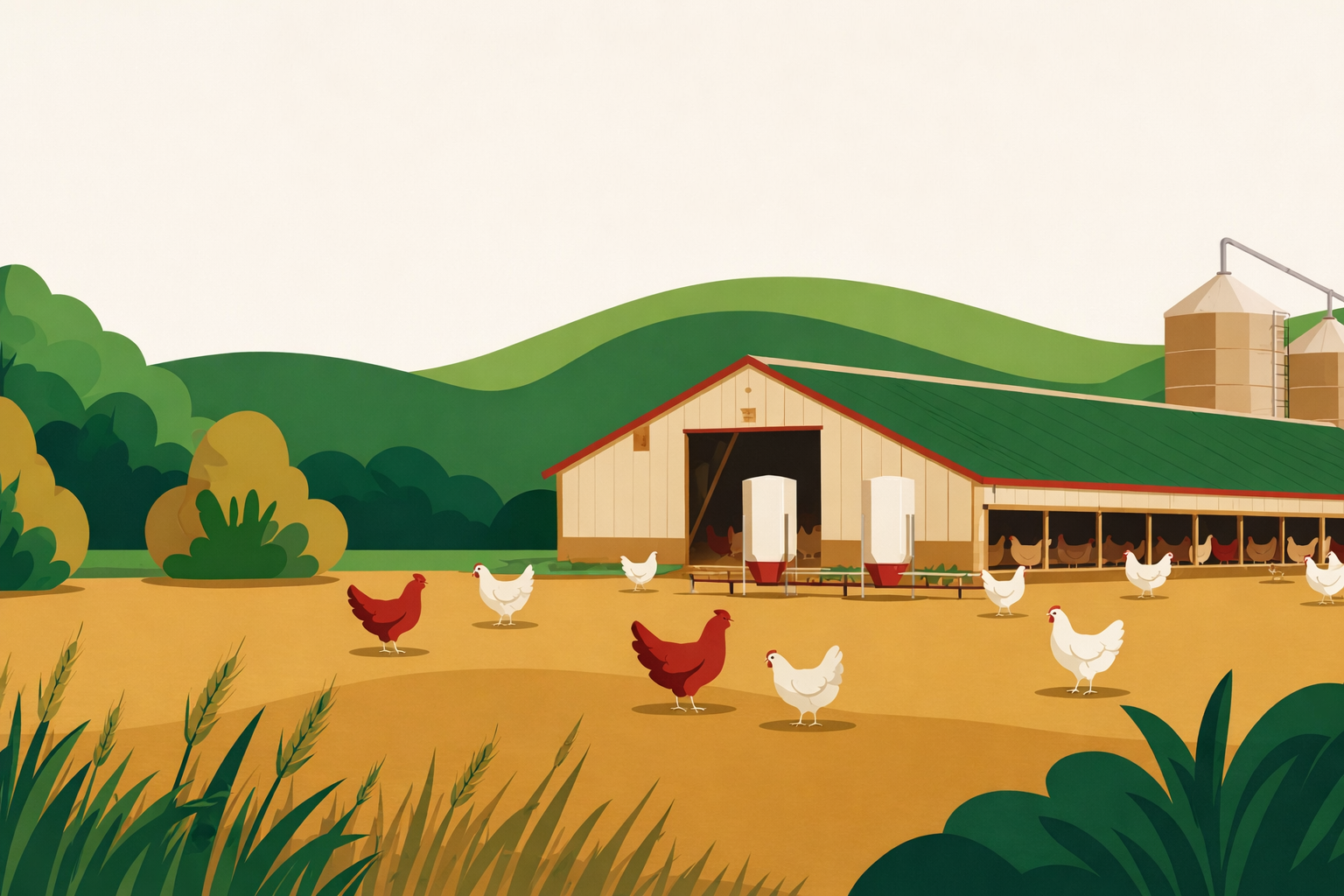
The question every farmer hears
“That chicken is on hormones, that’s why it grows so fast” — this line comes up in almost every conversation about poultry. The answer is no. In the European Union, using hormones to boost the growth of food-producing animals, including poultry, has been banned for decades. No Polish broiler gets hormones — neither in feed nor by injection. The fast growth comes from something entirely different, which we explain below and in the guide on facts and myths about chicken.
Where the myth even comes from
The myth lives on because broilers really do grow surprisingly fast — in a few weeks a chick becomes a grown bird. The human mind looks for a simple explanation, and “hormones” sounds convincing. Add memories from the old days, stories about other countries with different rules, and “hormone-free” labels in shops that imply hormones must exist somewhere. The real answer is less sensational: it is broiler farming based on genetics and feeding, not chemistry.
What the law says
The basis is Council Directive 96/22/EC, which bans the use of substances with a hormonal action to promote the growth of farm animals in the European Union. The ban has been in force for years and covers the whole chain — from farm to sale. This is not the farmer’s goodwill but hard law, enforced by the veterinary services. So there are no hormones on the market as a poultry-fattening agent — they cannot be legally bought or administered.
So why do broilers grow so fast
The growth rate of a modern chicken is the fruit of about 60 years of genetic selection. Breeders around the world spent decades choosing the fastest- and healthiest-growing birds for reproduction, until today’s lines such as Ross and Cobb emerged. On top of genetics comes precise feeding and good house conditions. Hormones have nothing to do with it — the full list of factors is in the “What really drives growth” section and in the poultry encyclopaedia.
A clear head and order with DlaFerm.pl
A farmer who keeps solid records has nothing to fear from any question about meat quality. In DlaFerm.pl you keep a digital Flock Card, have treatment and drug withdrawal records at hand, and the reports to IRZplus flock records DlaFerm.pl will send for you, if you want. This is proof that you run the flock transparently and lawfully — ready for any inspection. You can create a farm account for free.
Is chicken on hormones — six reasons why it is not true
The hormone myth falls apart once you look at the facts: the law, the market, genetics and controls. Here are six reasons that together leave no doubt.
A legal ban across the whole European Union
Council Directive 96/22/EC bans the use of hormonal substances to promote the growth of food-producing animals in the EU. It is a ban in force for decades, binding on every farm. Hormones for fattening are simply illegal — and that is the starting point of the whole myth, which we also gather in facts and myths about chicken.
There are no hormones on the market
Since the ban covers the whole chain, hormones for fattening poultry cannot be legally bought or administered. They are not sold as a feed agent or a “growth” drug. Even if a farmer wanted them, there is nowhere to get them. This differs from veterinary medicines, which are legal, recorded and subject to a withdrawal period.
Broilers grow fast thanks to genetics, not chemistry
The growth rate is the result of about 60 years of genetic selection, good feed and keeping conditions. Modern lines such as Ross and Cobb emerged from choosing the best-growing birds over generations. A comparison of two leading lines is in Ross 308 vs Cobb 500 — it is genetics, not hormones.
The myth comes from the past and other countries
Part of the belief is an echo of the old days and stories about countries with different rules. People confuse fast growth with a “booster” and carry old notions over to today’s production. Meanwhile, in the EU the rules have been clear for decades. We explain where such misunderstandings come from in facts and myths about chicken.
Controls and residue monitoring
Poultry meat is subject to state residue monitoring — the veterinary services take samples and test them for banned substances, including hormonal ones. This control system makes sure the ban is not just on paper. The results confirm there are no hormones in poultry, because nobody uses them.
“Hormone-free” labels are a marketing trick
A “hormone-free” label on a chicken pack distinguishes nothing, because no chicken in the EU contains hormones — by law. It is a marketing move that plays on the myth and implies an advantage where everyone is under the same ban. A glossary of such terms is in the poultry encyclopaedia.
What really drives broiler growth
If not hormones, then what? Here are six real factors that together decide the growth rate and health of a meat chicken.
Breed genetics
This is the most important factor. Modern broiler lines such as Ross and Cobb are the fruit of decades of selection for fast, healthy growth and good feed use. Genetics sets the bird’s potential — the rest of farming is about realising it. The differences between lines are shown in Ross 308 vs Cobb 500.
Phase feeding
A broiler gets feed matched to its age — a starter early on, a grower during growth and a finisher before slaughter. Each mix has the right level of protein and energy. It is precise, balanced feeding, not any “boosters”, that gives fast, even gains in a healthy bird.
House microclimate
Temperature, humidity, ventilation and litter quality decide whether the bird grows calmly or gets stressed. A good microclimate means fewer respiratory diseases and better feed use. Controlling house conditions is now the basis of modern broiler farming.
Health and biosecurity
A healthy flock grows faster than a sick one — obvious, yet often underrated. Biosecurity, a preventive programme and a quick reaction to the first signs of disease protect the gains. Treatment, if needed, is led by a vet, and medicines are subject to a withdrawal period — a gap before slaughter that guarantees no residues in the meat.
Bird welfare
A bird with enough space, free access to water and feed, and calm makes better use of its genetic potential. Stocking and keeping standards are not only a legal duty — they are also a production factor. Stress, crowding and poor litter lower the gains, so welfare and results go hand in hand.
Flock management
In the end, the farmer’s daily work matters: watching the birds, adjusting feeding and watering, reacting to small signals, keeping solid records. A well-run flock grows evenly and healthily. It is most convenient to gather all of this in one place — the digital Flock Card in DlaFerm.pl, described in the poultry encyclopaedia.
Frequently asked questions about hormones in chicken
Is chicken really not raised on hormones?add
Really not. In the European Union, using hormones to promote the growth of food-producing animals, including poultry, has been banned for decades under Directive 96/22/EC. A Polish broiler gets no hormones, neither in feed nor by injection. Its fast growth comes from genetics, feed and conditions, not from any chemistry.
Then why do broilers grow so fast?add
Because over about 60 years breeders around the world chose the fastest- and healthiest-growing birds for reproduction, until today’s lines such as Ross and Cobb emerged. On top of genetics comes precise phase feeding and good house conditions. It is this combination, not hormones, that delivers the fast gains. The growth rate is therefore the fruit of selection, not chemical intervention.
Is a “hormone chicken” the same as a chicken on steroids?add
It is one and the same misunderstanding. Neither growth hormones nor anabolic steroids may be used in poultry production in the EU. Both terms circulate in the myth of a “boosted” chicken, but in practice they are illegal and absent from the market. A bird’s fast growth needs neither of these substances.
What does a “hormone-free” label on chicken mean?add
In practice it distinguishes nothing, because no chicken in the EU contains hormones — by law. Such a label is a marketing trick that plays on the popular myth and implies an advantage where all producers are under the same ban. It is worth knowing this is not information about a real difference in the product.
Does anyone check that there really are no hormones?add
Yes. Poultry meat is subject to state residue monitoring — the veterinary services take samples and test them for banned substances, including hormonal ones. It is a system that makes sure the ban works in practice. The results confirm there are no hormones in poultry, because nobody uses them.
And the medicines a chicken gets — do they stay in the meat?add
Veterinary medicines are something different from hormones and are legal, but they are used only when needed, under a vet’s supervision and with a withdrawal period. The withdrawal period is the required gap between the last dose and slaughter, which guarantees residues have time to clear from the bird’s body. That is why properly kept treatment and withdrawal records are so important.
Run your flock transparently with DlaFerm.pl
Want to answer any question about your meat quality with confidence? We will show you how DlaFerm.pl lets you keep a digital Flock Card and treatment and drug withdrawal records — proof of solid farming. Create a free farm account.
Phone
+48 796 258 151