Environmental enrichment — perches, platforms, bales
Birds in a house need more than feed and water. Perches, elevated platforms and bales to peck at let them move, scratch and rest the way nature intended. We explain why to enrich the environment, which elements you use, how many per bird and how to keep them clean.
verifiedFrom the team that has organised work on poultry farms for years.
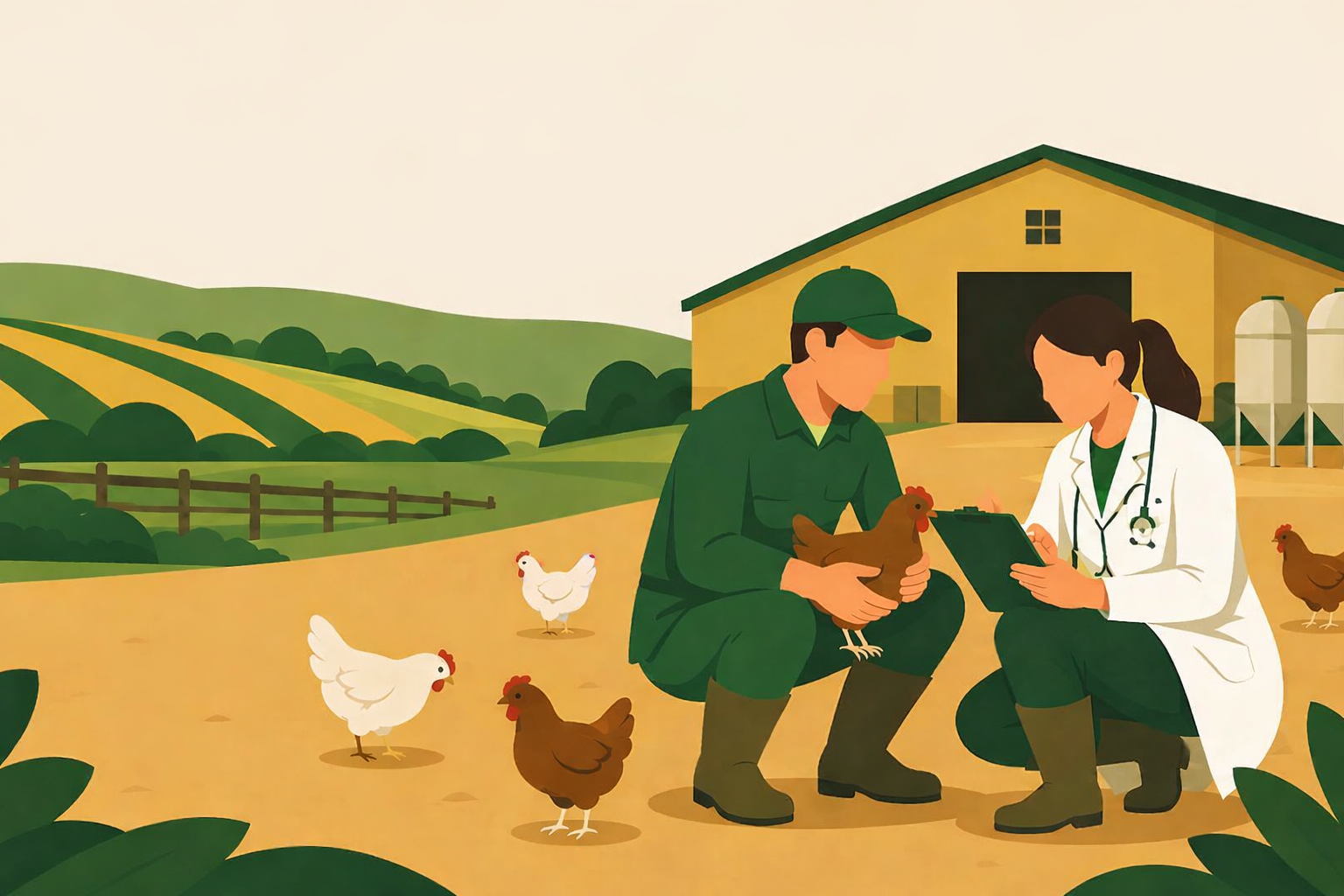
Environmental enrichment means adding elements to the house that let birds behave the way their nature dictates. A broiler that has something to perch on, peck at and scratch in is more active and less apathetic. Movement strengthens the legs, and busy birds spend less time lying idle on the litter. It isn’t decoration for the house — it’s a practical way to a healthier, calmer flock.
Why enrich the broiler environment?
The reason is twofold: welfare and production. Birds that move and climb onto platforms have stronger legs and better condition, and the flock can be more uniform. Activity cuts apathy and crowding at the feeder, while bales and scratching materials give an outlet to natural urges. Increasingly, enrichment is also a requirement — welfare standards such as the European Chicken Commitment (Better Chicken Commitment) or RSPCA schemes explicitly demand perches, platforms and pecking materials per a set number of birds.
How you enrich the house environment
It’s best to combine several types at once: some give movement and a place to rest up high, others give the beak and feet something to do on the litter.
Elevated platforms
Low platforms that birds climb onto and off make them move and exercise their legs. They also give a resting place away from the crowd and damp litter. The surface should be rough and easy to clean, and the access ramp gentle, so the birds use it on their own.
Perches
Horizontal bars satisfy the strong urge to perch up high, especially at night. Broilers use them more cautiously than layers, so perches are mounted low and stable, with no sharp edges. They count towards the perch length required by welfare standards.
Alfalfa and straw bales to peck at
Blocks or bales spread on the litter give birds something to peck at and break up. They keep the beak busy, cut boredom and direct the natural instinct onto something safe. They have to be replaced once pecked apart or damp, so they don’t spoil litter quality.
Scratching materials
Dry, loose litter and topped-up portions of material (for example chopped straw) prompt scratching and dust-bathing. That is one of the strongest natural behaviours of hens, and a simple way to keep up activity and feather condition. The key is litter that stays dry and doesn’t cake.
Manipulable objects
Hanging or lying objects — chains, rings, light items to peck at — give birds extra occupation. They should be safe, with no small parts to swallow, and easy to disinfect. They work best when rotated now and then, since birds get used to the same objects.
Natural light and a daily rhythm
Windows or skylights letting in daylight support activity and the flock’s natural daily rhythm. Combined with platforms and bales, they encourage the birds to move during the day and rest quietly in the dark phase. Many welfare standards require access to natural light.
Enrichment step by step
- 1
Check your welfare standard’s requirement
Start with the standard that applies to you. The European Chicken Commitment and RSPCA schemes give concrete minima — how many centimetres of perch, how many platforms and which pecking materials per a set number of birds. Write these values down before you mount anything, so you hit the requirements straight away.
- 2
Pick a set of enrichments
Combine several types: platforms and perches for movement and resting up high, plus bales and scratching materials to occupy the beak and feet. Different elements meet different needs, so one type alone isn’t enough. Choose equipment that’s easy to wash and disinfect between flocks.
- 3
Spread them evenly and count per bird
Lay out platforms, perches and bales across the whole house, not just along the wall, so every bird has them close by. Stick to the per-bird ratio from your standard — it’s about real access, not a few elements for show. Leave room around them so birds can approach freely.
- 4
Introduce them from the first days
Put the enrichments in early, ideally at placement or in the first days of rearing. Young birds learn to use them faster and start exercising their legs sooner. Low platforms and gentle ramps ease the start, while bales direct pecking onto the litter from the outset.
- 5
Keep hygiene and dry litter
Enrichments only make sense when they’re clean. Replace pecked-apart or damp bales, top up dry scratching material and clean the platforms so they don’t gather moisture and droppings. Caked, wet litter ruins foot condition, so dry litter is the first condition of good enrichment.
- 6
Watch the effects: legs, activity, uniformity
See whether the birds use the equipment, how they move and how the foot condition looks. Less apathy, better legs and a more uniform flock are a sign the enrichment works. If an element is ignored, change its place, height or type — and note what works in your house.
Frequently asked questions about environmental enrichment
Is environmental enrichment mandatory?add
It depends on the standard you work under. Welfare programmes such as the European Chicken Commitment (Better Chicken Commitment) or RSPCA schemes explicitly require perches, elevated platforms and pecking materials per a set number of birds, often with access to natural light. Even outside such a programme, enrichment supports leg condition and cuts apathy, so it’s worth using.
How many platforms and perches per bird?add
The exact minima come from your welfare standard — usually as centimetres of perch and platform area per a set number of birds. So first check the requirements of the programme you produce under and match the number of elements to the house stocking. It’s about real access for the whole flock, evenly spread, not a few units for show.
Don’t bales spoil litter quality?add
Only if they’re neglected. Alfalfa and straw bales keep the birds’ beaks busy and cut boredom, but once pecked apart or damp they have to be replaced so they don’t wet the litter. With dry, regularly topped-up litter, bales support natural scratching without harming foot condition.
Does enrichment affect leg health?add
Yes, and that’s one of the main reasons to use it. Platforms and perches make the birds move, and movement strengthens the legs and improves foot condition. An active flock lies on the litter less, is less apathetic and can be more uniform. The condition is dry litter and clean enrichments — moisture and dirt cancel out the benefits.
Record your welfare equipment in DlaFerm.pl
In DlaFerm.pl, in the “Technical equipment of the building” step, you note which perches, platforms and enrichments you have in the house — all next to the flock card. Create a free account or write to us.
Phone
+48 796 258 151