Poultry farm disease insurance
Culling a flock on the order of the Veterinary Inspection during avian influenza or Newcastle disease is a sudden loss for a farm. The state budget pays compensation for the killed birds, but not for the downtime and lost profit. We explain what state compensation covers, what only a commercial policy does, and what to check in the terms.
verifiedFrom the team that has organised work on poultry farms for years.
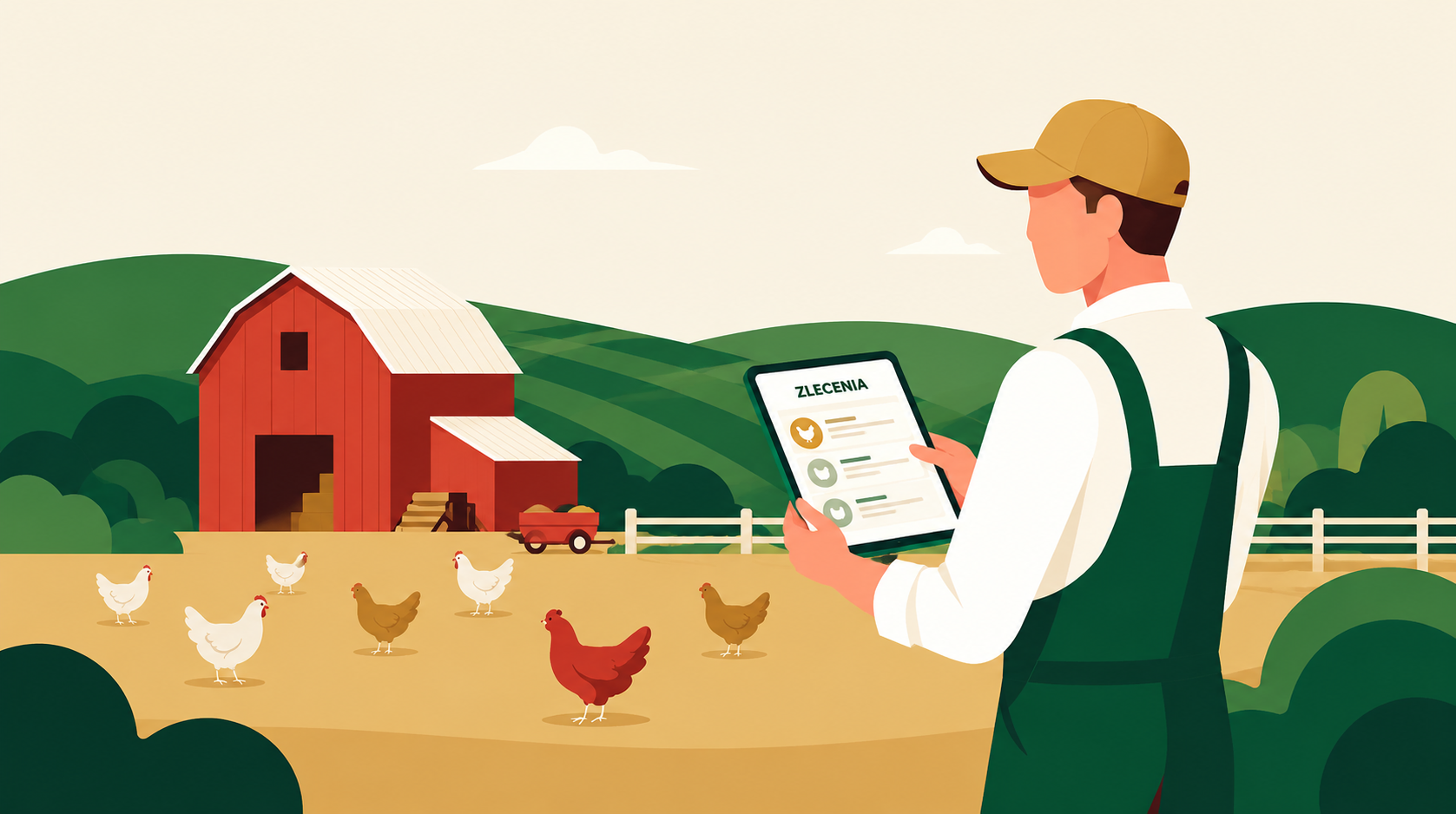
When avian influenza (HPAI) or Newcastle disease (ND) is detected on a farm, the Veterinary Inspection orders the flock to be culled, and the farmer is entitled to compensation from the state budget. It covers the market value of the killed animals and destroyed property. The trouble is that a farm’s losses go well beyond the value of the birds — and that is exactly what the compensation does not cover. Commercial policies close this gap, but their terms have to be read carefully.
How does state compensation differ from a policy?
Compensation from the state budget, under the act on animal health protection and the control of infectious animal diseases, refunds the market value of killed animals and destroyed property. It does not, however, cover indirect losses: production downtime, lost profit, cleaning and disinfection costs above the standard, the flock rebuilding period or the drop in revenue. Those risks are taken on by commercial insurance — of animals, property and lost profit — provided the infectious disease has not been excluded from it.
What farm insurance can include
It’s best to combine several policies: one protects the animals and property, another the revenue during downtime. Together they close what state compensation does not cover.
State compensation for culling a flock
When culling is ordered due to HPAI or ND, you are entitled to a refund of the market value of the killed animals and destroyed property from the state budget. That is the baseline, but it covers only the direct value — not downtime and not lost profit. It’s worth knowing what you already have from the authorities before you add a policy.
Livestock insurance
A policy against death and emergency slaughter covers the loss of animals from chance events. Note: epizootic risk, that is infectious diseases such as HPAI, is often excluded or covered only on special terms. This is the first thing to check in the policy terms.
Farm property insurance
House buildings, equipment, silos and installations can be insured against fire and other forces of nature. This protects the farm’s assets regardless of the flock. Check whether the scope covers all the buildings and equipment that really make up your production.
Business interruption insurance
A business interruption policy covers the drop in revenue while the farm is not producing — for example during the rebuilding of the flock after culling. This is precisely the loss that state compensation does not refund. The key is the length of the covered period and how lost profit is calculated.
Cleaning and disinfection costs
After culling, the building has to be thoroughly cleaned and disinfected, often beyond the usual standard between flocks. Some of these costs may go beyond state compensation. Check whether and to what extent your policy covers them.
Premium subsidies
Premiums for agricultural insurance, including livestock, are subsidised from the state budget under the act on crop and livestock insurance. These subsidies lower the real cost of the policy. Meeting biosecurity requirements is often a condition of cover.
Farm insurance step by step
- 1
Check what state compensation covers
Start with what you already have from the authorities. When culling is ordered due to HPAI or ND, the state budget refunds the market value of the killed animals and destroyed property. Write down what this refund does not include — downtime, lost profit, above-standard costs — because those are exactly the gaps a policy is meant to close.
- 2
Establish whether HPAI and ND are covered or excluded
This is the most important point of the whole contract. In animal insurance, infectious diseases and epizootic risk such as avian influenza are often excluded or covered only on special terms. Read the policy terms carefully and ask the agent directly whether culling on the order of the Veterinary Inspection is in scope.
- 3
Set the sum insured and the deductible
The sum insured should match the real value of the flock and property, not a figure lowered for a cheaper premium. Check the deductible too — the part of the loss you cover yourself. Too low a sum or a high deductible mean the payout won’t be enough to rebuild.
- 4
Add downtime and lost-profit cover
The value of the animals is not all you lose when a flock is culled. A business interruption policy covers the drop in revenue while the flock is rebuilt — a loss state compensation does not refund. Set the length of the covered period so it reaches all the way to restocking the house.
- 5
Meet the biosecurity requirements
Biosecurity is often a condition of cover — without it the insurer may refuse to pay. Check what your policy requires and keep it up to date: disinfection mats, entry control, securing feed and water. The same supports an application for a premium subsidy.
- 6
Gather and record the documents
In a claim, documentation matters: Veterinary Inspection decisions, flock valuation, invoices for cleaning and disinfection, stocking data. Keep them in one place so the claim goes smoothly. The better documented the loss, the fewer disputes over the size of the payout.
Frequently asked questions about farm insurance
Will I get compensation for culling a flock during avian influenza?add
Yes. When culling is ordered due to HPAI or Newcastle disease, you are entitled to compensation from the state budget for the market value of the killed animals and destroyed property, under the act on animal health protection and the control of infectious animal diseases. It does not, however, cover downtime, lost profit or the cost of rebuilding the flock — those gaps are closed only by a commercial policy.
Does a policy cover a loss caused by HPAI?add
That depends on the policy terms. In many livestock policies, infectious diseases and epizootic risk such as avian influenza are excluded or covered only on special terms. So before signing, you have to read the policy terms and ask directly whether culling on the order of the Veterinary Inspection is within the scope of cover.
What does state compensation not cover?add
Compensation refunds only the market value of the killed animals and destroyed property. It does not cover indirect losses: production downtime, lost profit, cleaning and disinfection costs above the standard, the flock rebuilding period or the drop in revenue. Those risks can be covered by separate policies — for lost profit and property.
Are there subsidies for the insurance premium?add
Yes. Premiums for agricultural insurance, including livestock, are subsidised from the state budget under the act on crop and livestock insurance. These subsidies lower the real cost of the policy. Meeting the farm’s biosecurity requirements is often a condition of cover, and sometimes of the subsidy itself.
Keep your farm documents in DlaFerm.pl
In DlaFerm.pl, next to the flock card, you note the stocking, value and notes you need for a claim and valuation — all in one place. Create a free account or write to us.
Phone
+48 796 258 151