Broiler contract farming — the deal with the plant, prices and risks
Many broiler farmers work under a contract with a poultry plant or slaughterhouse. The plant supplies the chicks and feed, while you provide the growing service and earn a fee that depends on results. We explain how contract farming works, the payment models, what to watch in the contract and which risks you take on.
verifiedFrom the team that has organised work on poultry farms for years.
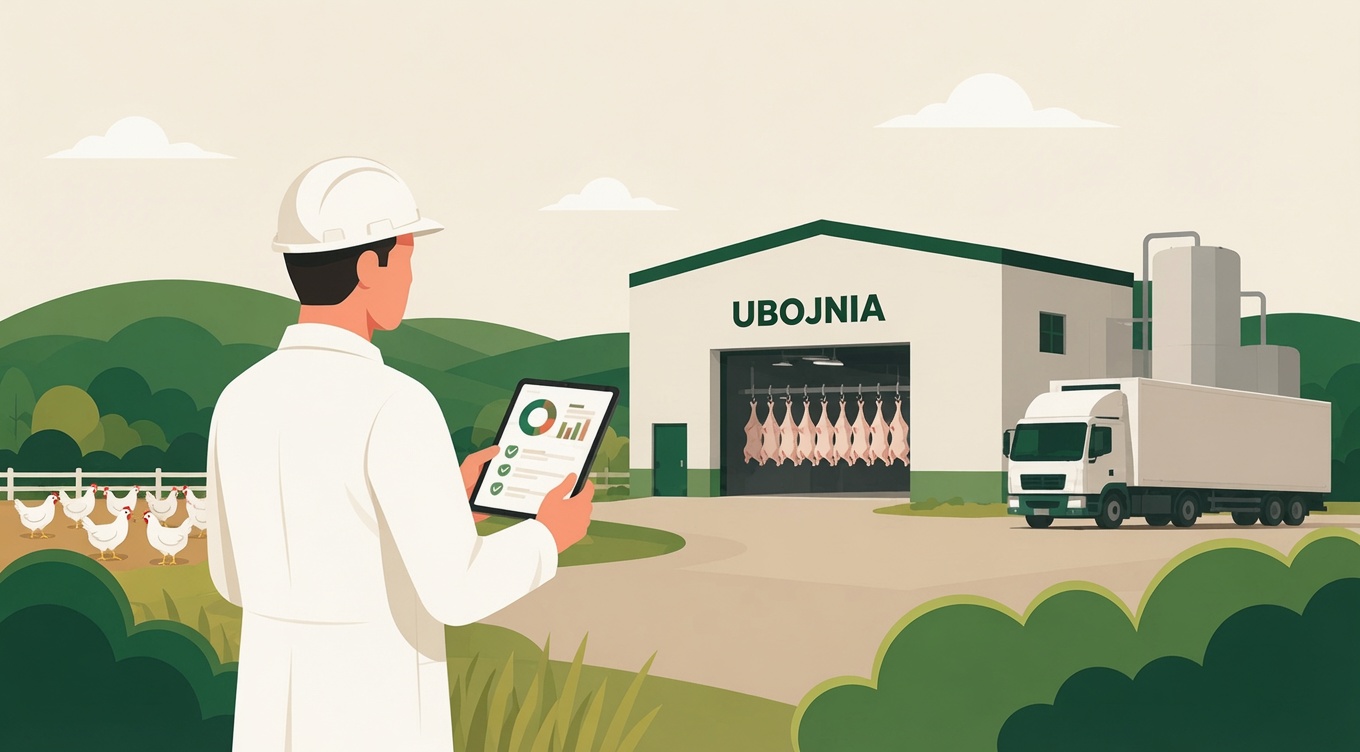
Contract farming is an agreement between a farmer and a poultry plant or slaughterhouse, in which the plant usually supplies the chicks, feed and veterinary care, and collects the live birds once the flock is finished. The farmer provides the growing service — the house, the labour and the day-to-day care — and in return earns a fee that depends on results. This arrangement is called contract growing, and it is a form of vertical integration in the poultry sector.
Why is contract farming so common?
The reason is simple: contract farming takes part of the risk and hassle off the farmer’s shoulders. You don’t have to buy chicks or feed yourself at fluctuating prices, you have an agreed offtake of the live birds and veterinary support from the plant. In return you give up part of the margin and tie yourself to a single buyer. In Polish law a contract-farming agreement is a named type of contract set out in the Civil Code, so it’s worth reading its terms carefully and knowing exactly what you sign.
What a contract-farming agreement should cover
Before you sign, check each of these points — they decide how much you really earn and how much risk you take on.
The price and payment formula
The single most important point: how your fee is calculated. The most common models are payment per kg of gain, per m² of house floor or per bird reared. Check whether the rate is fixed or variable, and exactly what goes into the basis for the settlement.
Who supplies chicks and feed
In a typical contract the plant provides the chicks, feed and often medicines, and their cost doesn’t fall on the farmer. Make sure exactly what the plant delivers and what you are responsible for — that decides which costs stay on your side and how the margin is worked out.
Quality parameters, bonuses and penalties
Growing performance is measured by weight gain, feed conversion (FCR), mortality and the European Production Efficiency Factor (EPEF). Many contracts add a bonus for good results and deduct a penalty for poor ones. Check the thresholds and amounts so you know how your work translates into pay.
Term and termination
Look at how many flocks or what period the contract covers and how it can be terminated. The notice periods, renewal terms and whether the plant guarantees your next placements all matter. They decide how stable your planning can be.
How disease risk is shared
The key question: who bears the loss when a flock dies or has to be culled, for example during bird flu (HPAI). Check how the contract splits disease risk, who is liable for mortality above the norm and whether the plant helps in the event of an outbreak being stamped out.
Payment terms and security
Check how long after the birds are collected you get paid and how that payment is secured. Watch for any obligation to insure the flock or the house and who pays the premium. Late payments can hit the cash flow of a small farm hard.
Contract farming step by step
- 1
Work out your own growing costs
Before you sit down to talk, work out what one flock costs you: heating, power, water, labour, litter, the depreciation of the house. Without that figure you can’t judge whether the offered rate per kg of gain or per m² is worth it for you at all.
- 2
Compare the payment models
Ask for the fee to be laid out under different models — per kg of gain, per m², per bird reared — and convert each to your house and your stocking. The same plant may have several variants, and the gap between them can be wide on a poor and a good flock.
- 3
Read the bonus and penalty clauses
Check exactly which results earn a bonus and which end in a deduction. Watch the FCR, mortality and EPEF thresholds and whether the penalties are directly proportional to the result. They decide how much is left for you on a weaker flock.
- 4
Check risk sharing and termination
Go through the clauses on disease, culling, payment terms and termination. Make sure who bears the loss during HPAI and whether your next placements are guaranteed. These are the points that decide your safety, and they’re easy to overlook.
- 5
Negotiate and put it in writing
Don’t treat the first draft as final — ask about rates, bonus thresholds and payment terms. Everything you agree verbally has to make it into the written contract. Verbal promises of offtake or top-up payments mean nothing if they aren’t in the document.
- 6
Record the results of every flock
After each flock, record the weight gain, feed conversion, mortality, EPEF and the settlement with the plant. That way you’ll see whether the contract really pays off, and you’ll have hard data for the next round of talks. A flock history is your strongest argument at the table.
Frequently asked questions about broiler contract farming
How does contract farming differ from selling live birds on the open market?add
Under contract farming you tie yourself to a single plant, which usually supplies the chicks and feed and guarantees offtake of the live birds in advance, while you earn a fee for the growing service. On the open market you buy the chicks and feed yourself and find your own buyer, taking on the price risk but keeping the whole margin. Contract farming gives more certainty at the cost of part of the profit.
How is the farmer’s fee calculated?add
The most common models are payment per kg of gain, per m² of house floor or per bird reared. The basis is often topped up with bonuses for good results — low FCR, low mortality, a high European Production Efficiency Factor (EPEF) — and penalties for poor ones. The exact formula is always set by the specific contract, which is why you have to read it point by point.
Who bears the loss when a flock dies or has to be culled?add
That depends on the contract terms and is one of the most important points to check. Some contracts shift part of the disease risk onto the farmer, others leave it with the plant, especially for events beyond the farmer’s control such as bird flu (HPAI). Before you sign, settle outright who is liable for mortality above the norm and for losses during culling.
What are the main risks of contract farming for the farmer?add
The main ones are dependence on a single buyer, penalties for weaker results, an unclear split of feed and live-weight price risk, and the payment and termination terms. If the plant halts placements or is late with payment, your cash flow feels it hard. That’s why it’s worth working out your own costs, reading the contract point by point and recording the results of every flock.
Record the contract terms and flock results in DlaFerm.pl
In DlaFerm.pl, next to the flock card, you can note the key terms of your contract with the plant and the results of every flock — weight gain, feed, mortality and the settlement. Create a free account or write to us.
Phone
+48 796 258 151