Polish poultry worldwide — exports, new markets, competition
Since around 2014 Poland has been the largest poultry-meat producer in the European Union, and roughly half of its output goes to export. What you get for your live birds therefore depends not only on the home market but on conditions abroad. We explain where Polish poultry goes, its strengths, where competitive pressure is rising and what it all means for a single farm.
verifiedFrom the team that has organised work on poultry farms for years.
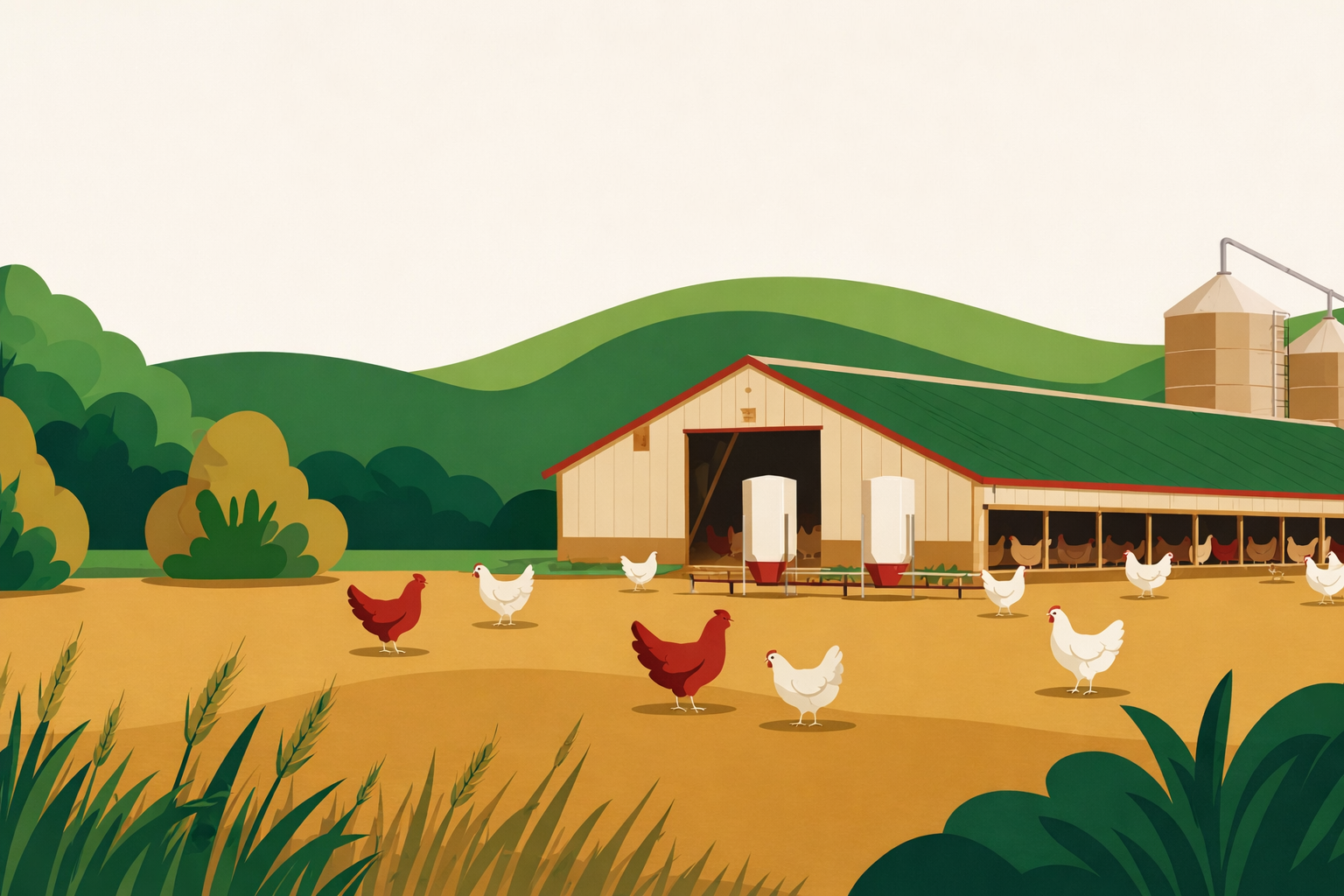
Poland is the largest poultry-meat producer in the European Union — according to industry data, roughly since 2014. We produce about 2.4–3 million tonnes a year, and a large part, roughly half, goes to export. That means domestic production is tightly tied to demand abroad: when exports go well, it’s easier to sell and the live-bird price is better, and when they stall it hits the whole market, the individual farm included.
Where does Polish poultry go?
Most Polish poultry is bought by European Union countries — above all Germany, France, the Netherlands and the Czech Republic. On top of that come buyers outside the EU, and further markets open up thanks to trade deals and veterinary agreements, including in Asia, the Middle East and Africa. Each such opening widens sales and reduces dependence on one direction, but requires meeting the receiving country’s sanitary requirements.
Polish poultry’s strengths and competitive pressure
Some things give Polish poultry an edge worldwide, others raise costs or close markets. It pays to know both, because together they decide the buying price.
Scale of production
Poland produces the most poultry meat in the whole EU. Large, steady supply lets the sector serve big buyers and keep prices competitive. It’s a strength other EU countries can’t quickly undercut.
Lower production costs
Production costs in Poland are lower than in many Western European countries, which translates into a competitive price for the finished meat on export markets. It’s one of the main reasons Polish poultry sells well abroad.
Strong vertical integration
The sector is heavily integrated: processing plants work with contract farms, supplying chicks and feed and collecting the live birds. This arrangement gives predictability and smooth logistics, and farmers clear terms of cooperation with the plant.
Imports from Ukraine
After trade liberalisation in 2022, and later under quotas, cheaper poultry from Ukraine enters the EU market. This raises price pressure, especially in segments where price is what counts most. It’s a real factor affecting domestic prices.
Competition from Brazil and other exporters
On non-EU markets Polish poultry competes with large exporters, above all Brazil, which produces cheaply and at huge scale. Contracts have to be won on price and quality, and exchange rates can tip the balance one way or the other.
Bird flu (HPAI) and costs
An outbreak of highly pathogenic avian influenza can close export markets — buyers suspend imports from the affected region (regionalisation). Add rising feed and energy costs and ever-higher EU welfare requirements, which raise costs against cheaper non-EU competition.
How to read the market step by step
- 1
Understand where the buying price comes from
The live-bird price you get depends largely on export conditions and exchange rates. When exports grow, demand for live birds is stronger and the price usually higher. When sales abroad stall, the pressure travels down the chain to the farm. It pays to look at the market more broadly than your own contract.
- 2
Watch the sanitary situation in your region
HPAI outbreaks nearby hit sales and prices, because foreign buyers suspend imports from the affected area. Follow veterinary-service announcements and reports of outbreaks in your voivodeship — it helps make sense of sudden swings on the market.
- 3
Track the main export markets
Most Polish poultry is bought by EU countries — Germany, France, the Netherlands, the Czech Republic. Shifts in demand there show up quickly at home. New markets in Asia, the Middle East and Africa widen sales, but open gradually, as veterinary agreements are reached.
- 4
Reckon with competitive pressure
Cheaper imports from Ukraine and competition from Brazil on non-EU markets pull prices down, especially where price matters most. This won’t vanish overnight, so factor the pressure into your planning and don’t base the budget on your best months.
- 5
Mind the costs you can control
You can’t influence feed and energy prices or exchange rates, but you can watch feed use, flock condition, rearing results and losses. Good production results are your cushion when the market is weak — and an advantage when it improves.
- 6
Record results and draw conclusions
Note the results of successive flocks: weight, feed use, mortality, buying price. Seeing them side by side over time makes it easier to spot how export conditions and the sanitary situation translate into your results — and to plan the next flock better.
Frequently asked questions about Polish poultry exports
Is Poland really the largest poultry producer in the EU?add
Yes. According to industry data, Poland has been the largest poultry-meat producer in the European Union roughly since 2014. We produce about 2.4–3 million tonnes a year, and a large part, roughly half, goes to export. That puts domestic production in close dependence on demand abroad.
Why do imports from Ukraine lower domestic prices?add
After trade liberalisation in 2022, and later under quotas, cheaper poultry from Ukraine enters the EU market. More supply of cheaper product raises price pressure, especially in segments where price counts most. Together with competition from Brazil on non-EU markets, it pulls prices down.
How does bird flu affect exports?add
Detecting an outbreak of highly pathogenic avian influenza (HPAI) can close export markets. Foreign buyers suspend imports from the affected region — so-called regionalisation. For a single farm it means an outbreak nearby hits sales and the live-bird price, even if your own flock is healthy.
What does all this mean for an individual farmer?add
A great deal: the live-bird buying price depends on export conditions and exchange rates, and HPAI outbreaks in the region hit sales. You can’t influence these, but you can mind your costs and production results and follow the market, so you can plan the coming flocks better.
Track your flock results in DlaFerm.pl
In DlaFerm.pl you record the weight, feed use, mortality and buying price of successive flocks — all next to the flock card, ready to compare over time. Create a free account or write to us.
Phone
+48 796 258 151