Poultry house litter: straw or wood shavings?
Straw and wood shavings are the two most common poultry-house litters — both work, but under different conditions. The choice is not a matter of taste: it decides litter moisture, foot health (FPD), costs and how much work the changeover takes. We compare them criterion by criterion and suggest what to choose for broilers and what for layers.
verifiedFrom the team that has organised work on poultry farms for years.
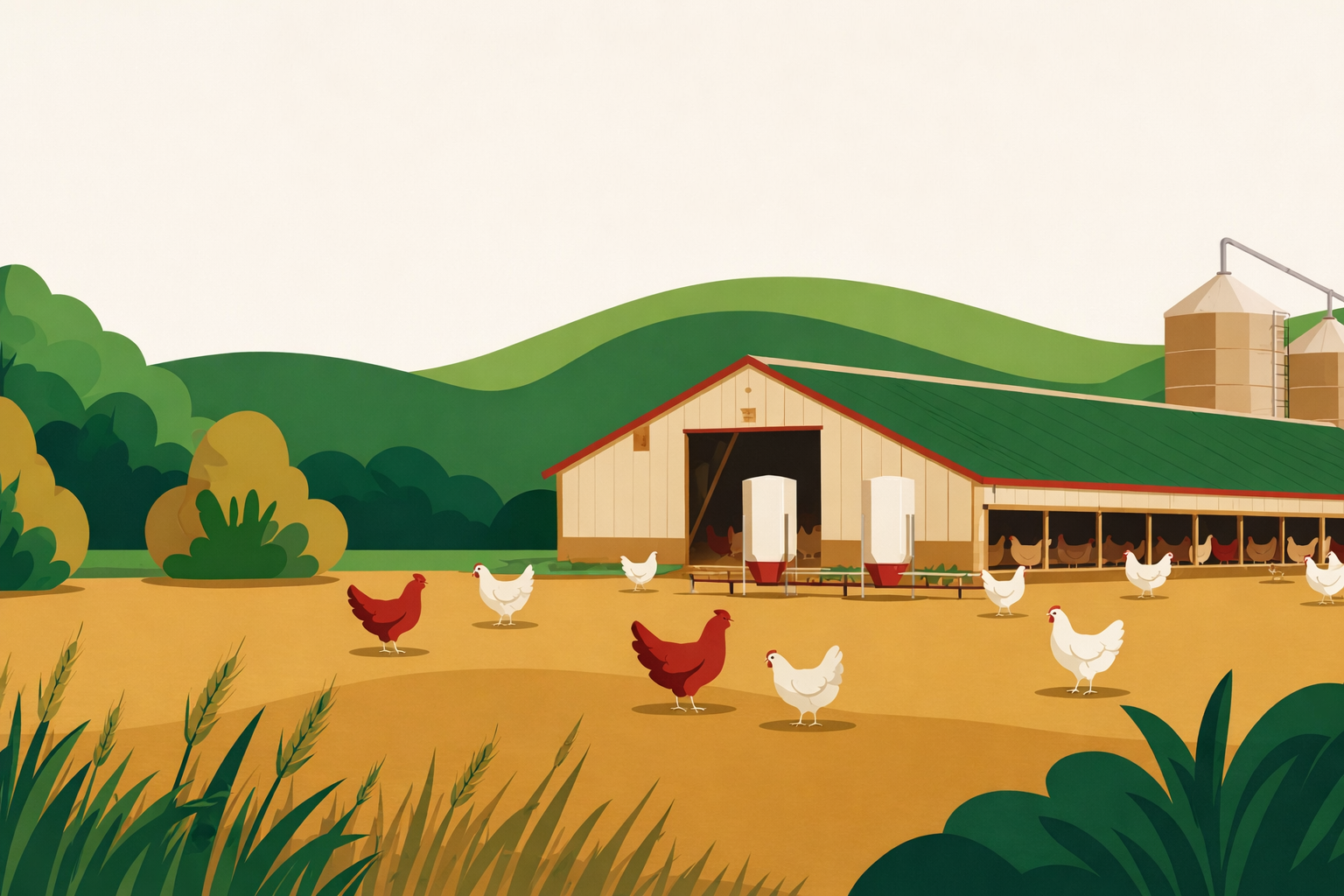
Two litters, one goal — a dry, friable mat
Straw (usually chopped wheat straw) and wood shavings (coarser wood strands rather than fine sawdust) are the two basic poultry-house litters. The goal of both is the same: keep the floor dry, friable and warm, absorb moisture from droppings and drinkers, and protect the bird’s feet and breast. They differ in their properties, though, so with the wrong choice the very same litter can be excellent or troublesome. We cover running litter through the whole cycle in the guide on poultry-house litter management.
Why this choice matters so much
Litter is not an add-on but a factor that decides welfare and results. Wet, packed litter means higher moisture at floor level, ammonia, worse air quality and pododermatitis (FPD, foot-pad dermatitis). That in turn means worse growth, a lower carcass grade and more downgrades. Dry, friable litter works the other way. So always consider straw versus shavings together with ventilation and watering — they decide how much water reaches the litter.
Absorption, cost, availability — three axes of the decision
Three things count at once: how the material absorbs moisture, how much it costs, and whether you can get it nearby. Shavings usually absorb moisture faster and give a friable mat, but can be pricier and harder to source in some regions. Straw is cheap and easy to buy from a neighbour, but handles excess water worse and cakes more easily. Neither is “better” in a vacuum — the better one is whichever fits your house, stocking density and season.
Litter moisture starts with ventilation and water
Even the best litter will get wet if the air does not remove moisture and the drinkers leak. So before you judge straw or shavings, check whether your system removes moisture from the house — the comparison tunnel vs cross ventilation and the choice of gas vs forced-air heating help, because heat and air movement dry the floor. Litter is the last link — it will not fix ventilation mistakes.
DlaFerm.pl — record what works in your house
Which litter and what depth works for you is best known from your own cycles. Note the litter type and depth, top-up dates and foot observations in the digital Flock Card, and treatments in the treatment and drug withdrawal records. After a few batches you have your own hard data — and you choose litter on facts, not on feel. You can create a farm account for free.
Straw vs shavings — criterion by criterion
Six criteria that really decide the litter choice. For each we show how straw fares and how wood shavings fare, so you can match the material to your house.
Moisture absorption
Shavings absorb moisture faster and have more surface area, so they cope better with water from droppings and drinkers — the floor stays dry longer. Straw absorbs more slowly, and once soaked it gets heavy and loses friability. With wet droppings or high stocking density the advantage of shavings is clear. We cover moisture control in litter management.
Litter quality and caking risk
Straw cut too coarse or soaked easily cakes and forms a packed, slippery crust — then it stops evaporating moisture. Shavings stay friable longer and turn over better, but very fine wood dust can irritate the airways. Good straw must be dry, clean and short-cut; good shavings — de-dusted and from safe wood.
Effect on foot health (FPD) and welfare
Foot-pad dermatitis (FPD) comes mainly from wet, packed litter, not from the material itself. Shavings, staying friable longer, more often give a dry mat and lower FPD risk with good ventilation. Straw works just as well as long as it is dry — but it punishes moisture faster. For both, the key is a dry surface, not the material in itself.
Cost and availability
Straw is usually cheaper and easy to source locally — often straight from a nearby farmer, which cuts transport cost. Shavings can be pricier and their price depends on how close a sawmill is and on the timber market. In farming regions straw wins on price, near the timber industry shavings win on availability. Calculate cost per square metre and per cycle, not per bag.
Labour and changeover in the cycle
Straw more often needs topping up and turning, because it packs faster. Shavings, managing moisture better, can be less labour to keep friable, though spreading an even layer of fine material has its own technique. After the cycle both are removed similarly. Labour on litter is a real cost — count it in the comparison alongside the bag price.
Manure use after the cycle
Spent litter is manure of varying composition. Straw-based manure has a more favourable carbon-to-nitrogen ratio, composts more easily and is better suited for the field. Shavings-based manure (wood) breaks down more slowly and may temporarily tie up nitrogen in the soil, so it needs longer composting. When planning fertilisation, allow for the litter type — it affects fertiliser value and decomposition speed.
What to choose and when
Short pointers on which litter fits which situation — from broilers and layers, through high density and a wet season, to the most common mistakes and our recommendation.
Broiler vs layer
A broiler in a short, intensive cycle and under a high moisture load often gains from shavings, which hold friability longer and protect feet and breast. For layers (deep-litter system) both litters work, and straw is often more practical and cheaper, because the cycle is long and changeovers rare. The production type and water load on the litter decide, not the name of the material.
At high stocking density
The more birds per square metre, the more water reaches the litter and the greater the premium on absorption — then shavings usually give a safer, drier mat. But at high density ventilation must work first, because no litter removes moisture on its own. Check the system choice in tunnel vs cross ventilation — it decides whether the litter dries.
In a wet season
In autumn and winter, when the air is humid and the temperature difference favours condensation, wet litter is the main problem. In that period the more absorbent shavings give a bigger safety margin, while straw needs more frequent top-ups. Stable heat also helps — compare gas vs forced-air heating, because a warmer floor evaporates water faster.
A mix of both materials
You do not have to choose once and for all. Many farmers combine layers: shavings as an absorbent, friable base, and straw to add bulk and warmth. Such a mix combines the strengths of both and can be cheaper than pure shavings. One condition: both materials must be dry, clean and mould-free, because a wet or mouldy base will ruin the whole mat.
Common mistakes
The most common errors are: too thin a starting layer, wet or mouldy litter already at placement, straw cut too coarse (fast caking) and very dusty, non-de-dusted shavings irritating the airways. It is also a mistake to blame wet litter on the material when the real cause is leaking drinkers or poor ventilation. First look for the water source, then judge the litter.
Summary and recommendation
There is no single winner — there is a match to the conditions. Choose shavings at high density, with wet droppings and in a wet season, when absorption and foot protection matter. Choose straw when it is cheap, locally available and you have full moisture control, especially for layers. And if you hesitate, start with a mix and record the results in the digital Flock Card, so after a few cycles you choose on facts. Choose your home-made vs ready feed just as deliberately and keep flock records in IRZplus.
Frequently asked questions about litter: straw or shavings
What is better for a poultry house — straw or shavings?add
There is no single answer — it depends on the conditions. Shavings usually absorb moisture better and stay friable longer, so they suit high stocking density, wet droppings and a wet season. Straw is cheaper and easier to source locally, and works well when you have full moisture control. What really decides the result is whether the litter is dry and friable, and that also depends on ventilation and watering.
Which litter cakes and hardens less?add
Shavings usually stay friable longer and less often form a packed, slippery crust. Straw, especially cut too coarse or soaked, cakes and crusts more easily, so it stops evaporating moisture. The key, though, is not the material itself but a dry surface — dry straw keeps its friability, while soaked shavings will also pack. Watch the water sources and ventilation.
Does litter affect foot inflammation (FPD)?add
Yes, but indirectly. Pododermatitis, or foot-pad dermatitis, comes mainly from wet, packed litter and high moisture at floor level, not from the type of material. A dry, friable mat — whether straw or shavings — gives a low FPD risk. So the most important thing is keeping the litter dry: good ventilation, tight drinkers and an adequate layer.
Can you mix straw with shavings?add
Yes, and many farmers do. It is popular to put shavings down as an absorbent, friable base and top up with straw for bulk and warmth. Such a mix combines the strengths of both materials and can be cheaper than pure shavings. There is one condition: both materials must be dry, clean and mould-free, because a wet or mouldy base will ruin the whole mat and raise the disease risk.
How much litter to lay at the start and how deep?add
The starting layer must be deep enough to absorb the moisture of the first days and insulate the birds from a cold floor — too thin a litter soon soaks and packs. The exact depth is matched to the species, season and floor type, so it is worth checking breed-guide recommendations and our litter management article. Better to start with a solid layer and top up if needed than to skimp at the start.
What to do with spent litter after the cycle?add
Spent litter is valuable manure, most often composted and used as fertiliser. Straw-based manure has a more favourable carbon-to-nitrogen ratio and breaks down faster, while shavings-based manure (wood) needs longer composting, because it can temporarily tie up nitrogen in the soil. Its use must comply with fertilisation and water-protection rules — check local requirements before spreading it on the field.
Sources & resources
Choose litter on facts with DlaFerm.pl
Want to know which litter really works in your house? Note the litter type and depth, foot observations and moisture in the digital Flock Card, and after a few cycles choose straw or shavings on your own data. Create a free farm account.
Phone
+48 796 258 151