Colibacillosis (E. coli) in quail: symptoms, prevention and treatment records
Colibacillosis caused by pathogenic E. coli strains (APEC) usually strikes a quail flock secondarily — when immunity is weakened and the microclimate is poor. Learn how to recognise it, how to prevent it, and how to keep compliant treatment records.
verifiedFrom the team that has organised work on poultry farms for years.
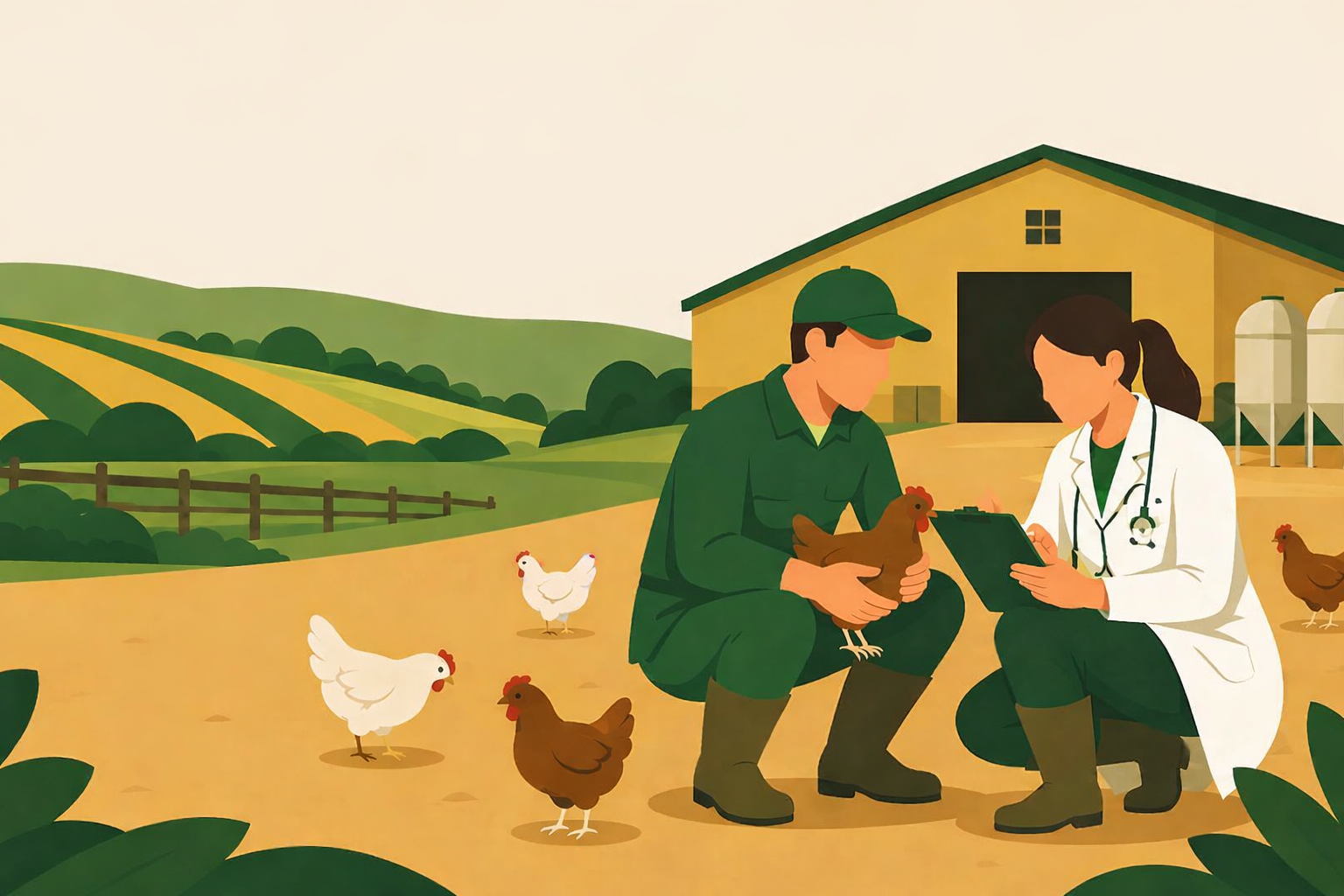
What is colibacillosis in quail?
Colibacillosis is a bacterial disease caused by pathogenic strains of the gut bacterium Escherichia coli, designated APEC (avian pathogenic E. coli). E. coli itself naturally lives in the intestines of a healthy bird — most strains are harmless. The problem lies with pathogenic strains, which usually strike secondarily, that is when the bird’s immunity has already been weakened by another disease, by stress or by a poor microclimate. In quail — a very small and sensitive bird — such an infection can develop and spread through the flock exceptionally fast. More about the disease across species: Poultry colibacillosis.
How does colibacillosis present in quail chicks?
In the youngest chicks two pictures are typical: yolk-sac inflammation and navel inflammation, together known as omphalitis (infection of an unhealed navel and an unabsorbed yolk sac). The yolk sac is a food reserve the chick should absorb in its first days of life — if it becomes infected, it turns into a focus of bacterial multiplication and a source of septicaemia (infection of the whole body via the blood). Sick chicks are lethargic, feed poorly, have a swollen, soft belly and a wet, unhealed navel area, often with an unpleasant smell. Mortality in the first week of life can be high. Hatchery hygiene and chick quality are crucial here.
How does colibacillosis present in older quail?
In reared and adult quail, colibacillosis most often takes the form of septicaemia and inflammation of the serous membranes — the thin membranes covering internal organs. Characteristic features are inflammation of the air sacs (airsacculitis), of the pericardium (the membrane around the heart) and of the peritoneum, often with fibrin deposits visible at post-mortem. Birds are dull, fluffed up, eat less, lose weight, and egg laying drops in laying quail. The disease is rarely the primary cause — it usually finishes off a flock already weakened by viruses, mycoplasmas, coccidiosis or overloaded by poor air. Overview of other diseases of this species: Quail diseases.
Why are quail especially exposed?
Quail are usually kept at a high stocking density, and their microclimate deteriorates very easily. A small bird, many birds per square metre and an intensive metabolism mean rapid build-up of ammonia, dust and moisture in the litter. Ammonia and dust damage the delicate respiratory tract and open the gateway to secondary E. coli infection, while wet litter is an environment that favours bacteria. On top of that, in such a small bird the disease spreads fast and the margin for reaction is narrow. That is why environmental prevention matters more than treatment in quail. On sensible density: Quail stocking density.
Colibacillosis and other quail diseases
Colibacillosis is almost always secondary, so it rarely occurs alone. First a weakening factor appears — a viral infection, mycoplasmosis, coccidiosis, transport stress or overload from a poor microclimate — and E. coli exploits that weakness. For this reason, giving an antibiotic alone without removing the primary cause brings only temporary improvement. When colibacillosis is suspected, it is always worth consulting a veterinarian who will determine what really weakened the flock. Overview of poultry disease symptoms: Poultry diseases — symptom table.
How colibacillosis strikes a quail flock
Each of these signals should prompt the farmer to consult a veterinarian.
Navel and yolk-sac inflammation
In chicks, an unhealed, wet navel and a swollen belly are the classic picture of omphalitis. An infected yolk sac becomes a focus of E. coli multiplication and a source of septicaemia.
High chick mortality
In the first week of life, mortality of quail chicks with yolk-sac infection can rise sharply. This is a signal of problems with hatchery hygiene and chick quality.
Septicaemia and dullness
Older birds are lethargic, fluffed up, huddle together and respond poorly to their surroundings. Septicaemia is an infection of the whole body via the blood — a dangerous state that requires a quick response.
Respiratory signs and air-sac inflammation
Rattling, open-beak breathing and a fast respiratory rate point to air-sac inflammation. It is most often accompanied by high levels of ammonia and dust in the air.
Drop in egg laying and weight loss
In laying quail, egg production falls, birds lose weight and become uneven. This is a common signal of secondary colibacillosis in a flock weakened by another disease.
Rapid spread through the flock
At high stocking density and with a poor microclimate, the disease spreads through the quail flock very fast, and the margin for reaction is narrow.
How to prevent colibacillosis and how to act when disease is suspected
In quail, environmental prevention is more effective than treatment — because colibacillosis is usually a secondary infection.
Good ventilation, low ammonia and dust
Effective ventilation removes ammonia, dust and excess moisture — the very things that most damage the quail respiratory tract and open the way to E. coli. Keeping the air fresh and clean is the first line of defence. Details on conditions: House requirements for quail.
Dry litter and moisture control
Wet litter favours bacteria and raises ammonia levels. Checking drinker tightness, regular turning and, where needed, partial litter replacement reduce infection pressure. More: Poultry house litter — management.
Sensible stocking density
Too high a density speeds up microclimate deterioration and disease spread. Choosing a sensible number of birds per square metre relieves ventilation and litter. Practical tips: Quail stocking density.
Hatchery hygiene and chick quality
Clean hatching eggs, disinfection, a correct hatch and rapid navel healing reduce yolk-sac inflammation in chicks. A good start is the best prevention of colibacillosis in newborns.
Farm biosecurity
Limiting entry, quarantining new birds, rodent control and cleaning between cycles reduce the amount of bacteria in the environment and the risk of bringing in factors that weaken the flock. Rules: Poultry farm biosecurity.
Treatment guided by an antibiogram and records
Antibiotic treatment should be prudent and based on an antibiogram (a bacterial sensitivity test), with the drug chosen by the vet. Every administration requires an entry in the treatment record with the withdrawal period. DlaFerm.pl keeps these records digitally: Treatment records and drug withdrawal.
Frequently asked questions about colibacillosis in quail
What is colibacillosis in quail?add
It is a bacterial disease caused by pathogenic E. coli strains (APEC). It usually strikes secondarily — when quail immunity is weakened and the microclimate is poor. In chicks it causes yolk-sac and navel inflammation; in older birds, septicaemia and inflammation of the serous membranes.
Why does colibacillosis appear so easily in quail?add
Quail are kept at a high stocking density, and their microclimate deteriorates very fast. Ammonia, dust and wet litter damage the respiratory tract and open the way for E. coli. In such a small bird the disease spreads rapidly, which is why environmental prevention matters more than treatment.
What is yolk-sac inflammation in chicks?add
The yolk sac is a food reserve the chick absorbs in its first days of life. If an unhealed navel or an unabsorbed sac becomes infected with E. coli, a focus of bacterial multiplication forms (omphalitis) and a source of septicaemia. Signs are a swollen belly, a wet navel and high mortality in the first week.
Will an antibiotic alone cure colibacillosis?add
Usually it is not enough. Because colibacillosis is a secondary infection, giving an antibiotic without removing the primary cause (e.g. poor air, another disease) brings only temporary improvement. The vet selects the antibiotic based on an antibiogram, and improving husbandry conditions remains key.
What should I do if I suspect colibacillosis in my flock?add
Contact a veterinarian. Do not give antibiotics without a diagnosis and prescription — they require a withdrawal period, and incorrect use can expose the farmer to penalties. The vet will order tests, including an antibiogram, and help determine what weakened the flock. Find a specialist: Veterinarian.
How does DlaFerm.pl help with colibacillosis?add
DlaFerm.pl enables digital treatment and withdrawal records — legally required documentation for every administration of an antibiotic. The Flock Card lets you track mortality, egg laying and health events, making early detection easier. Data are always available for veterinary or inspection visits.
Sources & resources
Keep treatment records with DlaFerm.pl
Want to see how the Flock Card and withdrawal records work? Write to us or create an account.
Phone
+48 796 258 151