Guinea fowl farming for beginners
The guinea fowl is an ornamental-utility bird with tasty, niche meat and small eggs. It is tough and resistant, but also skittish and very loud — that is the first thing you must think through, especially if you have close neighbours. We show where to start, what to expect and what to watch for before you bring in your first birds.
verifiedFrom the team that has organised work on poultry farms for years.
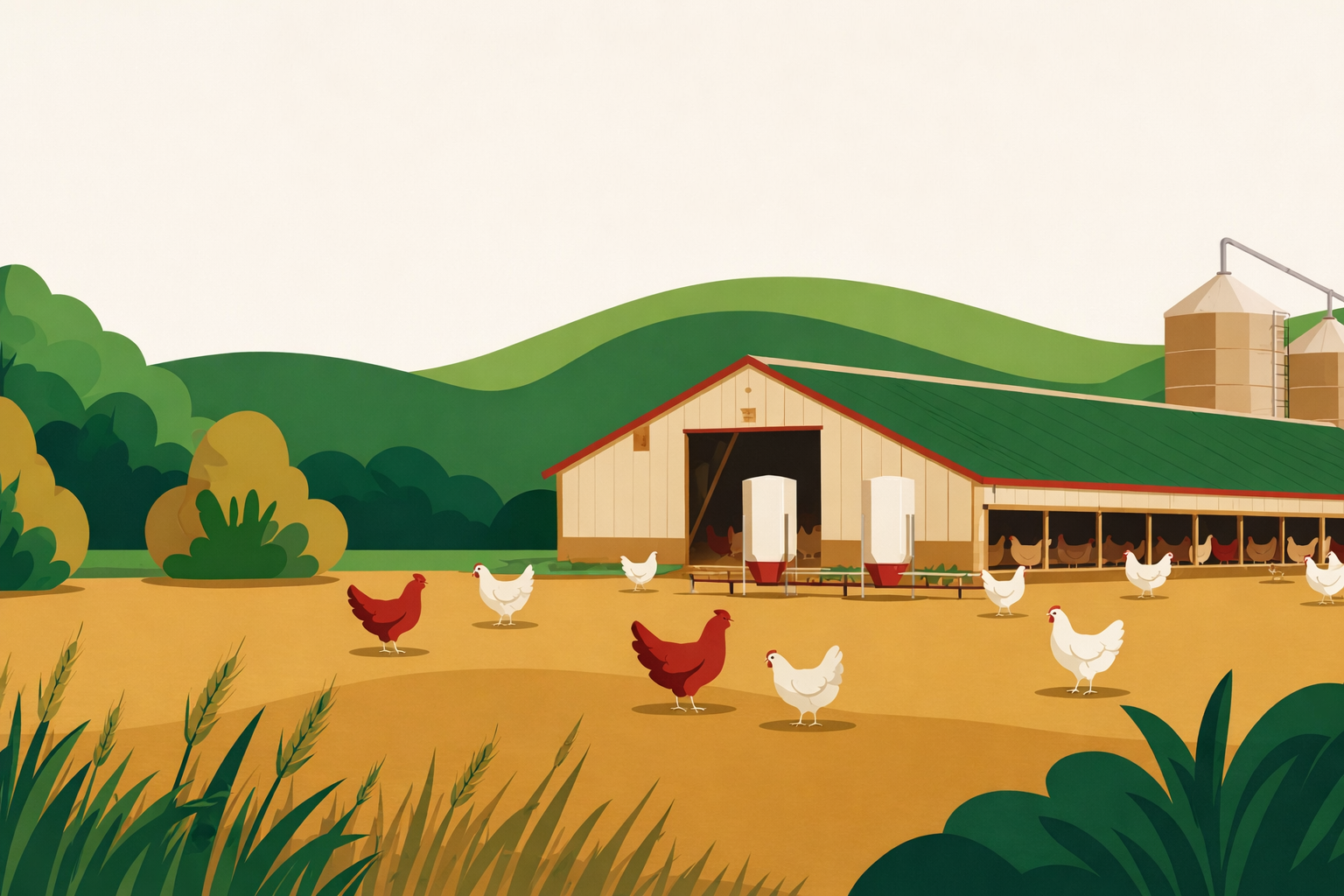
The guinea fowl — tough but demanding
The guinea fowl is a bird originating in Africa, kept here for its tasty, dark, slightly gamey meat and its small, hard-shelled eggs. It is very disease-resistant and copes well with harsher conditions, which is why it is sometimes recommended to beginners. But it has a character of its own: it is skittish, likes to perch high and fly, and warns vocally of every novelty. Before you start, it is worth getting to know guinea fowl farming from the ground up so you know what you are getting into.
Noise and neighbours — issue number one
Guinea fowl are one of the loudest poultry species. A flock can raise the alarm at the sight of a cat, a bird of prey, a stranger or even a swaying branch — and it does so piercingly, often in bursts. It is an excellent living alarm against pests and intruders, but it can seriously get on neighbours’ nerves. If you live in dense housing, first check what the rules on poultry keeping and neighbours say, and only then plan the size of your flock.
Run and welfare — guinea fowl need space
Guinea fowl are happiest with a large, fenced run where they can run, scratch and hunt insects. They are active, fly well and like to roost high, so the fencing and shelter need to be planned sensibly. The more natural space and greenery, the calmer and healthier the birds. We cover the keeping conditions and the species’ needs in the guide on guinea fowl welfare.
Meat and eggs — a niche, not a mass product
Guinea fowl meat is prized in the kitchen and the eggs have a distinctive flavour, but these are niche products — you will not find a mass buyer for them as you would for chicken or hen eggs. Egg laying is seasonal and lower than in hens, and growth is slower. For a beginner this means one thing: start with a small flock for your own use or for a narrow circle of buyers you know, and develop sales only once you know the species.
Order from day one with DlaFerm.pl
Even a small operation needs order: you have to register the flock and record bird health, treatments and the withdrawal period before consumption. DlaFerm.pl gives you a free farm account where you keep a digital Flock Card, have flock records in IRZplus and treatment and withdrawal records at hand. And if you want, we file your flock-change reports to the often cumbersome IRZplus and send them to ARiMR for you — automatically, without logging into the portal. All in one place and ready for an inspection.
Starting a guinea fowl flock step by step
Six steps that take you from the idea to a healthy, well-managed flock of guinea fowl.
1. Think through noise and neighbours
Before you buy anything, honestly assess whether the loudness of guinea fowl fits your plot and surroundings. Talk to your neighbours and check what the rules on poultry keeping and neighbours say. This is the most common reason beginners give up on the species after just a few weeks.
2. Prepare a run and shelter
Plan a large, well-fenced run with greenery and a dry, airy shelter with perches where the birds can roost high. The fencing must account for the fact that guinea fowl fly well. You will find the species’ requirements in the guide on guinea fowl welfare.
3. Register the flock
Every poultry operation must be reported and the flock recorded. Start by obtaining a number and registering with the relevant registers, and enter the flock into flock records in IRZplus. This is the basis of a legal operation and readiness for a veterinary inspection.
4. Buy keets or hatching eggs
You can start with young keets (guinea fowl chicks) from a trusted supplier or with hatching eggs for incubation. For a beginner it is simpler and safer to buy reared, healthy birds. Start with a small flock — you will learn the species more easily and limit the risk.
5. Provide rearing and feeding
The youngest keets need warmth, dry litter, clean water and high-protein feed. Over time you switch to feed for growing birds, and adults go out onto the run where they supplement their diet with insects and greenery. Dry litter and constant access to water are the foundation of good health.
6. Keep records and observe the flock
Daily observation is your main tool: a change in behaviour, appetite or sounds quickly reveals a problem. Record health, treatments and the withdrawal period in a digital Flock Card, using the treatment and withdrawal records. Order from the start saves you trouble later.
Beginner guinea fowl keeper’s pitfalls
Six things that most often surprise new keepers and can decide whether the operation succeeds.
Noise and conflict with neighbours
This is by far the biggest risk with guinea fowl. Their piercing calls can irritate even friendly neighbours and end in a complaint. In compact housing it is better to keep a small flock or consider a different species altogether. Check the rules on poultry keeping and neighbours beforehand.
A run that is too small
A guinea fowl crammed into a tight yard becomes even more nervous and loud, and more prone to injuries and flock conflicts. It is a bird of movement and space — without a large, safe run it is hard to speak of welfare. Do not start if you lack a space that suits the species.
Skittishness and escapes
Guinea fowl spook easily and fly well, so they can clear a fence, get onto a roof or vanish into the bushes. New birds must be acclimatised to the place gradually, and the fencing and shelter planned with their agility in mind. Sudden movements and noise around the run only deepen the stress.
Too niche a product
Guinea fowl meat and eggs are tasty, but they are goods for a narrow circle of buyers — do not count on mass sales as with chicken. Egg laying is seasonal and growth slower. First find a real outlet or plan the operation for your own use, and only then increase the scale.
Costs and profitability
Slower growth, seasonal laying and the need for a large run mean guinea fowl are rarely a “quick earner”. Honestly count the cost of feed, fencing, shelter and your own time before you judge profitability. For most beginners this is a hobby flock for the home table, not a first-year business.
Records and formalities
Poultry keeping comes with duties: registration, flock records, and — when you sell products — the rules of agricultural retail trade. Check the requirements of selling poultry from the farm (RHD) and keep proper records from day one to avoid problems during an inspection.
Frequently asked questions about guinea fowl farming for beginners
Is the guinea fowl a good bird for a beginner?add
In terms of health, yes — guinea fowl are very resistant and forgive many mistakes. The problem is their loudness and their need for a large run, so they suit a beginner who has space and no sensitive neighbours nearby. In dense housing it is better to start with a small flock or another species.
How loud are guinea fowl?add
Very loud — they are one of the noisiest poultry species. A flock raises the alarm at the sight of a cat, a predator, a stranger or even a small novelty, doing so piercingly and in bursts. It is an asset as a living alarm but a common cause of conflict with neighbours, so the noise must be thought through before you start.
How much space do guinea fowl need?add
Guinea fowl need a large, fenced run with greenery where they can run and hunt insects, plus a dry shelter with perches for roosting high. The more natural space, the calmer and healthier the birds. A cramped yard increases stress, noise and the risk of injury.
Are guinea fowl resistant to disease?add
Yes, guinea fowl are regarded as one of the toughest poultry species and rarely fall ill in good conditions. Even so, the same biosecurity and observation rules apply as for other poultry — resistance does not excuse you from order, documentation, and records of treatment and the withdrawal period before consumption.
Can you make money on guinea fowl?add
Guinea fowl meat and eggs are prized, but they are niche products — there is no mass buyer for them as there is for chicken. Slower growth, seasonal laying and the need for a large run lower profitability. For most beginners this is a flock for their own use or a narrow circle of buyers, not a first-year business.
Does a guinea fowl flock have to be registered?add
Yes, every poultry operation must be reported and the flock recorded, regardless of the number of birds. The flock is entered into the records in IRZplus, and when you sell products the rules of agricultural retail trade (RHD) apply. The exact scope of duties is best confirmed with the district veterinary officer.
Start your guinea fowl flock with order from day one
Want registration, bird health and flock documentation under control? Create a free farm account in DlaFerm.pl and keep your Flock Card and records in one place. Write to us.
Phone
+48 796 258 151