Goose farming for beginners
The goose is a forgiving bird for a beginner: resilient, grazing on grass, and not requiring the precise microclimate of a broiler. It has its specifics, though — seasonality, a long rearing period and sales concentrated around the holidays. We show how to calmly start goose farming and what to avoid at the outset.
verifiedFrom the team that has organised work on poultry farms for years.
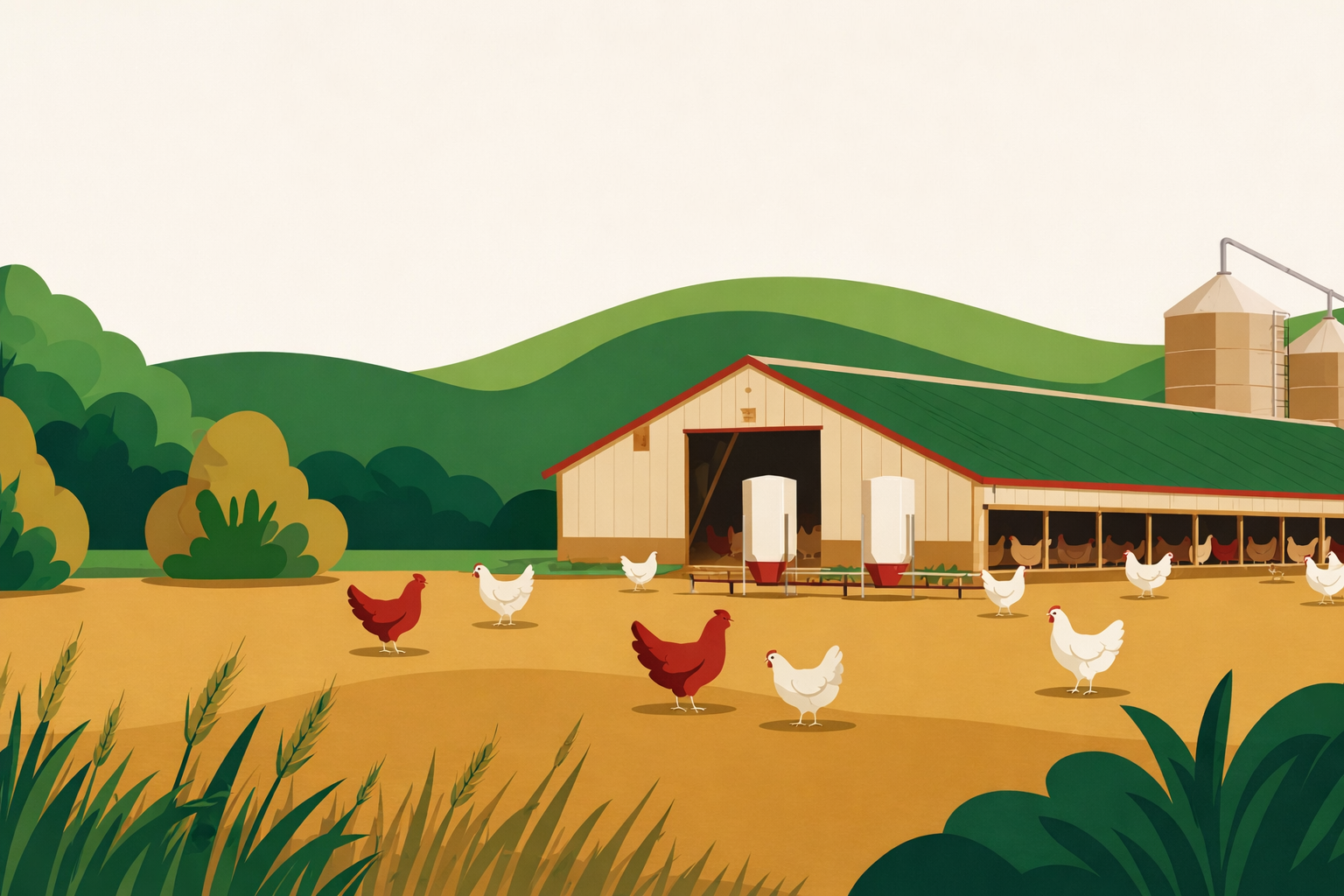
The goose — a good bird to begin with
The goose is one of the more forgiving species for a beginner. It is tough, disease-resistant and copes with our weather better than many other birds. For most of its life it grazes on grass, so it does not need the strict temperature and ventilation control of a meat chicken. If you are just starting, it is worth first getting the whole picture from the guide on goose farming, and then coming back for the details.
Seasonality and the oat-fed goose
Goose farming is strongly seasonal. The classic model is placing the goslings in spring, grazing through summer and fattening in autumn — this is how the famous oat-fed goose is produced, a bird supplemented with oats in the final weeks, which improves the quality and flavour of the meat. This seasonality cannot be avoided: you plan the whole operation around a specific sales date, most often in autumn. It is a different logic from year-round poultry fattening and must be understood from the start.
Pasture, range and resilience
The goose is a pasture bird — it does best on a range with access to grass and water. Good pasture lowers the feed cost, because greens cover part of the bird’s needs, and outdoor activity strengthens the flock’s condition. This natural resilience is a big plus for a beginner: fewer dramatic health crashes than with intensive birds. Even so, the conditions must be cared for — we cover the basics in the guide on goose welfare.
A long rearing period and holiday sales
The goose grows slowly — full rearing takes months, far longer than broiler fattening. That means capital tied up in feed and labour for longer before you see any revenue. Sales usually concentrate around the holidays and the autumn season, so before you place the goslings it is worth having your sales market scouted. A well-planned date is half the battle.
Records from day one with DlaFerm.pl
Even a small, seasonal goose operation has duties: registration, flock records and treatment documentation. DlaFerm.pl lets you keep a digital Flock Card, flock records in IRZplus and treatment and withdrawal records in one place, and — if you want — it files your flock-change reports to IRZplus for you automatically. So from day one your paperwork is in order and you are ready for a veterinary inspection.
Starting a goose operation step by step
Six steps that lead from the decision and formalities to the first placement and grazing. Each one is worth thinking through calmly.
Plan and sales date
Start from the end: decide when and to whom you will sell the geese (most often the autumn–holiday season). From that date you count back to the placement date, because rearing is long. Without a scouted market it is not worth starting — the goose’s seasonality does not forgive poor planning.
Registration and formalities
Every operation must be registered and keep flock records. Check the registration duties and the assigned number using the guides on poultry farm registration and the farm veterinary number. You report the flock in IRZplus.
House, range and pasture
Geese need a dry, airy shelter for the night and bad weather, plus a large range with grass and access to water. Plan the area with a margin — the goose is a large bird, and crowding quickly ruins the pasture and harms welfare. You will find the basics of the conditions in the guide on goose welfare.
Buying healthy goslings
Buy goslings from a reliable, registered source — healthy, lively, with a properly healed navel and no signs of weakness. Agree a pickup date with the supplier so it aligns with your season plan. It is better to buy fewer good birds than to rescue a weak batch.
The first days of rearing
The youngest goslings need warmth, dry litter, easy access to water and starter feed. This is the only stage where conditions must be watched almost as closely as for a chicken. After a few weeks, once the birds feather up and strengthen, you gradually move them onto the range.
Grazing, fattening and sale
In summer the geese graze on grass and feed costs fall. In autumn you move to fattening — with the oat-fed goose this means supplementing with oats in the final weeks. Finally you carry out the sale you planned earlier. It is worth closing the whole cycle with thorough records in the digital Flock Card.
What to keep an eye on in goose farming
Six areas that most often surprise a beginner: from seasonality and pasture, through costs and profitability, to documentation.
Seasonality
The goose is a one-season bird — placement in spring, sale in autumn and around the holidays. The whole financial and organisational plan must follow this calendar. A late start or no buyer at the right time can wipe out a whole year of work, which is why you set the date first.
Pasture
Good pasture is an asset, but it needs management. Overcrowding and grazing in one spot quickly destroy the turf and raise the risk of parasites and disease. It is worth rotating the range, keeping the water clean and not overloading the area — this directly affects health and costs.
Costs
The biggest costs are goslings, feed and time. Pasture lowers the feed bill, but the long rearing means money is tied up for many months. Calculate the cost per bird realistically before you place the flock — include the oats for fattening, litter, brooder heating and labour.
Profitability
Goose profitability depends on the in-season sale price, feed cost and rearing losses. The margin can be good, but the risk is concentrated in a single sales window. Start at a smaller scale, work out the result after the first season and only then grow the flock. The guide on goose farming profitability can serve as a reference point.
Health and resilience
The goose is resilient, but not indestructible. Wet litter, dirty water and overcrowding favour parasites and disease in this species too. React early to lethargy, diarrhoea or reduced appetite and consult a vet — an early response limits losses in the long, costly rearing period.
Documentation
Even a seasonal operation must have registration, flock records in IRZplus and treatment and withdrawal records. The withdrawal period after medicines is crucial for holiday-season sales. Documentation kept from the start protects you during an inspection and makes settling the season easier.
Frequently asked questions about goose farming for beginners
Is the goose hard for a beginner?add
The goose is among the easier birds for a beginner, because it is resilient, grazes on grass and does not require the precise microclimate of a broiler. The hardest part is not the keeping itself but the planning: seasonality and the long rearing period demand discipline. If you plan the sales date and provide a good range, the start is calm.
What is an oat-fed goose?add
The oat-fed goose is a bird supplemented with oats in the final weeks before sale. Oats in the final fattening phase improve the quality, flavour and texture of the meat. It is a classic, seasonal farming model in which summer is spent grazing and autumn shifts to fattening on oats.
How long does goose rearing take?add
Goose rearing is long, counted in months — far longer than the few-week broiler fattening. The exact time depends on the breed and sales goal, but you must always reckon with capital in feed and labour being tied up for most of the season. That is why the financial plan is built around the sales date.
Does a goose need pasture?add
Yes, the goose is a pasture bird and does best on a range with grass and access to water. Pasture lowers feed costs and supports the flock’s condition. However, grazing must be managed — rotate the area and avoid overcrowding, because ruined turf increases the risk of parasites.
When are geese sold?add
Goose sales concentrate mainly in autumn and around the holidays, when demand for goose meat is highest. That is why the whole cycle is planned so the birds reach form within that window. Before you place the goslings, it is worth having your sales market scouted and the date set.
What formalities are required for goose farming?add
Goose farming must be registered and the flock recorded in the IRZplus system, with treatment and medicine withdrawal documented as well. At a larger scale, biosecurity and a veterinary number requirements are added. You will find the details in the guides on farm registration and flock records, and it is worth completing the formal start before buying goslings.
Start goose farming with your paperwork in order
Want your flock records, treatment and withdrawal periods under control from day one? We will show you how DlaFerm.pl makes starting a seasonal goose operation easier. Write to us.
Phone
+48 796 258 151