Duck house requirements — water, litter, ventilation
Ducks drink a lot and spill water, so a duck house must above all cope with moisture. The most important things are drinking that limits spillage, dry litter and strong ventilation. We have gathered everything a duck house must provide in one place, with links to detailed guides for the specifics.
verifiedFrom the team that has organised work on poultry farms for years.
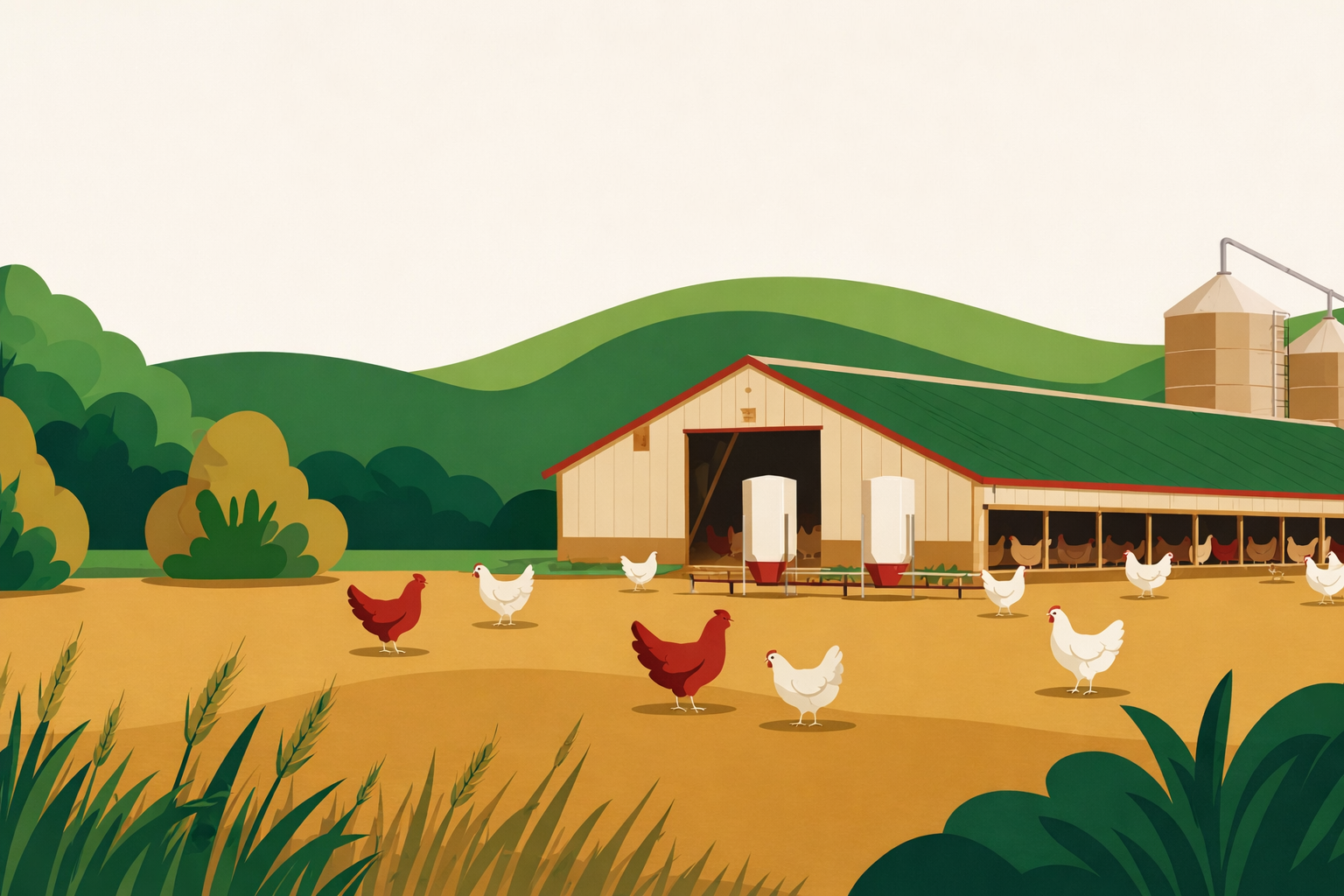
Ducks differ from chickens in one thing that changes the whole house setup: they drink a great deal of water and like to play with it — they spill it, dip their bills and splash it around the drinker. That is why a duck house is designed to fight moisture. Wet litter is the number-one problem here, not the exception. The whole rearing process is covered in the guide on duck farming.
Why is moisture more dangerous here than with chickens?
Water spilled at the drinkers ends up in the litter, which cakes and starts to rot. Wet, caked litter means higher ammonia, leg and footpad problems (swollen, red pads under the foot) and dirty plumage. With ducks this happens faster, because they themselves feed water into the litter. Hence the whole emphasis on drinking that limits spillage, frequent replacement of wet litter and strong ventilation that carries that moisture away.
Where do the numbers in this guide come from?
Indicative values* (stocking, space, start-up temperature, number of drinkers and feeders) follow welfare recommendations and rearing practice — among others the Council of Europe recommendations on ducks and IZ-PIB feeding standards. This is a starting point, not a fixed norm: actual settings depend on the breed, the rearing system and the specific house. This page is an overview of the whole; the details of each area are in separate guides linked in the text.
What to check when planning and preparing a duck house
- 1
A drinking system that limits spillage
This is the most important element of a duck house. A duck must be able to submerge its whole bill and rinse its nostrils, but the water must not land in the litter. So drinkers (nipples with a drip cup, bell or trough types) are placed over a slatted floor or grid that drains spilled water away from the litter. Line height is adjusted as the birds grow, so the duck drinks comfortably but does not splash to the sides. On drinking lines and their setting: drinking lines in the house.
- 2
Dry litter and its frequent replacement or drying
Dry, friable litter (e.g. shavings, chopped straw) about 5–10 cm* deep at the start is the basis of healthy legs and clean plumage. With ducks the litter gets wet faster than with chickens, so it must be topped up, turned and the caked areas around drinkers removed more often. The most exposed zones (around drinkers) are worth protecting additionally with a slatted floor. How to manage litter through the whole rearing: managing litter in the house.
- 3
Strong ventilation and control of humidity and ammonia
Since ducks themselves add moisture to the house, ventilation must be more powerful than for the same stocking of chickens — its main task is to remove moisture and ammonia. Minimum (winter) ventilation doses fresh air and dries the litter even in frost, while maximum (summer) ventilation cools the birds in heat. Without effective air exchange even good litter soon softens. Sizing and setting rules are described in the guide on house ventilation.
- 4
Feeders — number and placement per bird
Every duck must have easy access to feed, without crowding at the feeder. Feeders (pans or a feed line) are sized by the number of points or line length per bird and spread evenly across the house. Ducks often carry feed to the water, so feeders are placed so they do not stand right next to the drinkers — otherwise softened feed drops into the litter and wets it further. On sizing and adjusting feeders: poultry feeding systems.
- 5
Space, stocking and no perches
Ducks are ground birds — they do not need perches or nests like laying hens; the whole rearing takes place on the litter (or litter with a slatted floor by the drinkers). Stocking is set so the birds have room and the litter can keep drying — too dense stocking means wet litter sooner and more ammonia. Space is counted in kilograms of bird weight per square metre, and the exact values depend on the rearing system and welfare requirements.
- 6
Start-up heating for ducklings
On day one the ducklings go under a brooder (an artificial hen) — a heater giving warmth from above, like a mother hen. Under the brooder it should be about 30–32°C* in the first week, then the temperature is lowered faster than for chicks, because ducks mature thermally earlier. After about 3 weeks they usually no longer need extra heating if the house is warm enough. The house and litter are warmed in advance so the ducklings do not lose heat to a cold floor.
Target parameters in a duck house
Four groups of values a duck house should hold. Indicative figures* from welfare recommendations and rearing practice.
Start-up temperature under the brooder
Under the brooder (artificial hen) about 30–32°C* in the first week, then a gradual drop — faster than for chicks. More telling than the thermometer is bird behaviour: evenly spread ducklings = good; huddled under the heater = too cold; fleeing the heat = too warm. After about 3 weeks ducks usually no longer need extra heating.
Humidity and ammonia — keep them low
Ducks moisten the house with water from the drinkers, so humidity and ammonia rise faster than with chickens. The goal is dry litter and air without a noticeable, pungent smell of ammonia. This is controlled mainly by ventilation and by limiting water spillage. When the litter gets wet, it is the first sign that ventilation or drinking needs adjusting.
Drinking: bill yes, litter no
A duck must be able to submerge its whole bill and rinse its nostrils, but the water must not reach the litter. Hence drinkers with a drip cup or drinkers over a slatted floor/grid. The number of drinking points and line height are set to the number and age of the birds, so every duck has easy access to clean water.
Litter and stocking
Dry, friable litter (shavings, chopped straw) about 5–10 cm* at the start, topped up and turned more often than with chickens. Stocking (kilograms of bird weight per m²) is set so the litter can keep drying. Litter is the litmus test of the climate — when it cakes and gets wet it means stocking or ventilation needs adjusting.
The most common mistakes in a duck house
These mistakes regularly spoil duck flock results — worth ruling out at the house planning stage.
Drinkers without litter protection
Drinkers placed straight over the litter, with no drip cup and no slatted floor, guarantee wet, caked litter around the drinking line. The result: ammonia, leg problems and dirty plumage. Place drinkers over a slatted floor or grid and choose a type that limits spillage. Related: drinking lines in the house.
Ventilation too weak, set as for chickens
Copying broiler ventilation settings is not enough — ducks let more moisture into the house, so air exchange must be stronger. Too weak ventilation means rising humidity, ammonia and wet litter despite topping up. The effect shows in the litter: wet litter — causes and effects.
Removing wet litter too rarely
With ducks the litter gets wet faster, so occasional topping up is not enough — the caked zones around drinkers must be removed and replaced on an ongoing basis. Neglected, rotting litter is a source of ammonia and disease. How to manage litter and remove droppings: managing litter and removing droppings from the house.
Feeders right next to the drinkers
Ducks carry feed to the water and back. When feeders stand right next to the drinkers, softened feed drops into the litter and wets it further, and some feed is wasted. Separate the drinking and feeding zones and set the right number of points. More: poultry feeding systems.
Frequently asked questions about duck house requirements
Do ducks in the house need access to a pool or bathing water?add
In commercial rearing, meat ducks are usually kept on litter without open swimming water — bathing would mean huge amounts of moisture in the house. A duck must, however, be able to submerge its whole bill and rinse its nostrils, so drinkers are used that give access to water without flooding the litter (e.g. over a slatted floor). It is a compromise between welfare and dry litter. More on drinking itself: drinking lines in the house.
Why does litter get wet faster with ducks than with chickens?add
Ducks drink a lot of water, spill it around the drinkers and splash it while dipping their bills — some of that water always ends up in the litter. Their droppings are also more watery. That is why with ducks wet litter is the number-one problem, not the exception. It is fought with three things at once: drinking that limits spillage, frequent litter replacement and strong ventilation. Details: wet litter — causes and effects.
What ventilation does a duck house need?add
Ventilation in a duck house must be stronger than for the same stocking of chickens, because its main task is to remove the moisture the birds introduce. Two modes are needed: minimum (winter) ventilation, which dries the litter and removes ammonia without chilling the ducks, and maximum (summer) ventilation, which cools them in heat. The sizing rules are described in the guide on house ventilation.
Do ducks need perches and nests in the house?add
No. Ducks are ground birds — the whole rearing takes place on litter, without the perches and nests that laying hens need. What matters instead is that the litter stays dry and the zones by the drinkers are protected with a slatted floor. Instead of perches you plan for space on the litter, good ventilation and easy access to water and feed. The whole rearing is covered in the guide on duck farming.
What temperature should a duck house have at the start?add
On day one the ducklings go under a brooder (artificial hen), where it should be about 30–32°C* in the first week. The temperature is then lowered faster than for chicks, because ducks mature thermally earlier, and after about 3 weeks they usually no longer need extra heating. The figures are indicative — bird behaviour matters more: evenly spread ducklings mean a good temperature.
How to limit ammonia in a duck house?add
Ammonia comes mainly from wet, rotting litter, and with ducks it gets wet quickly. It is reduced most effectively with three actions at once: drinking that does not flood the litter, frequent replacement of wet spots and removal of droppings, and strong ventilation that carries moisture away. More on removing droppings: removing droppings from the house.
Keep moisture and house climate in check with DlaFerm.pl
Want temperature, humidity and ventilation status in one place? DlaFerm.pl integrates with climate sensors and controllers and warns you before moisture in the duck house runs out of control. Create a free farm account or write to us.
Phone
+48 796 258 151