Heating a poultry house with biomass and renewables
Heating chicks and the poultry house is one of the biggest costs of rearing, especially in winter and in a flock’s first days. Alongside gas and LPG, biomass and renewable energy come up more and more — pellets, wood chips, straw, heat pumps and heat recovery. We explain when it pays off, what you gain and what you have to keep in mind.
verifiedFrom the team that has organised work on poultry farms for years.
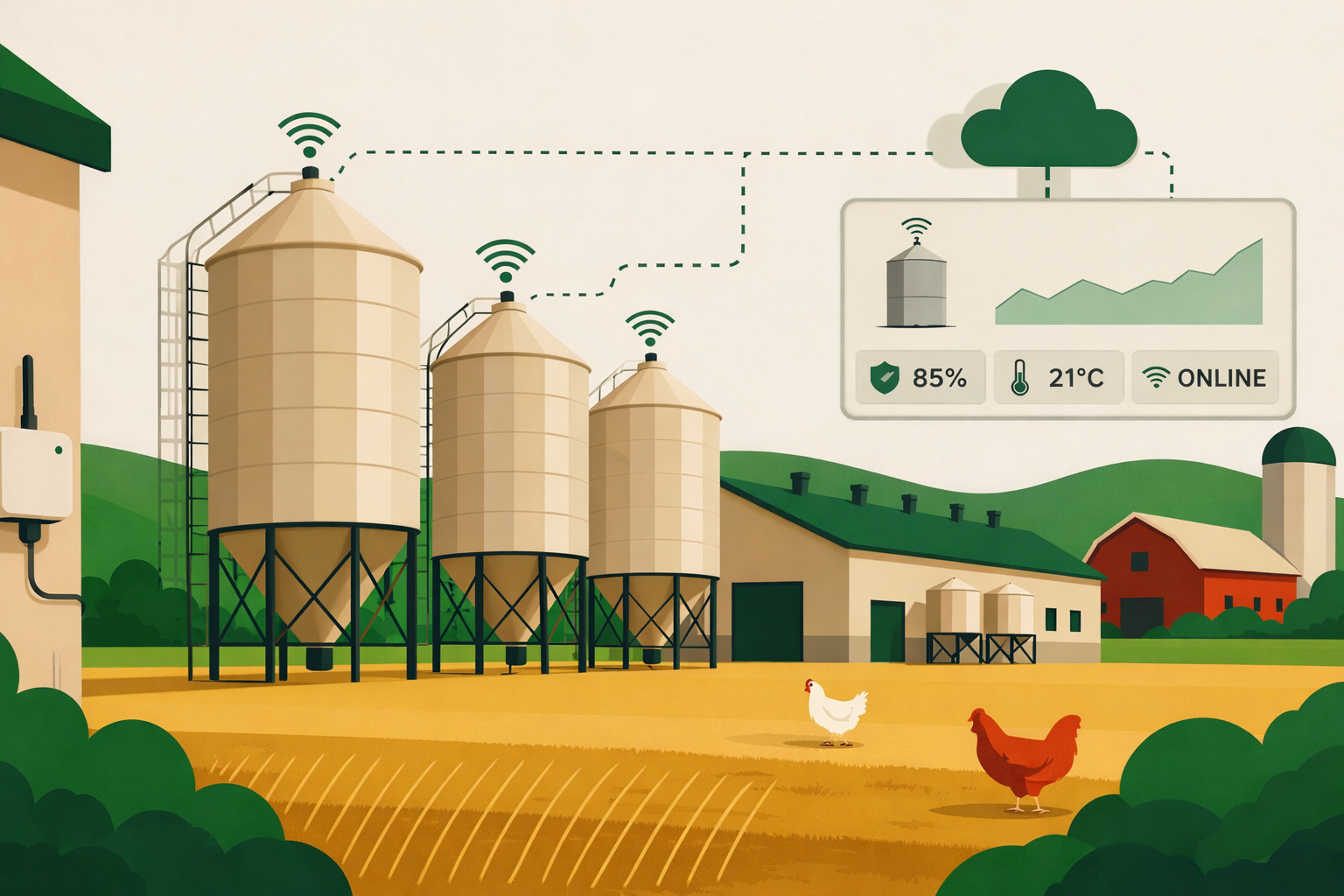
In poultry rearing, heat is a line item that can decide the financial result of a cycle. In their first days, chicks need a high, stable temperature, and the house has to be heated through the whole winter. Natural gas and LPG are convenient and clean-burning, but their price can swing. That is why some farmers look at biomass and renewable energy — not always instead of gas, more often as its complement. This page is about renewables and biomass specifically; the choice between gas and forced-air heating we cover separately.
When do biomass and renewables make sense?
Biomass and heat pumps mainly cut fuel cost and the carbon footprint, but they need more handling and more space than a gas cylinder. A pellet or wood-chip boiler needs fuel storage, regular cleaning and a steady fuel supply. A heat pump has low running costs, but a higher upfront cost and limited output at very low temperatures. Most often a mixed setup works best: a stable renewable base source plus fast gas top-up for the peaks, for example when chicks are placed.
How a poultry house can be heated with renewables
The choice depends on the size of the building, fuel access, budget and whether you treat renewables as a base source or a complement to gas.
Pellet boilers
Wood pellets have a steady quality and high energy density, and feeding the fuel is easy to automate with an auger. Combustion is clean and even, which helps hold a stable temperature. In return you need dry pellet storage and regular ash removal.
Wood-chip boilers
Wood chips can be cheaper than pellets, especially with access to your own or local material. They do need larger storage, moisture control and a stronger feed system. This is a solution for bigger buildings, where the lower fuel price makes up for more demanding handling.
Straw boilers
Straw is a fuel available straight from the farm, which is tempting with your own crop production. It has lower energy density, burns faster and leaves more ash, so a large store and more frequent handling matter. Dry, well-stored straw and a boiler built for this fuel are key.
Heat pumps
A heat pump draws energy from air, ground or water and delivers it to the house with high efficiency. Running costs are low, there is no combustion and no fuel store. The downside is a higher upfront cost and a drop in output in hard frost, which is why it is often paired with a second, fast heat source.
Heat recovery from exchangers
A heat exchanger takes energy from the warm, stale air removed from the house and uses it to warm the fresh incoming air. It is not a standalone source but a way to cut losses — less heat leaves with ventilation, so the boiler or pump runs less often while air exchange is kept up.
Solar collectors and solar support
Solar collectors heat water or air with sunlight and can support heating outside the peak of winter. Their yield depends on the season and weather, so they are treated as an add-on that lowers the bills, not as the only heat source for the thermally demanding brooding of chicks.
Choosing renewable heating step by step
- 1
Count your current heat use
Start with your own data: how much gas or LPG you use per cycle and per season, and how demand splits between chick placement and the rest of rearing. Without that figure you can’t honestly compare fuel costs or size a new source. Real data from the building matters more than catalogue averages.
- 2
Check fuel access
Assess what you have a sure, steady access to: pellets, wood chips, straw, or conditions for a heat pump. Work out how much space fuel storage takes and how you will top it up through the season. Cheap fuel without steady supply and storage space soon stops being cheap.
- 3
Match the source to the building size
A small hatchery or house has different needs than a large farm. Pellets and heat pumps are easier to automate; wood chips and straw pay off at larger scale. Decide too whether renewables are to be the base source or just a complement to gas — that changes the sizing and the budget.
- 4
Plan an even temperature for chicks
Chicks are sensitive to swings in heat, so the source has to keep up with the fast warm-up at placement and hold a stable temperature without spikes. Biomass boilers have more thermal inertia than gas burners, which is why they are often paired with a fast peak source and well-set controls.
- 5
Take care of safety: CO and ventilation
Any combustion needs sound flue gas removal and ventilation — incomplete burning of biomass can produce carbon monoxide (CO), dangerous to birds and people. Plan a proper chimney, CO sensors and boiler servicing. A heat pump burns no fuel, but it still needs a correct electrical installation.
- 6
Add heat recovery and solar support
Whatever the main source, consider an exchanger to recover heat from the exhaust air and solar support outside the peak of winter. That lowers the demand for heat from fuel, and so the bills, without hurting air exchange. Every kilowatt saved is less fuel burned.
Frequently asked questions about heating a poultry house with biomass and renewables
Biomass instead of gas, or together with gas?add
Most often together. Biomass or a heat pump gives a cheap, stable base source, while gas or LPG stays as a fast top-up for the peaks — especially at chick placement, when the temperature has to rise quickly. A mixed setup combines a lower fuel cost with the certainty that heat never runs short. The choice between gas and forced-air heating we cover on a separate page.
Is biomass really cheaper to run?add
It usually lowers fuel cost and the carbon footprint, but the overall bill depends on the price of fuel, access to it and the labour involved. A pellet or wood-chip boiler has to be loaded, cleaned and serviced, and the fuel stored. Work out the cost per cycle on your own usage data, not on catalogue averages — only then does the comparison with gas make sense.
Will biomass heating hold an even temperature for chicks?add
Yes, provided it is well sized and controlled. Biomass boilers have more thermal inertia than gas burners, so they react more slowly to a sudden need for heat. For sensitive chicks they are usually paired with a fast peak source and a controller that keeps a stable temperature, with no swings up and down.
What to watch out for on safety?add
The most important thing is sound flue gas removal and ventilation. Incomplete burning of biomass can produce carbon monoxide (CO), invisible and dangerous to birds and staff. You need a proper chimney, regular boiler servicing and CO sensors in the house. Keep the fuel store dry and away from ignition sources, and leave the installation to a qualified contractor.
Describe your building’s heat source in DlaFerm.pl
In DlaFerm.pl, in the “Technical equipment of the building” step, you record how you heat the house — gas, biomass or a heat pump — all in one place. Create a free account or write to us.
Phone
+48 796 258 151