Solar power on a poultry house — sun electricity for the farm
A poultry farm uses electricity around the clock: ventilation, lighting, drinking lines and feed augers run without a break. On top of that it has large, well-lit roofs. That makes a poultry house one of the better places for a solar PV system. We explain how to size the system to your use, what self-consumption is and why a generator is still essential.
verifiedFrom the team that has organised work on poultry farms for years.
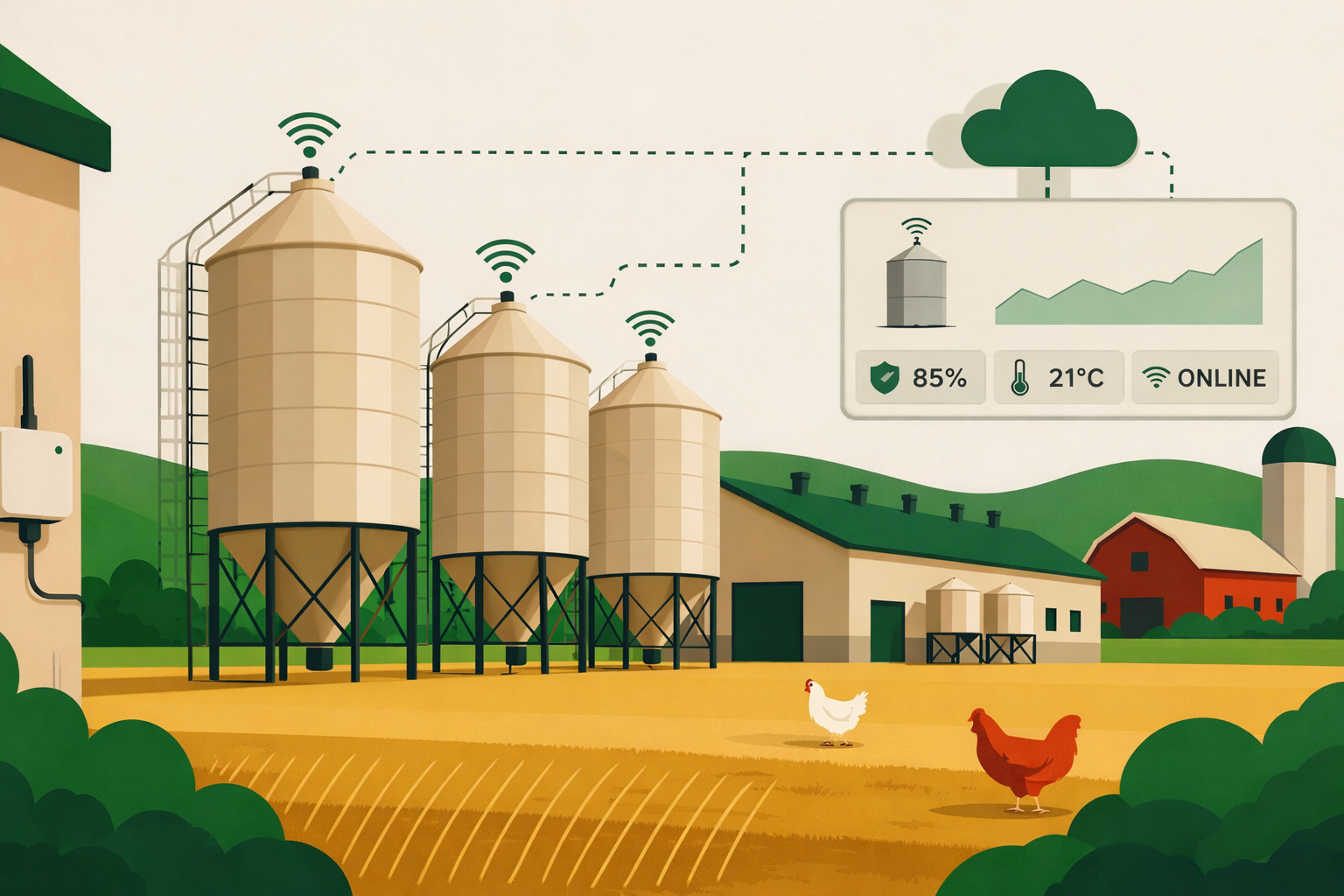
Solar PV on a poultry farm is not a roof decoration but a way to cut the electricity bill the farm runs up anyway. Ventilation, lighting, the drinking system and feed augers run almost without a break, and in the heat power draw climbs sharply as the fans work harder. Poultry house roofs are large, uniform and usually well lit by the sun — ideal for panels. Combining steady, high use with a large roof area means much of the solar energy is consumed on site.
Why is a poultry farm a good candidate for PV?
Whoever uses electricity while the panels are producing it — during the day — gains the most. A poultry farm works exactly like that: ventilation cools the house hardest in the sunny, hot hours, which is when solar produces the most energy. This is called self-consumption — the more power you use straight from your own system, the less you buy from the grid and the faster the investment pays off. Exporting the surplus to the grid is usually less rewarding than using it yourself, so the system is sized to the building’s real daily use.
What solar PV on a farm consists of
How the parts are chosen and connected depends on power use, roof area and how important continuous power to the ventilation is.
Panels and roof area
Modules are most often mounted on poultry house roofs — they are large, uniform and little shaded. Orientation to the points of the compass, the tilt angle and the load capacity of the roof structure all matter. Before mounting it is worth checking the state of the covering, because the panels will stay on it for many years.
Inverter
It turns the direct current from the panels into the alternating current the farm’s equipment uses. Its power and quality decide how much energy actually reaches the fans, lighting and feed augers. The inverter is also where you read the current energy production.
Self-consumption vs export to the grid
Power from the panels first feeds the farm’s equipment, and only the surplus goes to the grid. The higher the self-consumption, the better the bill — energy used on site is worth more than energy exported. That is why the system is designed around the daily use profile, not around the roof’s maximum capacity.
Energy storage (batteries)
Storage gathers the daytime surplus and gives it back in the evening and at night, when the panels are idle but ventilation and lighting still draw power. It raises self-consumption and cuts purchases from the grid. It is an extra cost, so its payback is worked out individually for a given farm.
Generator as backup
Solar PV does not replace the generator. In a power cut, especially in the heat, stopping the ventilation threatens the flock within a quarter of an hour. A generator with automatic transfer switching takes over the critical equipment regardless of the weather or time of day — it, not the panels, is the emergency safeguard.
Production and use metering
Meters and monitoring show how much energy the system produced, how much the farm used on site and how much went to the grid. From that you know whether the panel capacity matches real use and where energy leaks away. It is the basis for judging the true payback of the system.
Solar PV on a farm step by step
- 1
Count yearly and daily power use
Start with the bills and readings: how many kilowatt-hours the farm uses in a year and how that spreads across the day and the season. Ventilation in the heat and heating at placement are two different peaks. Without knowing the use profile you cannot sensibly size the panels.
- 2
Size for self-consumption
The system is sized so that as much energy as possible is used on site rather than exported. Too large a system makes surpluses that pay back poorly; too small a one will not cover the daily use. The reference point is the daily draw profile, not the roof area alone.
- 3
Check the roof and structure
Assess the roof’s load capacity, the state of the covering, the orientation and any shading from trees or silos. The panels will stay on the roof for years, so it is better to redo the covering before mounting than after. With a weak structure, ground mounting on a plot beside the farm is an option.
- 4
Consider energy storage
If much of the use falls in the evening and at night (lighting, ventilation), energy storage lets you use the daytime surplus instead of exporting it. It is an extra cost, so work out whether the raised self-consumption justifies the investment on your particular farm.
- 5
Plan a generator as the safeguard
Regardless of the solar PV, the farm needs a generator with automatic transfer of power to the critical equipment. A power cut with stopped ventilation is a real threat to the flock. Size the generator to the power of the fans and emergency lighting, not to the whole building’s use.
- 6
Check grants and grid settlement
Investment in solar PV on farms is sometimes supported by grant schemes and favourable grid settlement — the terms change over time, so check the current rules with the grid operator and the installer. Gather quotes from several firms and compare not just the price but the capacity, warranties and expected production.
Frequently asked questions about solar PV on a poultry farm
Will solar PV replace the generator in a power cut?add
No. A standard solar PV system usually shuts down when there is no grid voltage, and at night it produces no power anyway. In a power cut, especially in the heat, stopping the ventilation threatens the flock within a quarter of an hour. That is why the farm must have a generator with automatic transfer for the critical equipment — solar PV cuts the bills, but the generator is the emergency safeguard.
How do I size the system to the farm?add
The starting point is yearly and daily power use, not the roof area. The system is sized so that as much energy as possible is used on site (self-consumption), because exporting the surplus to the grid usually pays back worse. A poultry farm uses the most in the sunny, hot hours of ventilation, which matches the panels’ production well. The exact sizing is best left to an installer based on your bills.
Is energy storage worth it?add
It depends on the use profile. If a good share of the power goes in the evening and at night — lighting, ventilation — storage lets you use the daytime surplus instead of exporting it, so it raises self-consumption. It is, however, an extra cost, so the payback is worked out individually for a given farm and its use. Without a big difference between day and night, storage pays back more slowly.
Does solar PV lower the farm’s carbon footprint?add
Yes. Solar energy used on site replaces grid power, which partly comes from fossil fuels, so it lowers the carbon footprint of production. For farms that document their environmental impact towards buyers and industry requirements, their own solar PV and lower grid use are a measurable part of environmental management.
Describe your building’s equipment in DlaFerm.pl
In DlaFerm.pl, in the “Technical equipment of the building” step, you record your energy source, generator and ventilation system — all in one place. Create a free account or write to us.
Phone
+48 796 258 151