On-farm hatching — chicks without transport
Instead of hatching in a hatchery and travelling for hours to the house, the egg hatches right on the farm. A freshly hatched chick doesn’t wait and doesn’t travel — from the first moment it has feed and water right under its beak. We explain what on-farm hatching is, how trays above the litter work and what it takes to get it right. It’s a simple way to a better start and a calmer flock.
verifiedFrom the team that has organised work on poultry farms for years.
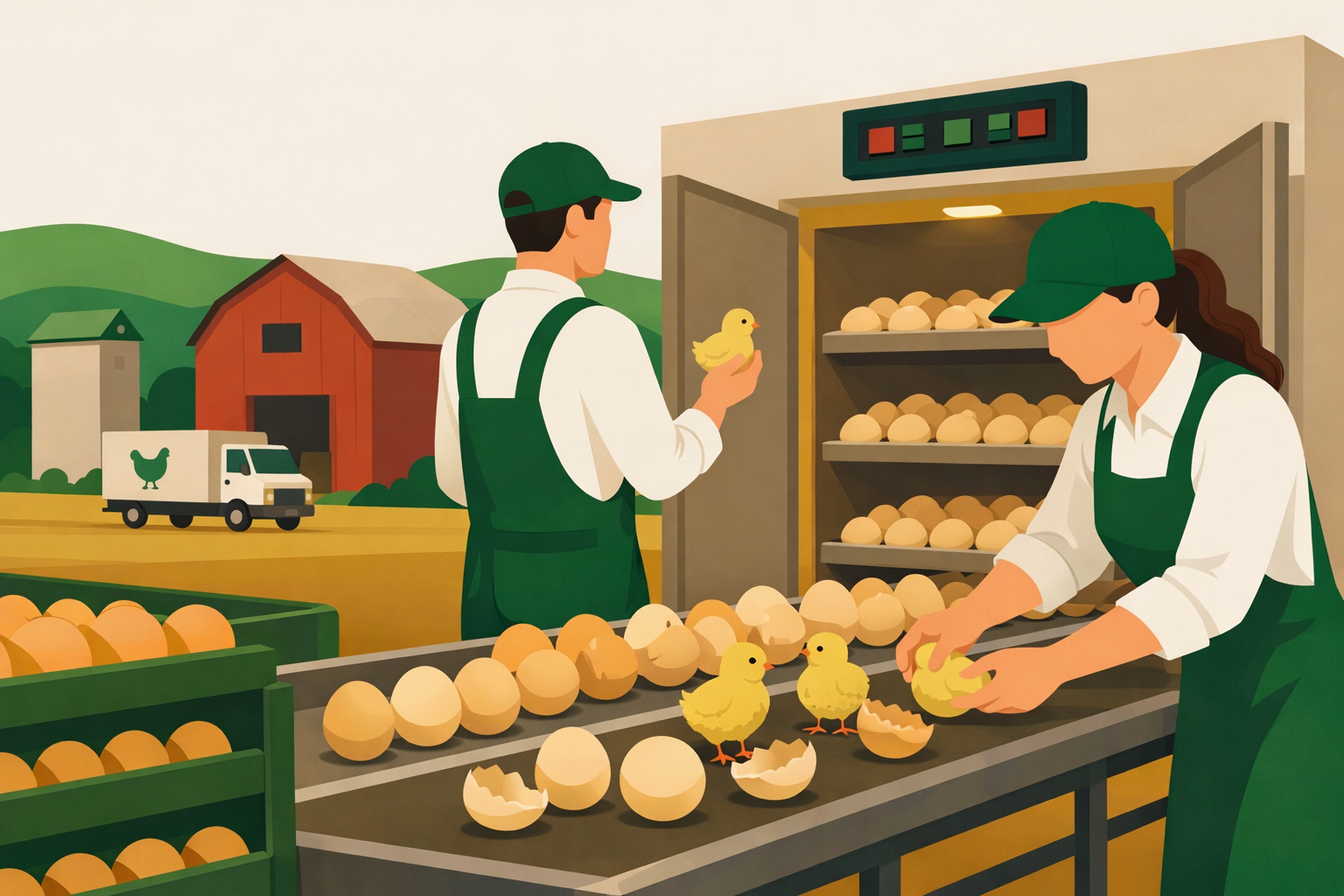
On-farm hatching means chicks hatch directly in the poultry house rather than in a hatchery. Eggs in the final stage of incubation arrive on the farm a few days before hatch and finish hatching on site — on special trays placed above the litter. As soon as a chick hatches, it steps down onto the litter and finds feed and water straight away. Several stressful steps of the classic route are gone: sorting, packing and a long road transport.
Why hatch chicks on the farm?
The reason is simple but important: a better start. In the classic system a chick waits in the hatchery after hatch, is sorted, packed and hauled, and during all that time it neither eats nor drinks — sometimes for many hours or longer. On-farm hatching removes this gap: the bird gets feed and water right after hatch. That supports gut development, gives a stronger immune system and often lower first-week mortality. The flock also tends to be more uniform, because every chick gets the same good start.
What makes up on-farm hatching
Three things matter most: a good egg, even heating during hatch and cleanliness — without them, trays above the litter won’t give an edge.
Hatching trays above the litter
Eggs are laid out on flat trays suspended low above the litter. When a chick hatches, it steps down from the tray onto the litter, where feed and water wait. The trays are designed so the chick descends safely and doesn’t get trapped in shells. After hatch they are collected and cleaned before the next flock.
Eggs in the final stage of incubation
What arrives on the farm are eggs in the last days of incubation, just before hatch — not fresh hatching eggs. The earlier part of incubation is done by the hatchery in setters. So the farm is responsible only for the end of the hatch, which decides whether the chick hatches well and evenly.
Even heating and temperature
On hatch days the eggs and freshly hatched chicks need stable, even warmth across the whole house. The litter must be warmed up, because a cold floor quickly chills a small chick. So the farm heats the house in advance and makes sure there are no cold spots or draughts.
Immediate access to feed and water
The whole point of on-farm hatching is that the chick eats and drinks right after hatch. Starter feed and water must be laid out so every chick reaches them without searching. That cuts the fasting period to zero and kick-starts gut development from the first hours of life.
Hygiene and healthy hatching material
Since hatching happens in the house, the cleanliness of eggs and litter is crucial — a dirty egg is a risk of infecting the freshly hatched chick. Eggs must come from healthy parent flocks and be clean, and the litter fresh and dry. Here hygiene replaces the sterile conditions of a hatcher in the hatchery.
No sorting or transport
In on-farm hatching the chicks are neither sorted nor hauled — they stay where they hatched. The stress of catching, boxing and a long drive disappears. This is one of the method’s main advantages, because it is precisely these steps that weigh most on a tiny chick in its first day of life.
On-farm hatching step by step
- 1
Arrange it with the hatchery
Agree with the hatchery on a delivery of eggs in the final stage of incubation — that is, in the last days before hatch. Healthy parent flocks and clean eggs matter, because the hatch will take place at your house. Set the exact day and time of delivery so it lines up with the house being ready.
- 2
Heat the house and litter in advance
Several hours before delivery, warm the house so the litter is warm and the temperature is even across the hall. A cold floor quickly chills a fresh chick, so this is a condition of a successful hatch. Check there are no cold spots, draughts or damp.
- 3
Lay the eggs on trays above the litter
Spread the egg trays evenly across the house, low above the litter, so hatched chicks have a short, safe way down. Don’t overcrowd the eggs and leave the chicks room to step off. Even spreading helps keep similar conditions for all the eggs.
- 4
Put feed and water under the beak
Before hatching starts, lay out starter feed and water so every descending chick reaches them at once. The point is that the bird doesn’t have to search for anything. It is exactly this immediate access that gives on-farm hatching its edge over classic transport.
- 5
Watch the hatch and the first hours
On hatch days inspect the house more often than usual: are the chicks coming off the trays, are they finding feed and water, are there cold spots? React on the spot — adjust the heating or move the drinkers where needed. The first hours decide the start of the whole flock.
- 6
Clean the trays and record the result
After the hatch is over, collect the trays, remove the shells and clean the equipment before the next flock. Count how many chicks hatched and how the flock looks in the first week. Note mortality and observations so you can compare flocks and know what works best for you.
Frequently asked questions about on-farm hatching
How does on-farm hatching differ from classic chick delivery?add
In the classic system chicks hatch in the hatchery, are sorted, packed and hauled to the house, and during that time they neither eat nor drink. In on-farm hatching the eggs finish hatching in the house, and right after hatch the chick steps down onto the litter to feed and water. The fasting gap and transport stress disappear, which usually gives a better start.
Does on-farm hatching reduce first-week mortality?add
Most often yes, because the chick gets feed and water right after hatch instead of waiting for transport. Earlier feed access supports gut development and the immune system, and the absence of transport stress helps too. The condition, though, is good heating, cleanliness and healthy hatching material — without them the advantage disappears.
Which eggs are suitable for on-farm hatching?add
You need eggs in the final stage of incubation, that is the last days before hatch, delivered by the hatchery. They should come from healthy parent flocks and be clean, because the hatch will take place in the house. A dirty or sick egg is a risk of infecting the freshly hatched chick.
What matters most for on-farm hatching to succeed?add
Three things: warm, evenly heated litter on hatch days, immediate access to feed and water under the beak, and hygiene of the eggs and the house. A cold floor quickly chills the chick, and dirt risks infection. If these conditions are met, trays above the litter give a better and more uniform start than classic transport.
Record the flock start in DlaFerm.pl
In DlaFerm.pl, next to the flock card, you note the placement day, the hatching method and rearing observations — everything in one place, so you can compare flock after flock. Create a free account or write to us.
Phone
+48 796 258 151