Climate computers and controllers — automatic microclimate in the poultry house
A climate computer is the brain of the house: it reads sensors, compares them with a set temperature curve and controls the fans, heating and cooling itself. So the birds get a stable microclimate around the clock, you save energy, and you get an alarm before a small problem turns into a loss. We show how they work, what functions they have and how to match a device to your building.
verifiedFrom the team that has organised work on poultry farms for years.
What a climate computer is and why to fit one
A climate computer (climate controller) is a device that centrally manages the microclimate in the poultry house. It collects data from temperature, humidity and often CO2 sensors, then automatically controls ventilation, heating and cooling to keep the conditions set by the farmer. Instead of adjusting fans by hand and watching a thermometer, you set a target curve — and the device handles the rest. This is the basis of modern control, which we describe further in the article on climate controllers in the poultry house.
The microclimate must match the birds’ age
A broiler on day one needs about 32-34°C, and at the end of fattening only 18-20°C. You cannot handle that difference with a single thermostat setting. A climate computer runs a so-called temperature curve — it automatically lowers the set value as the flock ages, matching the work of broiler-house ventilation to the birds’ real needs. That is where the biggest value lies: a stable microclimate at every stage of rearing, without constant manual correction.
Where it is used and why it pays off
You will find climate controllers in broiler, layer and turkey houses — wherever a stable microclimate and energy-cost control matter. The larger the stocking, the more precision counts: even a few degrees of deviation means worse gains, higher feed use or heat losses. A well-chosen computer also controls cooling devices such as cooling pads (panel chłodzący) and heat recovery from heat exchangers in the house, combining bird comfort with a lower bill.
Alarms that save the flock
The most important function of a computer is not convenience but safety. A ventilation failure in summer can suffocate a flock in a dozen minutes, and too low a temperature in winter can chill the chicks. A climate controller watches alarm thresholds and notifies the farmer immediately: by sound, phone or in an app. That is the difference between a small intervention and the loss of a whole batch. So alarms are treated as a must, not an add-on.
Control and records in one place
A climate computer looks after the conditions in the house, and DlaFerm.pl helps you run the rest of the farm: you record the course of rearing in a digital Flock Card, and the reports to flock records in IRZplus DlaFerm.pl will send for you, if you want. The microclimate is under the hardware’s control, and the documentation and flock results under the app’s — a coherent picture of the farm, ready for any inspection. You can create a farm account for free.
Climate computer — what it is and how it works
From a simple thermostat to an advanced computer — they all control the same microclimate, but with different precision. Here are six things worth understanding before you choose a device.
Types: from thermostat to computer
The simplest are thermostats — they switch a fan or heating on past a threshold. Above them sit zone controllers, and at the top climate computers that run curves, calculate minimum ventilation and log data. The larger and more modern the building, the more a top-shelf solution pays off — the comparison is in the article on climate controllers.
How it works: sensor → algorithm → devices
The loop is simple: sensors measure temperature, humidity and CO2, the algorithm compares them with the set value, and the controller runs fans, heating or cooling. It all happens in seconds and repeats hundreds of times a day. That is why a computer reacts more smoothly and precisely than a person checking a thermometer once an hour.
Key functions: curves, minimum ventilation, alarms
Three functions make the difference. The temperature curve lowers the target as the flock ages. Minimum ventilation guarantees air exchange and moisture removal even in the cold, when the birds do not generate enough heat. Alarms watch the safety thresholds. See how these settings tie in with broiler-house ventilation.
Where and when to use it
A climate controller is worth having wherever the microclimate decides the results — in broiler, layer and turkey houses, especially with high stocking and mechanical ventilation. The more devices you have (fans, heating, cooling pads, flaps), the more sense it makes for one computer to coordinate them rather than separate regulators.
Installation and sensors
The heart of the system is the sensors — their number and placement decide whether the computer sees the real microclimate. Temperature sensors are mounted at bird height, at several points in the hall, away from heaters and inlets. A badly placed sensor means a false reading and a wrong reaction of the whole control. It is worth leaving the installation to a professional and checking the temperature spread after start-up.
Integration with monitoring and phone
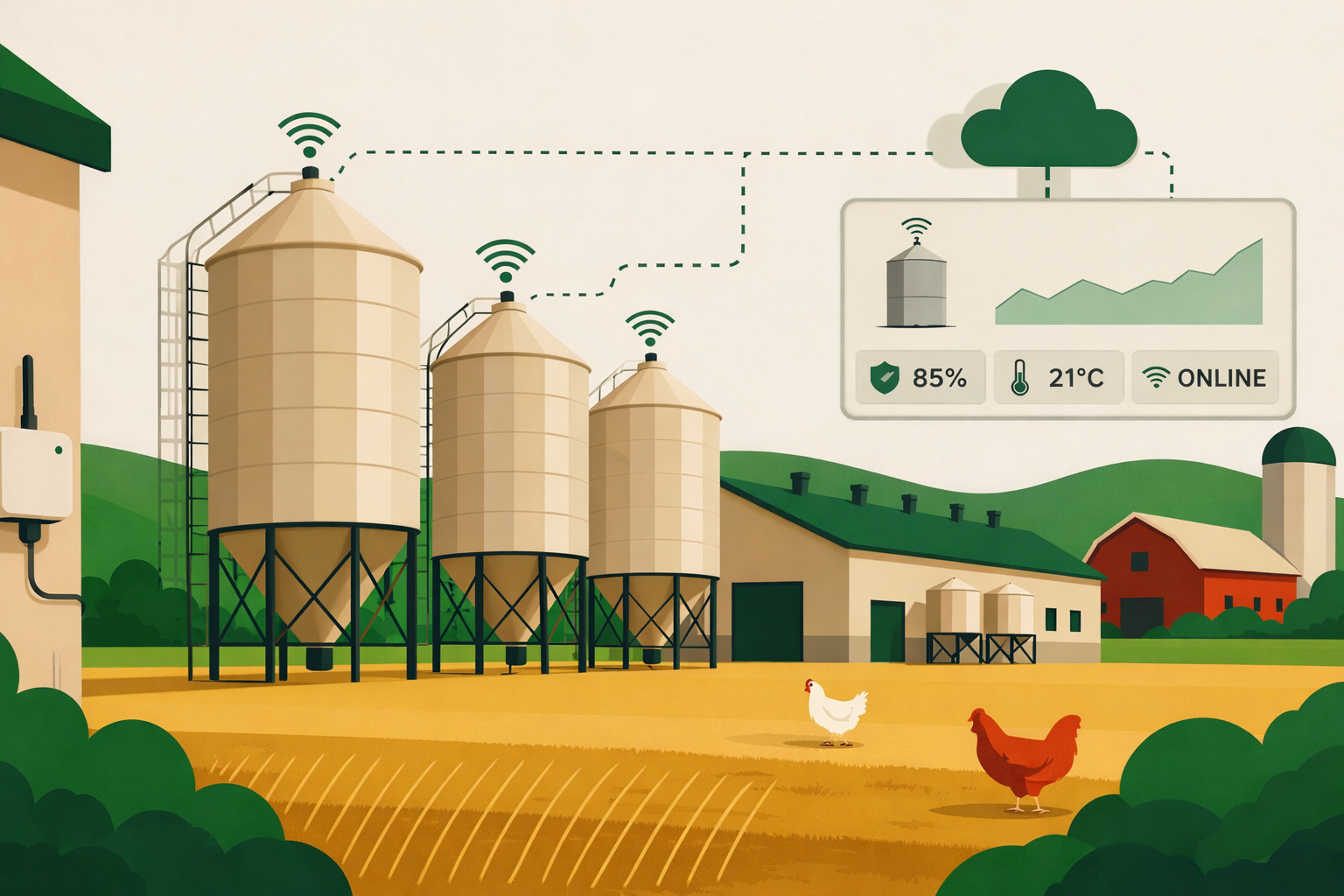
Modern computers send data to the cloud and an app, so you can view the microclimate and history from your phone, and an alarm reaches you even at night away from the farm. The hardware controls the conditions, and you conveniently keep the course of rearing and flock results in a digital Flock Card — then both the microclimate and the documentation are within reach.
How to choose and run a climate computer
The biggest difference comes from sizing to the building and honest sensor calibration. Here are six areas to think through before buying and in daily use.
Sizing to the building’s size and type
The controller must handle as many outputs as you have devices: fans, heating, cooling, flaps, possibly heat recovery. A small, naturally ventilated house needs only a simple regulator, while a large hall with mechanical ventilation needs a full computer with room to expand. Oversizing is a needless cost, while undersizing means a missing function at the key moment.
Costs: purchase, installation and running
The cost covers the device itself, sensors, wiring and installation, and then ongoing service. An advanced computer is an outlay that pays back through energy savings and better flock results, but only when it is set up well. Calculate the total cost soberly and compare it with real savings on heating and smaller losses — only then can you see whether the investment adds up.
Service and sensor calibration
A sensor drifts over time — it shows a value off from the real one, and the control reacts to false data. So sensors are calibrated periodically and cleaned of the dust and feathers that lower readings. A regular check, a clean sensor and a trusted control thermometer are the condition for the computer to actually hold the set microclimate, not just appear to.
Reliability and emergency alarms — power loss
The most dangerous is a power failure: with mechanical ventilation, cutting the power in heat suffocates a flock in a dozen minutes. So the computer should have backup power for the alarm and an independent flap-opening system (e.g. gravity actuators), and the farm a generator. The alarm must work even when the main controller fails. This is not excess caution but protection of the whole batch.
Common mistakes
Typical errors are badly placed sensors, too aggressive curves, minimum ventilation switched off or set too low (result: moisture and ammonia) and ignored alarms. A common mistake is also the lack of cooling pads where summer temperatures exceed what ventilation alone can manage. Settings are worth checking after every placement, not once at installation.
When it pays off
The larger the stocking, the longer the summer and the higher the heating bills, the faster a good computer pays back. For a small, naturally ventilated flock a simple controller is enough. On a commercial farm with heat recovery from exchangers and cooling, a full computer is not a luxury but a tool that watches both the microclimate and the costs — and you record the flock results in a digital Flock Card.
Frequently asked questions about climate computers and controllers
How does a climate computer differ from a thermostat?add
A thermostat switches a fan or heating on past a single temperature threshold. A climate computer does far more: it runs a temperature curve that changes with the flock’s age, calculates minimum ventilation, controls many devices at once and watches alarms. In practice a thermostat is enough for a small flock, while a computer is essential where the microclimate and energy costs decide the result.
What is a temperature curve in a controller?add
A temperature curve is a programmed plan that automatically lowers the target temperature as the birds age — from high for chicks to lower for adult birds. Thanks to it you do not have to adjust the settings daily: the computer matches the conditions to the rearing stage itself. It is one of the functions that most strongly sets a climate computer apart from an ordinary thermostat.
Why minimum ventilation if the birds are not hot?add
Minimum ventilation provides constant air exchange even on cold days, when the birds do not generate excess heat. Without it humidity and the concentration of ammonia and CO2 rise in the house, harming the birds despite a comfortable temperature. The computer calculates the minimum flow from the stocking and flock age, so it keeps the air healthy, not just the temperature right.
What happens during a power failure?add
This is the most dangerous scenario, especially in summer with mechanical ventilation — without airflow a flock can suffocate in a dozen minutes. So the computer should have backup power for the alarm and independent flap opening, and the farm a generator. The emergency alarm must trigger even when the main controller fails. Without that safeguard you risk losing the whole batch.
How often should sensors be calibrated?add
Sensors drift over time and show values off from the real ones, so they are checked periodically with a control thermometer and calibrated to the maker’s guidance. They must also be cleaned regularly of dust and feathers that lower readings. A dirty or miscalibrated sensor makes the computer control on false data, which ruins the whole microclimate.
Does a small poultry house need a climate computer?add
Not necessarily. In a small, naturally ventilated flock a simple controller or thermostat with a sensor is usually enough. A full computer pays off with higher stocking, mechanical ventilation and high heating costs, where precision turns into real savings and better results. Match the choice to the scale of the building, not to fashion — oversized hardware is a needless cost.
Microclimate under the hardware, the farm under DlaFerm.pl
A climate computer looks after the conditions in the house, while DlaFerm.pl helps you keep the Flock Card, treatment records and flock results in one place. Create a free farm account and have your documentation ready for any inspection.
Phone
+48 796 258 151