Flock biomass calculator for pickup
Before you order transport to the slaughterhouse, you need to know how many kilograms of live weight will leave the house. Flock biomass is simply the number of live birds multiplied by their average weight. We show a simple formula, work through an example step by step and convert the result into the number of vehicles and crates. This is the basis for planning the pickup, the catching and the settlement well.
verifiedFrom the team that has organised work on poultry farms for years.
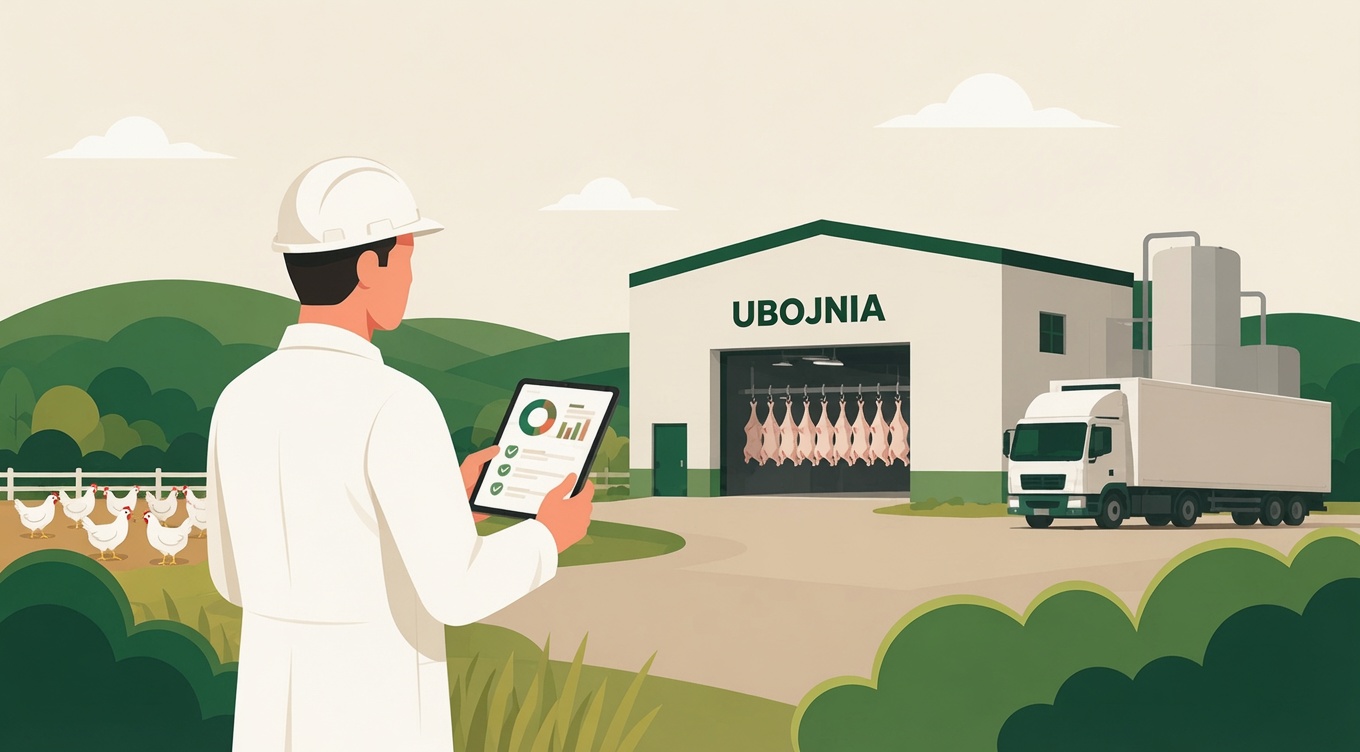
What flock biomass for pickup is
Flock biomass for pickup is the total weight of all live birds that will leave the house for the slaughterhouse — given in kilograms or tonnes. You calculate it simply: take the number of live birds and multiply by their average weight. The result tells you how much live weight you actually have in the facility, and that in turn decides how many vehicles and crates the pickup needs. Without this figure you order transport by guesswork, which is a common reason for too few or too many trucks turning up.
Why calculate biomass before pickup
Live weight is needed at three moments: when you order transport (how many trucks and crates), when you plan the catching (how many crews and hours) and when you settle with the slaughterhouse (payment goes by kilograms). The more accurately you calculate biomass, the fewer surprises at the slaughterhouse gate scale. In words the formula is: biomass = number of live birds × average weight of one bird. This is the same logic the slaughter-day calculator uses when setting the pickup date.
Where to get the two numbers for the formula
You only need two values. The first is the number of live birds: take the number placed and subtract deaths and culls cumulatively from the start of the batch. The second is the average bird weight from a sample weighing — you weigh several dozen birds from different parts of the house and work out the average. Both numbers are easiest to have at hand when you keep a digital Flock Card — deaths and weighings are recorded there as you go.
Biomass versus other batch indicators
Biomass for pickup is a snapshot of the flock’s weight on a given day — not to be confused with whole-cycle efficiency indicators. How the birds grew and how much feed they ate per kilogram of gain is shown by the feed conversion ratio (FCR), and the overall performance of the batch by the EPEF index. Biomass answers a different question: how much live weight will physically leave the house today and what that means for the pickup logistics.
Calculate once and save on transport
Well-calculated biomass means transport ordered just right: no empty trips and no birds left for the next run. In DlaFerm.pl you have the number of live birds and the latest weighings in one place, so you set the live weight and the number of trucks in moments — without adding up paper sheets by hand. You can create a farm account for free and start planning the pickup on real numbers right away.
How to calculate flock biomass for pickup — six steps
From gathering two numbers to converting them into vehicles and crates. Go through these six steps and you get a ready pickup plan based on kilograms, not on a hunch.
Gather the data: live birds and average weight
Count the live birds: number placed minus deaths and culls cumulatively. Take the average weight from a sample weighing — you weigh several dozen birds from a few parts of the house and work out the average. Both values are at hand in the digital Flock Card if you record deaths and weighings as you go.
Write down the formula
The formula is simple: biomass (kg) = number of live birds × average bird weight (kg). If you want the result in tonnes, divide the kilograms by 1000. That is all — no complicated conversions, a single multiplication that is worth doing just before ordering transport, on fresh numbers.
Take a worked example
Suppose a flock: 20,000 chicks placed, 1000 birds died and culled cumulatively, so 19,000 live birds remain. From the sample weighing the average weight came out at 2.6 kg per bird. These two numbers are enough to calculate the whole live weight for pickup.
Substitute into the formula
We multiply: 19,000 birds × 2.6 kg = 49,400 kg. In tonnes that is 49,400 ÷ 1000 = 49.4 tonnes of live weight. That is how many kilograms will physically leave the house that day — and the slaughterhouse will charge from this figure, so it is worth having it calculated accurately.
Convert into vehicles and crates
Now divide the biomass by the load capacity of one truck. With a truck holding about 5000 kg of live weight: 49,400 ÷ 5000 ≈ 10 runs or one larger set over several rounds. You calculate the number of crates similarly — biomass or number of birds divided by the capacity of one crate. The carrier provides exact capacities.
Use the result in logistics and catching
You pass the ready live weight to the slaughterhouse and carrier to order the right number of trucks and crates. If you plan partial catching (thinning — removing some of the heavier birds before the main pickup), calculate biomass separately for that batch. You then tie the pickup plan and dates together with the slaughter-day calculator.
What to watch out for when calculating biomass
The result is only as good as the data you put into it. Here are six things to keep in mind when planning the live-weight pickup.
Truck load capacity and crate capacity
The number of vehicles depends on the real load capacity given by the carrier, not on a “typical" truck. Crate capacity is the number of birds you may carry in it — it depends on bird weight and the season (fewer in summer to avoid overheating). Always confirm these values with the carrier before the pickup, because they decide the final number of runs.
Transport weight loss
The live weight at the slaughterhouse gate is sometimes a little lower than calculated in the house — birds lose weight during catching, waiting and transport (transport weight loss). This is a normal phenomenon, but it is worth knowing it when planning the settlement. A shorter time between catching and slaughter and calm handling limit this loss. Do not overstate the payment forecast by weight that will be lost on the way.
Partial catching (thinning)
In partial catching you remove part of the flock before the main pickup — usually the heavier birds, to give the rest more room. Then you calculate biomass twice: separately for the batch taken now and separately for the one that stays. After thinning, update the number of live birds, because you enter the next pickup with a smaller flock.
Compliance with transport welfare
Planning the pickup must stay within the rules on the protection of animals during transport: crate stocking, journey duration and conditions must not endanger the birds. In summer the density is reduced so the birds do not overheat. Biomass helps plan the pickup to fit the norms — but the carrier and the rules set the upper stocking limits.
Common mistakes: a bad weight sample
The most common mistake is an average weight from a poor sample — weighing a few birds only from under the feeder or from one corner of the house overstates or understates the result. Weigh several dozen birds from different places and at a fixed time. The second mistake is stale deaths: if the number of live birds is not up to date, the whole biomass drifts off. Fresh data means an accurate result.
Calculate in the app on live data
Biomass is most reliably calculated when the number of live birds and the latest weighings are recorded as you go. In the digital Flock Card you have deaths and weighings in one place, and DlaFerm.pl can file your flock records in IRZplus for you — automatically, if you want. So you set the live weight and the number of trucks on current numbers, not from memory.
Frequently asked questions about flock biomass for pickup
How do I calculate flock biomass for pickup?add
You multiply the number of live birds by their average weight: biomass (kg) = number of live birds × average bird weight (kg). You take the number of live birds as the number placed minus deaths and culls, and the average weight from a sample weighing. Example: 19,000 birds × 2.6 kg = 49,400 kg, that is 49.4 tonnes of live weight for pickup.
Where do I get the average bird weight?add
From a sample weighing: you weigh several dozen birds taken from different parts of the house at a fixed time, then work out the average. A sample from one corner or only from under the feeder will distort the result. The better chosen and larger the sample, the more accurate the average, and therefore the whole calculated flock biomass.
How many vehicles are needed for the pickup?add
You divide the biomass by the real load capacity of one truck. For example 49,400 kg divided by 5000 kg of capacity is about 10 runs or one larger set over several rounds. You calculate the number of crates similarly — you divide the weight or number of birds by the crate capacity. The carrier always confirms the exact capacities.
What is the difference between a full pickup and partial catching?add
In a full pickup the whole flock leaves at once. In partial catching (thinning) you take part of the birds first — usually the heavier ones — to give the rest more room and finish fattening them for the next date. Then you calculate biomass separately for the batch taken and separately for the one that stays, and after thinning you update the number of live birds.
Why is the weight at the slaughterhouse gate lower than calculated?add
Birds lose weight during catching, waiting and transport — this is so-called transport weight loss. The longer the time between catching and slaughter and the more stressful the handling, the bigger the loss. That is why the payment forecast is not overstated by weight that will be lost on the way, and short, calm transport limits this loss.
Can biomass be calculated in the DlaFerm.pl app?add
Yes. When you keep a digital Flock Card, the number of live birds and the latest weighings are recorded as you go, so you set the live weight and the number of trucks on current numbers. You do not add up deaths from paper sheets or hunt for old records — you calculate everything on fresh data in one place. You can create a farm account for free.
Calculate biomass and plan the pickup in DlaFerm.pl
Want to know the live weight and the number of trucks before you call the carrier? After sign-up, in the Flock Card you have live birds and weighings in one place, so you calculate biomass and the pickup plan in moments. Create a free farm account.
Phone
+48 796 258 151