Turkey or broiler — which is more profitable?
Broiler and turkey are two different business models, even though both produce poultry meat. The broiler is a short, fast cycle with many rotations a year; the turkey is a long fattening period, a more expensive facility and a higher live-bird price. We compare them criterion by criterion on our own cost model built from public prices — not from any farm’s data. At the end we say what to choose and when.
verifiedFrom the team that has organised work on poultry farms for years.
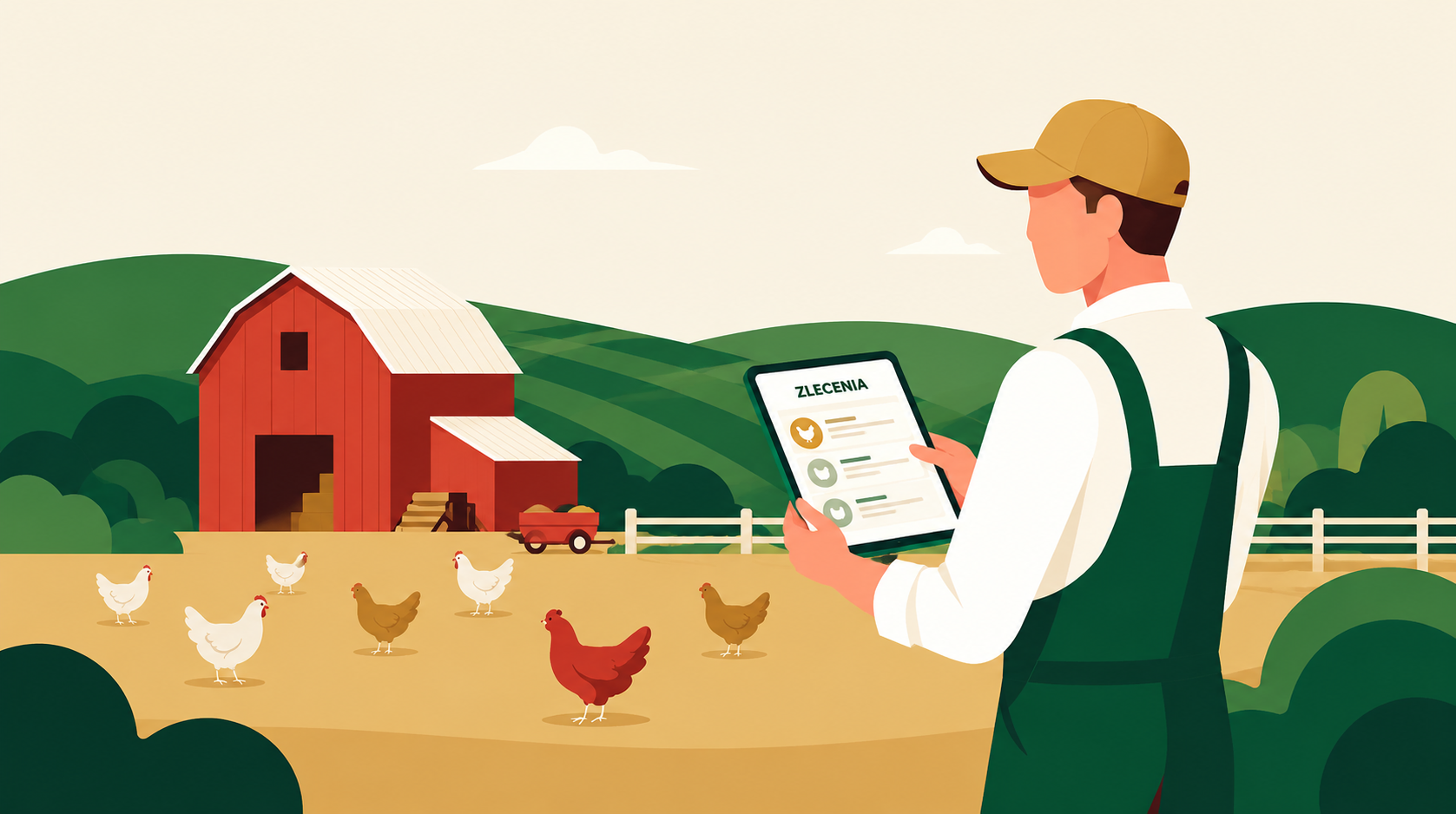
Two different meat-production models
Broiler and turkey are not the same business in two sizes but two distinct models. The broiler grows fast — the cycle is counted in weeks and you run many batches a year. The turkey grows for a long time to a heavy weight, so there are few rotations, but each bird is worth more. That alone means profitability cannot be compared by eye — it has to be calculated over the whole year and the whole facility. A good starting point is our guide on turkey farming profitability.
Where the profitability differences come from
Profitability is not the live-bird price but the margin after costs: day-old chicks, feed, heating, treatment and facility depreciation. The turkey has a higher purchase price, but also a longer cycle, worse feed conversion per kilogram and a more expensive, better-heated facility. The broiler has a lower price but a low unit cost and fast capital turnover. So "which pays off more" depends on how many rotations you fit in a year and what facility you have — more in turkey farming.
We calculate per year, not per batch
The most common mistake is to compare profit from a single flock. One broiler batch yields less than a turkey one, but you have several times more batches, so the annual total from the same floor area is what counts. One turkey cycle yields a lot, but the facility "works" more slowly and freezes capital longer. Only the annual profit per square metre shows the truth. We use the same approach in the guide on how much you can earn from poultry farming.
A cost model from public prices — not client data
All the numbers here are our own model based on publicly available norms (breed guides, market data on live-bird and feed prices). This is not data from any farm or an "app average" — your farm will calculate its own result on its own costs. Good record-keeping lets you compare both directions on real numbers rather than gut feeling. You track the turkey and broiler cycle in the digital Flock Card.
DlaFerm.pl makes the decision easier
Whether you go for broiler, turkey or both, the key is controlling the costs and results of each flock separately. DlaFerm.pl lets you keep a digital Flock Card and flock records in IRZplus for each species. The IRZplus portal can be unintuitive, so you can have DlaFerm.pl file the flock-change reports for you — automatically, if you want; or you can report them yourself. So after the first year you know exactly which direction gave you a higher margin per square metre. You can create a farm account for free.
Turkey vs broiler — criterion by criterion
Six criteria that decide profitability. For each we name both species so you can see where each one wins. The numbers are a model from public prices, not farm data.
Cycle length and rotation (broiler vs turkey)
The broiler fattens briefly — usually around 5–6 weeks to slaughter weight, so on one facility you fit several batches a year (after cleaning breaks). The turkey grows for a long time: hens for a dozen-odd weeks, toms up to half a year to a heavy weight. That means barely 1.5–2 cycles a year. The broiler wins on rotation and fast capital turnover, the turkey on the value of a single bird. We count profit annually, as in how much you can earn from poultry farming.
Day-old chick and feed cost — FCR (broiler vs turkey)
A turkey poult costs more than a broiler chick at the start. Feed is the largest cost for both directions. The broiler has very good feed conversion — FCR (feed per kilogram of gain) usually close to 1.5–1.7. The turkey grows to a heavy weight, so total feed per bird is many times larger and the whole-cycle FCR is higher (often 2.5–3.0). Per kilogram of meat the broiler is cheaper to feed, but the turkey sells dearer — and it balances out. Details in turkey farming profitability.
Facility requirements and stocking — LU (broiler vs turkey)
The broiler tolerates higher stocking (kg/m²) and a simpler facility; the turkey needs more space per bird, stronger ventilation and often better heating in the first weeks. That feeds into LU (Livestock Units) and the cost of building and utilities. A turkey house is more expensive per bird, but the bird is worth more. The broiler yields more kilograms per square metre a year thanks to rotation, the turkey more from a single batch. Keeping requirements are covered in turkey farming.
Live-bird purchase price — market, public (turkey vs broiler)
The live-turkey purchase price is usually clearly higher than the broiler per kilogram — that is a public market fact, not our estimate. But a higher price does not mean a higher margin: you have to subtract the dearer feed per kilogram and the longer capital lock-up of the facility. The broiler takes a lower price but with a low unit cost and fast turnover. Both prices move and are seasonal, so the model must be built on a range, not a single number — follow the public quotations.
Health risk and losses (broiler vs turkey)
The turkey is more sensitive, especially in the first weeks (start, heating, disease), and the long cycle means that a bird that dies has already had a lot of feed invested in it — the loss hurts more. The broiler has a short cycle, so a loss is a smaller sunk cost per bird, but at dense stocking a disease quickly spreads through the whole flock. Both directions share the avian-influenza risk (culling the flock). Records of treatment, withdrawal and mortality are the basis for real loss accounting — keep them in the digital Flock Card.
Capital and liquidity (broiler vs turkey)
The broiler freezes capital briefly: you buy chicks, after a few weeks you have revenue and repeat the cycle. Liquidity returns fast. The turkey needs more capital for longer — dearer poults, more feed per bird and months of waiting for the sale. That is harder for beginners and more sensitive to feed-price swings mid-cycle. The broiler is safer for liquidity, the turkey needs a financial buffer and stronger nerves. Record every cycle in IRZplus flock records.
Turkey or broiler — how to decide
A table alone is not enough — the choice depends on scale, access to a buyer and your experience. Here are six things that decide it before you calculate the margin on your own costs.
Farm size and facility
A small facility and less capital handle the broiler better — fast turnover, low unit cost, easier to start. The turkey rewards a larger, better-equipped farm that can carry dearer poults and months of fattening without revenue. If you are building from scratch, design for a specific species, because ventilation and stocking requirements differ. Compare on annual margin per square metre, not on a single batch — as in how much you can earn from poultry farming.
Access to integration and a buyer
The market often chooses the direction for you: if a broiler integration operates nearby (chicks, feed and collection in one), entry is easier and less risky. The turkey can be harder to organise and needs a reliable buyer of live birds, because you will not sell a large bird "off hand". Before you decide, check the real buyers and purchase prices in your region — those, not general quotations, will decide profitability.
Farmer’s experience
The turkey is harder, especially at the start — sensitive brooding, higher environmental demands, a long cycle with no room for error. The broiler forgives more and gives a fast learning loop: a short cycle means frequent feedback and a chance to improve. A beginner usually starts more safely with the broiler and reaches for the turkey once heating, ventilation and biosecurity are mastered. The basics of keeping turkeys are covered in turkey farming.
Diversifying directions
You do not have to choose once and for all. Some farms combine directions to spread price risk — when one live-bird price falls, the other saves the year. You can also alternate species in the seasons when they sell better. Diversification makes sense when the facility and staff can carry two different regimes. It is reasoned the same way in other comparisons, like duck vs goose — profitability. Keep each flock separately in IRZplus records.
Common mistakes in profitability accounting
The most common mistake is comparing profit from a single batch instead of the whole year — the broiler then "loses" apparently, although rotation reverses the result. The second is omitting the depreciation of the more expensive turkey facility and the cost of locked-up capital. The third is counting by purchase price without subtracting mortality, withdrawal and worse FCR. A real account needs hard data from records, not internet prices — so keep a digital Flock Card from day one.
Recommendation
From a cost model built on public prices a simple rule emerges: the broiler forgives more, returns capital faster and suits a smaller farm and a beginner better — it wins on rotation. The turkey gives higher value from a single batch and can give a higher margin, but only with a good facility, a reliable buyer and experience, because the longer cycle punishes mistakes harder. Make the final decision on your own numbers — the full estimate is in turkey farming profitability.
Frequently asked questions: turkey or broiler
Which is more profitable — turkey or broiler?add
It depends on scale, the facility and the number of rotations a year. The broiler has a lower purchase price but a fast cycle and many batches a year, so it wins on rotation and fast capital return. The turkey has a higher live-bird price and per-bird value, but a long cycle, dearer feed per kilogram and a more expensive facility. Profitability must be calculated annually per square metre on your own costs, not from a single flock. This is a model from public prices, not data from any farm.
Why does the turkey have a higher purchase price but not always a higher margin?add
Because margin is price minus costs. The turkey sells dearer per kilogram, but eats more feed per kilogram of gain (higher FCR), grows for months and needs a more expensive, better-heated facility that locks up capital longer. After subtracting those costs the price advantage melts away. So you cannot compare directions by the live-bird price alone — you have to calculate the full account over the whole year.
Which species is easier for a beginner?add
Usually the broiler. The short cycle gives fast feedback and a chance to improve on the next batch, and the facility is simpler and cheaper. The turkey is more sensitive, especially in the first weeks, has higher environmental demands and a long cycle with no room for error. It is worth reaching for the turkey once you have mastered heating, ventilation and biosecurity.
How does FCR affect the turkey-versus-broiler comparison?add
FCR is the feed needed per kilogram of gain — the lower, the cheaper the bird grows. The broiler has a very good FCR (usually around 1.5–1.7), so it feeds cheaply per kilogram. The turkey grows to a heavy weight with a higher whole-cycle FCR (often 2.5–3.0), so feed per bird is many times larger. That is why feed is the largest cost for both directions and the first thing to calculate. The numbers are a model from public norms.
Is it worth keeping both species at once?add
It can pay off if the facility and staff can carry two different keeping regimes. Diversification spreads price risk — when one live-bird price falls, the other saves the year. But remember that turkey and broiler differ in ventilation, stocking and heating requirements, so a building does not always suit both. Keep each flock separately in records so you can see the margin of each direction.
Where do I get the numbers for my own profitability account?add
From two sources: public production norms (breed guides give FCR, gains, slaughter weights) and current public quotations of live-bird and feed prices. To that you add your own facility, utility and labour costs. Do not rely on an "app average" or someone else’s data — only your own records will show your real result. DlaFerm.pl lets you keep a digital Flock Card separately for broiler and turkey.
Calculate turkey and broiler profitability on your own numbers
Want to compare both directions on your farm’s real costs rather than internet prices? Keep a digital Flock Card and IRZplus records separately for each species, and after the first year you will see which gave a higher margin per square metre. Create a free farm account.
Phone
+48 796 258 151