Water management on a poultry farm — rainwater, meters, saving
On a farm water is both a resource and a real cost. The more you use, the higher the bills for supply and discharge, and in dry years the greater the risk of running short. We show how to harvest rainwater from poultry-house roofs, measure use separately in each building, cut losses and use water sensibly more than once.
verifiedFrom the team that has organised work on poultry farms for years.
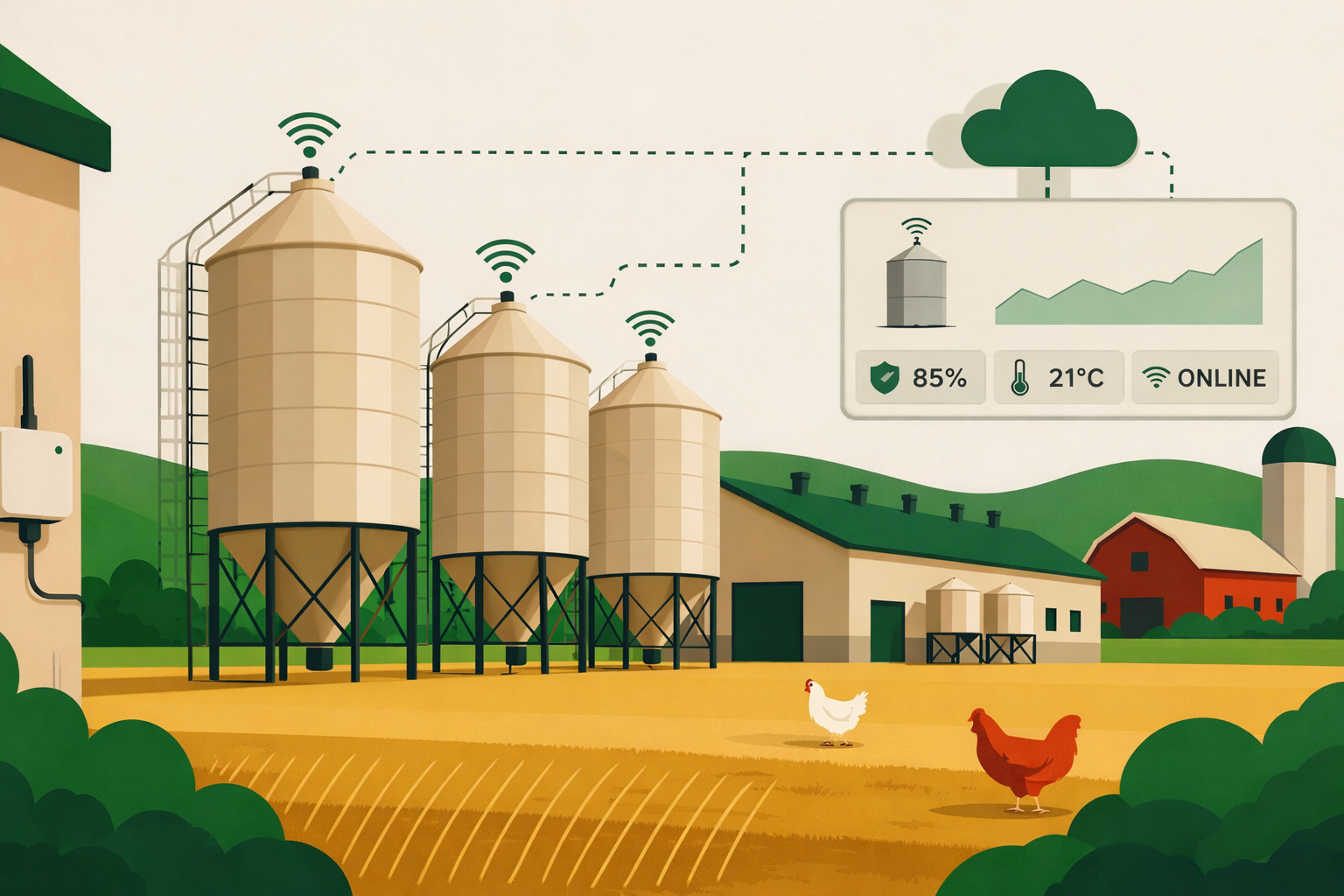
On a poultry farm water does not only flow to the drinkers. It also goes to washing and disinfecting houses between cycles, to cooling in the heat, to keeping the grounds and to daily handling. Each of these streams is money — for supply, for the energy to pump it and for discharging the wastewater. That is why water management is not one meter by the well, but a whole-farm view: where the water comes from, where it escapes and what can be recovered.
Why plan your water management?
Water managed well lowers costs and makes the farm less dependent on the weather. By harvesting rainwater from the roofs you get a free source for washing and grounds keeping instead of mains water. By measuring use separately in each house you catch a leak sooner, before it grows into a high bill. By cutting losses on the line and washing at high pressure you do the same job with less water. Together this gives the farm a safety margin for dry years and firmer footing under environmental checks.
Water as a resource and a cost
Every water stream on the farm can be cut or replaced with a cheaper source — from the poultry-house roof to the tip of the pressure washer.
Rainwater from poultry-house roofs
Poultry-house roofs are a large area from which thousands of litres run off during rain. Collected into a tank, this water is fine for washing the yard, disinfecting the grounds and other technical tasks. Without treatment it is not water for the birds — but every litre of rainwater used for washing is a litre of mains water you don’t buy.
Per-house water meters
A separate meter on each building shows how much water a given house uses, not the whole farm together. That way you see which building stands out from the rest and catch an unusual rise in use early — the most common sign of a leak in the line. It is also the basis for working out the cost per cycle and per building.
Leak detection
A leak is rarely visible at once — a dripping fitting or a leaky nipple quietly raises the bill. The meter is your hook: steady use at night while the birds sleep, or draw despite an empty house, is a sign that water is escaping somewhere. The narrower the measurement (per building, per line), the faster you find the leak.
Cutting losses on the line
Most water is wasted on small things: dripping nipples, badly set pressure in the drinking line, spillage under the drinkers. Tight nipples, pressure control and sound valves mean the same number of birds drink the same amount while less water reaches the litter. Drier litter also means a better microclimate and less ammonia.
High-pressure washing
Washing a house between cycles can swallow a huge amount of water. A high-pressure washer does the same job with far less — high pressure replaces volume. Soaking and soaping the surfaces first shortens the rinsing time, and so the use. This is exactly where harvested rainwater fits well.
Reusing process water
Some of the water used for technical tasks — for example from the first, rough rinse or from cooling — is clean enough to be used again for less demanding work instead of going straight to the drain. This calls for thinking the loop through and sensibly separating the cleaner streams from the dirtier ones.
Farm water step by step
- 1
Count how much water you use and where
Start with the whole picture: how much water goes to drinking, how much to washing, how much to cooling and grounds keeping. If you have one meter for the whole farm, add meters on the individual houses — without a split by building you cannot tell where to look for savings or leaks.
- 2
Assess the rainwater potential
Measure the area of the poultry-house roofs and check the annual rainfall in your area. That shows how much rainwater you can realistically collect over a year. Set it against your need for washing and grounds keeping — that is how you judge how big a tank makes sense and how much mains water you will replace.
- 3
Build the collection and storage
Lead the gutters from the roofs to a tank with simple removal of debris (leaves, dust). Remember that untreated rainwater is for washing and technical work, not for the birds. Keep the rainwater lines clearly separate and labelled so they aren’t confused with drinking water.
- 4
Stop losses on the drinking line
Walk the drinking lines and replace dripping nipples, set the right pressure and check the fittings for tightness. Watch the meter: steady, small draw with a sleeping or empty flock usually means a leak. Drier litter under the drinkers is a good sign that the water reaches the birds, not the floor beneath them.
- 5
Wash with less water
Before washing, soak and soap the surfaces, then rinse with a high-pressure washer — high pressure replaces volume, so you cut litres for the same result. For washing and disinfecting the grounds, use harvested rainwater instead of mains water wherever drinking quality is not required.
- 6
Guard the drinking-water quality
Saving must not come at the expense of the drinking water — it has to stay clean and safe for the flock. Keep drinking water in a separate, closed loop, with a filter and regular line cleaning, independent of any savings on technical water. Drinking-water quality and technical-water saving are two separate tracks that must not mix.
Frequently asked questions about water management on a farm
Can rainwater from the roof be used for the birds?add
Untreated — no. Water running off a poultry-house roof carries dust, droppings from wild birds and contaminants, so it does not meet the requirements for drinking water. It is excellent, though, for washing the yard, disinfecting the grounds and technical work. For drinking, use water from a separate, controlled loop, and let rainwater replace the water that need not be potable.
Why meters on each house separately?add
One meter for the whole farm shows only the total and hides where the water really escapes. A separate reading on each building points straight to the house using more than it should — and an unusual rise in use is the most common sign of a leak. Per-building measurement also lets you work out the water cost per cycle fairly and compare houses with one another.
How do I spot a leak fastest?add
Look at the use when nothing should be flowing: at night while the flock sleeps, or while the house stands empty between cycles. Steady, non-zero draw at those moments almost always means a leak — a dripping nipple, a fitting or a crack in the line. The narrower your measurement (per building, and best of all per drinking line), the faster you locate the spot.
Won’t saving water harm the flock?add
Not if you separate the two goals. The flock must have steady access to clean drinking water in the required amount — that is never cut. You save where the water is not for drinking: on washing, disinfecting the grounds, keeping the yard and on losses from leaks. Tight nipples and the right pressure actually help the birds, because they give drier litter and a better microclimate.
Describe your building’s water management in DlaFerm.pl
In DlaFerm.pl, in the “Technical equipment of the building” step, you record water sources, meters and the drinking system in one place — everything to hand when you plan savings. Create a free account or write to us.
Phone
+48 796 258 151