Polish Cattle Breeds: A Guide to Native Breeds
Polish native breeds have been kept in the country for many generations. The two named most often are Białogrzbieta, being restored under a protection program, and Polish Red (polska czerwona), used for breeding and fattening. IZ PIB data show that beef herds in Poland rely mainly on foreign breeds.
verifiedFrom the team that has organised work on poultry farms for years.
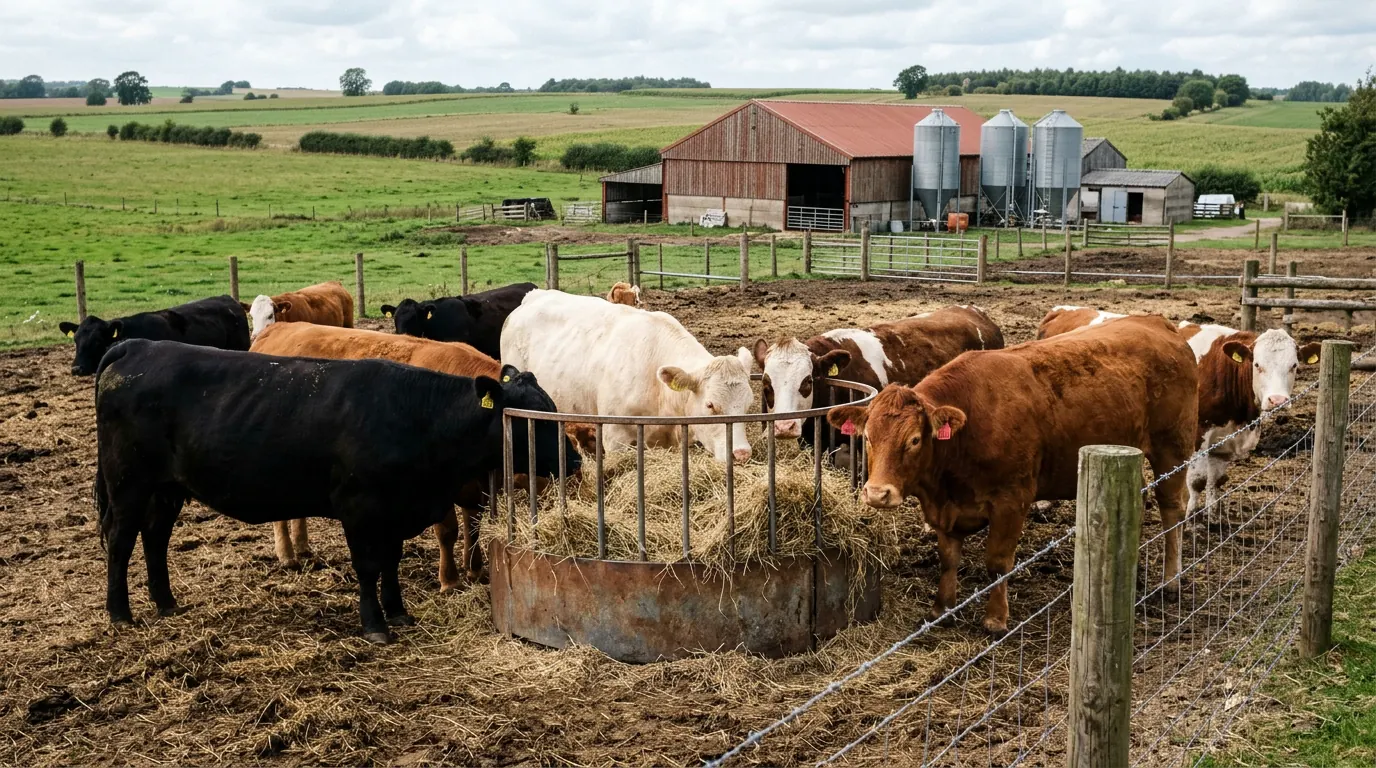
Polish native cattle breeds have been kept in the country for many generations. The two named most often are Białogrzbieta, which is being restored under a genetic resources protection program, and Polish Red, used for breeding and fattening. IZ PIB (the Polish National Research Institute of Animal Production) data show, though, that foreign breeds dominate beef herds in Poland: Limousine, Charolaise, Hereford and Simentaler. This overview covers which native breeds are worth knowing, what their population status is and how to approach choosing a breed for your own herd. Each breed has its own page, linked in the text. For a wider comparison, see beef cattle breeds, fattening and profitability.
Foreign breeds in the purebred population
According to a 2016 PZHiPBM (Polish Association of Cattle Breeders and Beef Producers) summary cited by IZ PIB, Limousine dominates the purebred beef population, at about 70% of cows. Next come Charolaise (12%), Hereford (6%) and Simentaler (6%). Native breeds are not among the dominant ones in this summary. Keeping them going therefore rests largely on genetic resources protection programs, not on mass production. For a farmer, this means choosing a native breed needs a thought-out plan, because there is no ready, widespread base of animals and suppliers.
Białogrzbieta: a breed restored from old Polish cattle
Goals of protection programs
Cattle genetic resources protection programs share common goals: restoring and preserving the population of old Polish cattle, keeping the existing genetic variation, reducing the infusion of foreign breeds, and rebuilding and stabilizing the phenotypic and genetic traits of the old native cattle. According to an IZ PIB monograph, all these programs aim to limit the share of foreign breeds by choosing bulls with the lowest possible share of other-breed blood. Every cow selected for a program must meet the breed standard described in that program. We describe the basic traits of the breed on the Białogrzbieta page.
What this means in your herd
If you keep a Białogrzbieta herd, choose a bull with a pedigree that confirms breed purity and record every choice. Cows that do not meet the standard will not enter the program, so assess them at every herd review. In a small population, one careless mating affects the whole next generation of calves. Before you start, check the program's requirements in its documentation and ask for the breed standard description. Keep records from the first calf, because rebuilding the line of descent after a few years can be hard.
Polish Red in breeding and fattening
Polish Red is a native breed you can keep for either breeding or fattening. We cover its production traits, feeding needs and fattening on a separate page: Polish Red cattle: traits, breeding, fattening. Before choosing a breed, compare not only how the animals look but also their growth rate on the feed you have on the farm. The same breed gives a different result on poor feed than on good feed, so work out your own feeding costs and compare them with your sales plan before you decide.
Breed and pasture quality
In IZ PIB research on organic cattle farming, dry matter yield depends on paddock quality. For an average paddock with 150–170 kg N/ha fertilization, the yield is 7.7 t dry matter/ha and the stocking rate for cows with calves is 2.4 animals/ha. On a poor paddock the yield drops to 4.4 t dry matter/ha, so you must reduce the stocking rate. These figures come from organic conditions, so check with an advisor before applying them to your own pasture. We cover grazing, stocking rates and rotation in the article on grazing cattle on pasture.
Population status of native and foreign breeds
Falling numbers of crossbreds
The 2016 PZHiPBM summary reports that the total number of female beef crossbreds fell from 11,333 thousand head in 2007 to 4,272 thousand head in 2016. The biggest fall is in the group marked LM in the table, which dropped from 9,070 thousand head in 2007 to 3,756 thousand head in 2016. These figures cover crossbreds, not purebred native breeds. Still, they show how the animal base that all of Poland's beef breeding draws on is changing, and why it pays to watch population trends before you buy animals.
What this means for native breeds
Small breeds need planned breeding work, because in a small population relatedness between animals is more likely. The general rule is simple: at every mating, check that the bull and cow are not closely related. In a paper on new methods of assessing the production and breeding value of beef cattle, IZ PIB points to the growth of data-based animal evaluation. For a farmer, this means pedigree and performance records become a selection tool, not just paperwork.
How to choose a breed for your herd
Suckler cows or fattening
The first question is whether you want to sell calves or fattened beef. That decision determines whether you need suckler cows that raise calves, or fattening animals bought at a set age and weight. We describe the suckler system, where cows are kept with their calves for sale, in the article suckler cows: the suckler system in beef cattle. For native breeds the choice of system matters even more, because fewer animals may be available than with foreign breeds.
Match the system to your feed
The Teagasc Beef Manual from Ireland, in its section on beef production systems, sets out how to choose a system from stocking rate to feeding. We do not carry its figures over to Polish conditions, but the logic is the same: fit the system to your feed and pasture resources, not the other way round. If you have a lot of grassland, suckler cows are easier to keep. With limited feed, consider a lower stocking rate or shorter fattening. Confirm decisions with an agricultural advisor and a vet who knows your herd. For dairy and dual-purpose breeds, see dairy and dual-purpose cattle breeds.
Calving, welfare and veterinary care
Difficult calving
In its opinion on beef cattle welfare, EFSA (the European Food Safety Authority) states that difficult calving (dystocia) seriously affects the health and welfare of both the suckler cow and the calf, and that a caesarean carries its own risk for the cow, especially as an emergency. EFSA notes that most research on difficult calving concerned dairy breeds, and it treats the conclusions as comparable for beef breeds. The practical takeaway is simple: watch the cow at calving, keep the vet's number at hand and record how the birth went. With native breeds, where each animal has higher breeding value, a quick response matters even more.
Officially notifiable diseases
A leaflet from PODR Szepietowo (a regional agricultural advisory center) on lumpy skin disease (LSD) in cattle describes the symptoms and what to do. Report any suspicion to a vet, because you do not treat it yourself. The vet always chooses the medicine and dose. Record withdrawal periods in your treatment log, because they decide when an animal can go to slaughter. Keep the entries in the treatment and withdrawal module, so you have the paperwork ready at sale.
Keeping records for a native herd
You register cattle in IRZplus (ARiMR's online animal register; ARiMR is Poland's Agency for Restructuring and Modernisation of Agriculture), and you organize herd events in your farm log. We describe linking the log with IRZplus and sensors in the IRZplus and sensor integrations module. In a herd with several breeds, record the breed, date of birth and the dam's origin in every entry. The legal state described here is as of 22.11.2026. Before regulations change, check the current requirements in the Internetowy System Aktów Prawnych (Poland's online legal acts database). To keep cattle data together, see our beef herd management software.
Prices and sales
Slaughter cattle prices change over time and depend on category (bulls, heifers, cows), weight, age, and whether you sell live weight or carcass weight. We give no amounts here, because quotes change every week. You can check current data in the slaughter cattle price quotes. Agree the price of a breeding animal, especially of a rare breed, directly with the seller, after checking the pedigree and health status. For other rare breeds, see rare cattle breeds.
Frequently asked questions
What are the native Polish cattle breeds?add
The two named most often are Białogrzbieta and Polish Red (polska czerwona). Białogrzbieta is being restored under a genetic resources protection program, while Polish Red is used for breeding and fattening. We describe each breed separately, because their production traits differ.
Is Białogrzbieta a beef breed?add
Białogrzbieta is a native breed covered by a protection program, and that program does not allow blood from other breeds, because the breed is still being restored. How well it suits a given production direction depends on the line and your farm's conditions, so check the breed description before you decide.
Why do foreign breeds dominate in Poland?add
The 2016 PZHiPBM summary, cited by IZ PIB, shows that Limousine dominates the purebred population, followed by Charolaise, Hereford and Simentaler. Native breeds are not among the dominant ones in this summary. The right breed depends on your production goal and farm conditions.
What stocking rate should I use on pasture?add
Stocking rate depends mainly on paddock quality, not on breed alone. In organic research, IZ PIB gives 2.4 animals/ha for cows with calves on an average paddock (150–170 kg N/ha fertilization, 7.7 t dry matter/ha yield). On a poor paddock the yield drops to 4.4 t dry matter/ha, so you must reduce the stocking rate. Check it with an advisor before deciding.
What should I do in a difficult calving?add
A difficult calving needs a quick decision from a vet. EFSA states that dystocia threatens the health and life of the cow and calf, and that a caesarean carries its own risk for the cow, especially as an emergency. Do not wait too long to call for help, and record how the birth went.
Is a native breed more expensive to buy?add
The price depends on breed, age, weight, and whether you buy a breeding or slaughter animal. We give no amounts, because quotes change over time. You can check current slaughter cattle prices in the quotes, and agree the price of a breeding animal directly with the seller.
Sources & resources
- linkIZ PIB — WZ — New methods of assessing the production and breeding value of beef cattle (Z. Choroszy et al.), WZ LVI(2018)3:17–23
- linkIZ PIB — Livestock farming and breeding over 70 years. Cattle Breeding Department, Sheep and Goat Breeding Department
- linkIZ PIB — WZ — Feeding beef cattle under organic farming conditions (K. Bilik et al.)
- linkEFSA AHAW Panel — Welfare of beef cattle (EFSA Journal 23:9518)
- linkPODR Szepietowo — Lumpy skin disease (LSD) in cattle — leaflet (Z. Marciniak)
- linkTeagasc (Ireland) — Teagasc Beef Manual — Section 3: Beef Systems
Prepared by: DlaFerm Team based on data from the sources listed · Publisher: INSTA-TECH sp. z o.o.
Do you keep a cattle herd and want your data in one place?
The IRZplus and sensor integrations module shows how DlaFerm links your herd records with IRZplus and sensors. Create a free farm account and try it on your own herd data.
Phone
+48 796 258 151