Slaughter cattle prices in Poland: weekly quotes for bulls, heifers and cows
Slaughter cattle prices change every week. They depend on the animal category, carcass weight and demand from slaughterhouses. We do not quote amounts here. We explain what moves the price and where to check current quotes.
verifiedFrom the team that has organised work on poultry farms for years.
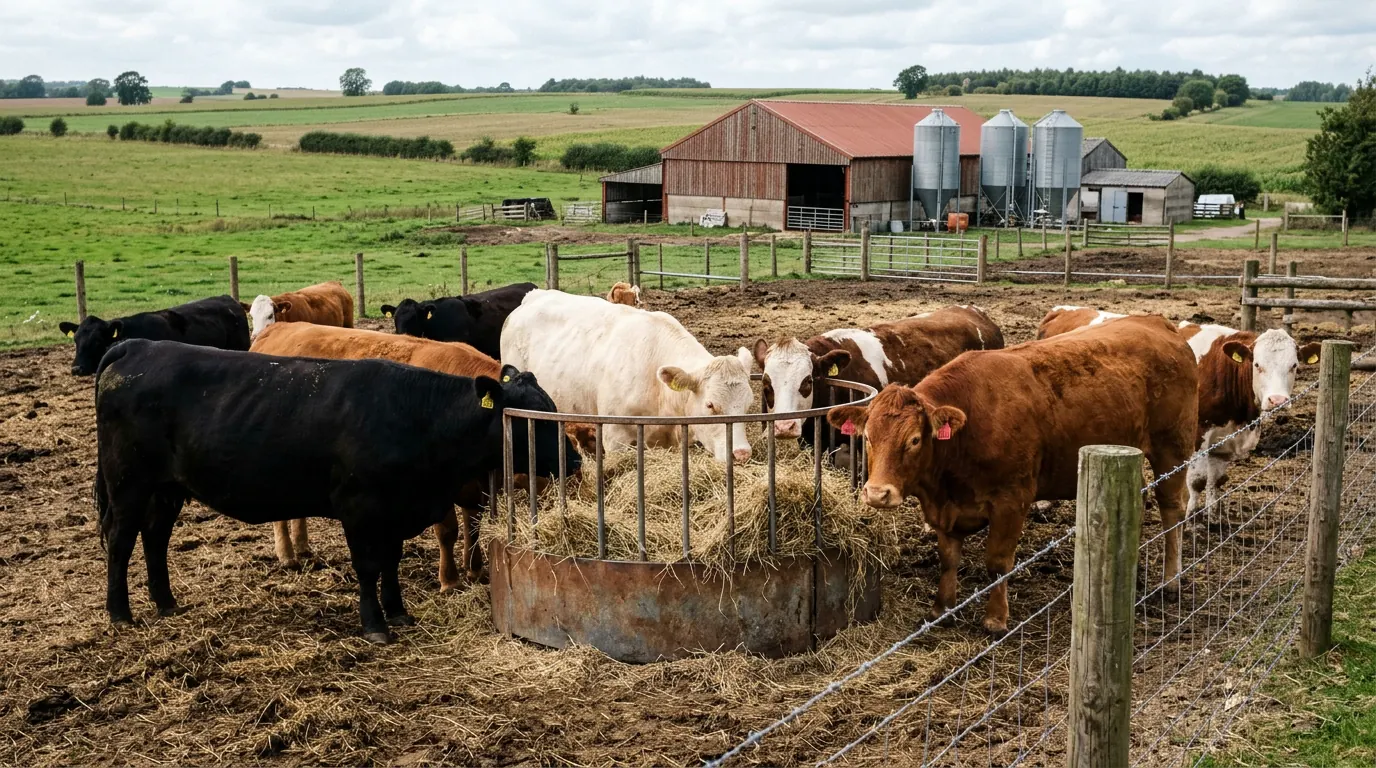
The market sets slaughter cattle prices, not a single authority. Price depends on the animal category, carcass weight and grade, demand from slaughterhouses and the situation on foreign markets. Quotes change from week to week, so instead of figures we show how pricing works and where to find current data.
What the price starts from
Cattle for slaughter are usually priced by carcass weight (dressed weight), not live weight. The plant grades the carcass for muscling and fat cover. The better the grade, the higher the price per kilogram. Two animals with the same live weight can therefore bring different money. Before you sell, ask the buyer how they price and whether the price includes supplements for grade, sex and age.
Bulls, heifers and cows: different prices, different reasons
Bulls and steers
The Teagasc Beef Manual (Ireland) gives a live weight range of 600–760 kg for steers (castrated males) aged 18–24 months. Animals in this range are most often priced by carcass grade. Uncastrated bulls gain weight at a different pace, so agree the settlement terms with the plant before you rear them, not after slaughter.
Heifers for slaughter
Heifers that do not stay in the herd go to slaughter. Their price depends on the same factors as bull prices: carcass weight, grade and current demand. Teagasc gives a live weight range of 350–650 kg for heifers aged 12–24 months, which shows how wide the spread in weight is within one category.
Cull cows
Cows removed from breeding differ in age and condition from younger animals. Plants judge them on muscling and fat cover, so their body condition before sale directly affects the price. A cow in poor condition is better fed up before loading than sold with a lower grade.
What pushes prices up or holds them down
The national herd
According to the Institute of Animal Production (IZ PIB; H. Grodzki et al., WZ 2015), the cattle population in Poland fell from 10000 thousand head in 1990 to 4641 thousand head in 2014. Fewer animals means less beef over the long term, but the price in any given week comes from the current balance of supply and slaughterhouse demand. For where prices may go, see our cattle price outlook.
Feed and rearing costs
The Teagasc manual (Nutrition section) describes the pasture wedge, a chart of grass availability across paddocks. When grass runs short, the cost of supplementary feeding rises. Farmers then more often consider selling earlier, which adds supply to the market. Work out feed costs together with dressing percentage and EWW, because these decide how many kilograms of carcass you actually sell.
Herd health and trade
Lumpy skin disease (LSD) can restrict the movement and sale of animals in a threatened area, as described in a leaflet from PODR Szepietowo (a regional agricultural advisory center). The county veterinary officer (powiatowy lekarz weterynarii) sets the rules, and a vet chooses treatment and doses. Keep treatment and withdrawal period data up to date in your treatment and withdrawal records, because a plant may ask for them.
How to read quotes and compare offers
Live weight or carcass
A price per kilogram of live weight and a price per kilogram of carcass are two different values. When you compare offers, convert them to the same basis, for example carcass weight. Check whether the quote is a net price or includes supplements for grade. Otherwise an offer can look better only because the number looks higher.
Regional prices and swings
Quotes differ between regions and plants. We publish cattle buying prices separately for each voivodeship (province), for example Wielkopolskie. Cattle prices swing through the year and through the week, and there is no fixed peak date. The question of whether cattle prices will rise has no certain answer. Judge the trend over several weeks of quotes and by talking to plants.
Getting cattle ready for sale
Transport and welfare
Animals stressed by transport, or kept without feed and water for long, lose weight and may be priced lower. EFSA (the European Food Safety Authority), in its opinion on cattle welfare during transport, describes how to reduce stress at loading. Arrange pickup so animals do not wait unattended for many hours.
Animal data and the invoice
At sale you need data on each animal and the sales documents. The integrations module for IRZplus (ARiMR's online animal register) and sensors helps keep herd data in one place. KSeF invoicing (KSeF is Poland's national e-invoicing system) makes it easier to issue the invoice for the animals you sell.
Where to check quotes and rules
Sources of quotes
Price information and forecasts are published by Poland's Ministry of Agriculture and Rural Development (Ministerstwo Rolnictwa i Rozwoju Wsi) and by agricultural advisory centers (ODR and PODR). For every quote, check the date, the unit (live weight or carcass) and whether the price is net. Prices given by plants are usually an offer, not the final price.
Welfare rules
Minimum standards for the protection of calves are set by Council Directive 2008/119/EC, available from the EU Publications Office. You can check national rules in Poland's Internet System of Legal Acts (ISAP); the legal state is as of 22.11.2026. If you are unsure about moving animals, ask the county veterinary officer before you sign a contract.
Frequently asked questions
How much is a kilogram of slaughter cattle?add
The price changes every week and depends on category, carcass weight and grade. We give no amounts in the article because they would go out of date quickly. Check current quotes in Ministry of Agriculture publications and in the offer of the specific plant.
Will cattle prices go up?add
There is no certain answer, because the price depends on domestic supply, plant demand, feed costs and the situation on foreign markets. Judge the trend over several weeks of quotes, not from a single reading.
How is the price of slaughter cattle calculated?add
Most often as carcass weight multiplied by the price per kilogram. The muscling and fat cover grade affects the price. Before you sell, agree the pricing rules with the plant in writing.
Are bulls priced differently from heifers?add
The animal category affects growth rate, grading and demand, so the price can differ. Age and weight matter too. Ask the buyer how they price each category before you bring animals in.
Where can I check current cattle buying prices?add
Data is published by Poland's Ministry of Agriculture and Rural Development and by agricultural advisory centers. Also ask slaughterhouses and buyers directly. Note the date of the quote and the unit, live weight or carcass.
Does lumpy skin disease (LSD) affect cattle sales?add
It can restrict the movement of animals in a threatened area. The county veterinary officer sets the rules. Before you sell, ask the officer about the current situation in your county.
Sources & resources
- linkIZ PIB — WZ — Current state and prospects of beef cattle farming in Poland (H. Grodzki et al.), WZ LIII(2015)2:77–87
- linkTeagasc (Ireland) — Teagasc Beef Manual — Section 3: Beef Systems
- linkTeagasc — Teagasc Beef Manual — Section 6: Nutrition
- linkPODR Szepietowo — Lumpy skin disease (LSD) leaflet (Z. Marciniak)
- linkEFSA AHAW Panel — Welfare of cattle during transport (EFSA Journal 20(9):7442)
- linkMinistry of Agriculture and Rural Development — gov.pl/web/rolnictwo
Prepared by: DlaFerm Team based on data from the sources listed · Publisher: INSTA-TECH sp. z o.o.
Selling cattle? Connect herd data to your invoice
The KSeF invoicing module in DlaFerm.pl helps you issue the invoice for animals you sell in the same system where you keep your herd records. Create a free farm account and see how it works in practice.
Phone
+48 796 258 151