Cattle Prices in Wielkopolskie, Poland
The price paid for cattle in Wielkopolskie is not one number from a board. It is built from the value of the cattle bought and the weight of chilled carcasses, and it is worked out differently when cattle are sold by live weight. We show how the calculation works and what to check before you sell your finishing cattle.
verifiedFrom the team that has organised work on poultry farms for years.
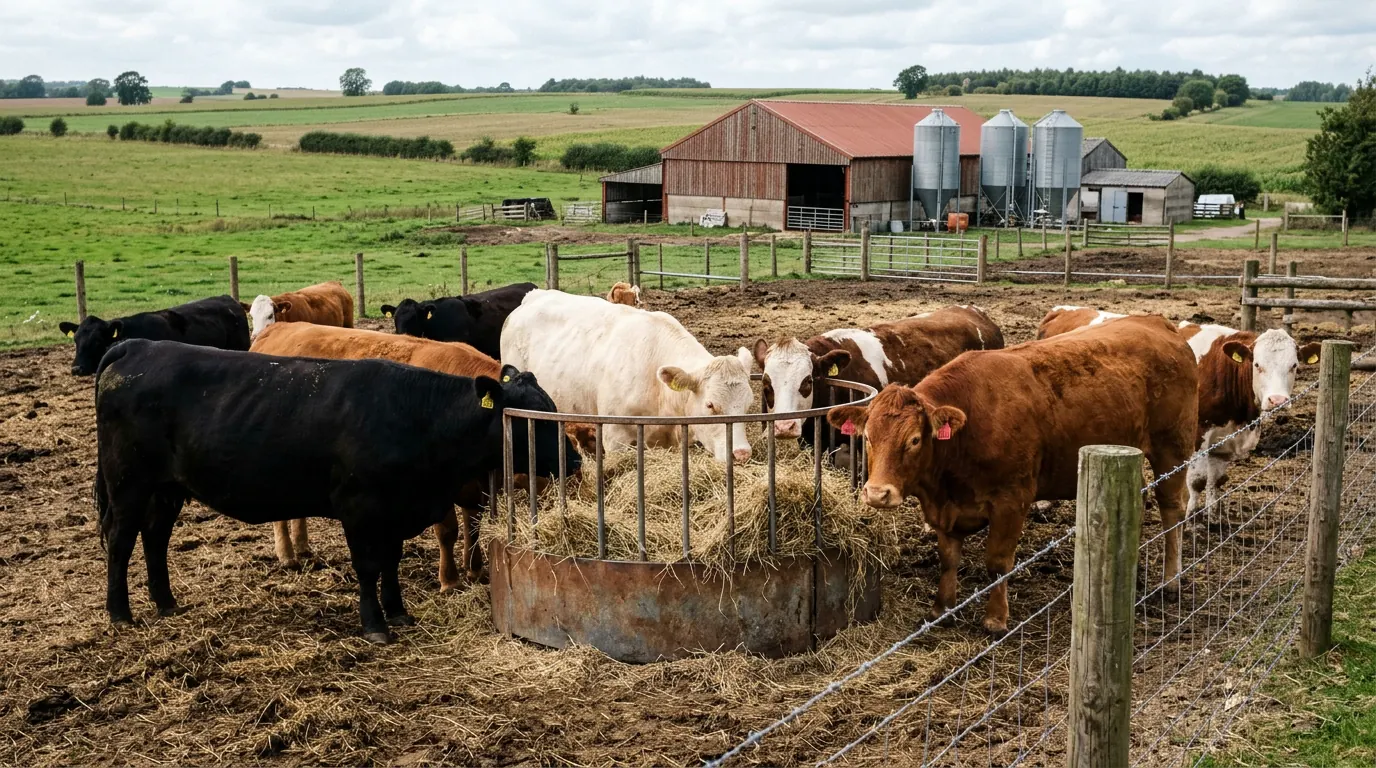
The price of cattle in Wielkopolskie voivodeship comes from market data recorded when slaughter cattle are bought, not from a single quote in the media. The price on your farm depends on the animal category, the carcass weight and the way the sale is settled. So when you compare offers, you need to know what the quoted amount really means. We explain it using the methodology of Poland's Ministry of Agriculture and Rural Development (MRiRW), as of 22.11.2026. Poultry is a separate market with its own pricing, and beef is calculated differently.
What the quoted price means
Ask the buyer whether the price is per kilogram of live weight or per kilogram of chilled carcass. Under the MRiRW methodology, the base price is calculated from the value of slaughter cattle bought (marked W) and the weight of chilled carcasses (I). A separate calculation applies to cattle bought by live weight. The gap between the two can be large, because dressing percentage decides how much of the live animal ends up in the carcass. A rate without the weight behind it does not tell you what you will be paid for your animals.
How the cattle price is calculated
Value of cattle bought and carcass weight
The base price rests on the value of the slaughter cattle bought and the weight of chilled carcasses. You need both figures, so a rate per kilogram without weight data is not enough to judge an offer. The methodology shows the base price as an average of three subclasses, with a worked example. For a farmer this means one thing: ask about the subclasses and the way the price is calculated, not only about the rate. Ask for the calculation in writing, so that after collection you can check where the amount on the settlement came from.
Price by live weight
A separate chapter of the methodology covers cattle bought by live weight. The price is then calculated differently than for carcasses, so before you sign a contract, agree what basis you will be paid on. The question is whether you are paid per kilogram of live animal or on the slaughter result. If the buyer uses their own estimate of dressing percentage, put that value in the contract. That makes it easier to compare the settlement with the slaughter result for your batch.
Supplements and adjustments
The methodology allows the purchase price to be adjusted for additional payments. The same base rate can therefore bring different income, depending on whether the buyer added supplements. Check that the quoted amount includes every component before you compare two offers. You can issue invoices for cattle sales in the KSeF invoicing module (KSeF is Poland's national e-invoicing system), and keep your sales data in one place.
Why dressing percentage affects the price
Dressing percentage in IZ PIB research
In a finishing study described by IZ PIB (the National Research Institute of Animal Production; J. Trela and B. Choroszy, WZ 2011), Black-and-White bulls finished up to 15 months of age reached a dressing percentage of 57.81%. Crossbreds with Piedmontese of the same age reached 61.98%. A difference of a few percentage points means clearly more meat from the same live weight. The data come from studies carried out years ago and cover specific groups, so treat them as an illustration of the principle, not as a price list for your herd.
Age at the end of finishing
The same study compared bulls finished up to 12 and up to 15 months of age. Longer finishing increases carcass weight, but it raises feed costs and takes up space in the barn. Before you choose a selling date, work out whether the extra carcass weight covers the cost of the extra months. The result depends on feed prices and buying prices at the time, so repeat the calculation before every batch.
Calculate before you sell
Before you pick a date and a buyer, work out three numbers: live weight, expected dressing percentage and price per kilogram of carcass. That shows whether a live-weight price is fair given your herd's yield. Record the results of each batch so you can compare them with later sales. A farm management program that stores data on animal batches makes this easier.
Where to check cattle prices in Wielkopolskie
MRiRW market data
The ministry records market data from the beef and veal market. The duty to report, the scope of the data and the way the price is calculated are described in the MRiRW methodology we use here. Check current quotes in ministry publications and with local buyers, and compare several offers from the same day. We give no amounts here, because they change regularly.
What moves the price
The buying price is influenced by demand from processors, the supply of cattle in the region, the animal category, carcass weight and the season. Prices change over short periods, so a quote from a month ago is not enough to value a batch. Watch the changes over several weeks and note how the price moved for your category of animals.
Getting cattle ready for sale
Withdrawal period and treatment
Cattle that have been given a medicine must not go to slaughter before the withdrawal period has passed. The vet sets the withdrawal period for the specific product and way of giving it; we do not give doses or times. Record every treatment so you have all the details at hand at collection. The Treatment and withdrawal period module helps with this.
Documents and identification
Before collection, check that the animals have all their documents and correct ear tags, as the buyer and the regulations require. Settle the details with your vet or the county vet (powiatowy lekarz weterynarii). The rules of veterinary supervision are described by the Chief Veterinary Inspectorate (Główny Inspektorat Weterynarii). Missing paperwork can delay collection, and then the price no longer matters.
Herd records
Data on birth weight, weight gain and dispatch dates show which groups of finishing cattle give the best result. Record them for every batch and compare them with earlier settlements before you sell. Such a summary shows whether longer finishing pays or whether earlier dispatch is better.
How to compare buying offers in Wielkopolskie
Questions to ask the buyer
Ask whether the price is per kilogram of live weight or of carcass, how the weight is determined, whether supplements apply and whether transport costs are added. Compare offers in the same week and for the same category of cattle. Put the answers in the contract, because verbal agreements are hard to prove later.
Using other regions as a reference
Farmers compare prices in their own voivodeship and set them against other regions. The same rule holds for cattle: the same unit, the same date and the same type of settlement. If you want to compare, see the neighboring regions, for example Lubuskie and Kujawsko-Pomorskie, or the national page on slaughter cattle prices.
Frequently asked questions
What is the cattle price in Wielkopolskie?add
Amounts change regularly, so we do not give them in the article. Check current quotes in MRiRW publications and with buyers in the region. Compare offers from the same day and for the same category of animals.
What is the difference between a live weight price and a carcass price?add
A live weight price is based on the weight of the animal before slaughter, and a carcass price on the weight after slaughter. The difference depends on the dressing percentage, the share of the carcass in live weight. Always ask which weight the quoted rate refers to.
What does the dressing percentage of cattle depend on?add
It depends on the breed or crossbreed, the age at the end of finishing and the condition of the animal. The IZ PIB study reports that Black-and-White bulls at 15 months reached 57.81%, and crossbreds with Piedmontese 61.98%. The data come from finishing trials, so treat them as an example.
Can I sell cattle straight after treatment?add
No. After a medicine is given, the animal must wait out the withdrawal period, which the vet sets for the specific product. Record every treatment so you are sure of the dispatch date.
Do supplements affect the buying price?add
Yes, the MRiRW methodology allows the purchase price to be adjusted for additional payments. The same base rate can therefore bring different income. Before you sign, ask whether the amount is net and whether supplements are included.
How do I invoice a cattle sale?add
You issue the invoice under the rules that apply to the sale, and you settle the details with your accountant. In DlaFerm you can issue invoices in the KSeF invoicing module. Keep the documents in one place so you can find them easily during an inspection.
Sources & resources
- linkMRiRW (ZSRIR) — Methodology for recording market data from the beef and veal market
- linkIZ PIB — WZ — 60 years of IZ work on beef cattle (J. Trela et al.), WZ XLIX(2011)4:11–56
- linkChief Veterinary Inspectorate — gov.pl/web/wetgiw
Prepared by: DlaFerm Team based on data from the sources listed · Publisher: INSTA-TECH sp. z o.o.
Selling cattle through a buyer?
The KSeF invoicing module helps you issue invoices for animals sold, and the farm management program collects data on your batches. Create a free farm account on DlaFerm.pl and start by entering your herd.
Phone
+48 796 258 151