Cattle Prices and Buyers — Kujawsko-Pomorskie Voivodeship
The price a buyer pays for slaughter cattle in Kujawsko-Pomorskie depends on the animal category, carcass weight and pricing method, not only on the rate per kilogram. We explain how the base price is calculated, what drives adjustments and how to compare buyer offers over time. The description reflects the situation as of 22.11.2026.
verifiedFrom the team that has organised work on poultry farms for years.
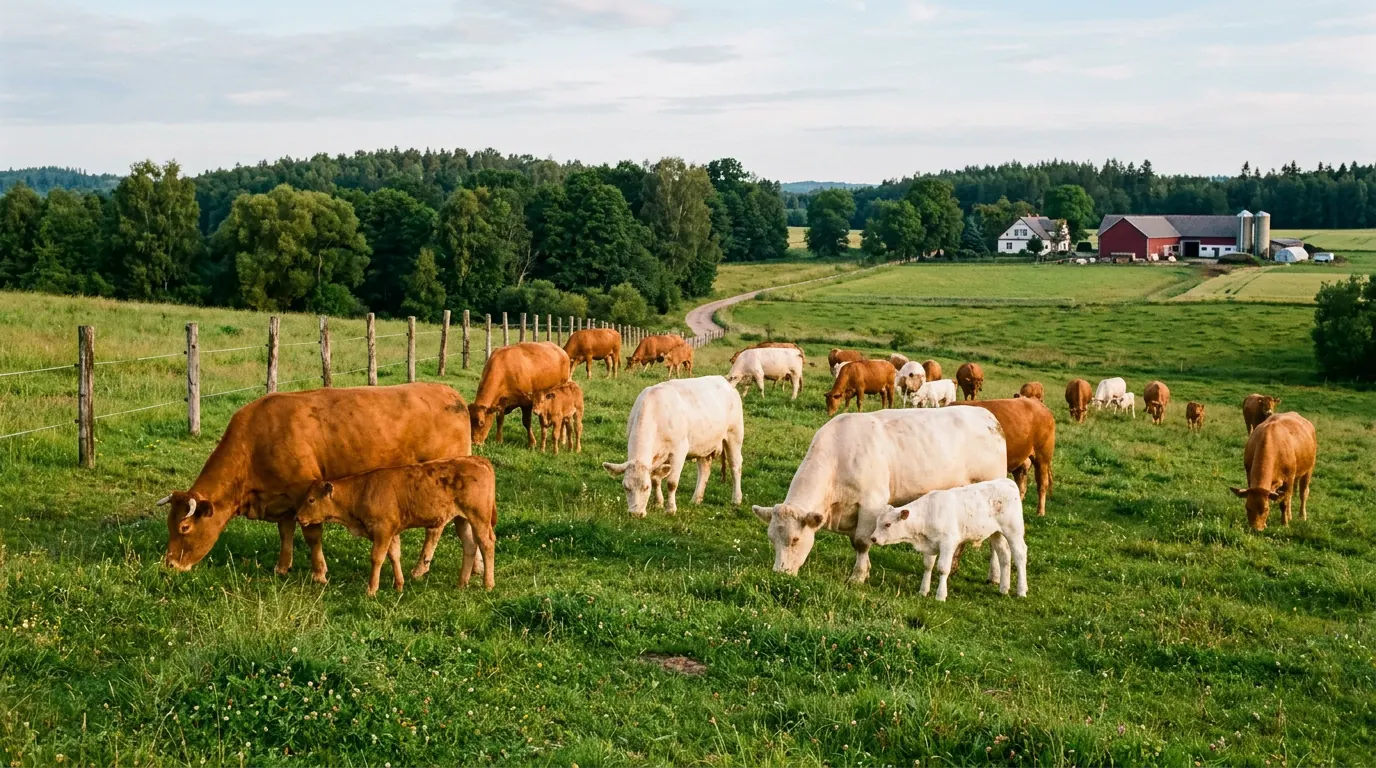
The price for slaughter cattle in Kujawsko-Pomorskie is agreed between the farmer and the buyer, but it rests on calculations set out in the methodology for recording market data. We give no specific amounts here, because quotes change often. We show what the price depends on and how to compare it yourself with what a buyer pays.
Who this guide is for
This guide is for keepers of suckler cows, finishing cattle and heifers sold for slaughter who want to check that a buyer's offer is calculated fairly. The poultry market works differently, so we cover its prices separately. For a neighboring region, see cattle prices in Pomorskie.
How the buyer's price is calculated
Value of the cattle purchased
According to the methodology for recording market data on beef and veal, run by the Ministry of Agriculture and Rural Development (MRiRW), the base price is first calculated from the value of slaughter cattle purchased, marked W in the document. The second component is the weight of chilled carcasses, marked I. The document also gives an example where the base price is the average of three subclasses of cattle. For you as a farmer this means one thing: check whether the buyer quotes a price per kilogram of carcass or per kilogram of live weight, because these are two different bases for settlement.
Live weight price
The methodology describes buying cattle by live weight separately. In that case the price is not calculated from the carcass, so comparing it with carcass quotes needs a conversion. The conversion depends on dressing percentage, which is carcass weight divided by live animal weight. Dressing differs between breeds, sexes and ages, so the same rate per kilogram of live weight can mean a different value for two batches. Before you sign a contract, ask the buyer to state the basis of the calculation in writing and check that it matches the weight and the slaughter document.
What the buyer's price depends on
Category and sex
Slaughter cattle are split into categories: young bulls, heifers, cows and steers. Each has a different dressing percentage and share of meat in the carcass, and buyers price them separately. Research by IZ PIB (Poland's National Research Institute of Animal Production) shows how large the difference can be. In a review published in Wiadomości Zootechniczne in 2011, the dressing percentage of young bulls from black-and-white cows was 57.54% at 12 months, and of crossbred bulls with Charolais 60.05%. These results come from studies under specific conditions, so treat them as a guide, not a price list.
Age and weight at sale
A younger animal usually gives a lighter carcass at sale, but may convert feed into gain better. Wójcik and Czubska of IZ PIB describe pasture finishing in Wiadomości Zootechniczne in 2014: a longer grazing season lowers the intensity of gain, but the cost per unit of gain is clearly lower. Settlement counts carcass weight and trade class, meaning the grade for muscling and fat cover. Before sale, weigh the animals on the same day and record the weights.
Quotes and comparisons in the voivodeship
Where to look for comparisons
Compare offers over time, not one rate from one day. Record the price, date, category and pickup place in a simple table or in farm management software. We cover poultry data for the same region separately, because the mechanisms are similar but the markets differ in rhythm and structure. For a neighboring region, a useful comparison is the Pomorskie voivodeship summary. The national overview is on the cattle prices page.
What the rate alone tells you
A rate per kilogram without the category, weight and pricing method tells you nothing. A buyer may pay a higher rate for live weight and a lower one for carcasses once losses are counted. Before comparing two offers, ask about the pricing basis and how the animals are weighed. Check amounts in the current summaries published by the Ministry of Agriculture, because quotes change often.
Additional payments and the base price
Adjustments for additional payments
The methodology says the purchase price is adjusted for additional payments linked to the transaction. The final amount can therefore differ from the base price in the quote. At pickup, check whether the buyer shows the price before and after adjustments and whether extra payments are listed in the sales document. If payments relate to schemes you enter animals into, check the terms on the website of ARiMR (Poland's Agency for Restructuring and Modernisation of Agriculture), because rules can change.
Recording sales volume
The same methodology describes recording trade volume, meaning the number of cattle sold in a period. A farmer who keeps their own sales records can check more easily whether a settlement adds up. Record the animal's ID number, the date of dispatch, the weight at departure and the carcass weight from the slaughter document. The IRZplus integration module (IRZplus is ARiMR's online animal register) cuts manual retyping of animal data between the register and your own records.
Is selling profitable in practice
Intensity and result
ODR Lubań (a regional agricultural advisory center) prepared a sample calculation of farm income from beef production for different levels of intensity. The document shows how the result changes when feeding and rearing time change. Work out your own cost of feed, pasture, veterinary care and labor, then set it against the buyer's price. The gap between revenue and cost can be small, so even a few extra days of rearing can change the sale result.
Animal health and value
Disease lowers an animal's value, because sick cattle are harder to sell on good terms. If you suspect a skin disease or another infectious disease, report it to your vet and to the county veterinary officer (powiatowy lekarz weterynarii). A medicine's withdrawal period affects the sale date, because animals are not sent to slaughter before it ends. The vet always chooses the medicine and dose. Record treatments and withdrawal dates in your records, for example with the treatment and withdrawal module.
Invoices and records when selling cattle
Invoice and KSeF
A cattle sale ends with an invoice or sales document. Check whether the buyer issues invoices in KSeF, Poland's national e-invoicing system (Krajowy System e-Faktur), and whether you have access to them. You can find the invoicing rules in the Internet System of Legal Acts, and ask your accountant if in doubt. Keep invoice files and numbers together with slaughter documents, so you can easily compare the settlement with the contract price. KSeF invoicing in the system keeps this in order as you go.
Batch records
For each batch, record the dispatch date, number of animals, category, live weight, carcass weight, buyer name and price. This lets you compare the settlement with quotes and catch differences before you pay for a mistake. Keeping records in one place lowers the risk of errors when you sell several batches a month.
Frequently asked questions
How do I check whether a cattle buyer's price is fair?add
Ask for the basis of the calculation: whether the price is per kilogram of carcass or live weight, and which weight it covers. Compare it with quotes from the same period and the same category. Record results in a table so you see a trend, not one rate.
Where can I check current cattle prices in Kujawsko-Pomorskie?add
The Ministry of Agriculture publishes current summaries, and the MRiRW methodology describes how data are recorded. Compare regional data with neighboring voivodeships and with the settlement of a specific buyer. Do not rely on one rate from an advert.
Is the cattle price based on live weight or carcass weight?add
It can be based on either. When cattle are bought by live weight, the price is not calculated from the carcass, so a comparison needs a conversion through dressing percentage. Dressing depends on breed, sex and age. Always ask for the basis of settlement.
What is the dressing percentage of cattle?add
Dressing percentage is carcass weight divided by live animal weight. In IZ PIB research described in 2011, young bulls from black-and-white cows had 57.54% at 12 months. The result depends on breed and conditions, so it is better to weigh the batch before sale.
Do additional payments change the price when I sell?add
The MRiRW methodology provides for adjusting the purchase price for additional payments. The final amount can therefore differ from the base price. Check the sales document and the scheme terms on the ARiMR website.
Does a medicine withdrawal period affect the sale date?add
Yes. Animals are not sent to slaughter before the withdrawal period of a medicine ends. The vet sets the withdrawal period and the dose. Record treatments in your records so you do not mix up dates.
Sources & resources
- linkMRiRW (ZSRIR) — Methodology for recording market data on beef and veal
- linkIZ PIB — WZ — 60 years of IZ work on beef cattle (J. Trela et al.), WZ XLIX(2011)4:11–56
- linkIZ PIB — WZ — Breed selection and breeding work in organic beef herds (P. Wójcik, A. Czubska)
- linkODR Lubań (PODR publication) — Sample calculation of farm income from beef production (different intensity levels)
Prepared by: DlaFerm Team based on data from the sources listed · Publisher: INSTA-TECH sp. z o.o.
Want your cattle sales records in one place?
The IRZplus and sensor integration module in DlaFerm.pl helps you keep animal data in order with every sale. Create a free farm account or get in touch, and we will show you how it works in practice.
Phone
+48 796 258 151