Gelbvieh cattle: a beef breed from Franconia
Gelbvieh is a yellowish-red breed from Franconia in Bavaria. We explain how to recognize it, how to use it in a beef herd and how to record the animals in ARiMR documents (Poland's Agency for Restructuring and Modernisation of Agriculture).
verifiedFrom the team that has organised work on poultry farms for years.
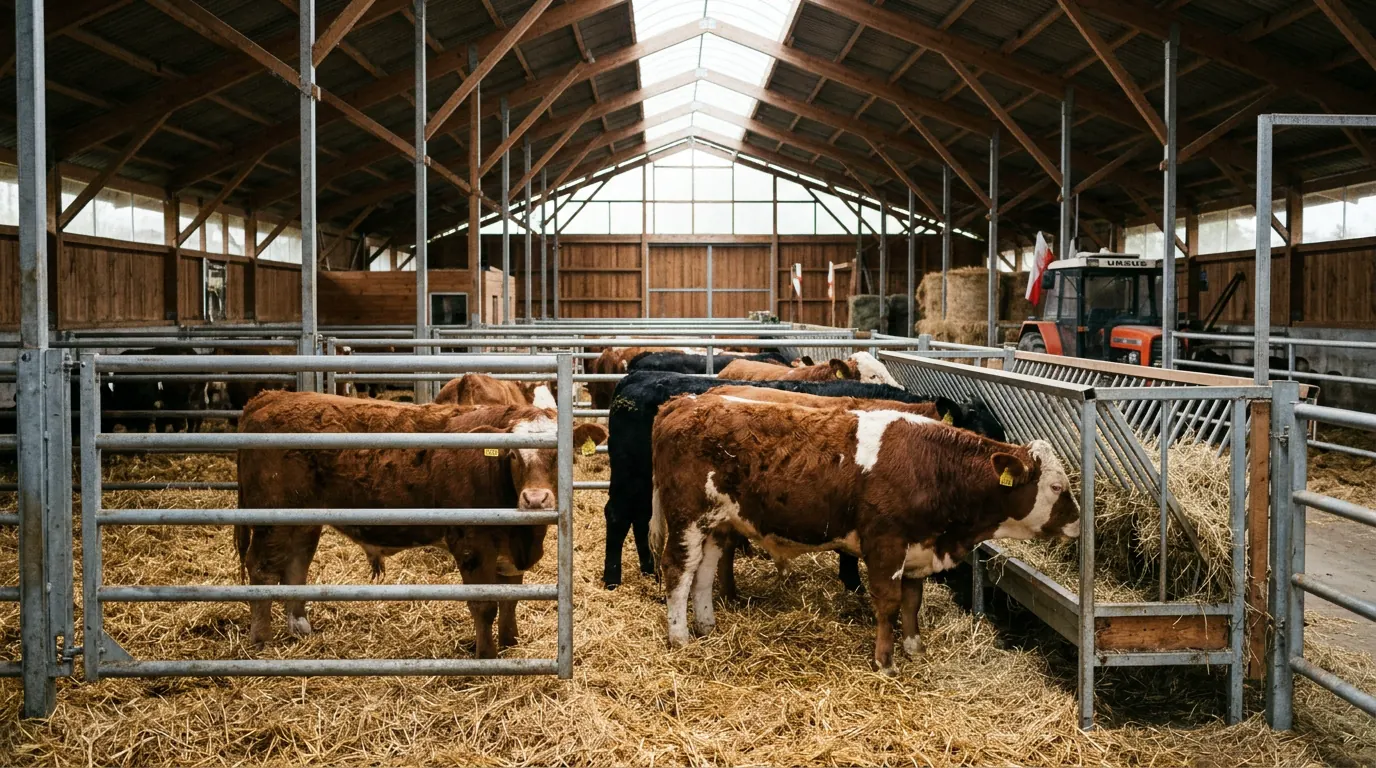
Gelbvieh (German for "yellow cattle") comes from Franconia, a historic region in northern Bavaria. The animals have a uniform coat from golden yellow to red, a pale nose and pale rings around the eyes. In the past they were used for everything: work, milk and meat. Today breeders usually treat them as a beef breed. In ARiMR records the breed has the letter code GV, listed in the official list of cattle breed codes.
Gelbvieh among the breeds in Poland
In Poland gelbvieh is a rare breed. According to IZ PIB (the National Research Institute of Animal Production; Wiadomości Zootechniczne 2018), limousine dominates the purebred beef cow population with a 70% share, followed by charolaise (12%) and hereford and simental (6% each). Gelbvieh has no separate line in that breakdown. To compare it with the most common breeds, start with the guides to limousine and hereford. For a general overview of breeds, fattening and profitability, read our article on beef cattle.
Origin and appearance
Franconia: the cradle of the breed
Gelbvieh was developed in Franconia from local yellow cattle. For a long time the breed was kept for several purposes, so family farms shaped its character: calm animals, good mothers and willingness to work. Other Alpine and mountain breeds followed a similar path, for example pinzgauer, described separately. For this reason gelbvieh was not bred only for fattening, and you can see it in its build and behavior.
How to recognize gelbvieh
The easiest sign is the coat: uniform yellow or reddish, without large patches. The muzzle and the area around the eyes are lighter, and the hooves and horns are pale too. Herds include both horned and polled animals. The frame is compact, with well developed thighs and rump. Gelbvieh is sometimes mistaken for Polish Red or salers, so when buying, check the pedigree papers and the ear tags. You can compare them with the guides to salers and Polish Red (polska czerwona).
What gelbvieh is good for
Suckler cows and commercial crossbreeding
In a beef herd gelbvieh works as a maternal breed. The cows have a good temperament and strong mothering instinct, which makes raising calves at their dam easier. The breed is also used in commercial crossbreeding. IZ PIB describes that the fastest growth of the beef herd comes from crossing dairy cows with beef bulls. Crossbred calves are then kept for fattening or as replacements. The choice of bull breed depends on the size of your cows and calving conditions in your herd.
Meat and its quality
Beef quality depends on breed, but also on feeding, slaughter age and the production system. IZ PIB compared the fat composition of meat from organic farms, including hereford and limousine. Differences in fatty acids and vitamin E were clear between breeds and crossbreds. These studies give no separate results for gelbvieh. Work out dressing percentage and carcass grade from your own herd results and slaughter records.
Keeping gelbvieh in practice
Pasture and stocking rate
Gelbvieh makes good use of pasture, and the stocking rate per hectare depends on paddock quality. IZ PIB (K. Bilik et al.) reports that on a very good paddock you can keep clearly more animals than on a poor one, and the numbers differ for a cow with calf and a young fattening animal. The reference cow weighs about 500 kg, calves in February and raises the calf to 250 kg. Before you set the stocking rate, assess the sward, fertilization and water access. If you want breeds that cope with poor pasture, see the guide to galloway.
Feeding and calf rearing
Give suckler cows good quality roughage and choose the supplementary ration to match body condition and calving date. Recommendations for beef herds are in the OODR Łosiów leaflet "Żywienie bydła mięsnego" (Feeding beef cattle). Calves need above all colostrum in the first hours of life, a dry bed and a calm mother. Detailed rearing rules are in the KPODR Minikowo manual "Odchów cieląt mięsnych" (Rearing beef calves). Agree the feeding plan with an advisor from the agricultural advisory center or with your vet.
Health and herd records
You tag and register animals according to ARiMR requirements, and you record the breed with the code GV. Give medicines only on your vet's advice, since the vet chooses the product and dose. Also keep withdrawal periods before slaughter and before selling milk or meat. Record all treatments, calvings and movements as they happen. Such records make inspections and herd assessment easier.
Buying animals and selection
What to check when buying
Check the pedigree papers and herd book entry if you buy breeding stock. Assess leg structure, udder, rump shape and temperament. Ask the seller for data on calving ease and calf weaning weights. Remember that a rare breed means fewer bulls and cows to choose from, so you often have to look farther from your farm. Price depends on pedigree, age, assessment results and the market, so agree it directly with the breeder.
Choosing a bull and avoiding inbreeding
In a small herd, make sure you do not mate a bull with his daughters. The Teagasc manual, in its breeding section, describes how to select bulls by breeding value and calving ease. When buying a young bull, check data on his parents and his weaning weight. In family herds it often pays to swap bulls between neighboring breeders. You can compare approaches used in other breeds in the guides to piemontese and other beef breeds.
Frequently asked questions
Where does the gelbvieh breed come from?add
Gelbvieh comes from Franconia, a region in northern Bavaria, Germany. It descends from local yellow cattle that were once used for work, milk and meat.
What do gelbvieh cattle look like?add
The animals have a uniform coat from golden yellow to red and a lighter muzzle. The frame is compact, and herds include both horned and polled animals.
What is the gelbvieh breed code in ARiMR records?add
In the list of letter codes for cattle breeds, gelbvieh has the code GV. You enter the code when registering animals, so check the current list on the ARiMR website.
Is gelbvieh popular in Poland?add
No, it is a rare breed. In IZ PIB data on the purebred beef cow population, limousine dominates (70%), followed by charolaise (12%), hereford (6%) and simental (6%). Gelbvieh has no separate line in that breakdown.
What is gelbvieh used for in a herd?add
Most often as a maternal breed in a beef herd and for commercial crossing with dairy cows. Crossbred calves can then be fattened or kept as herd replacements.
How much does a gelbvieh calf or cow cost?add
Price depends on pedigree, age, assessment results and the market. Agree it directly with the breeder, and check market quotations for indicative livestock prices.
Sources & resources
- linkARiMR — List of letter codes for cattle breeds
- linkIZ PIB — WZ — New methods of assessing performance and breeding value of beef cattle (Z. Choroszy et al.), WZ LVI(2018)3:17–23
- linkIZ PIB — WZ — Feeding beef cattle in organic systems (K. Bilik et al.)
- linkTeagasc — Teagasc Beef Manual — Section 4: Breeding
- linkKPODR Minikowo — Rearing beef calves (manual, SGGW authors)
Prepared by: DlaFerm Team based on data from the sources listed · Publisher: INSTA-TECH sp. z o.o.
Do you keep a cattle herd and want your records in one place?
See how DlaFerm helps you record treatments and withdrawal periods and keep your farm paperwork in order. Create a free farm account or get in touch.
Phone
+48 796 258 151