Galloway Cattle: A Beef Breed for Pasture
Galloway is a polled beef breed from Scotland that handles grazing outdoors for most of the year. This guide covers breed traits, the Polish ARiMR breed code, stocking rates, breeding and herd health records.
verifiedFrom the team that has organised work on poultry farms for years.
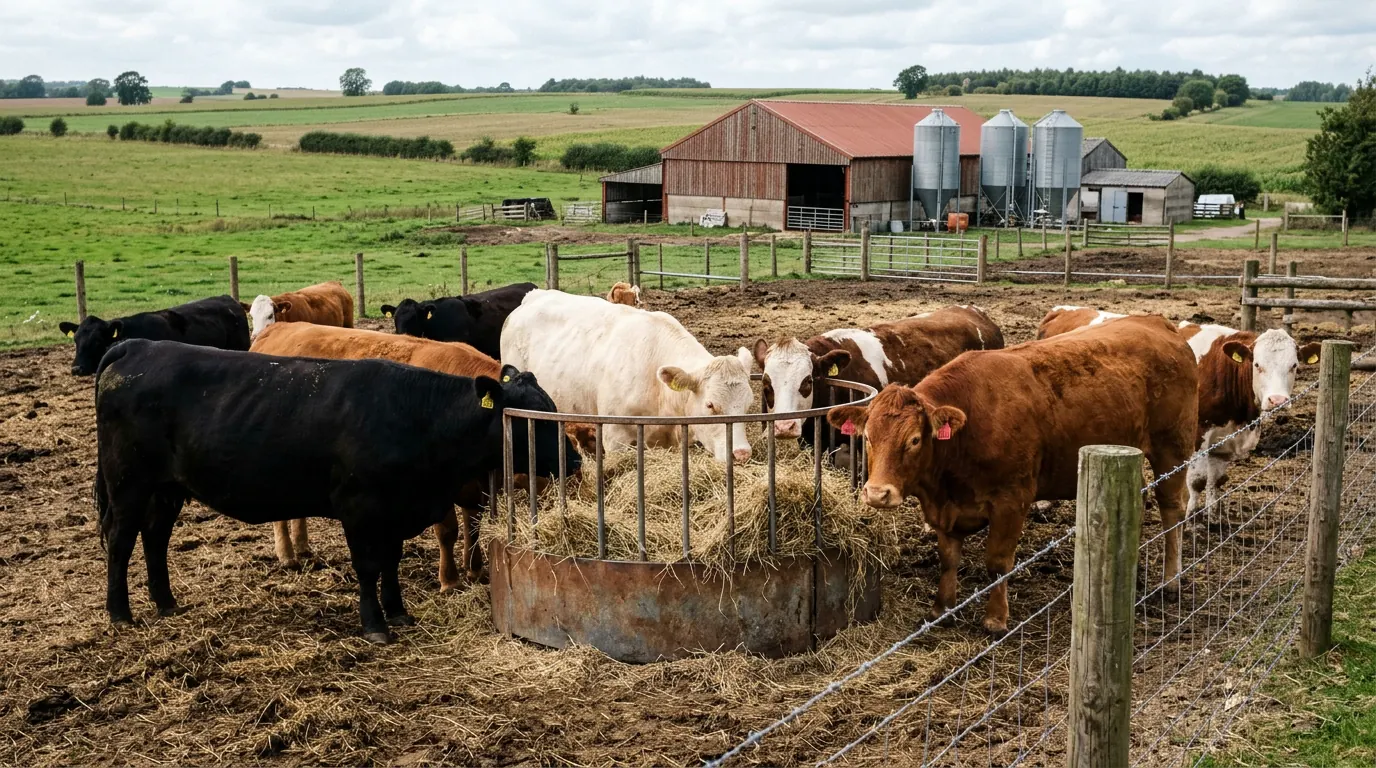
Galloway is a beef breed you keep mainly on pasture, not in a barn. The cows are polled, usually black or dun, and use grass from natural grassland well. Their value on your farm depends on three things: pasture quality, regular breeding and solid health records. Below we go through each area step by step, based on publications from IZ PIB (Poland's National Research Institute of Animal Production), ODR (regional agricultural advisory centers) and institutes in the UK and Ireland.
Why Galloway is popular in Poland
Galloway came to Poland as a breed that can be kept with little concentrate feed. According to the IZ PIB review of the history of beef cattle farming, beef breeds were developed in different regions of the country, and they gained importance where farms focused on grassland and extensive systems. For you as a farmer this means one thing: when you plan a Galloway herd, you start with the pasture, not the livestock building.
Galloway: traits and identification
Polled cattle from grassland
Galloway is a polled breed, which makes herd work easier and reduces the risk of injuries between animals. The cows are medium-framed, and young animals gain well on grass. The breed copes with changing weather, so it suits farms that keep cattle outdoors for much of the year. Keep this in mind when you plan the herd, because it affects how you equip paddocks and shelters.
Breed code in the ARiMR register
In the list of letter codes for cattle breeds from Poland's ARiMR (Agency for Restructuring and Modernisation of Agriculture), valid as of 22.11.2026, Galloway has the code GA. Enter this code in your herd records from day one, because it makes later reports and contact with advisory services easier. You handle animal identification in IRZplus, ARiMR's online animal register, and you can link your records through integrations with IRZplus and sensors.
Galloway on pasture: stocking rate and sward quality
Paddock quality sets the stocking rate
According to an IZ PIB publication on organic farming, stocking rate on pasture depends on paddock quality. The table in the paper distinguishes very good, average and poor paddocks. For each it gives a different nitrogen rate, dry matter yield and stocking rate, separately for young fattening cattle and for cows with calves. A poorer paddock carries fewer animals per hectare. The calculations assume 80% pasture utilization, so set your stocking rate from your own yield measurements, not from the table figure alone.
Shelter and water on pasture
EFSA studies on beef cattle welfare look at animal behavior on pasture and at the role of shelter and shade for comfort. For you this means a concrete task: check that every paddock has protection from sun and wind, and constant access to water. Shelter does not have to be elaborate, but it should be available in every season, winter included.
Galloway breeding: heat and seasonal calving
Heat every 21 days or so
According to a leaflet from WMODR Olsztyn (a regional agricultural advisory center), heat in cattle is short, on average around a dozen hours, and the interval between heats is about 21 days (18–24 days). A healthy cow that has not been served or inseminated shows signs of heat roughly every three weeks. Bulls are sexually active all year. Watch for heat every day, especially on pasture, where signs are easy to miss. You can plan breeding dates and cycles in the stocking and cycle planning module.
Seasonal calving on pasture
The WMODR leaflet stresses that seasonal calving matters a lot for farmers who keep cows on pasture most of the time. The goal is to get a calf each year from as many females in the herd as possible. If cows calve in one window, it is easier to plan calf care, pasture work and animal sales. This only works with accurate records of every calving, which you can keep in the farm management software.
Rearing Galloway calves and feeding the herd
The first days after birth
The KPODR Minikowo guide on rearing beef calves, written by authors from SGGW (Warsaw University of Life Sciences), describes rules that apply to every breed. The most important is a fast and full supply of colostrum in the first hours of life, plus checking that the calf suckles and passes feces. Agree exact schedules for milk or milk replacers with your vet, because they depend on the calf's age and the cow's condition.
Feeding cows on grass
The Teagasc manual (section 6: Nutrition) describes grass-based feeding of beef cattle and supplementing the diet when feed runs short. For Galloway this means pasture covers most of the needs in summer, and in winter you need good quality silage or hay. Match the feed amount to cow condition, scoring it regularly in the herd. Build the feeding plan with an advisor, because it depends on body weight, stage of pregnancy and lactation.
Galloway herd health and treatment records
Diseases reported in cattle herds
A leaflet from PODR Szepietowo (a regional agricultural advisory center) describes lumpy skin disease (LSD) in cattle. At any suspicion of disease, contact your vet right away and do not wait for the animal to recover on its own. Do not treat animals yourself or move them without advice. During a herd inspection, health records are the first document you are asked for, and they show the history of the herd.
Treatment, medicine and withdrawal period
The vet always chooses the medicine and the dose. Your job is to keep the record: product name, date given, animal number and the date the withdrawal period ends. The withdrawal period comes from the product leaflet and the vet's advice. Following it protects consumers and your credibility when you sell. Keep treatment records in the treatment and withdrawal module so dates do not get lost in notebooks.
Galloway in the farm budget
What drives income from live cattle
A sample calculation from ODR Lubań (a regional agricultural advisory center) on income from beef live weight production shows that the result changes with the intensity of production. Income is affected by pasture cost, winter feed cost, age at sale and body weight at sale. Market prices change regularly, so we do not give them in this guide. Check current quotes with buyers and abattoir price lists, and run the numbers on your own data.
Documenting sales
Selling live cattle or grazing services needs correct invoices and statements. In practice you can keep accounts in a system that handles invoices under current rules, including invoicing in KSeF, Poland's national e-invoicing system. Link the record of each animal sold to its health and breeding history, because buyers increasingly ask for this data.
Frequently asked questions
Are Galloway cattle good for grazing?add
Yes. Galloway is bred mainly for grassland and copes well with living outdoors most of the year. Make sure animals have shelter and constant access to water. Match the stocking rate to paddock quality.
What is the Galloway breed code in ARiMR?add
In the ARiMR list of letter codes for cattle breeds, valid as of 22.11.2026, Galloway has the code GA. Enter the code in your herd records and check the current list on the ARiMR website.
How often are Galloway cows in heat?add
Heat in cattle is short, and the interval between heats is about 21 days (18–24 days). Watch the cows every day, especially on pasture, because signs are easy to miss. Bulls are active all year.
How many Galloway cows can you keep per hectare?add
The number depends on paddock quality, fertilization and dry matter yield, not on the breed alone. The stocking tables in IZ PIB publications show how the rate changes with pasture quality. Set it from yield measurements on your own paddock.
How much does a Galloway cow cost?add
The price depends on age, condition, pedigree and whether you buy a breeding or a fattening animal. Prices change regularly, so check current offers, buyer prices and reputable breeders of the breed.
Sources & resources
- linkARiMR — List of letter codes for cattle breeds
- linkIZ PIB — WZ — Feeding beef cattle in organic farming (K. Bilik et al.)
- linkWMODR Olsztyn (gov.pl) — Breeding in beef cattle herds (leaflet)
- linkTeagasc — Teagasc Beef Manual — Section 4: Breeding
- linkEFSA AHAW Panel — Welfare of beef cattle (EFSA Journal 23:9518)
- linkIZ PIB — WZ — Current state and prospects of beef cattle farming and breeding in Poland (H. Grodzki et al.), WZ LIII(2015)2:77–87
Prepared by: DlaFerm Team based on data from the sources listed · Publisher: INSTA-TECH sp. z o.o.
Keeping a Galloway herd on pasture?
Record breeding, treatments, withdrawal periods and IRZplus integration in one place. Create a free farm account on DlaFerm.pl or get in touch, and we will show you how it works in practice.
Phone
+48 796 258 151