Piemontese cattle: traits, breeding and finishing
Piemontese is an Italian beef breed with a light coat and clearly heavy muscling. In Polish herds it mostly appears as the sire in commercial crosses, which gain carcass yield. We cover the breed's origin, its performance traits, breeding and finishing rules, and the records you need to keep.
verifiedFrom the team that has organised work on poultry farms for years.
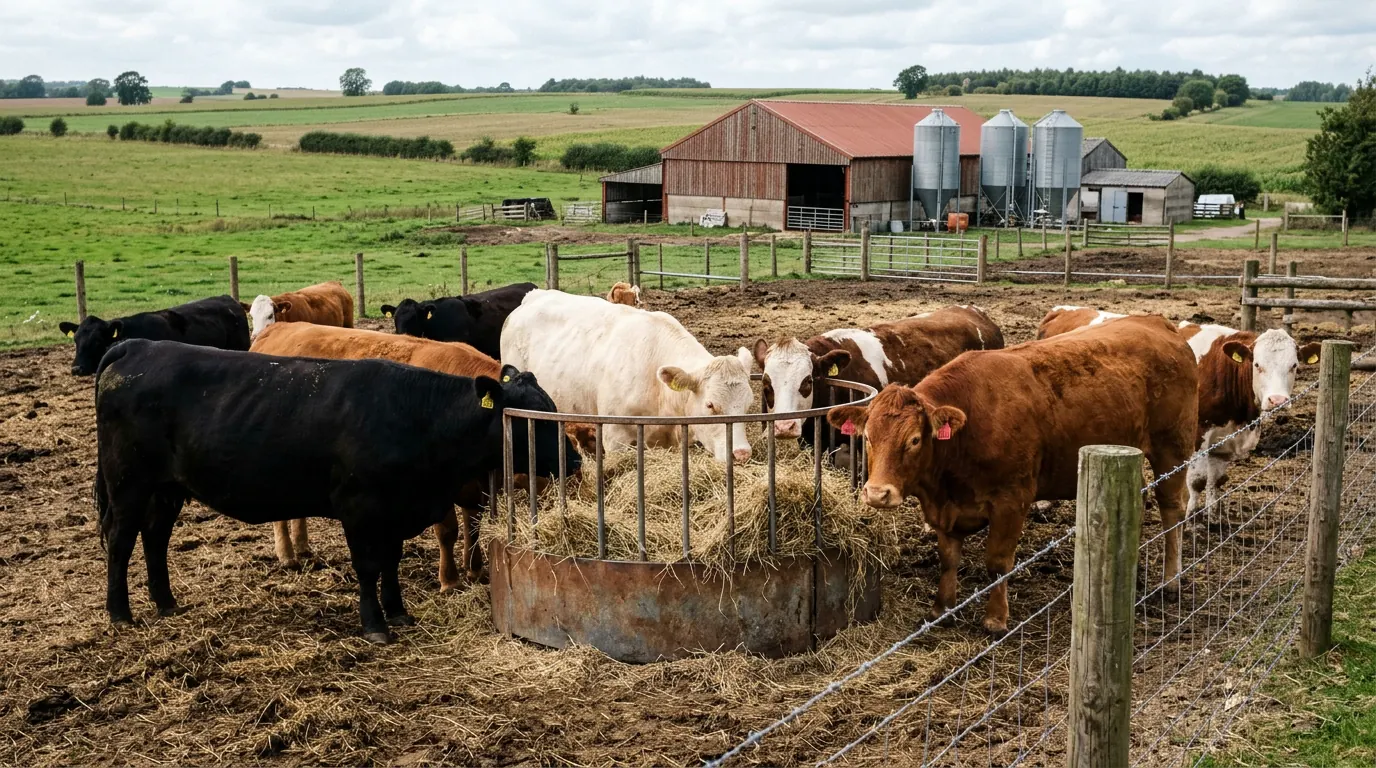
The piemontese breed (letter code PI) is Italian beef cattle with a white or light gray coat, dark skin around the muzzle and eyes, and dark hooves. In Poland it is a minor breed. Its main value shows in crossbreds, which combine good carcass yield with pronounced muscling. Below we describe where the breed comes from, its traits, how breeding and finishing work, and what data you need to keep in your herd records.
Why it is mostly about crossbreeding
Most beef herds in Poland are crossbreds, and purebred cattle make up a small part of the population. According to Grodzki et al. (Wiadomości Zootechniczne, 2015), a population of about 17.5 thousand purebred cows is spread over 14 breeds, including piemontese (PI), which was originally imported. Piemontese rarely forms large purebred herds. More often a piemontese bull is crossed with cows of other breeds or with crossbreds, because the offspring gain muscling. Crossbreeding still needs a mating plan, animal registration and parentage records, because without them you cannot tell what share of blood each calf carries.
Origin of the breed and how it is coded
Breed code in documents
In the list of letter codes for cattle breeds published by Poland's ARiMR (Agency for Restructuring and Modernisation of Agriculture), piemontese (piemont) has the code PI. You enter this code in animal records and notifications. In crossbreed summaries you see it next to codes of other beef breeds, for example LM for limousine or CH for charolaise. Before you enter a code, check the current list on the ARiMR website, because codes can be updated. Also record the breed of the sire and dam of every calf, because without it you cannot trace parentage when you sell or assess the herd.
Piemontese in the Polish population
Data from the Polish Association of Beef Cattle Breeders and Producers (PZHiPBM), cited by Choroszy et al. (Wiadomości Zootechniczne, 2018), show that other breeds dominate the crossbred population, and piemontese numbers are small and uneven from year to year. This means you should check the local offer from breeders and the availability of breeding stock before buying heifers or a bull. Do not base your decision on one table. Compare several sources and ask the breeder for the animal's pedigree.
Carcass yield and muscling
Carcass yield in crosses
Trela et al. (Wiadomości Zootechniczne, 2011) compared the offspring of a control group (marked PR in the table) with crosses sired by a piemontese bull. In bull calves at 12 months, carcass yield in the control group was 57.54%, and in piemontese crosses 60.22%. At 15 months it was 59.01% and 62.52%. Meat production relative to the control group was 128.3% at 12 months and 123.4% at 15 months. In heifers at 12 months, carcass yield was 56.20% in the control group and 59.49% in the piemontese cross. These are results from one trial, so treat them as a direction, not a guarantee for your herd.
Muscling and double muscling
Piemontese is a breed with clearly heavy muscle mass. Some animals carry a genetic mutation that increases muscle growth. In practice this is called double muscling. This type gives a lot of lean meat, but it brings harder calvings, because calves can be large and the cow's pelvis is narrower. When you choose a bull, look not only at the muscling of his offspring but also at calving ease in the daughters and sons from earlier calf crops.
Breeding and calf rearing
Choosing the bull and heifers
In beef herds the result of the year depends on how many calves are born alive and in good condition, and on how fast they grow. When you choose a piemontese bull, check calving ease in his offspring, not only weaning weight. Assess heifers before first service for pelvic size and body condition. Record every calving with the calf's birth weight and notes on how it went. After a few years you will see which line causes the fewest calving problems.
Calf rearing
Beef calves need access to colostrum, dry bedding and regular condition checks in the first weeks. With calves from piemontese crosses, watch closely whether each calf stands and suckles on its own after birth. Report weak calves or those that lag behind the rest to your vet and note them in your records. Calf protection rules are set by Council Directive 2008/119/EC, and the county veterinary officer (powiatowy lekarz weterynarii) checks how they are applied on the farm. Good bedding conditions reduce losses in the first days after birth.
Finishing and feeding piemontese cattle
Finishing rules
Finishing piemontese and its crosses relies on high-energy feed, good-quality forage and constant access to clean water. According to Teagasc (Beef Manual, Section 4: Breeding), a cow's condition before calving affects how fast the calf starts to develop. A similar rule applies to finishing: animals in good condition use feed more efficiently. We do not give rations, because they depend on weight, age and feed composition. Set the ration with a feeding adviser or your vet.
Finishing economics
Profitability depends on the live cattle price, feed cost, rate of gain and veterinary costs. Live prices change weekly, so we do not give amounts. Check quotations in notices from slaughterhouses and meat plants and in bulletins from agricultural advisory centers. Before you decide on the scale of finishing, work out your own feed cost per kilogram of gain and compare it with the selling price. You will find ready tools for such calculations in the calculators for farmers.
Health, medicines and withdrawal periods
Lumpy skin disease
Lumpy skin disease (LSD) is described in a leaflet from PODR Szepietowo (a regional agricultural advisory center), prepared by Z. Marciniak. If you suspect skin lesions on an animal, isolate it from the rest of the herd and report the case to your vet and to the county veterinary officer. Do not treat or move animals without a veterinary decision. Note the date the signs appeared and the number of animals affected, because you need these details for the report.
Medicines and withdrawal periods
Enter every medicine given to an animal in the treatment record, with the date, the animal's number and the name of the person who gave it. Your vet chooses the medicine and the dose. The withdrawal period is the time after which meat or milk from a treated animal may enter the food chain, and it decides when you can send an animal to slaughter. Your records let you check this before every sale. Treatment records and withdrawal periods in DlaFerm help you track these dates for each animal.
Registration and herd records
Registration in IRZplus
Cattle are registered in IRZplus, ARiMR's online animal register. Report births, movements and losses within the deadlines set by the rules. Check the current rules in official notices, because deadlines are sometimes changed. IRZplus and sensor integrations let you carry over part of the data without retyping, but the keeper remains responsible for correct notifications.
Herd records
Keep a record card for each animal: breed code, dam, sire, date of birth, birth weight and how the calving went. When crossing with piemontese, record the share of blood in the offspring, because it shows what kind of cross the animal is. Paper lists quickly go out of date, so keep your data in one place. A farm management system brings breeds, parentage, health and deadlines together in one view.
Frequently asked questions
How does piemontese differ from other beef breeds?add
Piemontese has a light coat with dark skin around the muzzle and eyes and clearly heavy muscling. In the trial described by Trela et al. (Wiadomości Zootechniczne, 2011), piemontese crosses reached higher carcass yield than the control group. Results depend on the herd, so compare your own data.
What is the piemontese breed code at ARiMR?add
The letter code for piemontese is PI. ARiMR publishes the list of codes. Before you enter a code in your records, check the current version on the agency's website, because the list can be updated.
Is piemontese good for crossbreeding?add
Crossbreeding is common in Polish herds, because purebred cattle make up a small part of the cow population. According to Grodzki et al. (Wiadomości Zootechniczne, 2015), the purebred stock is spread over more than a dozen breeds. Crossbreeding needs a mating plan and accurate parentage records.
Why can piemontese calvings be difficult?add
Some animals carry a mutation that increases muscling, which leads to larger calves. With a narrower pelvis in the dam, calving can drag on. When you choose a bull, look at calving ease and record how each calving went. Report difficult calvings to your vet.
Do you have to report lumpy skin disease?add
Yes. If you suspect LSD, you report the case to your vet and do not treat the animal yourself. You will find a description of the signs and the procedure in the PODR Szepietowo leaflet.
How do you keep medicine records for cattle?add
Record every medicine given, with the date, the animal's number and the withdrawal period. Your vet chooses the medicine and the dose. Keep the records where you can find them during an inspection and before every sale.
Sources & resources
- linkARiMR — List of letter codes for cattle breeds
- linkIZ PIB — Wiadomości Zootechniczne — Breeding work in a beef cattle herd (Z. Choroszy et al.), WZ L(2012)1:11–20
- linkIZ PIB — WZ — 60 years of IZ work on beef cattle (J. Trela et al.), WZ XLIX(2011)4:11–56
- linkIZ PIB — WZ — Current state and prospects of beef cattle farming and breeding in Poland (H. Grodzki et al.), WZ LIII(2015)2:77–87
- linkIZ PIB — WZ — New methods of assessing the performance and breeding value of beef breeds (Z. Choroszy et al.), WZ LVI(2018)3:17–23
- linkPODR Szepietowo — Lumpy skin disease (LSD) — leaflet (Z. Marciniak)
Prepared by: DlaFerm Team based on data from the sources listed · Publisher: INSTA-TECH sp. z o.o.
Do you keep a beef herd or crossbreds?
The DlaFerm farm management system brings breeds, parentage, health and withdrawal periods together in one place. Create a free farm account and see what records for your herd look like, or get in touch with us.
Phone
+48 796 258 151