Rinderpest: the eradicated cattle disease and what it taught us
Rinderpest is a viral cattle disease that was declared eradicated worldwide in 2011. We explain how it spread, how it was beaten and what that means for you today, now that another serious cattle disease, lumpy skin disease, has reached Europe.
verifiedFrom the team that has organised work on poultry farms for years.
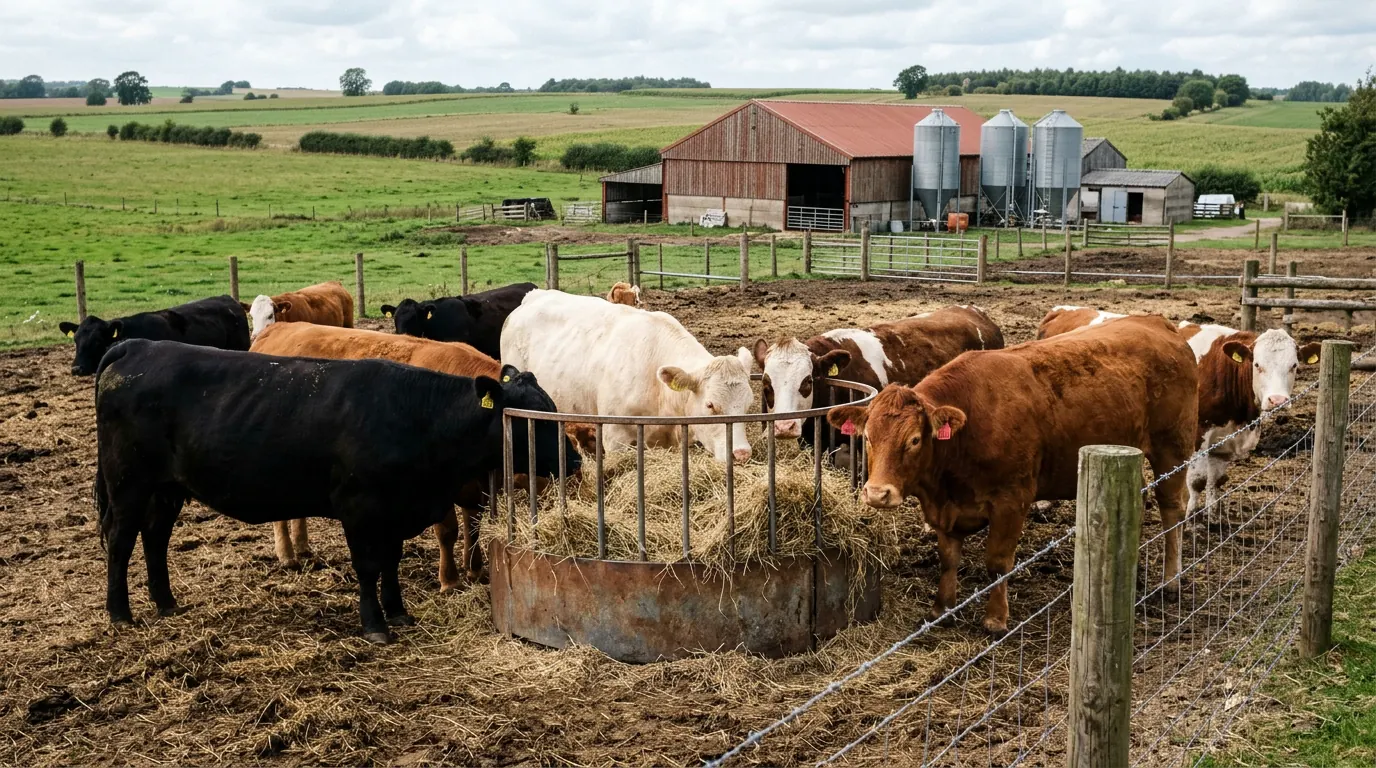
Rinderpest (Latin: rinderpest, also called cattle plague) was an acute, contagious viral disease of cattle and other ruminants. For centuries it caused huge losses in Europe, Asia and Africa: in herds with no immunity, most animals died. Today it no longer exists. Its global eradication was declared in 2011. It was only the second time in history, after smallpox in humans, that an infectious disease was removed completely.
For a keeper running a herd today, rinderpest is above all an example of what works against infectious disease: fast reporting, limits on animal movements and vaccination under state supervision. The same rules apply to other cattle diseases, which we cover in our overview of beef cattle diseases.
What rinderpest was and how it spread
The virus and susceptible animals
Rinderpest was caused by a paramyxovirus that infected cattle, buffalo and many wild ruminants. People did not catch it. The virus spread mainly by direct contact between sick and healthy animals, and through discharge from the nose and eyes and through manure. That is why it moved so easily where cattle were driven to markets, shared pastures and over long distances. In herds that had never met the virus, the disease was most severe.
Why animal movement was so dangerous
In past centuries rinderpest reached Europe with cattle transports and armies moving from the east. One sick animal brought into a healthy herd was enough to infect a whole area within a few weeks. The lesson from those epidemics is simple: disease spreads where animals move without control. The same principle is still used today to fight infectious cattle diseases.
What the disease looked like in a herd
The most commonly described signs
Accounts of past epidemics list high fever, loss of appetite, discharge from the nose and eyes, ulcers in the mouth and severe diarrhea leading to dehydration. Animals weakened fast, and in herds without immunity most sick animals died within a few days. Today the same signs can appear with other cattle diseases, so they cannot tell you which disease you have. A veterinarian makes the diagnosis based on laboratory tests.
What to do if you see worrying signs
If several animals suddenly have a fever, mouth ulcers or unexplained deaths, do not wait for the signs to pass. Separate the sick animals, limit the movement of people and equipment between buildings, and call your veterinarian right away. If a notifiable disease is suspected, the vet reports it to the county veterinary officer (powiatowy lekarz weterynarii). Current rules are published by the Chief Veterinary Inspectorate (Główny Inspektorat Weterynarii).
How rinderpest was eradicated
Vaccine and surveillance
The breakthrough was an effective vaccine developed in the 20th century. Vaccination alone was not enough, though: campaigns ran under the supervision of veterinary services, and progress was checked with testing. Once the disease disappeared from a region, vaccination was phased out and the area was watched to see whether the virus returned. In 2011 the Food and Agriculture Organization (FAO) and the World Organisation for Animal Health (WOAH) declared rinderpest eradicated worldwide.
How we know the disease is gone
Eradication does not mean you can drop your guard. The virus may still be kept in a few laboratories under strict control, and veterinary services keep monitoring cattle diseases. For a keeper this means one thing: if anyone in Poland reports a suspected case of rinderpest, it is a serious matter for the whole country, not an ordinary case of illness. In every such case the veterinarian and laboratory testing decide.
Lumpy skin disease: the cattle disease you need to know now
What the PODR Szepietowo leaflet says
According to a November 2025 leaflet from PODR Szepietowo (a regional agricultural advisory center in Poland), lumpy skin disease (LSD) is a viral disease of cattle and buffalo that spreads fast and causes heavy losses. Until now it occurred mainly in Africa and the Middle East, and in 2025 the first cases appeared in Europe. The disease does not threaten people. It is placed in category A+D+E, so under EU law it must be controlled in Poland and in the other EU states.
Which animals get sicker
Both dairy and beef cattle can fall ill. The leaflet says calves and dairy cows often get a more severe form, and according to WOAH, thin-skinned breeds and dairy cows are especially prone to severe disease. If you keep finishing cattle or suckler cows, do not treat LSD as a problem for dairy farms only. If you see skin ulcers, lumps or a sudden decline in the animals' condition, notify your veterinarian. Our overview of cattle diseases shows other diseases you have to tell apart from LSD.
What you can take from rinderpest history into your herd
Control who and what comes in and out
Rinderpest spread through people, animals and equipment, so the basis is knowing who and what enters the farm. Record visits from the vet, buyer, service technician and feed supplier. If a disease is suspected, the inspection will ask who was on the farm in recent days, and with a visitor log you can answer in minutes. A visitor log with a QR code helps with this. Also record animal purchases, sales and transport destinations, and keep your register reports up to date using the IRZplus integration (IRZplus is ARiMR's online animal register, run by Poland's Agency for Restructuring and Modernisation of Agriculture).
Buying animals and grazing
The most common way disease enters a herd is by buying new animals. Buy animals with documented origin, keep them apart for the period agreed with your veterinarian, and watch for fever, discharge and skin changes. Teagasc advises buying young cattle, preferably from accredited disease-free herds or closed herds with strict biosecurity, and testing, vaccinating and treating for parasites during quarantine. On pastures next to other keepers' herds, keep fences in good order so animals cannot touch across the fence. We describe the rules in our article on grazing cattle. For diseases spread by insects and ticks, see also ticks in cattle. You can build a farm action plan with the biosecurity plan generator.
Frequently asked questions
Does rinderpest still exist in Poland?add
No. Rinderpest was declared eradicated worldwide in 2011, so it does not occur in Poland either. Any suspected case would have to be reported at once to the Veterinary Inspection (Inspekcja Weterynaryjna) and confirmed by laboratory testing.
Is rinderpest dangerous to humans?add
No. Rinderpest infected cattle, buffalo and wild ruminants, but not people. The losses hit livestock and food supply, not human health.
How do you tell rinderpest from other cattle diseases?add
It is hard for a keeper to do alone, because fever, mouth ulcers and diarrhea occur with several diseases. A veterinarian makes the diagnosis based on tests. You will find an overview of diseases in our article on beef cattle diseases.
Is lumpy skin disease controlled by the authorities in Poland?add
According to the November 2025 PODR Szepietowo leaflet, LSD is in category A+D+E and under EU law must be controlled in Poland and other EU states. Current notices are published by the Chief Veterinary Inspectorate (Główny Inspektorat Weterynarii).
What should I do if cattle in my herd develop lumps on the skin?add
Isolate the sick animals, limit the movement of people and equipment, and notify your veterinarian right away. The vet decides on taking samples and reporting the suspicion to the county veterinary officer. Do not treat on your own: the vet chooses the medicine and dose.
Sources & resources
- linkPODR Szepietowo: Lumpy skin disease (LSD) of cattle, leaflet (Z. Marciniak)
- linkTeagasc: Teagasc Beef Manual, Section 7: Animal Health
- linkChief Veterinary Inspectorate (Główny Inspektorat Weterynarii): gov.pl/web/wetgiw
- linkInternet System of Legal Acts (ISAP): isap.sejm.gov.pl
Prepared by: DlaFerm Team based on data from the sources listed · Publisher: INSTA-TECH sp. z o.o.
Want a list of everyone who enters your farm at hand?
The QR visitor log in DlaFerm records every visit to your farm, so during an inspection or a disease suspicion you can reconstruct it in minutes. Create a free farm account or get in touch.
Phone
+48 796 258 151